Gila Trout
Oncorhynchus gilae
Overview
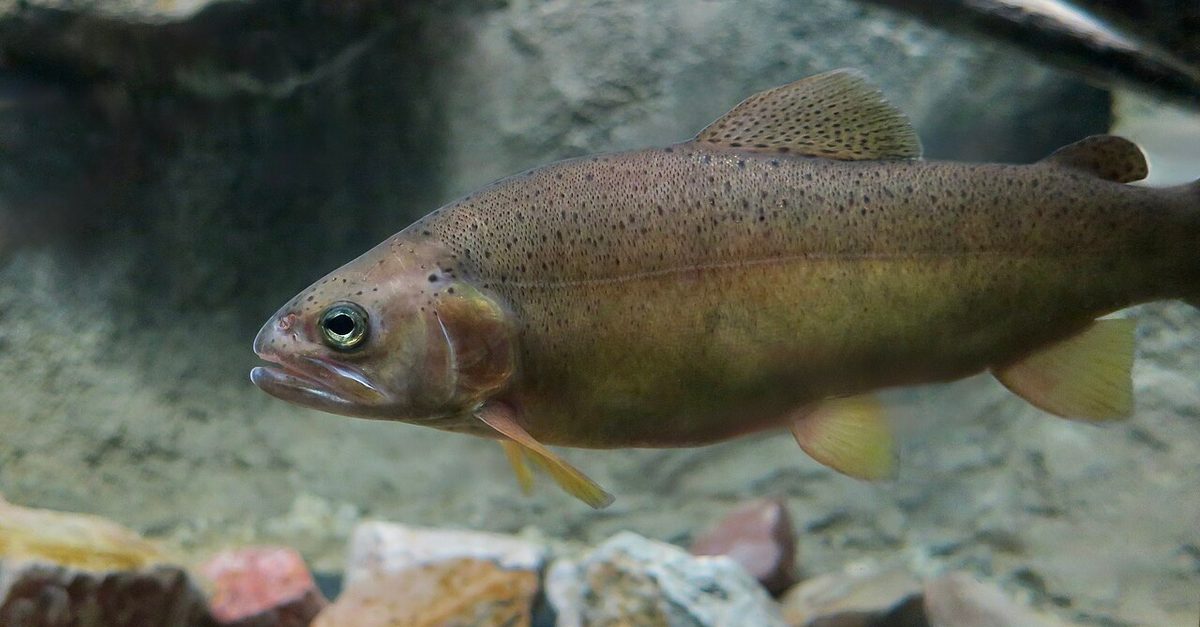
The Gila trout is one of the rarest and most geographically restricted trout species in North America, native exclusively to a handful of headwater streams in the Gila River basin of southwestern New Mexico and southeastern Arizona. Like its close relative the Apache trout, the Gila trout evolved in isolation in the mountains of the American Southwest, adapting to the warm, arid conditions at the southern edge of the trout's range. The species was listed as Endangered under the Endangered Species Act in 1967 and reclassified as Threatened in 2006 following significant recovery progress.
Gila trout are beautiful fish with a golden-yellow to coppery body, fine dark spots concentrated on the upper body, and a characteristic lack of prominent cutthroat slashes beneath the jaw (unlike true cutthroat trout, any jaw markings on Gila trout are faint or absent). The dorsal, pelvic, and anal fins often carry a distinctive yellowish-white leading edge. In the clear, cold headwater streams of the Gila Wilderness, these golden fish are both a conservation success story and a testament to the wildness of one of the most remote landscapes in the Lower 48.
For fly anglers, the Gila trout represents the ultimate backcountry native trout experience. The streams where Gila trout swim are almost exclusively in designated wilderness areas, requiring multi-day backpacking trips to access. The West Fork of the Gila River in New Mexico's Gila Wilderness, the first congressionally designated wilderness in the United States, is the most celebrated Gila trout destination. Anglers who make the journey are rewarded with rare native trout in pristine mountain streams surrounded by dramatic volcanic cliff formations and absolute solitude.
Identification
Gila trout are identified by their overall golden-yellow to coppery body coloration, similar to but generally less intensely yellow than Apache trout. The back is olive-gold, and the flanks transition to a warm golden-yellow. Fine, irregularly shaped dark spots are distributed across the upper body, concentrated above the lateral line and on the caudal peduncle. The spots extend onto the dorsal fin but are generally smaller and less prominent than the bold fin spotting seen on Apache trout.
The most reliable way to distinguish Gila trout from Apache trout is geographic: Gila trout are native to the Gila River basin of southwestern New Mexico, while Apache trout are native to the Salt River and Little Colorado drainages of east-central Arizona. In the field, Gila trout tend to have a slightly more olive (less golden) overall coloration and finer, less prominent spots than Apache trout. The dark eye stripe that is diagnostic in Apache trout is typically absent or very faint in Gila trout.
Separating Gila trout from non-native rainbow trout requires checking for the golden body coloration (rainbows are silver to pink), the absence of a prominent pink lateral stripe (present in rainbows), and the overall spot density (Gila trout have fewer, finer spots concentrated above the lateral line). As with other native southwestern trout, hybridization with non-native species can produce fish with intermediate characteristics, and genetic testing is the only definitive method for confirming pure Gila trout lineage.
Diet
Gila trout are generalist invertebrate feeders whose diet reflects the relatively simple food webs of their remote headwater stream habitats. Aquatic insects form the primary food source, including mayfly nymphs (primarily small Baetis species), caddisfly larvae, midge larvae and pupae, and small stonefly nymphs. The mountain streams inhabited by Gila trout typically support less insect diversity than larger valley rivers, but the insects present are sufficient to sustain healthy trout populations when stream conditions are favorable.
Terrestrial insects play an important supplementary role in the Gila trout's diet, particularly during the warm months from June through September. Ants, beetles, and other small insects that fall from overhanging ponderosa pine and mixed-conifer vegetation provide additional calories. The importance of terrestrials is amplified in the small, heavily canopied streams that serve as Gila trout strongholds, where the input of land-born insects can rival or exceed the aquatic insect production.
Gila trout are not piscivorous at any life stage, remaining committed invertebrate feeders throughout their lives. Their small maximum size (rarely exceeding 12 inches) and headwater habitat limit them to an insect-based diet. This makes them responsive to a wide variety of small nymph and dry fly patterns, and their relatively unselective feeding behavior means that close-enough fly pattern matching is usually sufficient for success.
Habitat Preferences
Gila trout are restricted to cold, clear headwater streams at elevations between 5,500 and 9,000 feet in the Mogollon, Black Range, and Mimbres mountains of southwestern New Mexico and the Blue Range of southeastern Arizona. They require water temperatures below 77 degrees Fahrenheit and prefer temperatures in the 50 to 62 degree range. The streams they inhabit are characteristically small (3 to 15 feet wide), steep-gradient, and set within ponderosa pine and mixed-conifer forest that provides critical shade and bank stability.
The ideal Gila trout stream features a complex channel structure with plunge pools, pocket water behind boulders, undercut banks, and clean gravel for spawning. Riparian vegetation, particularly willows and alders, provides overhead cover, bank stability, and terrestrial insect input. Gila trout have co-evolved with the fire-adapted forests of the Southwest and can tolerate the short-term disturbance of natural low-intensity fires, though catastrophic stand-replacing fires can devastate populations through post-fire debris flows and ash runoff.
Spawning occurs in spring, typically from March through May depending on water temperature and elevation. Gila trout require clean gravel substrate with moderate flow for successful reproduction. The primary threats to Gila trout habitat include hybridization with non-native rainbow trout, competition from brown and brook trout, habitat degradation from historic overgrazing, and the increasingly severe wildfire regime driven by climate change. Conservation efforts focus on maintaining pure populations behind fish barriers and establishing new populations through translocation to restored streams.
Fishing Tactics
Fishing for Gila trout requires a commitment to backcountry travel. The best Gila trout waters, particularly the West Fork of the Gila River, are located deep within the Gila Wilderness and require multi-day backpacking trips. Anglers should plan for 6 to 12 miles of hiking to reach the best water, with multiple river crossings along the trail. A short, light rod (7 to 7.5 feet in 2- to 3-weight) is ideal for the tight, brushy stream corridors, and a minimalist approach to fly selection keeps pack weight manageable.
Gila trout are willing dry-fly feeders that respond well to attractor patterns. Parachute Adams, Elk Hair Caddis, Royal Wulffs, and small Stimulators in sizes 14 to 18 cover most situations. A hopper-dropper rig with a small foam dry and a beadhead Pheasant Tail or Prince Nymph trailing below provides versatility. The streams are small and clear, demanding a careful approach: stay low, minimize false casts, and present your fly to each pool before the fish can detect your presence.
A free Gila Trout Fishing Permit from the New Mexico Department of Game and Fish is required on streams where Gila trout fishing is permitted. Practice strict catch-and-release with barbless hooks, handle fish briefly in the water without removing them, and release at the point of capture. The combination of rare native trout, genuine wilderness, and the physical challenge of the backcountry makes Gila trout fishing one of the most rewarding experiences available to American fly anglers.
Conservation
The Gila trout was one of the first fish species listed under the Endangered Species Act in 1967 and was reclassified from Endangered to Threatened in 2006. The species occupies a fraction of its historic range, with genetically pure populations maintained in approximately 20 protected streams across the Gila National Forest in New Mexico and a handful of streams in Arizona. The Gila Trout Recovery Plan calls for establishing and maintaining at least 17 self-sustaining populations. Recovery efforts have been conducted by the U.S. Fish and Wildlife Service, New Mexico Department of Game and Fish, Arizona Game and Fish Department, the U.S. Forest Service, and conservation organizations including Trout Unlimited. Key strategies include chemical treatment of streams to remove non-native trout, construction of fish barriers to prevent reinvasion, translocation of genetically pure Gila trout to restored streams, and habitat restoration through improved grazing management and post-fire rehabilitation. Anglers can fish for Gila trout on certain streams in the Gila National Forest under a special free permit from the New Mexico Department of Game and Fish. These fishing opportunities are carefully managed to allow recreational access while protecting recovery populations. The experience of catching a Gila trout in its native Gila Wilderness habitat is one of the most unique and meaningful experiences in American fly fishing.
Quick Facts
- Scientific Name
- Oncorhynchus gilae
- Average Size
- 8-12"
- Trophy Size
- 15+"
- State Record
- Typically small stream fish; rare specimens to 17 inches in optimal habitat. No formal state records maintained for most populations due to ESA status.
- Found In
- Various western rivers