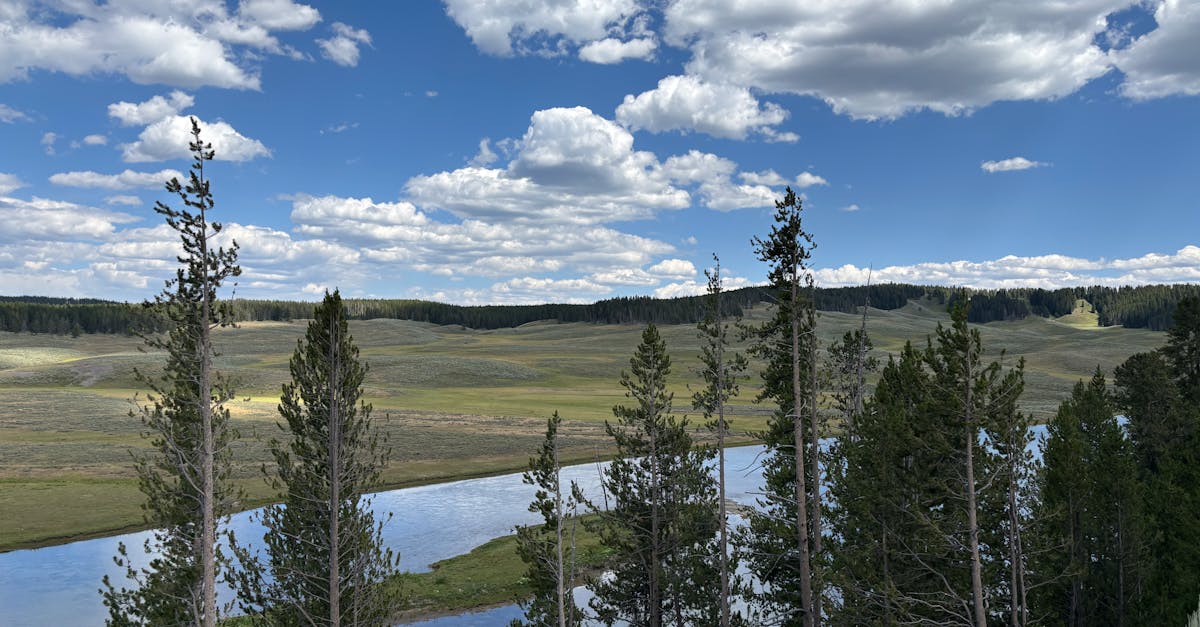
Yellowstone River
The Yellowstone is the longest undammed river in the lower 48 states, flowing 692 miles from Yellowstone National Park through Paradise Valley and across the Montana plains. It is home to the native Yellowstone cutthroat trout and offers some of the most scenic fly fishing in the American West.
Yellowstone River Fishing Report & Current Conditions
The Yellowstone River is a freestone fishery, and it fishes best in summer and fall. Live USGS streamflow readings update throughout the day, while the monthly median flows below map the river's typical discharge across the year. Together they show current fishability and how today's water compares to the seasonal norm.
Current Conditions
Typical Monthly Flows
Historical median discharge (CFS) by month: Yellowstone River
Overview
The Yellowstone River is a Montana icon: wild, undammed, and spectacularly productive. From its emergence from Yellowstone Lake through the dramatic Paradise Valley between the Absaroka and Gallatin ranges, this river offers a fishing experience unlike any other.
In the park, the Yellowstone supports native cutthroat trout that rise eagerly to dry flies in the meadow stretches between Yellowstone Lake and the Grand Canyon. Outside the park, the river enters Paradise Valley, where it becomes a powerful freestone river holding abundant rainbow and brown trout alongside native cutthroats.
The stretch from Gardiner to Livingston is premier float fishing water. Experienced guides row drift boats through boulder gardens and long riffles, presenting dry flies and nymphs to willing trout. The salmonfly hatch in early July turns this section into a feeding frenzy.
Below Livingston, the Yellowstone widens and warms, but still produces excellent fishing, particularly for large brown trout in fall. The river eventually reaches the Great Plains, where it supports walleye, sauger, and channel catfish, a completely different but equally rewarding fishery.
Water Characteristics
The Yellowstone is a large, powerful freestone river fed by snowmelt from the Absaroka-Beartooth Wilderness, the Gallatin Range, and Yellowstone National Park's high plateaus. It is the longest undammed river in the contiguous United States, meaning its flows are entirely natural, unregulated by any dam. This makes the Yellowstone highly variable: spring runoff can push flows above 20,000 cfs at Livingston, while late summer base flows may drop to 2,500-3,500 cfs. This natural hydrology creates dynamic channel-forming processes that maintain excellent spawning habitat and aquatic insect diversity.
Water clarity varies dramatically by season. During summer base flows (July through October), visibility ranges from 4 to 10 feet, gin-clear on the best days. During runoff (May through late June), the river runs high and turbid with glacial silt and snowmelt, often limiting visibility to inches. The substrate throughout the Paradise Valley section is predominantly cobble and gravel with large boulders, creating ideal riffle-run-pool sequences. Summer water temperatures in the upper river (Gardiner to Livingston) typically range from 52-62 degrees F, though they can exceed 70 degrees F in late July and August, triggering hoot-owl restrictions.
The Yellowstone's water chemistry reflects its volcanic origins: slightly alkaline with mineral content that supports robust aquatic insect populations. The river supports diverse hatches including salmonflies, golden stoneflies, PMDs, caddis, BWOs, and terrestrials, making it a year-round destination for fly fishers who time their trips to the river's natural rhythms.
Wading & Float Guide
The Yellowstone is a big, powerful river that demands respect from wading anglers. In the Paradise Valley section from Gardiner to Livingston, the main channel is generally too deep and swift to wade safely, particularly during and after spring runoff. However, numerous side channels, gravel bars, and shallow riffles along the margins provide excellent wading opportunities. A wading staff is strongly recommended, and anglers should always wear a wading belt and exercise caution, as the Yellowstone's currents are deceptively strong, and the rounded cobble bottom provides inconsistent footing.
Inside Yellowstone National Park, wading conditions vary dramatically. The meadow sections between Yellowstone Lake and the Grand Canyon are generally wadeable, with gravel and sand bottoms and moderate currents. The Lamar Valley and Slough Creek tributaries offer easier wading. However, the main river through the park's canyon sections is completely unwadeable.
Below Livingston, the river widens and slows, offering more wading access at bridge crossings and FWP sites, though the substrate shifts to sand and silt in many areas, making firm footing harder to find. Spring runoff on the Yellowstone is intense; the river can rise 3-5 feet and run chocolate brown for 3-6 weeks from mid-May through late June, making wading impossible and floating dangerous during peak flows.
Gardiner to Yankee Jim Canyon
The uppermost float section outside the park. Fast water through boulder gardens with technical rowing required. Yankee Jim Canyon contains Class II-III rapids that demand experienced oarsmen. Excellent salmonfly and golden stone water. Outstanding scenery with the Absaroka Range as backdrop.
Yankee Jim Canyon to Carbella
Paradise Valley opens up with long riffles, deep pools, and sweeping bends against cottonwood-lined banks. Prime hopper-dropper water in summer. Large brown trout hold along undercut banks and in the tailouts of deep pools. This section fishes well from July through October.
Carbella to Mallard's Rest
Classic Paradise Valley float with alternating riffles, runs, and pools. Easier rowing than the upper sections. Excellent nymphing water in the deeper slots. The Yellowstone's side channels in this section hold willing fish that see less pressure. Good fall brown trout water.
Mallard's Rest to Mayor's Landing (Livingston)
The lower Paradise Valley float. The river widens and slows slightly, with more cottonwood-shaded banks and deeper runs. Strong BWO and PMD hatches through this section. Fall streamer fishing along the banks can produce the biggest fish of the year. Good access and parking at both ends.
Livingston to Columbus (multiple sections)
Below Livingston, the Yellowstone becomes a big, braided prairie river. Water warms in summer, but large brown trout inhabit the deeper runs. Best fished in spring before runoff and in fall when browns stage for spawning. Less trout-focused but productive for anglers willing to explore less pressured water.
Rod & Tackle Guide
Upper Yellowstone (Gardiner to Yankee Jim Canyon)
- Rod
- 9' 6-weight
- Line
- Weight-forward floating
- Leader & Tippet
- 9' tapered to 3X-4X (dry/dropper), 7.5' to 2X-3X (streamers)
The upper river is big, fast water with strong currents and consistently windy conditions. A 6-weight is the minimum; it handles the wind, turns over large stonefly dries, and gives you enough muscle to fight cutthroats and rainbows in heavy current. Heavier tippet (3X) is appropriate here; the faster water is forgiving of leader diameter.
Paradise Valley (Yankee Jim to Livingston)
- Rod
- 9' 5-weight or 6-weight
- Line
- Weight-forward floating
- Leader & Tippet
- 9' tapered to 4X (dry fly/hoppers), 7.5' to 3X (nymph rigs)
A versatile 5-weight covers most Paradise Valley situations: hopper-dropper rigs, PMD hatches, and caddis emergences. Opt for the 6-weight on windy days or when throwing big stonefly patterns. The braided channels fish well with a 9' leader tapered to 4X, which balances presentation with enough strength for strong Yellowstone rainbows.
Lower Yellowstone (Livingston to Columbus)
- Rod
- 9' 6-weight or 7-weight
- Line
- Weight-forward floating; 200-grain sink-tip for streamers
- Leader & Tippet
- 7.5' tapered to 2X-3X (streamers), 9' to 4X (dry fly)
Big brown trout water. The lower river is wide and deep, and fall streamer fishing requires a rod that can throw heavy articulated patterns all day. A 7-weight is ideal for dedicated streamer anglers. For summer dry-fly work with hoppers and caddis, a 6-weight is sufficient.
Best Time to Fish the Yellowstone River
Spring
March and April offer pre-runoff nymphing with Skwala stoneflies (#8-10), a unique early-season hatch that brings big fish to the surface in Paradise Valley. BWO hatches (#18-20) on overcast afternoons are reliable. Runoff typically begins in mid-May and can render the river unfishable for 3-6 weeks. Monitor USGS flows; fishable levels are generally below 8,000 cfs at Livingston. In Yellowstone National Park, most waters don't open until Memorial Day weekend.
Summer
The salmonfly hatch (late June through mid-July) is the premier event. Fish large stonefly dries (#4-8) tight to banks as the hatch moves upstream from Livingston toward Gardiner. Golden stoneflies (#6-10) overlap and extend the big-bug window. Once flows stabilize in July, hopper-dropper rigs become the go-to: Chubby Chernobyls and foam hoppers with Pheasant Tail droppers. Watch for hoot-owl restrictions in late July and August when water temps rise. Fish early morning and late evening during heat waves.
Fall
September through November is trophy brown trout season. Streamer fishing with Woolly Buggers, Circus Peanuts, and Sex Dungeons (#2-6) along undercut banks produces the year's largest fish. Fall BWO hatches (#18-22) begin in late September and continue through October, providing excellent dry-fly fishing on overcast days. October caddis (#8-10) in the upper river adds another dry-fly opportunity. Crowds thin dramatically after Labor Day. Brown trout spawn in October-November, so handle spawning fish with extra care.
Winter
The Yellowstone can be fished through winter on catch-and-release sections, but conditions are challenging. Focus on the deepest, slowest pools and runs where trout congregate. Midge patterns (#18-24) are the primary offering: Zebra Midges, Mercury Midges, and Griffith's Gnats during midday midge clusters. Nymph deep with small Pheasant Tails, Rainbow Warriors, and soft-hackles. Fish the warmest hours (11 AM to 2 PM). Ice shelves along the banks can make access difficult. The Park sections are closed to fishing in winter.
Fishing Pressure & Local Tips
The Yellowstone receives moderate to heavy pressure during the summer season, concentrated on the Paradise Valley stretch from Gardiner to Livingston. The salmonfly hatch in late June and early July draws the heaviest crowds, with guided drift boats lining up at popular launches. Yankee Jim Canyon to Mallard's Rest sees the highest concentration of float traffic. Weekends from Fourth of July through Labor Day are the busiest periods.
Pressure drops considerably outside of peak summer. Fall fishing (September through November) offers some of the best conditions with a fraction of the summer crowds, as many visiting anglers have gone home, and locals have the river largely to themselves. Spring fishing before runoff (March through mid-May) is lightly pressured, and the Skwala hatch is a well-kept local favorite. Inside Yellowstone National Park, certain stretches (particularly the meadow sections near Buffalo Ford) can see significant walk-in pressure during summer, but the park's vast waters absorb crowds well. Exploring tributary streams like the Lamar River, Slough Creek, and Soda Butte Creek inside the park offers more solitude.
Local Knowledge
One of the Yellowstone's best-kept secrets is the Skwala stonefly hatch that occurs in March and April, before most visiting anglers arrive. These large (#8-10) olive-bodied stoneflies crawl to streamside rocks to emerge, bringing big trout to the surface when every other river in Montana is still locked in winter. Fish Skwala dry-fly patterns along the banks in the Paradise Valley section on warmer afternoons; this can produce some of the year's best dry-fly fishing with virtually no competition.
For the salmonfly hatch, track the migration upstream by calling local fly shops in Livingston and Gardiner. The hatch typically starts near Livingston in late June and reaches Gardiner by mid-July. Rather than chasing the leading edge of the hatch front (where every other angler is), fish a day or two behind it with golden stonefly and Yellow Sally patterns, as trout continue feeding aggressively on stones for days after the main salmonfly push passes.
The Yellowstone's side channels are critically underutilized. During summer, the main channel gets heavy boat traffic, but side channels and braids hold willing trout that rarely see a fly. Wade into these secondary channels early in the morning before boats launch. Also, the river below Livingston toward Big Timber receives a fraction of the pressure of Paradise Valley but holds excellent populations of brown trout, particularly in fall. Locals who fish this lower water rarely talk about it, but a fall float from Livingston downstream can produce browns exceeding 24 inches on streamers.
Species Present
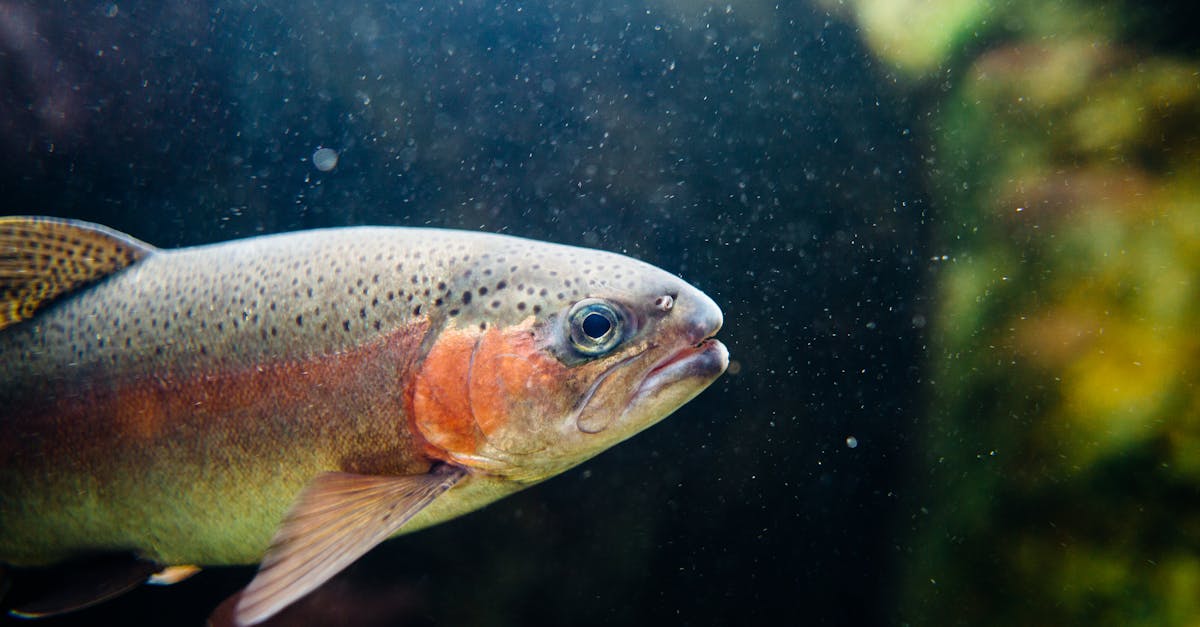
Rainbow Trout
The rainbow trout is Montana's most widespread and popular gamefish, celebrated for its explosive surface strikes, aerial acrobatics, and willingness to take a well-presented dry fly. Native to Pacific Coast drainages from Alaska to Mexico, rainbows were first introduced to Montana's waters in the late 1800s and have since established thriving populations in nearly every major river system in the state. On legendary waters like the Madison, Missouri, and Bighorn, wild rainbow trout grow fat on prolific insect hatches and provide some of the finest dry-fly fishing in North America. Rainbow trout in Montana display remarkable variation depending on their home water. Fish in nutrient-rich tailwaters like the Missouri River below Holter Dam can exceed 20 inches with regularity, their deep bodies and broad tails reflecting the abundant food supply. Freestone river rainbows, such as those in the upper Madison and Gallatin, tend to be leaner and more athletic, shaped by faster currents and colder water temperatures. In many Montana rivers, rainbows spawn in the spring from March through June, and anglers should be mindful of spawning redds during this period to protect future generations of fish. Rainbows are arguably the most versatile trout species for fly anglers. They respond well to dry flies during hatches, aggressively chase streamers, and feed heavily on nymphs subsurface throughout the year. Their fighting ability is legendary: a hooked rainbow will often launch itself completely out of the water multiple times during a battle. Montana's catch-and-release regulations on many blue-ribbon streams have produced exceptional rainbow trout fisheries with high densities of large, healthy fish that continue to draw anglers from around the world.
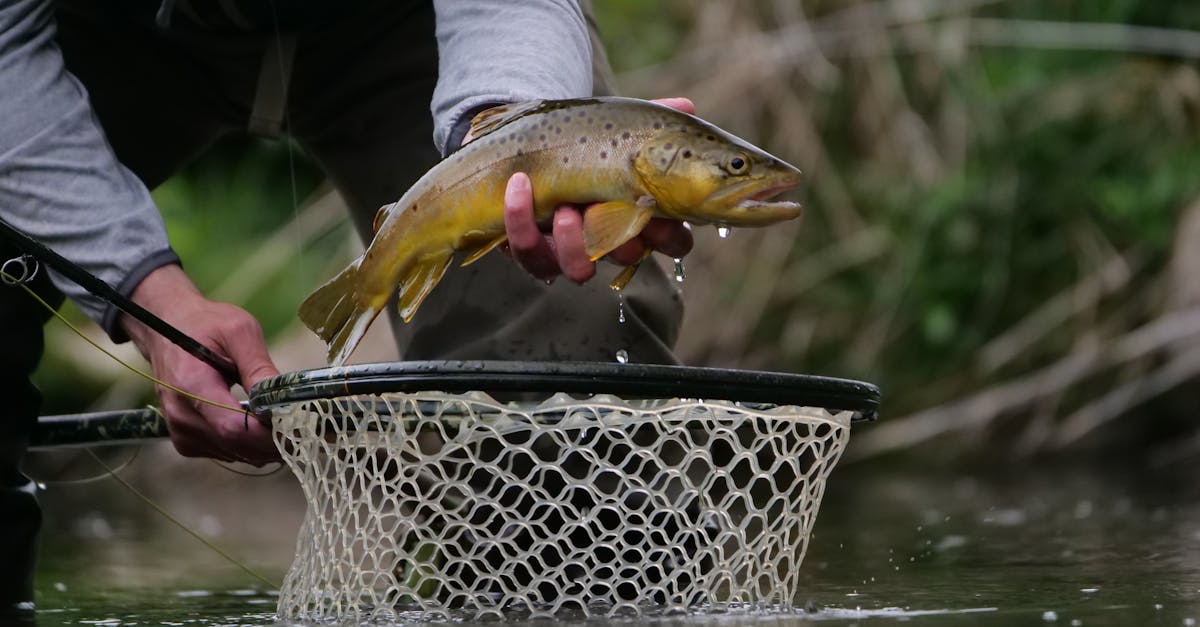
Brown Trout
The brown trout is the most cunning and elusive trout species swimming in Montana's rivers, and it rewards patient, skilled anglers with some of the state's most memorable catches. Originally native to Europe and western Asia, brown trout were first introduced to North American waters in 1883 and arrived in Montana shortly thereafter. They have since established robust, self-sustaining populations in virtually every major trout stream in the state, from the legendary spring creeks of the Paradise Valley to the sweeping runs of the lower Madison and the deep pools of the Bighorn. Brown trout grow larger than any other trout species in Montana, and fish exceeding 24 inches are caught with regularity on premium waters. The lower Madison River, the Missouri River below Holter Dam, and the Bighorn River are particularly renowned for producing trophy-class browns. Unlike rainbows, brown trout spawn in the fall (October through November), and their aggressive pre-spawn behavior creates an exciting window for streamer fishing as large males become territorial and attack anything that enters their domain. Browns are notably more nocturnal than other trout species, and many of the biggest fish are caught during low-light conditions. What sets brown trout apart from other species is their wariness and selectivity. Large browns are notoriously difficult to fool, often refusing flies that are even slightly off in size, color, or presentation. They tend to establish and defend prime feeding lies (undercut banks, logjams, deep pools, and boulder gardens), and an angler who learns to read water and identify these holding spots will consistently catch more and larger fish. This combination of difficulty, size potential, and intelligence makes the brown trout the most prized quarry for many serious Montana fly fishers.
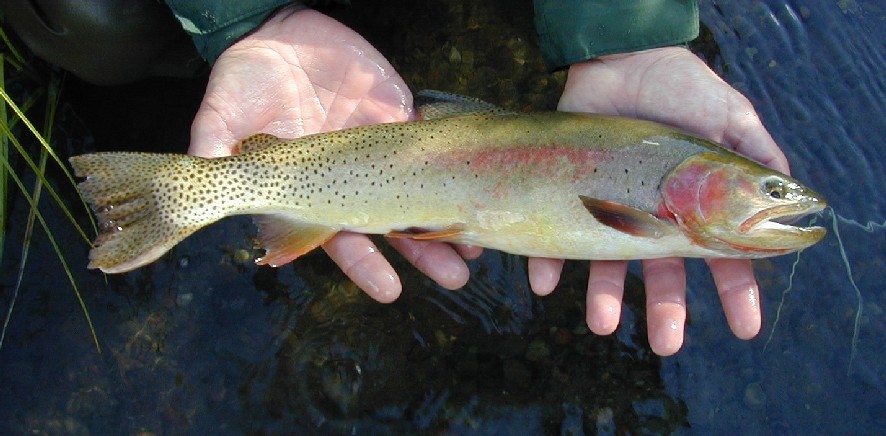
Yellowstone Cutthroat Trout
The Yellowstone cutthroat trout is Montana's most iconic native fish, a living symbol of the wild, untrammeled waters of the Greater Yellowstone Ecosystem. This subspecies of cutthroat trout evolved in the Yellowstone River drainage over thousands of years and is uniquely adapted to the cold, clear streams and rivers of south-central Montana. Named for the vivid red-orange slash marks beneath its lower jaw, the 'cut throat' that gives the entire cutthroat species complex its name, the Yellowstone cutthroat is one of the most beautiful and culturally significant fish in the American West. Yellowstone cutthroats are generally considered the most eager surface feeders among Montana's trout species, making them a favorite among dry-fly purists. They tend to be less wary than brown trout and more willing to eat a well-presented dry fly, even when no hatch is occurring. On their home waters (the Yellowstone River above Livingston, Slough Creek in Yellowstone National Park, the upper Lamar River, and numerous tributary streams throughout the Absaroka and Beartooth ranges), cutthroats will rise freely to attractor dry flies like Royal Wulffs, Stimulators, and Elk Hair Caddis, providing the kind of classic western dry-fly experience that anglers travel thousands of miles to enjoy. Despite their eagerness at the end of a fly line, Yellowstone cutthroat trout face significant conservation challenges. Habitat loss, hybridization with introduced rainbow trout, competition from non-native brook trout and lake trout, and the impacts of whirling disease have reduced their historic range by roughly 60 percent. Montana Fish, Wildlife & Parks, along with federal agencies and conservation groups, has invested heavily in cutthroat restoration projects, including barrier construction to prevent upstream migration of non-native species and targeted removal of lake trout from Yellowstone Lake. Anglers play an important role in cutthroat conservation by practicing careful catch-and-release techniques and supporting habitat protection efforts.
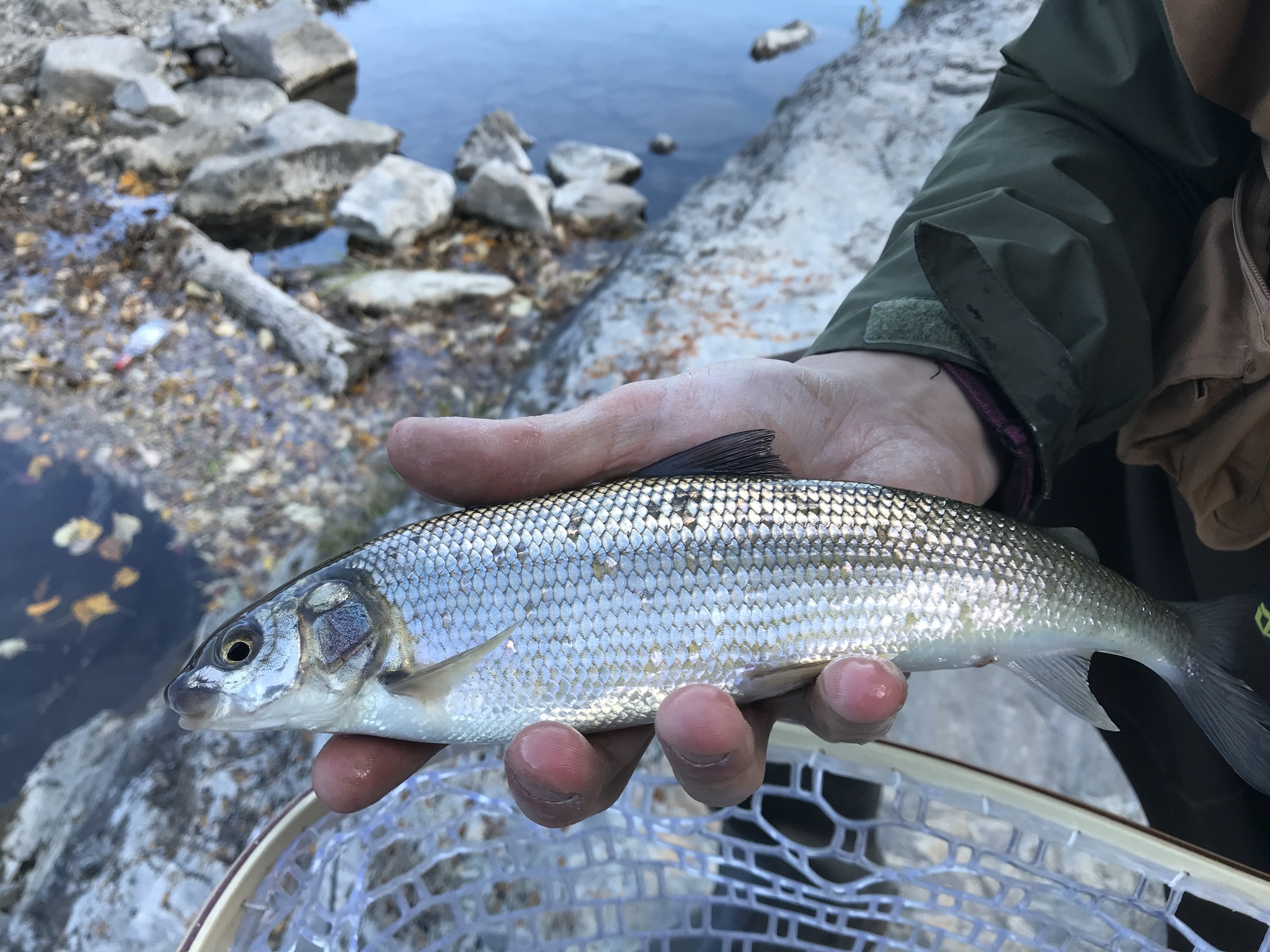
Mountain Whitefish
The mountain whitefish is one of Montana's most abundant native salmonids and arguably the most underappreciated gamefish in the state. A member of the whitefish subfamily (Coregoninae) within the broader salmonid family, mountain whitefish are present in virtually every cold-water river and large stream in Montana, often outnumbering trout by significant margins. On rivers like the Madison, Gallatin, Yellowstone, and Bitterroot, whitefish populations can exceed 1,000 fish per mile, making them the dominant salmonid species by biomass in many reaches. Despite this abundance, most fly anglers overlook whitefish entirely or view them as an unwelcome catch, which is unfortunate because they can provide outstanding sport on light tackle. Mountain whitefish are an important ecological component of Montana's river systems. They serve as a primary food source for larger brown trout, bald eagles, ospreys, otters, and other predators. Their fall spawning behavior (typically October through December) plays a critical role in nutrient cycling, and their eggs provide food for other fish and aquatic invertebrates during the lean winter months. In recent years, whitefish populations have been used as indicator species for overall river health, and declines in whitefish numbers on some Montana rivers have raised concerns about changing water conditions and disease pressure. For anglers willing to target them intentionally, mountain whitefish offer several advantages. They feed actively throughout the winter months when trout fishing can be slow, they are abundant and widely distributed, and they fight with surprising strength for their size; a 16-inch whitefish on a 3- or 4-weight rod provides a memorable tussle. Whitefish are also excellent table fare, with firm, mild-flavored white flesh that is delicious smoked or fried. Montana regulations typically allow a generous harvest limit for whitefish, recognizing their abundance and the role that harvest can play in managing populations on some waters.
Yellowstone River Hatch Chart
| Insect | Suggested Fly | Jan | Feb | Mar | Apr | May | Jun | Jul | Aug | Sep | Oct | Nov | Dec |
|---|---|---|---|---|---|---|---|---|---|---|---|---|---|
Blue-Winged Olive (Baetis) afternoon | Parachute Adams | ||||||||||||
Salmonfly (Pteronarcys) all day | Norm Wood Special | ||||||||||||
Golden Stonefly all day | Stimulator | ||||||||||||
Pale Morning Dun morning | PMD Comparadun | ||||||||||||
Caddisflies (various) evening | Elk Hair Caddis | ||||||||||||
Green Drake afternoon | Parachute Adams | ||||||||||||
Blue-Winged Olive (Baetis) afternoon | BWO Emerger | ||||||||||||
Terrestrials (hoppers, beetles) afternoon | Chubby Chernobyl |
Blue-Winged Olive (Baetis): Good spring BWO hatches throughout Paradise Valley.
Salmonfly (Pteronarcys): Early July. Later than the Madison due to elevation/snowmelt.
Golden Stonefly: Overlaps with and follows the salmonfly hatch.
Pale Morning Dun: Mid-summer PMD hatches. Size 14-16.
Caddisflies (various): Consistent evening caddis hatches.
Green Drake: Sporadic but exciting. Size 10-12. Use a large Parachute Adams.
Blue-Winged Olive (Baetis): Fall BWOs on overcast days.
Terrestrials (hoppers, beetles): Hopper fishing along grassy banks is prime.
Recommended Flies
Parachute Adams
Top PickWorks everywhere on the Yellowstone
Best in summer
Stimulator
Top PickEssential during stonefly season
Best in summer
Chubby Chernobyl
Top PickFloat fishing staple
Best in summer
Norm Wood Special
Top PickSalmonfly hatch in early July
Best in summer
Pheasant Tail Nymph
Top PickReliable all season
Best in spring
Pat's Rubber Legs
Top PickBig stonefly nymph for deep runs
Best in spring
Woolly Bugger
Top PickStreamer fishing for fall browns
Best in fall
Sex Dungeon
Top PickBig water streamer for trophy fish
Best in fall
Curated Fly Boxes
Yellowstone Summer Essential Box
SummerFrom salmonflies in the canyon to hoppers in Paradise Valley, the flies that cover the Yellowstone's diverse summer fishing.
Access Points & Boat Launches
Gardiner Town Launch
Boat LaunchEasyLaunch point at the northern boundary of Yellowstone National Park, marking the start of the famous Paradise Valley float. This site sees heavy use during summer months from both fishing and whitewater rafting outfitters. Anglers floating from here encounter some of the best cutthroat and rainbow water in the upper Yellowstone drainage.
Corwin Springs Bridge
Wade AccessModerateWade access near the USGS gauge station offering good pocket water, runs, and seams along the bridge structure. The site is a reliable spot to find rising fish during evening caddis hatches. Access from the roadside pull-off requires a short scramble down the bank, so felt-soled boots or studs are recommended on the slick rocks.
Mallard's Rest FAS
Boat LaunchEasyPopular put-in for mid-Paradise Valley floats with a developed ramp and on-site camping. The campground has vault toilets and fire rings, making it a good base for multi-day fishing trips. Mallard's Rest accesses some of the widest, most productive braided sections of the Yellowstone, with excellent hopper-dropper fishing in late summer.
Livingston City Launch
Boat LaunchEasyIn-town access point with improved facilities located within walking distance of Livingston's fly shops, restaurants, and lodging. The paved ramp handles all boat types and the site serves as a primary take-out for Paradise Valley floats. Livingston is a major hub for Yellowstone River anglers, and this launch sees consistent traffic from May through October.
Grey Owl FAS
Boat LaunchEasyMid-valley access point positioned well for shorter float sections between Gardiner and Livingston. The ramp is suitable for drift boats and rafts, and the surrounding banks offer decent wade fishing opportunities. Grey Owl is less crowded than the bookend launches and provides a quieter experience during peak season.
Regulations
Regulations
Season: Third Saturday in May through November 30 (extended catch-and-release Dec 1 through third Sat in May on some sections). Yellowstone National Park: catch-and-release only, no lead tackle, park fishing permit required (no state license needed inside park). Gardiner to Livingston: artificial flies/lures only in upper sections, 5 trout daily combined, only 1 brown over 18". Yellowstone cutthroat: catch-and-release only throughout upper river. Hoot-owl restrictions (2 PM closure) common July–August when water temps exceed 73°F. Check FWP at fwp.mt.gov for emergency closures and section-specific rules.
Always verify current regulations with Montana Fish, Wildlife & Parks before fishing.
Some links may earn a commission. Learn more
Quick Facts
- Region
- South Central Montana
- Water Type
- Freestone
- River Length
- 692 miles total (~90 miles of prime trout water from Gardiner to Livingston; ~55 miles in Yellowstone National Park)
- Difficulty
- Intermediate-Advanced
- Best Seasons
- summer, fall
- Trout Per Mile
- 1,500-3,000 (Paradise Valley section; higher densities in park meadow stretches)
- Record Trout
- 29" brown trout (Paradise Valley section; Yellowstone cutthroat to 22" documented in park waters)
- Species
- Rainbow Trout, Brown Trout, Yellowstone Cutthroat Trout, Mountain Whitefish
- USGS Gauge
- 06191500
Local Shops & Guides
Yellowstone Angler
Livingston, MT
Yellowstone Angler is Livingston's premier fly shop, strategically located to serve anglers fishing the Yellowstone River, Paradise Valley spring creeks, and the vast network of waters in and around Yellowstone National Park. The shop has earned a devoted following for its exceptionally detailed fishing reports, which are updated daily during the season and offer granular, river-by-river breakdowns of conditions, hatches, and recommended fly patterns. The shop stocks a comprehensive selection of rods, reels, lines, waders, and accessories from top brands, along with one of the most extensive fly selections in Montana. Their staff includes experienced anglers who provide honest, detailed advice based on current conditions rather than simply pushing products. Yellowstone Angler is also known for its excellent online presence, with fishing reports that draw readers from across the country. Yellowstone Angler's guide service covers the Yellowstone River, Paradise Valley spring creeks (including Armstrong's, Nelson's, and DePuy's), and various waters in Yellowstone National Park. Their guides are experienced professionals who tailor trips to the angler's skill level and interests, offering both float trips on the Yellowstone and walk-wade outings on smaller waters.
(406) 222-7130
Paradise Valley Lodge
Livingston, MT
Paradise Valley Lodge offers a comfortable fishing lodge experience in Montana's stunning Paradise Valley, with easy access to the Yellowstone River, Paradise Valley spring creeks, and Yellowstone National Park. The lodge is ideally situated along the East River Road south of Livingston, placing guests within minutes of some of the finest trout water in the American West. The lodge provides guided float trips on the Yellowstone River and walk-wade adventures on nearby spring creeks and smaller streams. Accommodations are designed with the traveling angler in mind, offering a relaxing retreat after long days on the water. The lodge's location in Paradise Valley provides spectacular views of the Absaroka Range and easy access to multiple fishing options. Whether you're floating the Yellowstone during the famous salmon fly hatch, stalking rising trout on a spring creek, or exploring backcountry streams in Yellowstone National Park, Paradise Valley Lodge serves as an ideal base of operations for a Montana fly fishing vacation.
(406) 333-4000
Murray's Fly Shop
Livingston, MT
Murray's Fly Shop has been a Livingston institution since 1981, serving generations of anglers fishing the Yellowstone River and surrounding waters. Located on West Park Street in the heart of Livingston's historic downtown, the shop is known for its friendly, no-nonsense approach to fly fishing advice and a carefully curated inventory that reflects decades of experience on local waters. The shop carries a focused selection of flies, rods, reels, leaders, tippet, and accessories chosen by anglers who know what actually works on Yellowstone-area waters. Murray's is particularly well-regarded for its fly selection, which emphasizes proven local patterns for the Yellowstone River, spring creeks, and smaller tributaries. Their book selection is also notable, featuring regional titles and classic fly fishing literature. Murray's staff embodies the old-school fly shop ethos: knowledgeable, approachable, and genuinely invested in helping anglers have good days on the water. Whether you need a specific pattern for a spring creek trip or general advice on where the fishing has been best, Murray's is a trusted resource that has stood the test of time in a town with no shortage of fly fishing expertise.
(406) 222-1673
Montana Troutfitters
Bozeman, MT
Montana Troutfitters is a premier fly fishing outfitter and fly shop based in Bozeman, Montana, offering guided trips on the region's finest trout rivers. Established as one of Bozeman's original fly shops, Troutfitters has built a reputation for professional guide service, quality gear, and genuine expertise on the Gallatin, Madison, Yellowstone, and Missouri rivers. The shop on West Main Street in Bozeman serves as both a full-service fly shop and the base of operations for their guide service. They stock a comprehensive selection of flies, rods, reels, waders, and accessories, with staff who can provide detailed, up-to-date advice on local conditions. Their fly selection is particularly strong, covering all the major hatches on nearby waters. Montana Troutfitters' guide service is the heart of the operation, offering float trips and walk-wade outings led by experienced, professional guides. Their guides hold US Coast Guard licenses where required and are skilled at working with anglers of all abilities, from first-time fly fishers to seasoned veterans looking to explore new water. The shop also offers fly fishing instruction and can customize multi-day fishing itineraries covering multiple rivers.
(406) 587-4707
Where to Stay
Livingston
A vibrant small town at the northern end of Paradise Valley. Multiple fly shops, excellent restaurants, craft breweries, and easy access to the river below.
The best base for the Yellowstone, with access to all Paradise Valley floats, plus an easy drive to the Gallatin and spring creeks. Dan Bailey's Fly Shop is a must-visit.
Paradise Valley / Emigrant
Small communities scattered along Highway 89 in the heart of Paradise Valley. Puts you right between the river and the Absaroka Range with mountain ranch atmosphere.
Guest ranches and cabins provide a classic Montana fishing lodge experience. Chico Hot Springs is a local institution worth a soak after a day on the water.
Gardiner
The north entrance to Yellowstone National Park and gateway to the upper Yellowstone. Small-town charm with river access steps away.
Best base for the upper Yellowstone floats through Yankee Jim Canyon and for park fishing. Limited options fill fast in summer, so book well ahead.