Greenback Cutthroat Trout
Oncorhynchus clarkii stomias
Overview
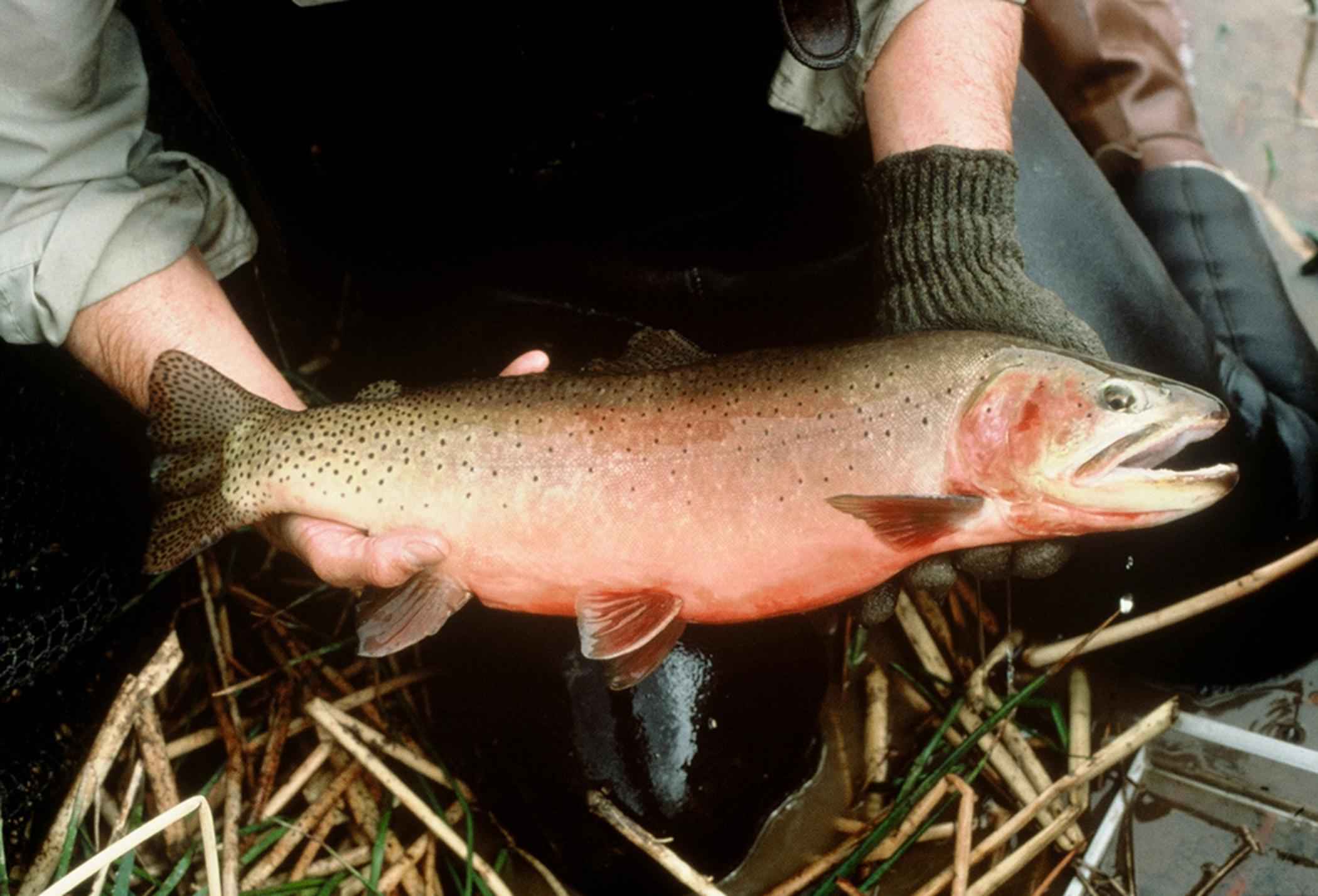
The greenback cutthroat trout is Colorado's official state fish, a living symbol of the Rocky Mountain headwaters that once teemed with native trout from the Front Range to the Continental Divide. This subspecies of cutthroat trout is endemic to the Arkansas and South Platte river drainages of eastern Colorado and a sliver of southeastern Wyoming, a relatively small native range that made it especially vulnerable to the habitat destruction, overfishing, and non-native species introductions that devastated western trout populations in the 19th and 20th centuries. By the 1930s, the greenback cutthroat was widely believed to be extinct, a casualty of the mining, logging, and hatchery-stocking era that transformed Colorado's mountain streams.
The rediscovery of remnant greenback cutthroat populations in the 1950s and 1960s sparked one of the most remarkable and complicated conservation stories in American fisheries management. Initial recovery efforts identified several populations as greenback cutthroats based on physical appearance, and fish from these populations were used to stock streams throughout Rocky Mountain National Park and the Front Range. However, a landmark genetic study in 2012 revealed that many of these previously identified 'greenback' populations were actually Colorado River cutthroats or hybrids, and that the only confirmed genetically pure greenback cutthroat population existed in a single 4-mile stretch of Bear Creek, a tributary of the Arkansas River near Colorado Springs. This discovery sent shockwaves through the conservation community and fundamentally reshaped greenback recovery efforts.
Today, the greenback cutthroat trout is one of the rarest salmonids in North America and is listed as Threatened under the Endangered Species Act. Recovery efforts centered on the Bear Creek population have expanded to include careful translocations to restored streams in the upper Arkansas River drainage and Rocky Mountain National Park, where non-native fish have been removed to create sanctuary habitats. For anglers, catching a true greenback cutthroat is an extraordinarily rare and special experience: it means fishing small, pristine mountain streams in some of the most beautiful country in Colorado and connecting with a fish that came within a hair's breadth of vanishing forever.
Identification
The greenback cutthroat trout carries the characteristic red-orange slash marks beneath the lower jaw that define all cutthroat trout, but several features distinguish it from the closely related Colorado River cutthroat and Yellowstone cutthroat subspecies. Greenback cutthroats are named for the distinctive olive-green to dark greenish coloration on the back and upper flanks, which tends to be more pronounced than in other cutthroat subspecies. The body color transitions from this dark greenback to brassy-gold or yellowish flanks, with a rosy or pink flush along the lateral line that intensifies during the spring spawning season.
The spotting pattern of greenback cutthroats is distinctive and diagnostically useful. Spots are large, round, and concentrated heavily on the posterior half of the body, particularly on and above the caudal peduncle (the area just forward of the tail). The spots become progressively sparser toward the head, and the forward third of the body may have few or no spots. This heavy posterior spotting, combined with the large individual spot size, helps distinguish greenbacks from westslope cutthroats (which have smaller, more irregular spots concentrated above the lateral line) and from Colorado River cutthroats (which often have a more even spot distribution).
In practice, field identification of greenback cutthroats is complicated by the presence of hybrid fish and other cutthroat subspecies that have been stocked in the same waters over the decades. Fish that appear to be cutthroats in historically greenback waters may actually be Colorado River cutthroats, Yellowstone cutthroats, or hybrids of multiple subspecies. Only genetic testing can definitively confirm a fish as a pure greenback cutthroat. For anglers, the most reliable approach is to consult Colorado Parks and Wildlife stream-specific information to determine whether a given stream holds confirmed greenback cutthroats, and to treat any cutthroat caught in those waters with the utmost care.
Diet
Greenback cutthroat trout feed primarily on the aquatic and terrestrial invertebrates available in the small, high-elevation mountain streams they inhabit. Their diet is dominated by aquatic insect larvae and nymphs, including small mayflies (Baetis, Epeorus), caddisfly larvae, midge larvae and pupae, and small stonefly nymphs. The headwater streams where greenback cutthroats persist are typically nutrient-poor compared to larger valley rivers, with less insect diversity and biomass. This resource limitation keeps greenback cutthroats small relative to cutthroat subspecies in more productive waters, but it also makes them relatively unselective feeders that will take a well-presented fly without the pickiness of a spring creek brown trout.
Terrestrial insects are a vital component of the greenback cutthroat's diet during the warm months. Ants, beetles, and other small insects that fall from the dense conifer and willow canopy overhanging their home streams provide an important caloric supplement to the relatively sparse aquatic insect base. On warm summer afternoons, greenback cutthroats can often be found stationed beneath overhanging branches, rising to terrestrial insects dropping from the vegetation. This behavioral pattern makes small ant and beetle imitations some of the most effective dry flies on greenback cutthroat water from July through September.
In the small mountain streams where greenback cutthroats reside, zooplankton and tiny crustaceans contribute to the diet in pools and stillwater sections where these organisms accumulate. Greenback cutthroats are not known to be piscivorous at any stage of their life, remaining committed invertebrate feeders even in the rare instances where individuals reach larger sizes. Their diet flexibility and willingness to eat a wide range of small food items is an adaptation to the resource-limited high-elevation environments that serve as their last remaining strongholds, environments where a selective feeder would struggle to meet its energy needs.
Habitat Preferences
Greenback cutthroat trout are quintessential headwater fish, restricted to small, cold, high-elevation mountain streams between 7,000 and 10,500 feet in the mountains of central Colorado. Their preferred water temperatures range from 45 to 58 degrees Fahrenheit, and they are found in streams that would strike many anglers as marginal trout water: narrow, shallow creeks tumbling through steep canyons, with plunge pools rarely deeper than three feet and stream widths of five to fifteen feet. This is precisely the type of habitat that provides refuge from non-native species: too small for brown trout, too cold for most rainbows, and often above natural barriers like waterfalls that prevent upstream colonization.
The ideal greenback cutthroat stream features clean gravel for spawning, abundant overhead cover from conifers and willows, cold groundwater inputs, and a complex channel structure with plunge pools, pocket water, and undercut banks. In Rocky Mountain National Park, the epicenter of greenback recovery efforts, streams like the upper portions of the Big Thompson drainage have been treated to remove non-native brook trout and rainbow trout, then restocked with genetically pure greenback cutthroats from the Bear Creek source population. These restored streams provide a glimpse of what Colorado's mountain waterways looked like before the era of non-native introductions.
Greenback cutthroats spawn in late spring to early summer (May through July), timing their reproduction to coincide with snowmelt recession and warming water temperatures in their high-altitude streams. They require clean, fine gravel with some groundwater upwelling for successful egg incubation. The short growing season at high elevations means that greenback cutthroats grow slowly, typically requiring four to five years to reach 8 inches, which limits their ability to recover quickly from population declines. Climate change poses a significant emerging threat, as rising temperatures may push suitable habitat to ever-higher and smaller stream reaches, further isolating and shrinking the already tiny amount of occupied habitat.
Fishing Tactics
Fishing for greenback cutthroat trout is an intimate, small-stream affair that rewards stealth, delicate presentation, and a minimalist approach. The tiny mountain streams where greenback cutthroats reside demand short rods (7 to 8 feet in 2- to 4-weight), short leaders (7.5 feet tapered to 5X), and close-quarters casting techniques. Roll casts, bow-and-arrow casts, and simple dapping presentations are often more useful than traditional overhead casts in the tight, brushy corridors of a high-country Colorado creek. Approach each pool from downstream, stay low, and avoid casting shadows over the water; greenback cutthroats in these small, clear streams are far more wary than their eagerness for dry flies might suggest.
Dry flies are the method of choice for greenback cutthroats, and simple, high-floating attractor patterns are all you need. Parachute Adams, Elk Hair Caddis, Royal Wulffs, and Yellow Stimulators in sizes 12 through 16 will cover nearly every situation on a greenback stream. During the warm summer months, small terrestrial patterns (foam beetles in size 14 to 16, cinnamon ants in size 16 to 18, and tiny hopper imitations) are exceptionally effective, especially when cast tight to overhanging banks and beneath low-hanging branches where real insects are falling into the water. A hopper-dropper rig with a small foam dry on top and a beadhead Pheasant Tail or Prince Nymph trailing 12 to 16 inches below provides the versatility to cover both surface and subsurface feeding fish.
Given the threatened status of greenback cutthroat trout, conservation-minded fishing practices are not just ethical but essential. Use barbless hooks exclusively, handle fish in the water without removing them if possible, and limit the number of fish you catch and play in a single session to avoid cumulative stress on a small, fragile population. Many anglers who fish greenback cutthroat streams adopt a self-imposed limit of a few fish per outing, releasing each fish at the point of capture and moving upstream to fresh water. Photographing a greenback cutthroat in the water, its golden flanks and crimson slashes glowing against the dark gravel of a high-mountain creek, is one of the most rewarding moments in Colorado fly fishing and a powerful reminder of why these fish are worth protecting.
Conservation
The greenback cutthroat trout is listed as Threatened under the Endangered Species Act, a status that reflects its precarious position as one of the rarest trout in North America. Following the 2012 genetic revelation that the only confirmed pure population exists in Bear Creek (a 4-mile stretch of the Arkansas River tributary near Colorado Springs), recovery efforts have been dramatically refocused. Colorado Parks and Wildlife, the U.S. Fish and Wildlife Service, and partner organizations are working to establish additional populations through careful translocation of Bear Creek fish into restored streams where non-native species have been removed. As of the mid-2020s, several new greenback populations have been established in small streams in the upper Arkansas River drainage and in Rocky Mountain National Park. Threats to greenback cutthroat recovery include the extremely limited genetic diversity of the Bear Creek source population, the risk of catastrophic events (wildfire, drought, chemical spill) eliminating the single founding population, ongoing challenges with completely removing non-native fish from restoration streams, and the long-term impacts of climate change on high-elevation stream habitat. Anglers fishing in confirmed greenback cutthroat waters should practice the most careful catch-and-release techniques possible (barbless hooks, wet hands, minimal air exposure, and rapid release), as every individual fish represents an irreplaceable piece of Colorado's native heritage. Some greenback restoration streams are closed to fishing entirely; always check current Colorado Parks and Wildlife regulations before fishing any stream in greenback cutthroat habitat.
Rivers Where Found
Quick Facts
- Scientific Name
- Oncorhynchus clarkii stomias
- Average Size
- 8-12"
- Trophy Size
- 16+"
- State Record
- 10 lbs 0 oz (cutthroat trout, Colorado); pure greenback populations are limited to small streams where fish rarely exceed 12 inches
- Found In
- South Platte River