Rio Grande Cutthroat Trout
Oncorhynchus clarkii virginalis
Overview
The Rio Grande cutthroat trout is the southernmost subspecies of cutthroat trout in North America and the only trout native to the Rio Grande basin. Found in the headwater streams of New Mexico and southern Colorado, this subspecies evolved in the mountain waters of the Sangre de Cristo, Jemez, and Sangre de Cristo ranges, where it once occupied hundreds of miles of stream habitat. Today, genetically pure Rio Grande cutthroat populations persist in approximately 120 streams, representing less than 12 percent of their historic range.
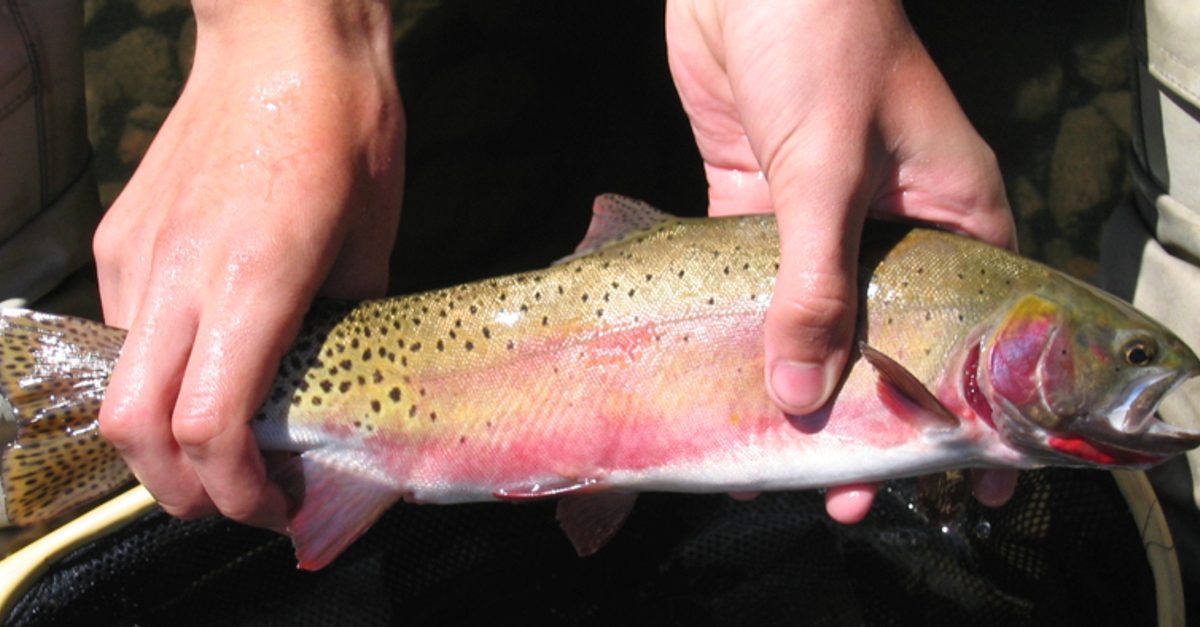
Rio Grande cutthroats are strikingly beautiful fish, with coloration that is among the most vibrant of any cutthroat subspecies. The body ranges from greenish-olive on the back to golden-bronze on the flanks, with a flush of rose or crimson along the lateral line that intensifies during spawning season. The characteristic crimson cutthroat slashes beneath the jaw are typically vivid and well-defined. Fine, irregularly shaped spots are concentrated on the upper body, particularly behind the dorsal fin, with fewer spots on the forward body.
New Mexico has made the Rio Grande cutthroat trout a conservation priority, with the Valle Vidal Unit of the Carson National Forest serving as the showcase for the state's largest native cutthroat restoration project. The Rio Costilla watershed in the Valle Vidal hosts one of the premier public fisheries for Rio Grande cutthroat trout, where anglers can target these rare native fish in stunning high-mountain meadow streams. For fly anglers who value native fish and wild places, the Rio Grande cutthroat offers an experience that is both ecologically significant and deeply rewarding.
Identification
Rio Grande cutthroat trout display the characteristic crimson slash marks beneath the lower jaw that define all cutthroat trout, and these marks are typically vivid and well-defined. The body coloration is distinctive: a greenish-olive back transitioning to golden-bronze flanks with a prominent rose or crimson flush along the lateral line. The belly is typically pale yellow to white. The overall impression is of a warmly colored, beautiful fish with a more golden hue than Yellowstone cutthroats and less greenish coloration than westslope cutthroats.
The spotting pattern helps distinguish Rio Grande cutthroats from other subspecies. Spots are fine, irregularly shaped, and concentrated on the posterior half of the body above the lateral line, with progressively fewer spots toward the head. The tail is moderately spotted but less heavily than in Yellowstone cutthroats. The pectoral, pelvic, and anal fins may display a yellowish or orange leading edge during spawning season.
In New Mexico streams where multiple cutthroat subspecies may have been stocked historically, field identification can be challenging. Fish that have been positively identified as genetically pure Rio Grande cutthroats by the state's ongoing monitoring programs are found in specific designated streams. When fishing in Rio Grande cutthroat habitat, treat all cutthroat trout as native fish and handle them with the utmost care.
Diet
Rio Grande cutthroat trout are generalist invertebrate feeders adapted to the relatively simple food webs of high-elevation southwestern mountain streams. Their primary food sources include aquatic insects: mayfly nymphs (particularly Baetis and small Ephemerella species), caddisfly larvae, midge larvae and pupae, and small stonefly nymphs. The headwater streams where these fish reside typically have lower insect diversity and biomass than larger valley rivers, which keeps fish relatively small but also makes them less selective feeders.
Terrestrial insects are a crucial dietary supplement during the warm months from July through September. Grasshoppers, ants, beetles, and other land-born insects that fall from the streamside vegetation provide an important caloric boost. On the high-meadow streams of the Valle Vidal, where the Rio Costilla winds through open grasslands, terrestrial input can be particularly significant, making hopper and ant patterns some of the most effective flies during the summer season.
Rio Grande cutthroats are enthusiastic surface feeders that strike dry flies with remarkable speed and aggression. Local guides in New Mexico describe them as among the fastest-rising trout they encounter, willing to move several feet to intercept a well-presented dry fly. This eagerness for surface food, combined with their relatively unselective nature, makes them a delight to catch on dry flies and an excellent species for anglers developing their fly-fishing skills.
Habitat Preferences
Rio Grande cutthroat trout inhabit cold, clear mountain streams at elevations between 7,000 and 12,000 feet in the mountains of New Mexico and southern Colorado. They require water temperatures below 68 degrees Fahrenheit and prefer the 48 to 58 degree range. Their habitat consists of small to medium-sized headwater streams with clean gravel substrates, intact riparian corridors, and complex channel structure including pools, riffles, pocket water, and undercut banks.
The ideal Rio Grande cutthroat stream flows through mountain meadows or dense conifer forest, with willow, alder, or spruce-fir riparian vegetation providing shade, bank stability, and terrestrial insect input. The Valle Vidal streams in northern New Mexico exemplify the classic Rio Grande cutthroat habitat: high-elevation meadow streams at 8,500 to 9,500 feet, with deep bend pools, gravel riffles, and undercut banks in a landscape of open grasslands backed by forested ridges.
Spawning occurs in late spring to early summer (May through July), timed to coincide with snowmelt recession and rising water temperatures. Rio Grande cutthroats construct redds in clean gravel with moderate current and groundwater influence. The primary threats to their habitat include hybridization with non-native rainbow and Yellowstone cutthroat trout, competition from introduced brook trout and brown trout, habitat degradation from livestock grazing and road construction, and climate change that may reduce the availability of cold-water habitat at lower elevations.
Fishing Tactics
Fishing for Rio Grande cutthroat trout is a small-stream affair that rewards stealth, accurate casting, and a minimalist approach. The meadow streams of the Valle Vidal and similar high-elevation habitats demand light tackle: an 8- to 9-foot rod in 3- or 4-weight, with a 9-foot leader tapered to 5X. The clear water and open meadow banks mean that cutthroats can see approaching anglers from a distance, so a low profile and careful approach are essential. Fish each pool from downstream, staying well back from the bank.
Dry flies are the method of choice, and Rio Grande cutthroats are among the most enthusiastic surface feeders in the cutthroat family. Elk Hair Caddis, Parachute Adams, and Yellow Stimulators in sizes 14 to 16 are reliable patterns throughout the season. During the peak hopper season from mid-July through September, small foam hopper patterns fished tight to the banks produce explosive strikes. A hopper-dropper rig with a small foam attractor on top and a beadhead nymph trailing 12 to 16 inches below is the most versatile all-around setup.
Trico hatches on the Valle Vidal streams in late July and August provide technical dry fly fishing for those who enjoy matching small insects. The combination of tiny Trico spinners and eager cutthroat risers creates a perfect opportunity for sight-fishing with size 20 to 22 patterns. Whether fishing during a hatch or prospecting with attractor dries, every Rio Grande cutthroat caught and carefully released represents a connection to the deep native trout heritage of the American Southwest.
Conservation
The Rio Grande cutthroat trout is a Species of Special Concern in New Mexico and Colorado and has been considered for listing under the Endangered Species Act, though it has not been listed as of the mid-2020s. The subspecies occupies less than 12 percent of its historic range, with genetically pure populations persisting in approximately 120 streams across New Mexico and southern Colorado. The primary threats are hybridization with non-native trout, competition from introduced species, and habitat degradation. The most significant conservation effort for Rio Grande cutthroats is the Rio Costilla watershed project in the Valle Vidal Unit of the Carson National Forest. This landmark project restored Rio Grande cutthroats to approximately 120 miles of stream, 15 lakes, and a 300-acre reservoir by removing non-native trout and constructing fish barriers. The scale and success of the Rio Costilla restoration make it one of the largest native trout recovery projects in U.S. history and a model for similar efforts elsewhere. Anglers fishing for Rio Grande cutthroat trout should practice careful catch-and-release with barbless hooks, wet hands, minimal handling, and rapid release. The Valle Vidal opens to fishing on July 1 each year, with the closure protecting the cutthroat spawn and elk calving earlier in the season. Supporting conservation organizations working on Rio Grande cutthroat recovery, such as Trout Unlimited and the New Mexico Wildlife Federation, helps ensure the long-term survival of this unique southwestern native trout.
Rivers Where Found
Quick Facts
- Scientific Name
- Oncorhynchus clarkii virginalis
- Average Size
- 8-12"
- Trophy Size
- 16+"
- State Record
- Limited to small stream populations; fish rarely exceed 14 inches. No separate state record category exists in most states.
- Found In
- Pecos River