Lahontan Cutthroat Trout
Oncorhynchus clarkii henshawi
Overview
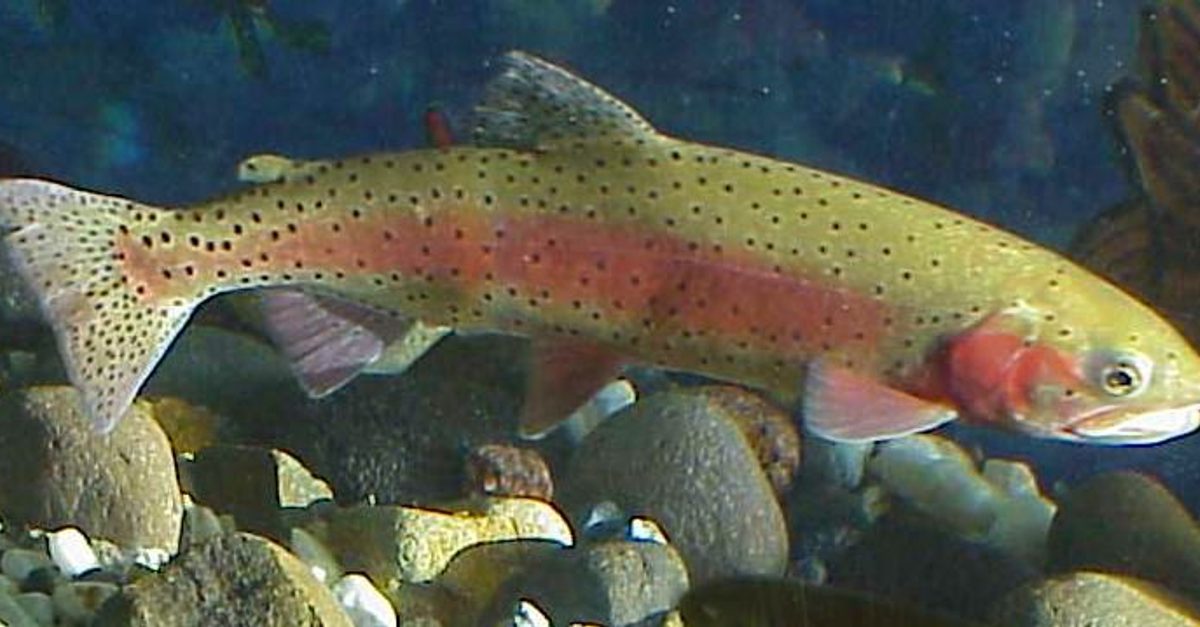
The Lahontan cutthroat trout is the largest subspecies of cutthroat trout in the world and the only trout native to the hydrographic Great Basin of Nevada, California, and Oregon. Named for the ancient Lake Lahontan that once covered much of northern Nevada during the Pleistocene, this remarkable fish evolved to thrive in the alkaline, desert-lake environments of the Great Basin, a trait that sets it apart from all other cutthroat subspecies. Lahontan cutthroats historically reached enormous sizes in the terminal lakes of the region: the 41-pound fish taken from Pyramid Lake in 1925 remains one of the largest cutthroat trout ever documented.
The modern story of the Lahontan cutthroat is one of dramatic decline and ongoing recovery. Dam construction, water diversions, overfishing, and the introduction of non-native trout devastated Lahontan cutthroat populations throughout the 20th century, and the subspecies was listed as Threatened under the Endangered Species Act in 1975. The most famous population, at Pyramid Lake on the Pyramid Lake Paiute Reservation in Nevada, was extirpated entirely by the 1940s when Truckee River diversions destroyed the spawning habitat. The fish that swim in Pyramid Lake today descend from the Pilot Peak strain, a remnant population discovered in a tiny creek on the Nevada-Utah border, which was used to restock the lake beginning in 2006.
For fly anglers, the Lahontan cutthroat represents one of the most exciting trophy trout opportunities in the American West. Pyramid Lake has become a world-class destination fishery, producing cutthroats that routinely exceed 20 inches and 5 pounds, with fish over 10 pounds caught regularly and specimens exceeding 20 pounds taken each season. The Truckee River system in California and Nevada also supports Lahontan cutthroat populations, and restoration efforts continue to expand the subspecies' range. Catching a Lahontan cutthroat connects an angler to the deep geological and cultural history of the Great Basin.
Identification
Lahontan cutthroat trout are distinguished from other cutthroat subspecies by their large size potential, their relatively sparse spotting pattern, and their adaptation to alkaline lake environments. Like all cutthroats, they display the characteristic red-orange slash marks beneath the lower jaw, though these can be subtle on chrome-bright lake fish fresh from Pyramid Lake. The body coloration of lake-dwelling fish is typically bright silver with an olive-green to steel-blue back, closely resembling a steelhead or large rainbow trout. As fish spend time in streams or approach spawning condition, they develop warmer tones of gold, copper, and rose.
The spotting pattern on Lahontan cutthroats is distinctive: spots are large, round, and concentrated on the posterior half of the body above the lateral line, becoming sparser toward the head. The spots are generally larger and more widely spaced than on Yellowstone or westslope cutthroats, giving the fish a cleaner appearance. Fish from different populations can show considerable variation in spotting density and body coloration, reflecting the genetic diversity among remnant populations.
Separating Lahontan cutthroats from rainbow trout, with which they commonly coexist in the Truckee River system, requires checking for the jaw slashes (absent in pure rainbows) and noting the spot pattern (rainbows typically have smaller, more numerous spots extending onto the head and below the lateral line). Hybrid fish between the two species can display intermediate characteristics, making definitive field identification challenging in mixed populations.
Diet
Lahontan cutthroat trout are opportunistic predators whose diet shifts dramatically based on their environment. In stream habitats, juveniles and small resident fish feed primarily on aquatic insects including mayfly nymphs, caddisfly larvae, stonefly nymphs, and midges, supplemented by terrestrial insects that fall into the water. This insect-based diet is similar to that of other cutthroat subspecies and makes stream-dwelling Lahontan cutthroats responsive to standard trout flies.
In lake environments, particularly the large terminal lakes where Lahontan cutthroats reach their greatest sizes, the diet shifts dramatically toward fish. In Pyramid Lake, the primary forage species is the tui chub, a native cyprinid that occurs in enormous numbers. Lahontan cutthroats in Pyramid Lake become almost exclusively piscivorous by the time they reach 16-18 inches, feeding on tui chubs and other small fish to fuel the rapid growth that produces trophy-class specimens. This predatory feeding behavior is why streamer and minnow patterns are so effective at Pyramid Lake.
The unique alkaline chemistry of Great Basin lakes also supports abundant populations of chironomid midges and brine shrimp-like organisms that provide supplemental food sources. At Pyramid Lake, massive chironomid hatches occur in spring, and cutthroats will gorge on emerging midges near the surface, creating opportunities for indicator fishing with chironomid pupa patterns. The combination of abundant forage fish and rich invertebrate populations in these alkaline lake systems is what allows Lahontan cutthroats to achieve sizes that dwarf their stream-dwelling counterparts.
Habitat Preferences
Lahontan cutthroat trout are uniquely adapted among salmonids to tolerate the warm, alkaline conditions found in Great Basin lakes and streams. They can survive water temperatures up to 72 degrees Fahrenheit and pH levels exceeding 9.4, tolerances that far exceed those of most other trout species. This physiological resilience allowed them to thrive in the terminal desert lakes of the Great Basin, environments that would be lethal to other salmonids. However, they still require cold, well-oxygenated tributary streams with clean gravel substrates for spawning.
Historically, Lahontan cutthroats occupied an enormous range encompassing the Truckee, Carson, Walker, Humboldt, and Quinn river systems in Nevada, the Susan River and Eagle Lake systems in California, and scattered populations in Oregon. Their life history in lake systems involves spending most of the year in the productive lake environment, feeding and growing, then migrating up tributary streams in spring to spawn. This lake-tributary migratory pattern means that connected, unobstructed waterways between lakes and spawning streams are essential for maintaining self-sustaining populations.
Today, genetically pure Lahontan cutthroat populations persist in a handful of isolated streams and lakes across their historic range. The most significant population is in Pyramid Lake, where the Pilot Peak strain has been successfully reestablished. Summit Lake, also on a Paiute reservation in northern Nevada, holds a unique strain of Lahontan cutthroat that has adapted to spawn in the lake itself rather than in tributary streams. Restoration efforts continue to expand the subspecies' range through careful translocations and habitat improvements.
Fishing Tactics
Fishing for Lahontan cutthroat trout varies dramatically between lake and stream environments. At Pyramid Lake, the signature technique is ladder fishing: standing on a stepladder placed in the shallow shoreline water to gain casting distance and better line management. Anglers fish indicator rigs with chironomid pupa patterns and balanced leeches suspended at depth, or strip streamers and specialty patterns like Popcorn Beetles on sinking lines. The best fishing at Pyramid runs from October through June, with peak action from November through April when fish cruise the shallows.
In the Truckee River system, Lahontan cutthroats are targeted with standard trout techniques: nymphing with mayfly and stonefly patterns, dry fly fishing during hatches, and streamer fishing in deeper runs and pools. The fish respond well to the same flies and presentations used for rainbow and brown trout, though they tend to be less wary than their stream-bred brown trout neighbors. Bead-head nymphs, Woolly Buggers, and attractor dry flies are all productive on the Truckee.
Regardless of the fishing environment, Lahontan cutthroats should be handled with care given their threatened status. Many waters have specific regulations regarding catch-and-release requirements, barbless hooks, and seasonal closures to protect spawning fish. At Pyramid Lake, a tribal permit is required, and specific regulations govern tackle, seasons, and harvest limits. Anglers targeting Lahontan cutthroats become advocates for the subspecies' recovery, understanding that every fish caught and released contributes to the long-term success of one of the West's most remarkable conservation stories.
Conservation
The Lahontan cutthroat trout is listed as Threatened under the Endangered Species Act, a designation it has held since 1975. The subspecies occupies less than 10 percent of its historic range, with the primary threats being habitat loss from water diversions, competition and hybridization with non-native trout species, and the legacy effects of overfishing that eliminated many populations in the early 20th century. Climate change poses an emerging threat, as rising temperatures may reduce the suitability of already marginal stream habitats. The recovery story of the Lahontan cutthroat at Pyramid Lake is one of the great conservation successes in western fisheries management. The rediscovery of the Pilot Peak strain in a remote creek on the Nevada-Utah border, and its successful reintroduction to Pyramid Lake, has produced a thriving trophy fishery that generates significant economic benefits for the Pyramid Lake Paiute Tribe and the surrounding region. Anglers fishing Pyramid Lake contribute directly to conservation through tribal permit fees, which fund ongoing management and habitat restoration. The Truckee River system has also seen significant investment in habitat restoration, including the construction of fish passage facilities and the restoration of spawning habitat, to support Lahontan cutthroat recovery.
Rivers Where Found
Truckee River
Eastern Sierra / Nevada and Placer Counties
Truckee River
Western Nevada / Washoe County
Pyramid Lake
Western Nevada / Pyramid Lake Paiute Reservation
East Fork Carson River
Western Nevada / Douglas County
Ruby Mountains / Lamoille Creek
Northern Nevada / Elko County / Ruby Mountains
Great Basin NP Streams
Eastern Nevada / White Pine County / Great Basin National Park
Quick Facts
- Scientific Name
- Oncorhynchus clarkii henshawi
- Average Size
- 16-20"
- Trophy Size
- 24+"
- State Record
- 41 lbs, caught in Pyramid Lake, Nevada in 1925 by a Paiute fisherman; modern fly-caught records include fish over 25 lbs from Pyramid Lake
- Found In
- Truckee River, Truckee River, Pyramid Lake, East Fork Carson River, Ruby Mountains / Lamoille Creek, Great Basin NP Streams