Snake River Fine-Spotted Cutthroat Trout
Oncorhynchus clarkii behnkei
Overview
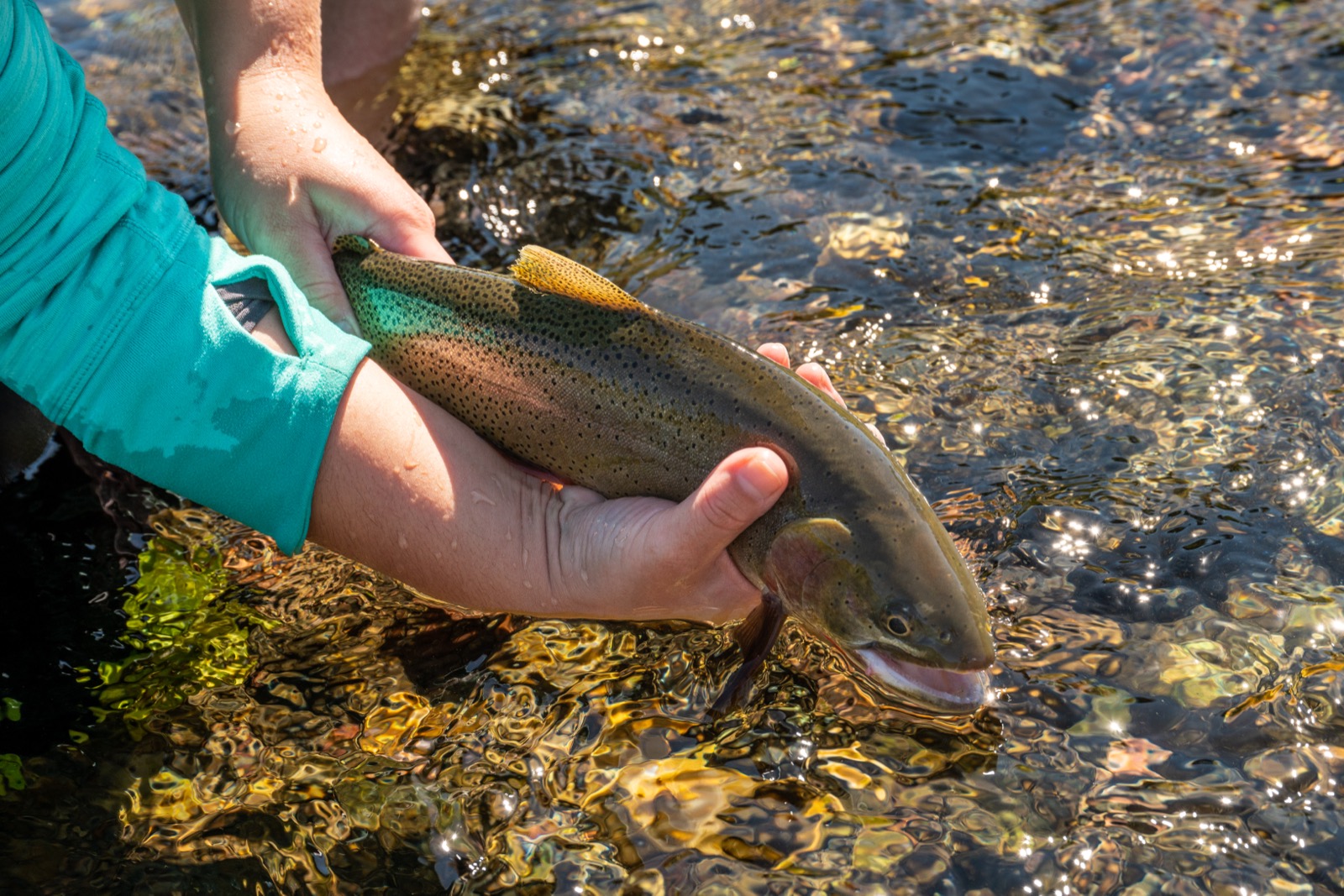
The Snake River fine-spotted cutthroat trout is the signature native fish of western Wyoming and one of the most visually striking and eagerly sought trout subspecies in the American West. Named for the profusion of tiny, pepper-like spots that cover virtually the entire body, a spotting pattern denser and finer than any other cutthroat subspecies, this fish is endemic to the Snake River drainage of northwestern Wyoming and adjacent portions of eastern Idaho. The heart of its range is the legendary Snake River itself, flowing through Jackson Hole beneath the towering rampart of the Teton Range, in a landscape so dramatic that it serves as the backdrop for some of the most iconic fly-fishing imagery ever captured.
Snake River fine-spotted cutthroats are among the most aggressive dry-fly feeders in the cutthroat family, a trait that has made them the centerpiece of the Jackson Hole and Snake River fly-fishing experience. During the prolific hatches of the Snake River (Pale Morning Duns, Green Drakes, Flavs, Gray Drakes, Yellow Sallies, and enormous salmonfly and golden stonefly emergences), fine-spotted cutthroats feed with an abandon that delights anglers and guides alike. A typical day of float fishing the Snake River during the early-summer hatch season can produce dozens of fish brought to hand on dry flies, with the best fish pushing 18 to 20 inches and fighting with the current-fueled power that river cutthroats are known for.
Despite healthy populations in the mainstem Snake River and many of its tributaries, fine-spotted cutthroats face ongoing management challenges. Hybridization with Yellowstone cutthroats (which were historically stocked in some Snake River tributaries) and with non-native rainbow trout threatens the genetic purity of fine-spotted populations. Additionally, the fine-spotted cutthroat's range is relatively small compared to more widespread subspecies, concentrating the population in a limited geographic area. Wyoming Game and Fish Department, along with federal land managers, actively monitors fine-spotted cutthroat populations, manages for native fish in key tributaries, and maintains regulations designed to protect this iconic subspecies for future generations of anglers.
Identification
The fine-spotted cutthroat trout is immediately recognizable by its namesake feature: an extraordinarily dense pattern of tiny, pinpoint-sized black spots that profusely cover the entire body from head to tail. The spots are smaller than those of any other cutthroat subspecies, often described as looking like a fine sprinkling of black pepper across the fish's flanks. This dense spotting extends well below the lateral line and onto the head and forward body, in sharp contrast to Yellowstone cutthroats, whose larger, rounder spots are concentrated on the posterior half of the body. The sheer number and fineness of the spots is the single most diagnostic feature and is visible even at a distance or through the water's surface.
Like all cutthroat trout, fine-spotted cutthroats display the characteristic red-orange slash marks beneath the lower jaw, which are typically vivid and well-defined. The body coloration features an olive to golden-green back, brassy or coppery flanks, and a white to yellowish belly. During the spring spawning season, males develop intensified coloration with deeper golds, more vivid slashes, and a faint pinkish flush along the lateral line. The overall body shape is streamlined and well-proportioned, with fish from the mainstem Snake River displaying the deep body and broad tail of a current-adapted trout.
Distinguishing fine-spotted cutthroats from Yellowstone cutthroats is the most common identification challenge, as both subspecies occur in the greater Snake River and Yellowstone drainages and can coexist in some waters. The key differences are spot size (fine-spotted has much smaller, more numerous spots), spot distribution (fine-spotted has spots distributed across the entire body including below the lateral line, while Yellowstone spots concentrate posteriorly), and overall spotting density (fine-spotted fish appear peppered, while Yellowstone fish appear spotted). In waters where hybridization between the two subspecies has occurred, intermediate fish may appear, displaying spot sizes and distributions that fall between the two parent forms. Separating fine-spotted cutthroats from rainbow trout is straightforward: look for the jaw slashes and the absence of the bright lateral stripe that characterizes rainbows.
Diet
Snake River fine-spotted cutthroat trout are voracious and opportunistic feeders, taking full advantage of the Snake River's extraordinary insect productivity. The Snake River and its tributaries support some of the most prolific hatches in the Rocky Mountain West, and fine-spotted cutthroats key in on the full spectrum of aquatic insects. Mayflies form the backbone of their diet during the warm months, including heavy hatches of Pale Morning Duns (Ephemerella), Green Drakes (Drunella grandis), Flavs (Drunella flavilinea), Gray Drakes (Siphlonurus), Blue-Winged Olives (Baetis), and Mahogany Duns. Caddisflies are equally important, with multiple species hatching from May through September, and the Snake River's famous salmonfly (Pteronarcys californica) and golden stonefly (Hesperoperla pacifica) hatches in late June and July trigger some of the most explosive surface feeding of the year.
Fine-spotted cutthroats are enthusiastic surface feeders that will rise aggressively to dry flies throughout the day during active hatches, and they are notably less selective than brown trout when insects are on the water. This eagerness for the dry fly is what makes them such a beloved species among fly anglers; on a good hatch day on the Snake River, fish that would be considered wary on a heavily pressured tailwater will eat a well-drifted Parachute Adams or Sparkle Dun without hesitation. Between hatches, cutthroats feed subsurface on nymphs and emergers, and they are responsive to a wide range of nymph patterns drifted along the bottom.
Terrestrial insects become an increasingly important dietary component from mid-July through September, as grasshoppers, crickets, beetles, and ants become abundant along the Snake River's grassy banks and sagebrush flats. The hopper season on the Snake River is legendary, with cutthroats slashing at large foam hopper patterns with reckless aggression. Larger fine-spotted cutthroats (fish over 16 inches) will occasionally prey on sculpin and small fish, but unlike brown trout, they remain primarily insect-focused feeders throughout their lives. This reliance on insect prey means that the health of fine-spotted cutthroat populations is directly tied to the health of the river's macroinvertebrate community.
Habitat Preferences
The Snake River fine-spotted cutthroat trout is fundamentally a river fish, most abundant in the mainstem Snake River from its headwaters in Yellowstone National Park downstream through Jackson Hole to the Palisades Reservoir, and in major tributaries like the Gros Ventre River, Hoback River, Salt River, and Greys River. Within the Snake River, fine-spotted cutthroats occupy the full range of river habitats: braided gravel channels, deep runs along cottonwood-lined banks, riffle-pool sequences, and the complex side-channel and back-eddy environments created by the Snake River's dynamic, ever-shifting character. Water temperatures in prime fine-spotted cutthroat habitat range from 45 to 62 degrees Fahrenheit, with the coldest temperatures found in the upper reaches and spring-fed tributaries.
The Snake River through Jackson Hole is a large, powerful river by cutthroat trout standards, a freestone system fed by snowmelt from the Tetons and the Gros Ventre Range that maintains strong flows and cold temperatures throughout the summer. Fine-spotted cutthroats in this environment grow larger and more robust than cutthroats in the smaller headwater streams typical of other subspecies' ranges. The river's braided channel structure, with its network of gravel bars, side channels, and log-jam complexes, provides abundant spawning habitat, juvenile rearing areas, and adult holding water in close proximity, supporting a dense and productive cutthroat population.
Spawning occurs in spring, primarily from April through June, with fine-spotted cutthroats ascending tributary streams to deposit eggs in clean gravel runs with appropriate water velocity and depth. Many of the Snake River's side channels and smaller tributaries serve as critical spawning and nursery habitat, and the health of these smaller waterways is essential to maintaining the mainstem cutthroat population. Fine-spotted cutthroats are also found in several high-mountain lakes in the Snake River drainage, where they occupy different ecological niches, feeding on zooplankton and midges in stillwater environments rather than the drift-oriented feeding style of river fish. Protection of connected habitat, from headwater spawning tributaries to mainstem adult holding water, is the cornerstone of fine-spotted cutthroat conservation.
Fishing Tactics
Dry-fly fishing on the Snake River during the hatch season is the quintessential method for catching fine-spotted cutthroats and one of the defining fly-fishing experiences of the American West. The Snake River's prolific hatches (salmonflies and golden stones in late June and early July, followed by PMDs, Green Drakes, Flavs, and caddis through August) produce extended periods of aggressive surface feeding that can last for hours. Match the hatch with appropriate patterns: Chubby Chernobyls and Stimulators during stonefly hatches, Sparkle Duns and Parachute patterns during mayfly emergences, and Elk Hair Caddis and X-Caddis during evening caddis activity. Standard tackle is a 9-foot rod in 5- or 6-weight (the Snake River is big water that demands longer casts and the ability to handle wind), with leaders of 9 to 12 feet tapered to 4X or 5X.
Float fishing the Snake River is the most popular and productive way to cover the miles of braided, channel-shifting water that hold fine-spotted cutthroats. Guided drift boat or raft trips allow anglers to systematically work the bankside seams, side-channel entrances, logjam edges, and gravel-bar drop-offs where cutthroats concentrate. From the boat, casting tight to structure with a hopper-dropper rig (a foam Chubby Chernobyl or Fat Albert on top with a beadhead nymph trailing 18 to 24 inches below) is the standard and most productive approach during the late-summer hopper season from mid-July through September. The Snake River's aggressive cutthroats will often blast the dry fly off the surface, making hopper fishing a heart-pounding affair.
Wade fishing on the Snake River and its tributaries offers a more intimate experience with fine-spotted cutthroats. The Gros Ventre River, Hoback River, Salt River, and Greys River all provide excellent wade-fishing opportunities with lower angling pressure than the mainstem Snake. In these tributary waters, fine-spotted cutthroats respond to the same small-stream tactics effective for other cutthroat subspecies: short, accurate casts with attractor dry flies, careful upstream approaches, and terrestrial patterns along grassy banks. Nymph fishing with a two-fly rig under an indicator is effective year-round in both the mainstem Snake and its tributaries, with stonefly nymphs (Pat's Rubber Legs, Girdle Bugs), Pheasant Tails, and Lightning Bugs in sizes 8 through 16 covering most situations. Whether floating the mainstem or wading a tributary, always handle fine-spotted cutthroats carefully and release them promptly to ensure the continued health of Wyoming's most iconic native trout.
Conservation
The Snake River fine-spotted cutthroat trout is not currently listed under the Endangered Species Act, but it is classified as a Species of Special Concern by the Wyoming Game and Fish Department and is the focus of active management and monitoring programs. The subspecies' relatively limited geographic range (essentially the Snake River drainage of northwestern Wyoming and adjacent Idaho) concentrates the entire population in a small area, making it potentially vulnerable to catastrophic events or widespread habitat changes. Primary management concerns include hybridization with non-native rainbow trout and previously stocked Yellowstone cutthroats, potential impacts from climate change on water temperatures and flow regimes, and maintaining adequate population connectivity between the mainstem Snake River and tributary spawning streams. Wyoming Game and Fish Department manages fine-spotted cutthroat waters with regulations designed to protect native fish, including slot limits and reduced bag limits on many waters in the Snake River drainage. Tributary streams are managed to favor native cutthroats, with non-native trout removed where feasible. The health of the mainstem Snake River population is closely monitored through annual electrofishing surveys and creel census data. Anglers on the Snake River and its tributaries are encouraged to practice voluntary catch-and-release for all cutthroat trout, use barbless hooks, and handle fish gently to maximize post-release survival. The strong, self-sustaining population in the mainstem Snake River through Jackson Hole represents one of the most successful native cutthroat trout fisheries remaining in the Rocky Mountain West.
Rivers Where Found
Quick Facts
- Scientific Name
- Oncorhynchus clarkii behnkei
- Average Size
- 12-16"
- Trophy Size
- 20+"
- State Record
- Included under Wyoming's cutthroat trout record of 15 lbs 0 oz, 32 inches, caught at Native Lake by Alan Dow in 1959; typical Snake River fish reach 4-6 lbs
- Found In
- Snake River, Green River, South Fork Snake River