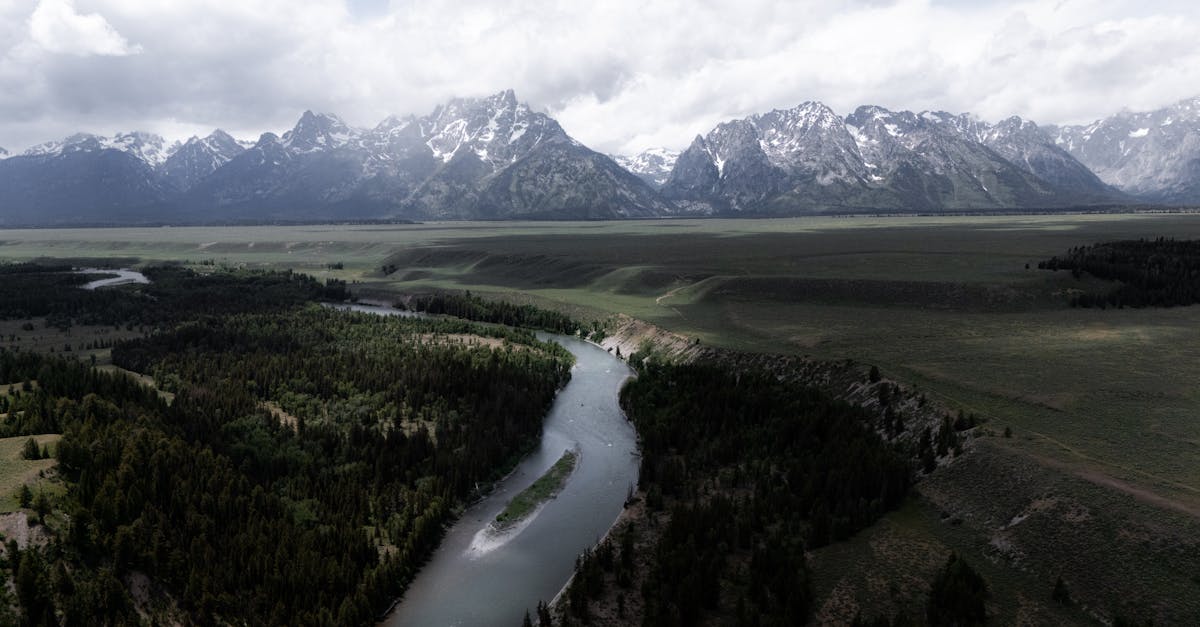
Snake River
The Snake River through Jackson Hole is one of the most scenic fly fishing destinations in America, flowing beneath the towering Teton Range through Grand Teton National Park. Home to the native Snake River fine-spotted cutthroat trout, this braided mountain river offers outstanding dry-fly fishing in a wilderness setting that defines the spirit of Western fly fishing.
Snake River Fishing Report & Current Conditions
The Snake River is a freestone (dam-influenced in upper section) fishery, and it fishes best in summer and fall. Live USGS streamflow readings update throughout the day, while the monthly median flows below map the river's typical discharge across the year. Together they show current fishability and how today's water compares to the seasonal norm.
Current Conditions
Typical Monthly Flows
Historical median discharge (CFS) by month: Snake River
Overview
The Snake River in Wyoming is a river of superlatives, framed by the most dramatic mountain scenery in the lower 48 states, home to a genetically unique native cutthroat trout, and offering a fly fishing experience that has drawn anglers to Jackson Hole for over a century. From its headwaters near the south entrance of Yellowstone National Park through Jackson Lake and the braided channels of the Jackson Hole valley, the Snake is an iconic Western trout stream.
The prime fly fishing water begins where the Snake exits Jackson Lake Dam and flows south through Grand Teton National Park. Here the river braids into a complex network of channels, side streams, and gravel bars backed by the spectacular Teton Range. The native Snake River fine-spotted cutthroat trout, a genetically distinct subspecies found nowhere else on earth, is the star of the show. These beautiful fish, marked by a dense pattern of small black spots, are eager dry-fly eaters that will rise aggressively to well-presented flies.
The most popular float fishing section runs from Deadman's Bar to Moose Landing in Grand Teton National Park, a 10-mile float through braided channels with the Cathedral Group of the Tetons as a backdrop. Below the park, the river continues through the town of Wilson and south toward the Snake River Canyon, offering additional float and wade fishing opportunities. The Wilson to South Park section is a local favorite, with a longer, mellower float through cottonwood bottoms that sees the largest congregation of bald eagles in Wyoming.
Below South Park, the Snake enters the dramatic Snake River Canyon, a steep-walled gorge with powerful Class III whitewater that is primarily a rafting and kayaking destination, though determined anglers can find productive pockets between rapids. The canyon holds brown trout and mountain whitefish in addition to cutthroat.
Jackson Hole's world-class resort infrastructure means anglers have access to exceptional lodging, dining, and fly shop services. However, the fishing itself maintains a wild, backcountry character that is increasingly rare in the American West. Protected within Grand Teton National Park and the Bridger-Teton National Forest, the Snake River corridor is a conservation success story where native cutthroat trout still thrive in their ancestral waters.
Water Characteristics
The Snake River in the Jackson Hole valley is a high-gradient mountain river fed by snowmelt from the Teton Range, the Yellowstone Plateau, and the Gros Ventre and Wind River ranges. Jackson Lake Dam at the head of the valley moderates flows somewhat, but the river retains its wild, freestone character with significant seasonal variability. Peak runoff typically occurs in late May through late June, pushing flows above 15,000 cfs with heavy sediment loads. By mid-July, flows usually stabilize between 2,000 and 4,000 cfs, dropping to 800 to 1,500 cfs by late September.
The riverbed substrate is coarse: large cobble, gravel, and boulders typical of a steep mountain river. This substrate supports strong populations of stoneflies, caddisflies, and mayflies, though insect densities are lower than tailwater fisheries like the Grey Reef. The Snake's aquatic productivity comes from its cold, well-oxygenated water and extensive spawning habitat in the braided gravel channels. Water temperatures during the fishing season typically range from 48 to 58 degrees Fahrenheit, ideal for cutthroat trout.
The braided channel morphology is a defining characteristic. The Snake splits into multiple channels around gravel bars and islands, creating a complex habitat mosaic of riffles, runs, pools, and backwater eddies. This braiding provides abundant edge habitat where cutthroat trout hold and feed. The channels shift from year to year as spring floods rearrange gravel bars, creating a dynamic landscape that requires anglers to relearn the river each season. Clarity is excellent from mid-July through October, typically 4 to 8 feet of visibility.
Wading & Float Guide
The Snake River through Jackson Hole is primarily a float fishing river, but productive wading opportunities exist at access points and along the braided side channels. The main channel is generally too deep and swift for safe wading, particularly during and after spring runoff. However, the river's braided character creates numerous side channels, gravel bars, and shallow riffles that are ideal for wading anglers. These side channels often hold concentrations of cutthroat trout that see less pressure than fish along the main drift boat runs.
The riverbed is composed of clean gravel and cobble with occasional larger boulders, typical of a mountain freestone river. Footing is generally stable but uneven, and the smooth rounded rocks can be slippery. Rubber-soled boots with studs are required in Grand Teton National Park (felt-soled boots are prohibited to prevent the spread of aquatic invasive species). A wading staff is recommended, particularly when crossing channels.
Wading access is available at Deadman's Bar, Schwabacher's Landing, Moose Landing, and the Wilson Bridge. At each of these points, anglers can walk the gravel bars and fish the edges of braided channels. The best wading occurs from mid-July through September when flows stabilize at 1,000 to 3,000 cfs. During spring runoff (late May through early July), the river runs high, fast, and silty, making wading dangerous and fishing generally unproductive.
Jackson Lake Dam to Pacific Creek
The uppermost float below Jackson Lake Dam. Cold, clear water with excellent cutthroat trout populations. The river begins to braid below the dam, requiring good oarsmanship to read the channels. Spectacular views of Mt. Moran. This section opens later in the season and fishes best from mid-July through September.
Deadman's Bar to Moose Landing
The signature Snake River float, the most popular and productive section for fly fishing. Braided channels weave through cottonwood groves with the Cathedral Group of the Tetons providing an unforgettable backdrop. Excellent dry-fly fishing for native cutthroat. Technical rowing through braided channels with sweepers and logjams. Experienced guide recommended.
Moose Landing to Wilson Bridge
Below the park, the river continues through private ranchland and national forest. Less boat traffic than the upper sections. Brown trout become more prevalent alongside cutthroat. Good hopper-dropper water in late summer. Watch for sweepers and log jams in the braided channels.
Wilson Bridge to South Park
A longer, mellower float popular with locals. The river consolidates into fewer channels with easier rowing. Home to the largest congregation of bald eagles in Wyoming. Good mix of cutthroat, brown trout, and whitefish. Excellent fall fishing with less pressure than the park sections.
Snake River Canyon (South Park to Alpine)
A powerful whitewater canyon that is primarily a rafting destination. Expert oarsmen only for fishing floats. Large brown trout and whitefish in deep pools between rapids. Not a traditional fishing float, but skilled anglers can find productive pockets. Commercial raft trips available.
Rod & Tackle Guide
Snake River in Grand Teton National Park (Dam to Moose)
- Rod
- 9' 5-weight or 6-weight
- Line
- Weight-forward floating
- Leader & Tippet
- 9' tapered to 3X-4X (hopper-dropper, stonefly), 9'-12' to 4X-5X (PMD, BWO)
A 6-weight is the preferred rod for float fishing; it handles the wind that funnels through the Teton valley, throws hopper-dropper rigs efficiently, and has the backbone to control fish in strong current. Wade anglers can drop to a 5-weight for more delicate presentations. Rubber-soled boots with studs are required in the park (no felt). Bring a stripping basket for wade fishing the gravel bars.
Wilson to South Park / Lower Snake River
- Rod
- 9' 6-weight
- Line
- Weight-forward floating (sink-tip for fall streamers)
- Leader & Tippet
- 7.5' tapered to 2X-3X (streamers), 9' to 4X (dry fly/nymph)
The lower river holds larger brown trout that demand heavier tackle, especially during fall streamer season. A 6-weight with a sink-tip line turns over big articulated streamers and handles the larger fish. During summer dry-fly fishing, the same rod works with a floating line and longer leader.
Best Time to Fish the Snake River
Spring
The Snake River is largely unfishable during spring runoff, which typically peaks in late May through late June. Snowmelt from the Tetons and Yellowstone Plateau pushes the river to 15,000+ cfs of chocolate-colored water. The season effectively begins when flows drop below 5,000 cfs and clarity improves, usually by early to mid-July. Before the river clears, anglers can fish Jackson Lake, the spring creeks, and Flat Creek in the National Elk Refuge. The park section (Jackson Lake Dam to Moose) opens April 1 but rarely fishes well until July.
Summer
Mid-July through August is prime time. Once the river drops and clears, native cutthroat trout become aggressive surface feeders. PMD hatches (#14-16) in July provide the first quality dry-fly fishing. By late July, hopper-dropper rigs become the dominant technique; fish foam hoppers or Chubby Chernobyls with Pheasant Tail or Prince Nymph droppers along the braided channels and gravel bars. Evening caddis hatches (#14-16) can produce explosive surface feeding. Float fishing is the most effective way to cover water, though wading anglers who explore the side channels can have outstanding fishing.
Fall
September and October are arguably the best months for quality fishing with the lightest pressure. Cutthroat trout feed aggressively in preparation for winter, and brown trout in the lower sections become active as spawning season approaches. BWO hatches (#18-20) on overcast September and October afternoons can produce blanket rises. Streamer fishing with Woolly Buggers and sculpin patterns improves dramatically in October as brown trout become territorial. October caddis (#8-10) provide late-season dry-fly action. The Tetons with fall colors provide an unforgettable backdrop.
Winter
The Snake River sees very little winter fishing pressure. The park section closes November 1, but sections below Moose remain open. Winter conditions are harsh in Jackson Hole; temperatures regularly drop below zero, and access can be difficult with snow and ice. Dedicated anglers who brave the cold can find fish feeding on midges during midday warming periods. Nymph deep with small Zebra Midges, RS2s, and Pheasant Tails in the slower runs. Most winter fly fishing in the Jackson area shifts to the spring creeks and Flat Creek.
Fishing Pressure & Local Tips
The Snake River through Grand Teton National Park receives moderate to heavy fishing pressure during July and August, driven by the combination of exceptional fishing, world-class scenery, and Jackson Hole's robust tourism infrastructure. The Deadman's Bar to Moose float is the most popular section, and anglers can expect to see 10 to 20 drift boats on peak summer days. Guided fishing trips represent a significant portion of the pressure, as the braided channels and sweeper hazards make guided floats the safest and most productive way to fish. Commercial float permits within the park are limited, which helps control total boat numbers.
Pressure drops significantly in September and October, making fall the best time for a quality experience with fewer crowds. Wade anglers can escape boat traffic by exploring the braided side channels accessible from Schwabacher's Landing, Moose, and the Wilson Bridge. The Wilson to South Park section sees substantially less pressure than the park section year-round. Early morning floats (launching at sunrise) and late afternoon sessions avoid the midday flotilla. Weekdays offer meaningfully less pressure than weekends throughout the season.
Local Knowledge
The Snake River's braided channels are both its greatest asset and its most common frustration for visiting anglers. Learning to read the braids (identifying which channels hold the most water and fish, finding the seams where currents merge, spotting the subtle gravel bar drop-offs where cutthroat hold) is the key to consistent success. Hiring a guided float trip for your first day on the river is strongly recommended, not just for safety among the sweepers and logjams, but to learn the river's character and rhythms.
Cutthroat trout on the Snake are enthusiastic but not indiscriminate dry-fly eaters. They respond best to presentations that land softly and drift naturally along the seams between faster and slower currents. The best anglers focus on the soft water along gravel bar edges, the inside of bends where current slows, and the confluences where side channels rejoin the main flow. Casting accuracy matters more than distance; most fish are caught within 30 feet.
Don't overlook the tributaries and spring creeks in the Jackson Hole valley. Flat Creek through the National Elk Refuge, the Gros Ventre River, and several private spring creeks offer outstanding fishing that complements the main Snake River. Flat Creek in particular provides technical spring creek fishing for large cutthroat trout in a meadow setting, a completely different experience from the powerful main river. Local fly shops in Jackson can arrange access to private spring creeks and provide current conditions on all area waters.
Species Present
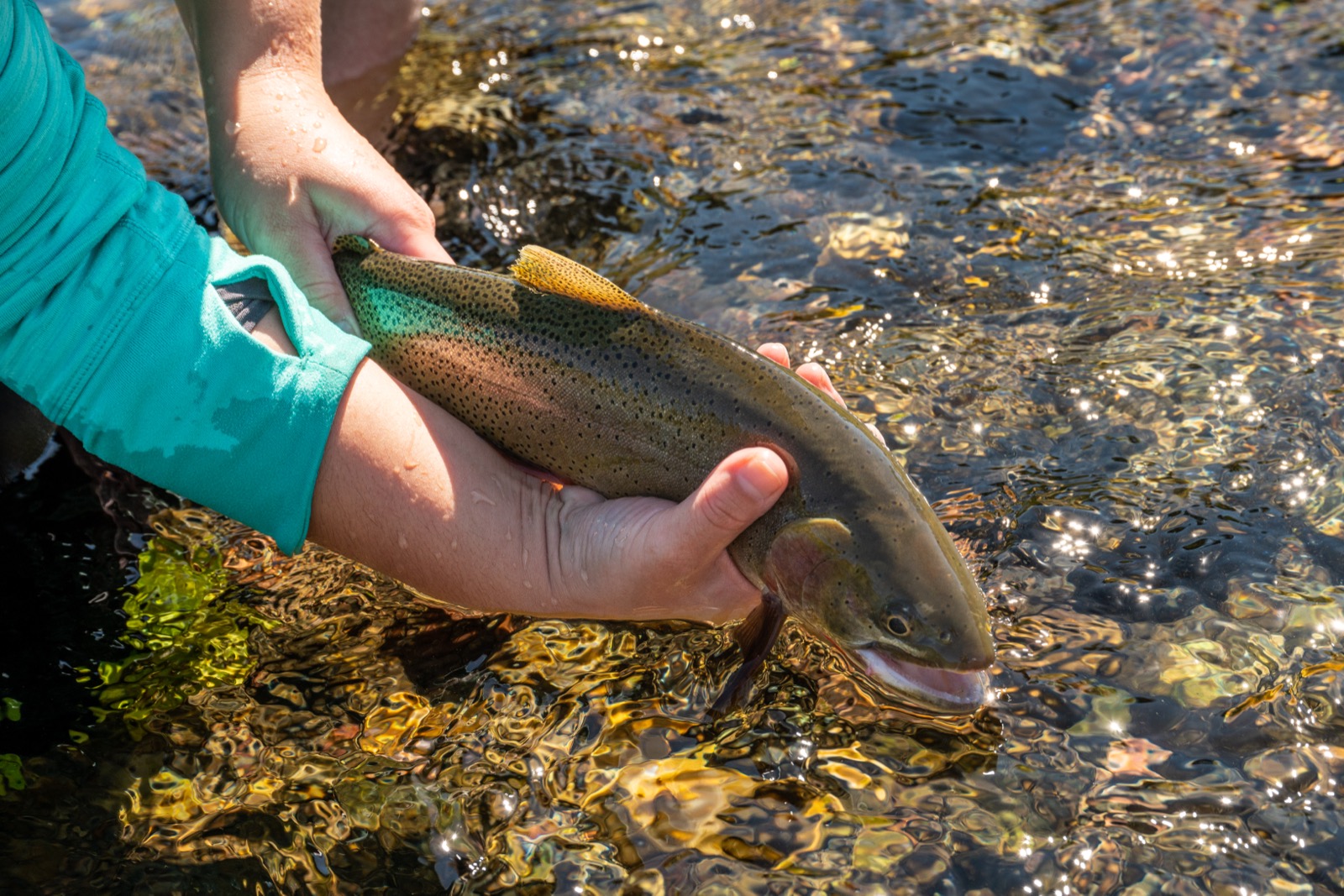
Snake River Fine-Spotted Cutthroat Trout
The Snake River fine-spotted cutthroat trout is the signature native fish of western Wyoming and one of the most visually striking and eagerly sought trout subspecies in the American West. Named for the profusion of tiny, pepper-like spots that cover virtually the entire body, a spotting pattern denser and finer than any other cutthroat subspecies, this fish is endemic to the Snake River drainage of northwestern Wyoming and adjacent portions of eastern Idaho. The heart of its range is the legendary Snake River itself, flowing through Jackson Hole beneath the towering rampart of the Teton Range, in a landscape so dramatic that it serves as the backdrop for some of the most iconic fly-fishing imagery ever captured. Snake River fine-spotted cutthroats are among the most aggressive dry-fly feeders in the cutthroat family, a trait that has made them the centerpiece of the Jackson Hole and Snake River fly-fishing experience. During the prolific hatches of the Snake River (Pale Morning Duns, Green Drakes, Flavs, Gray Drakes, Yellow Sallies, and enormous salmonfly and golden stonefly emergences), fine-spotted cutthroats feed with an abandon that delights anglers and guides alike. A typical day of float fishing the Snake River during the early-summer hatch season can produce dozens of fish brought to hand on dry flies, with the best fish pushing 18 to 20 inches and fighting with the current-fueled power that river cutthroats are known for. Despite healthy populations in the mainstem Snake River and many of its tributaries, fine-spotted cutthroats face ongoing management challenges. Hybridization with Yellowstone cutthroats (which were historically stocked in some Snake River tributaries) and with non-native rainbow trout threatens the genetic purity of fine-spotted populations. Additionally, the fine-spotted cutthroat's range is relatively small compared to more widespread subspecies, concentrating the population in a limited geographic area. Wyoming Game and Fish Department, along with federal land managers, actively monitors fine-spotted cutthroat populations, manages for native fish in key tributaries, and maintains regulations designed to protect this iconic subspecies for future generations of anglers.
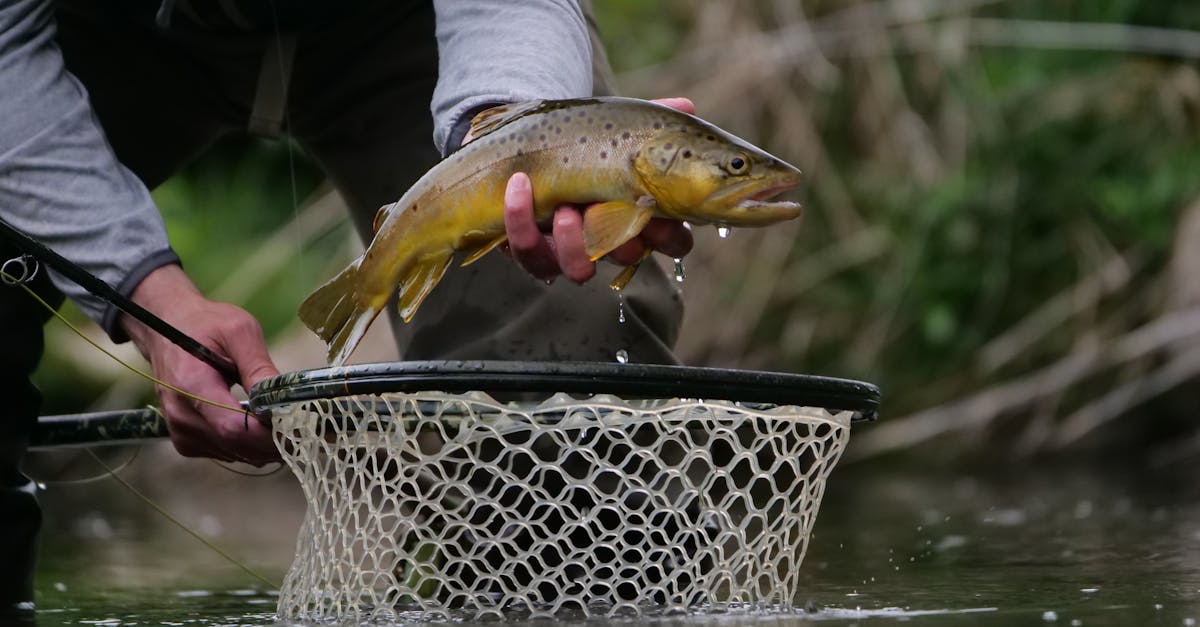
Brown Trout
The brown trout is the most cunning and elusive trout species swimming in Montana's rivers, and it rewards patient, skilled anglers with some of the state's most memorable catches. Originally native to Europe and western Asia, brown trout were first introduced to North American waters in 1883 and arrived in Montana shortly thereafter. They have since established robust, self-sustaining populations in virtually every major trout stream in the state, from the legendary spring creeks of the Paradise Valley to the sweeping runs of the lower Madison and the deep pools of the Bighorn. Brown trout grow larger than any other trout species in Montana, and fish exceeding 24 inches are caught with regularity on premium waters. The lower Madison River, the Missouri River below Holter Dam, and the Bighorn River are particularly renowned for producing trophy-class browns. Unlike rainbows, brown trout spawn in the fall (October through November), and their aggressive pre-spawn behavior creates an exciting window for streamer fishing as large males become territorial and attack anything that enters their domain. Browns are notably more nocturnal than other trout species, and many of the biggest fish are caught during low-light conditions. What sets brown trout apart from other species is their wariness and selectivity. Large browns are notoriously difficult to fool, often refusing flies that are even slightly off in size, color, or presentation. They tend to establish and defend prime feeding lies (undercut banks, logjams, deep pools, and boulder gardens), and an angler who learns to read water and identify these holding spots will consistently catch more and larger fish. This combination of difficulty, size potential, and intelligence makes the brown trout the most prized quarry for many serious Montana fly fishers.
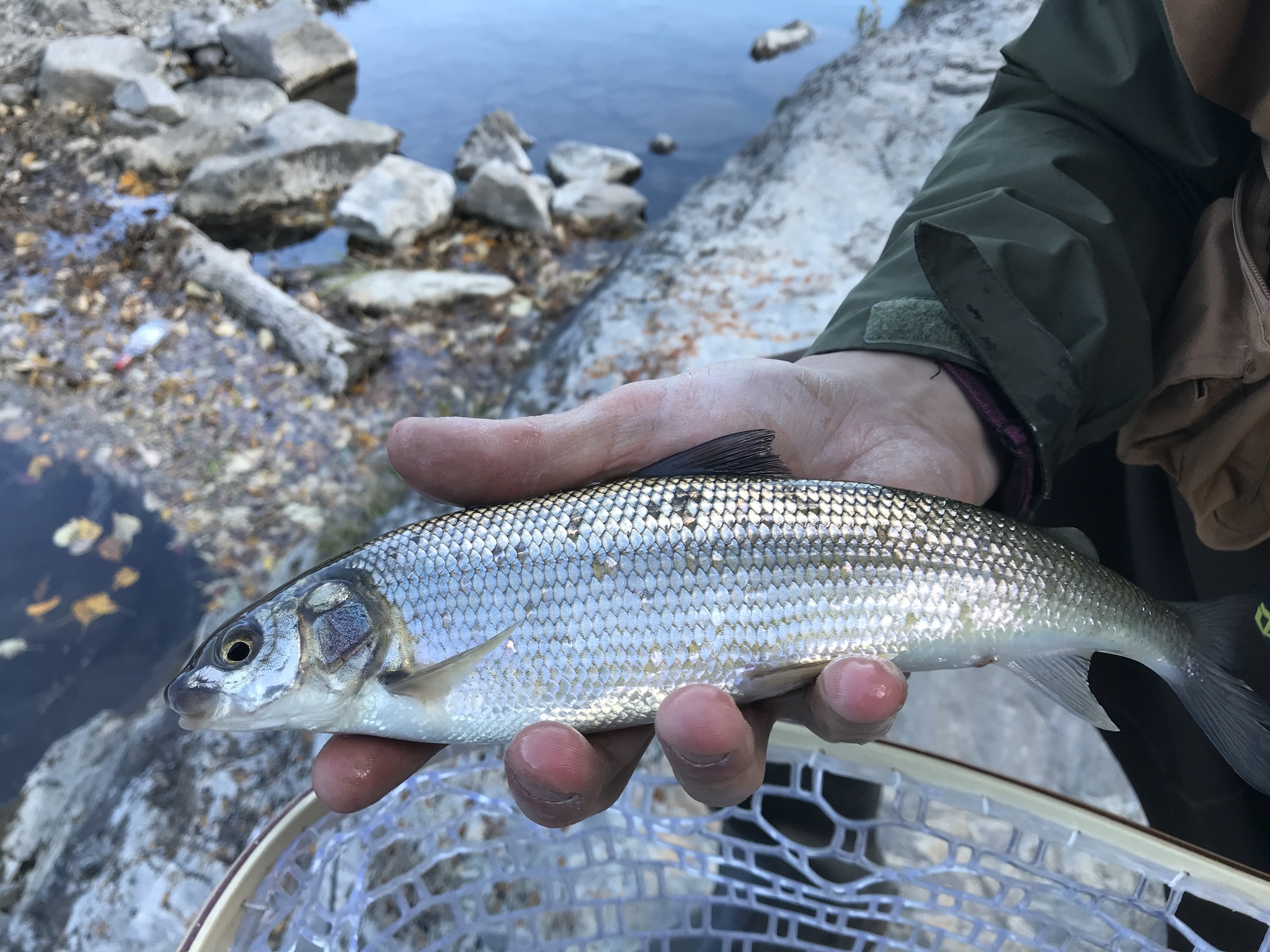
Mountain Whitefish
The mountain whitefish is one of Montana's most abundant native salmonids and arguably the most underappreciated gamefish in the state. A member of the whitefish subfamily (Coregoninae) within the broader salmonid family, mountain whitefish are present in virtually every cold-water river and large stream in Montana, often outnumbering trout by significant margins. On rivers like the Madison, Gallatin, Yellowstone, and Bitterroot, whitefish populations can exceed 1,000 fish per mile, making them the dominant salmonid species by biomass in many reaches. Despite this abundance, most fly anglers overlook whitefish entirely or view them as an unwelcome catch, which is unfortunate because they can provide outstanding sport on light tackle. Mountain whitefish are an important ecological component of Montana's river systems. They serve as a primary food source for larger brown trout, bald eagles, ospreys, otters, and other predators. Their fall spawning behavior (typically October through December) plays a critical role in nutrient cycling, and their eggs provide food for other fish and aquatic invertebrates during the lean winter months. In recent years, whitefish populations have been used as indicator species for overall river health, and declines in whitefish numbers on some Montana rivers have raised concerns about changing water conditions and disease pressure. For anglers willing to target them intentionally, mountain whitefish offer several advantages. They feed actively throughout the winter months when trout fishing can be slow, they are abundant and widely distributed, and they fight with surprising strength for their size; a 16-inch whitefish on a 3- or 4-weight rod provides a memorable tussle. Whitefish are also excellent table fare, with firm, mild-flavored white flesh that is delicious smoked or fried. Montana regulations typically allow a generous harvest limit for whitefish, recognizing their abundance and the role that harvest can play in managing populations on some waters.
Snake River Hatch Chart
| Insect | Suggested Fly | Jan | Feb | Mar | Apr | May | Jun | Jul | Aug | Sep | Oct | Nov | Dec |
|---|---|---|---|---|---|---|---|---|---|---|---|---|---|
Pale Morning Dun morning | PMD Comparadun | ||||||||||||
Golden Stonefly all day | Stimulator | ||||||||||||
Caddisflies (various) evening | Elk Hair Caddis | ||||||||||||
Terrestrials (hoppers, beetles) afternoon | Chubby Chernobyl | ||||||||||||
Blue-Winged Olive (Baetis) afternoon | BWO Emerger | ||||||||||||
October Caddis afternoon | Stimulator | ||||||||||||
Green Drake afternoon | Parachute Adams | ||||||||||||
Gray Drake evening | Parachute Adams |
Pale Morning Dun: First quality dry-fly hatch after runoff. PMD Comparadun size 14-16.
Golden Stonefly: Golden stones in early July. Stimulator size 6-10.
Caddisflies (various): Evening caddis flights are explosive on the Snake. EHC size 14-16.
Terrestrials (hoppers, beetles): Hopper-dropper rigs are the #1 Snake River technique from late July on.
Blue-Winged Olive (Baetis): Fall BWO hatches produce blanket rises on overcast days. Size 18-20.
October Caddis: Large October caddis. Stimulator or EHC in size 8-10.
Green Drake: Sporadic but exciting. Large Parachute Adams size 10-12.
Gray Drake: Evening spinner falls. Parachute Adams size 10-12.
Recommended Flies
Chubby Chernobyl
Top PickThe #1 Snake River pattern; hopper-dropper anchor from late July on
Best in summer
Elk Hair Caddis
Top PickEvening caddis hatches are explosive on the Snake
Best in summer
Stimulator
Top PickGolden stonefly imitation; also effective as attractor dry
Best in summer
Parachute Adams
Top PickUniversal mayfly; covers Grey Drakes, PMDs, and BWOs
Best in summer
Pheasant Tail Nymph
Top PickBest dropper nymph behind dry flies for cutthroat
Best in summer
Pat's Rubber Legs
Top PickStonefly nymph for deeper runs and pocket water
Best in summer
Woolly Bugger
Top PickFall streamer for brown trout in the lower sections
Best in fall
Also Effective
Access Points & Boat Launches
Deadman's Bar
Boat LaunchModerate (steep, rough access road)The most popular float fishing put-in within Grand Teton National Park. A gravel ramp launches drift boats and rafts for the 10-mile float to Moose Landing through the park's most productive cutthroat trout water. The steep, rough access road to the river is notoriously challenging; high clearance and 4WD recommended. Arrive early during peak season to secure a launch spot.
Schwabacher's Landing
Wade AccessEasyIconic access point within Grand Teton National Park offering wade fishing on braided side channels with the Teton Range as a backdrop. The famous Schwabacher's Landing overlook is a world-renowned photography location. Walk downstream from the parking area to access wadeable gravel bars and side channels that hold native cutthroat trout away from drift boat traffic.
Moose Landing
Boat LaunchEasyPrimary take-out for the Deadman's Bar float and put-in for floats below the park. Located near the Craig Thomas Discovery and Visitor Center in Grand Teton National Park. The improved ramp and parking area accommodate heavy summer use. Wade fishing is available from the banks upstream and downstream of the landing.
Wilson Bridge Access
Wade AccessEasyPopular local wade fishing access at the Wilson Bridge south of Jackson. Dikes above and below the bridge provide walking access along the river, with productive braided channels accessible on both banks. This is the best wade fishing access outside of Grand Teton National Park. Also serves as put-in for the Wilson to South Park float.
Regulations
Regulations
Grand Teton National Park waters: Wyoming fishing license required plus free park fishing permit. Creel limit 3 trout per day, no more than 1 cutthroat trout. All cutthroat trout less than 20 inches must be released immediately. November 1 through March 31: all cutthroat trout must be released. Snake River from Jackson Lake Dam to Moose: Open April 1 through October 31. Below Moose: Open year-round. Use or possession of live baitfish prohibited in Area 1. No felt-soled wading boots allowed in Grand Teton National Park. Check Wyoming Game & Fish Department regulations at wgfd.wyo.gov and NPS regulations for section-specific rules.
Always verify current regulations with Wyoming Game and Fish before fishing.
Some links may earn a commission. Learn more
Quick Facts
- Region
- Northwest Wyoming / Jackson Hole
- Water Type
- Freestone (dam-influenced in upper section)
- River Length
- 60 miles of prime trout water in Wyoming (Jackson Lake Dam to Alpine); braided channels add significant fishable water
- Difficulty
- Intermediate-Advanced
- Best Seasons
- summer, fall
- Trout Per Mile
- 1,500-2,500 (Snake River fine-spotted cutthroat dominant; browns and whitefish in lower sections)
- Record Trout
- 24" Snake River fine-spotted cutthroat trout; brown trout exceeding 26" documented in lower canyon sections
- Species
- Snake River Fine-Spotted Cutthroat Trout, Brown Trout, Mountain Whitefish
- USGS Gauge
- 13018750
Local Shops & Guides
Snake River Angler
Jackson, WY
Snake River Angler is Jackson Hole's premier fly shop and guide service, located on Deloney Avenue in the heart of downtown Jackson, Wyoming. The shop serves as the essential resource for anglers fishing the Snake River, its tributaries, and the stunning waters of Grand Teton National Park. Their team combines deep local knowledge with a passion for the Jackson Hole ecosystem and its remarkable fisheries. The shop carries a full selection of flies, rods, reels, waders, and accessories tailored to Snake River fishing. Snake River Angler is particularly known for their expertise on the fine-spotted Snake River cutthroat trout, a subspecies unique to the Snake River drainage and one of the most sought-after native trout in the West. Their fly selection emphasizes the patterns that produce on the Snake, from early-season streamers to the prolific summer hatches that bring cutthroats to the surface. Snake River Angler's guide service offers float trips on the Snake River through the dramatic scenery of Grand Teton National Park and the Snake River canyon, as well as walk-wade trips on tributaries and backcountry waters. Their Jackson-based guides are experienced professionals who know the river's seasonal rhythms, from spring runoff through the fall brown trout run. The shop also provides detailed fishing reports that help anglers plan their time on the water.
(307) 733-3699
JD High Country Outfitters
Jackson, WY
JD High Country Outfitters is a full-service outfitter based in Jackson, Wyoming, offering guided fly fishing experiences across the diverse waters of western Wyoming. From their location on North Center Street in downtown Jackson, they provide access to the Snake River, Green River, New Fork River, and backcountry lakes in the Wind River and Wyoming ranges. JD High Country Outfitters is known for going beyond the standard day trip, offering multi-day wilderness fishing expeditions that take anglers into the remote backcountry of western Wyoming. Their horse pack trips bring anglers to high-altitude lakes and streams that rarely see a fly line, providing a truly unique wilderness fishing experience. For those seeking a more accessible outing, their float and wade trips on the Snake and Green rivers deliver outstanding fishing in spectacular settings. The outfitter's experienced guides are licensed professionals who know the rhythms of each river and season. Whether you're floating the Snake River through Grand Teton National Park, fishing the Green River's crystal-clear water for large browns, or packing into a remote mountain lake on horseback, JD High Country Outfitters provides a premium guided experience. They also offer corporate retreats and custom multi-day itineraries for groups looking to combine adventure with fly fishing.
(307) 733-3270