Mercer's Dark Stone Nymph
Mercer's Dark Stone Nymph is a highly effective imitation of large stonefly nymphs, specifically designed to represent salmonflies (Pteronarcys californica) and golden stoneflies (Hesperoperla pacifica) in their nymphal stage. Created by renowned fly tier Mike Mercer, this pattern has become a staple in western fly boxes due to its realistic appearance, durability, and proven effectiveness on rivers where stoneflies are abundant. Stonefly nymphs are among the largest aquatic insects in North American rivers, with mature specimens reaching two to three inches in length. They spend two to four years developing in well-oxygenated, rocky streambeds before migrating to shore for emergence. During this extended nymphal stage, they are a primary food source for trout, and large fish actively hunt them along the bottom. Mercer's pattern captures the robust, segmented body, prominent legs, and distinctive antennae that characterize these important insects. The pattern's construction incorporates several features that make it exceptionally lifelike. Rubber legs provide constant motion in the current, suggesting the kicking action of live nymphs. The variegated chenille or dubbing body creates realistic segmentation and the dark coloration matches natural stonefly nymphs. Wingcases made from turkey tail or synthetic materials add anatomical accuracy, while bead heads or lead wire ensure the pattern gets down to the rocky bottom where stoneflies live. Mercer's Dark Stone Nymph is most effective during the weeks leading up to stonefly emergences, typically from late spring through early summer depending on elevation and latitude. However, because stonefly nymphs are available year-round, the pattern produces fish throughout the season. It's particularly deadly when fished dead-drift along the bottom through rocky runs, riffles, and pocket water where stoneflies are abundant. The pattern works on any river system with healthy stonefly populations, including Montana's Madison and Yellowstone rivers, Oregon's Deschutes, Colorado's Roaring Fork, and California's Yuba. It's also effective for steelhead, which eagerly consume stonefly nymphs during their river residency.
Pattern Details
- Type
- Nymph
- Seasons
- spring, summer
- Hook Sizes
- #6-10
- Hook Type
- 3XL nymph hook
- Tying Difficulty
- Intermediate
- Imitates
- Salmonfly and golden stonefly nymphs
Recipe & Materials
- Hook
- TMC 5263 or equivalent, sizes 6-10
- Bead
- Tungsten, gold or black
- Thread
- 6/0 black or brown
- Weight
- Lead or non-toxic wire
- Tail
- Brown goose biots
- Body
- Variegated dark chenille or dubbing
- Rib
- Copper wire
- Wingcase
- Turkey tail or thin skin
- Thorax
- Dark dubbing
- Legs
- Black or brown rubber legs
- Antennae
- Brown goose biots
Technique & Presentation
Tying Mercer's Dark Stone Nymph begins with proper hook selection and weighting. Use a 3XL nymph hook and add a tungsten bead for weight, or wrap 15-20 turns of lead wire if using a non-bead version. The pattern needs to get down quickly in the heavy water where stoneflies live. Start the thread behind the bead and wrap a solid foundation.
Tie in two brown goose biots for the tail, splayed in a V-shape to suggest the natural's twin tails. Add copper wire for ribbing, then tie in dark variegated chenille or create a dubbed body. The body should be thick and robust, matching the chunky profile of natural stonefly nymphs. Wrap the chenille or dubbing forward two-thirds of the hook shank, then counter-wrap the copper wire to create segmentation and durability.
The thorax area is where the pattern comes alive. Tie in a wide turkey tail or synthetic wingcase, then dub a thick thorax. Add rubber legs on each side—position them to suggest the multiple legs of the natural. Pull the wingcase forward and secure it, then add two more biots as antennae projecting forward. The finished pattern should have a distinct head-thorax-abdomen segmentation.
Fish Mercer's Dark Stone Nymph using a two-fly nymphing rig, with this pattern as the lead fly due to its weight. Use a strike indicator in faster water, or tight-line nymph in pocket water where you can maintain direct contact. The key is achieving a dead-drift right along the bottom where stonefly nymphs crawl and tumble. Strikes are often aggressive, as large trout don't hesitate when they encounter such a substantial food item. Set the hook firmly—big nymphs often attract big fish.
History & Origin
Mike Mercer developed this pattern in the Pacific Northwest, where massive stonefly hatches create some of the most exciting fishing of the season. Mercer, a professional tier and innovative fly designer, wanted a pattern that combined realism with durability—something that could withstand multiple fish and the rigors of rocky-bottom nymphing while still looking alive in the water.
The pattern gained recognition in the 1990s and quickly spread throughout the western United States. Guides on major western rivers adopted it as a go-to stonefly nymph, appreciating its effectiveness and ability to hold up under hard fishing. Mercer's Dark Stone Nymph represents a modern approach to stonefly imitation, incorporating synthetic materials like rubber legs while retaining natural materials for realistic appearance. Today, it's considered one of the most reliable stonefly nymph patterns available and is featured in fly shops from Montana to California.
Where to Fish This Fly
Related Nymph Patterns
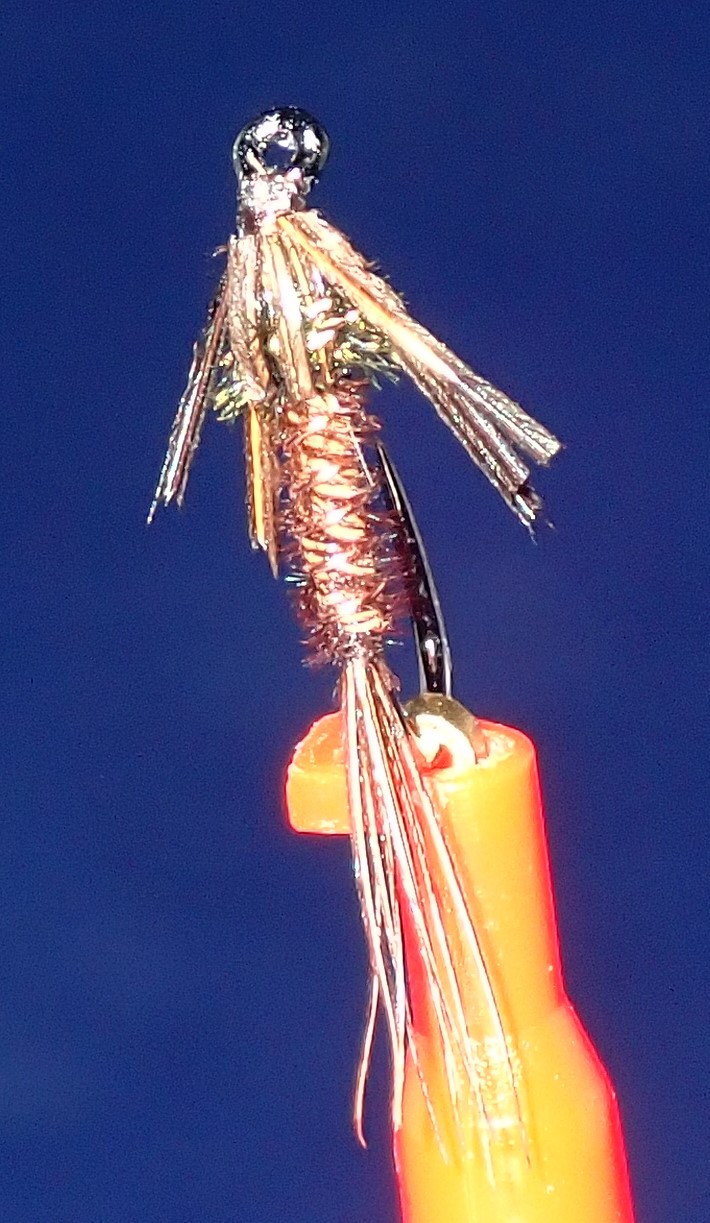
Pheasant Tail Nymph
Frank Sawyer's classic nymph pattern imitates a wide range of mayfly nymphs. The pheasant tail fibers create a realistic segmented body. Effective year-round in sizes #14-20, this pattern belongs in every Montana fly box. The Pheasant Tail Nymph is the most important subsurface fly in the history of fly fishing. Frank Sawyer's original design used nothing but pheasant tail fibers and copper wire, with no thread, no dubbing, no synthetics. The result was a slim, naturally segmented nymph that sinks quickly and perfectly imitates the profile of a swimming or drifting mayfly nymph. Modern variations have added a bead head for extra weight and flash, making an already deadly pattern even more effective. In Montana, the bead head Pheasant Tail is a year-round producer on every river in the state. It matches Baetis nymphs in fall and spring, PMD nymphs in summer, and various mayfly species throughout the seasons. Whether fished as a trailing nymph behind a dry fly, in a two-nymph Euro-style rig, or under an indicator, the Pheasant Tail consistently catches fish. Its slim profile sinks quickly and looks natural even to the most selective trout on the Missouri and Bighorn tailwaters.
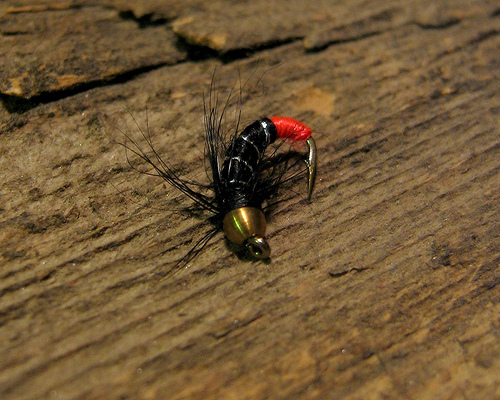
Zebra Midge
A devastatingly simple midge pupa pattern. Thread body with a bead head, and that's it. The Zebra Midge is the most effective winter pattern on Montana tailwaters and produces year-round on the Missouri and Bighorn rivers. The genius of the Zebra Midge lies in its simplicity. A small bead head, a thread body wrapped in even turns to create segmentation, and perhaps a few fibers for a collar, and that is all there is to it. Yet this pattern imitates the midge pupae that comprise an enormous percentage of a trout's diet on tailwater rivers. Midges hatch every day of the year on rivers like the Missouri and Bighorn, and the Zebra Midge matches them with astonishing effectiveness. The pattern's versatility is remarkable. Fished under an indicator in the classic dead-drift presentation, it produces fish consistently. But the Zebra Midge is also deadly when fished in the surface film as a midge cluster or suspended just below the surface on a greased leader. On winter days when other patterns fail, a small Zebra Midge in #18-22 fished deep and slow can save what might otherwise be a fishless outing. It is the great equalizer, the fly that always works when nothing else does.
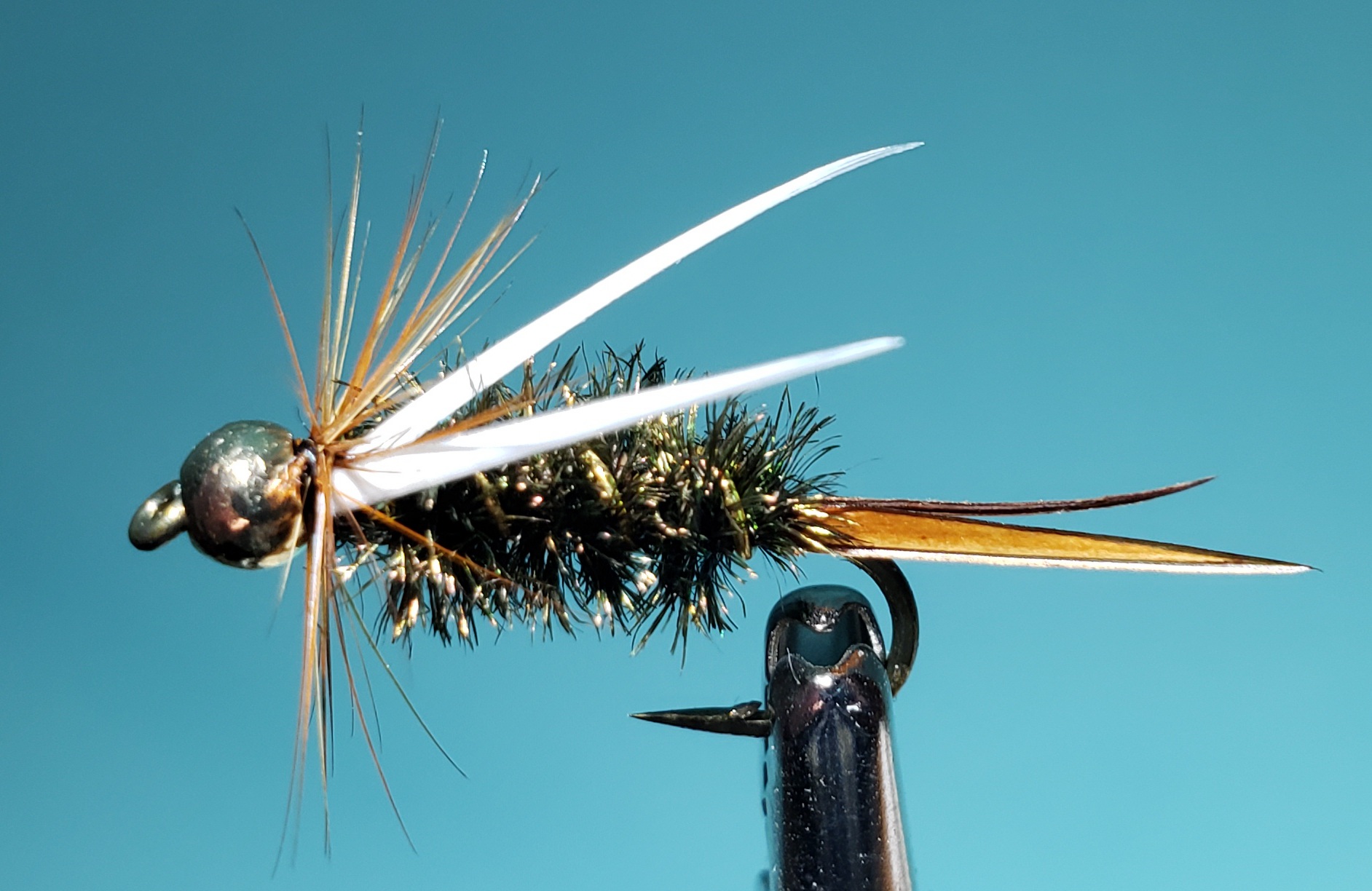
Prince Nymph
A classic attractor nymph with peacock herl body and white biots. The Prince Nymph doesn't imitate any specific insect but suggests many. It's a reliable searching pattern when drifted through riffles and runs on all Montana rivers. The Prince Nymph occupies a unique space in fly fishing; it is perhaps the most effective attractor nymph ever designed. The combination of a peacock herl body, white goose biot wing, and brown hackle creates a fly that doesn't precisely match any natural insect but somehow suggests dozens of them. Trout see the Prince Nymph and recognize it as food, plain and simple. The iridescent sheen of the peacock herl, the contrasting white wings, and the buggy profile all contribute to its universal appeal. In Montana, the Prince Nymph is a workhorse pattern that produces fish from the first runoff of spring through the cold days of late fall. It excels as a dropper behind large dry flies, as a searching nymph under an indicator, and as a point fly in a two-nymph rig. On the Madison, Gallatin, and Yellowstone rivers, the Prince Nymph consistently produces when conditions are changing, hatches are unclear, or fish seem unwilling to commit to specific imitations. It is the problem-solving nymph that every angler should carry.
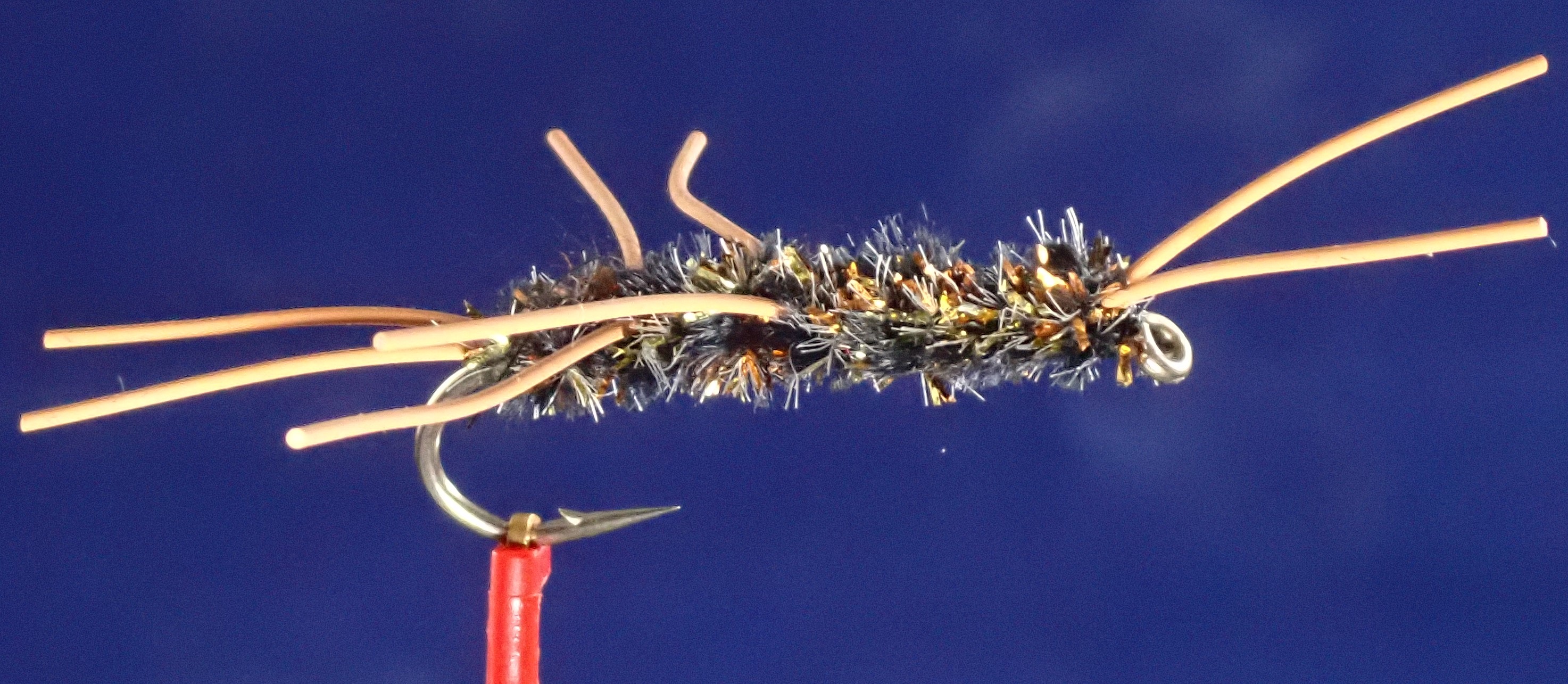
Pat's Rubber Legs
A large, heavily weighted stonefly nymph pattern. Pat's Rubber Legs is the go-to point fly for nymph rigs on the Madison, Yellowstone, and Gallatin rivers. The rubber legs pulse with every micro-current, driving trout wild. Pat's Rubber Legs is the definition of a workhorse nymph. This large, heavily weighted stonefly imitation serves as both an effective fish catcher and the anchor fly in a multi-nymph rig. Its weight gets the entire rig down to the bottom quickly, while its rubber legs provide continuous movement that attracts trout from a distance. The variegated chenille body suggests the mottled coloring of natural stonefly nymphs, and the overall profile matches the large Pteronarcys and Hesperoperla nymphs that inhabit Montana's freestone rivers. On the Madison, Yellowstone, and Gallatin rivers, all premier stonefly streams, Pat's Rubber Legs is arguably the most important fly in a guide's box. It produces fish 12 months of the year, not just during the stonefly emergence. Stonefly nymphs are always present in the drift, dislodged by current, wading anglers, and their own movements. A large Pat's Rubber Legs drifted along the bottom is a convincing imitation that trout eat with confidence. Pair it with a smaller trailing nymph like a Pheasant Tail or Lightning Bug for a devastating two-fly rig.
San Juan Worm
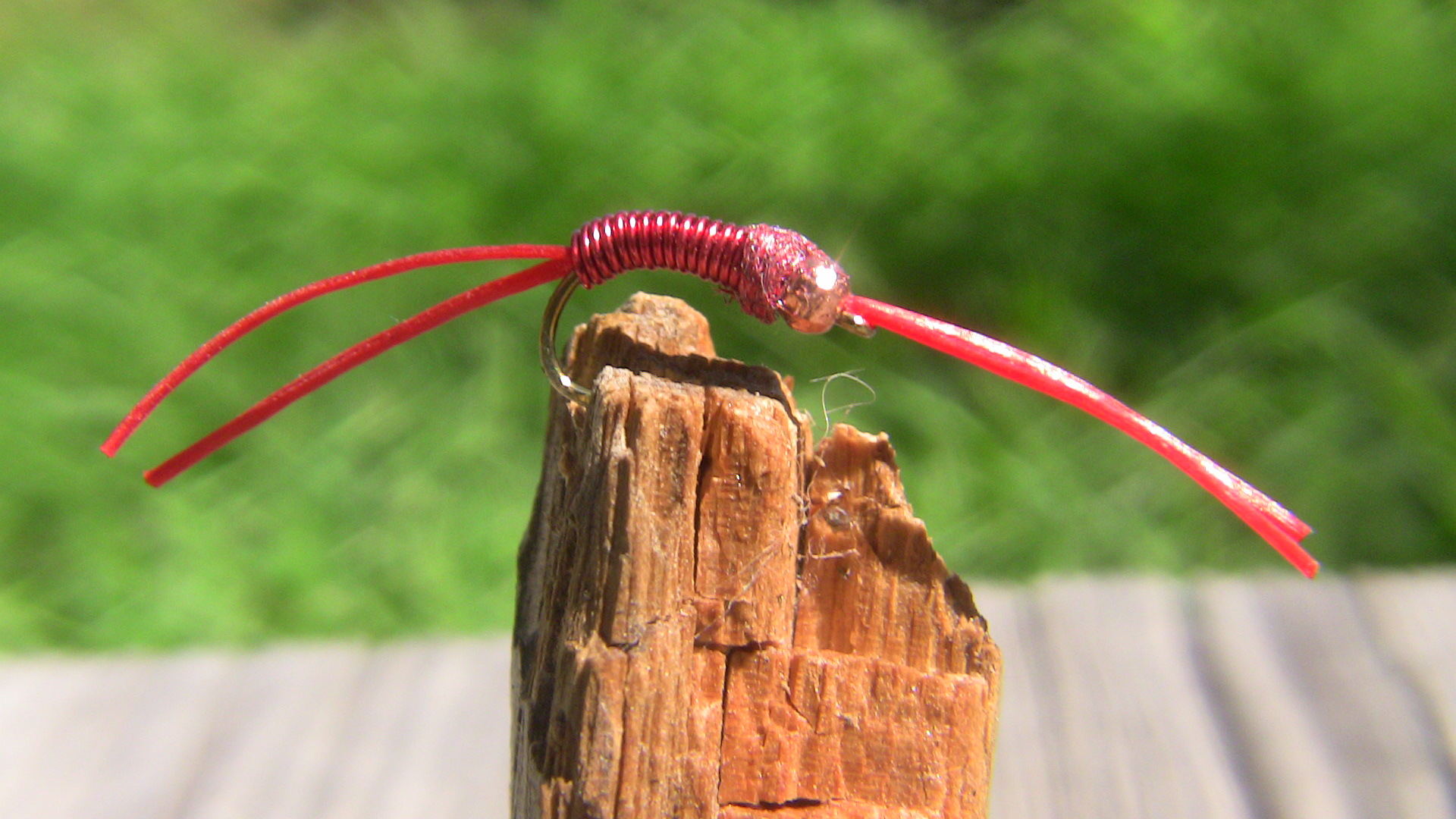
Love it or hate it, the San Juan Worm catches fish. This simple chenille or micro-tubing pattern imitates aquatic worms that are a significant food source in tailwater rivers. Particularly effective on the Bighorn and Missouri after rain events. The San Juan Worm divides the fly fishing community like no other pattern. Purists dismiss it as barely qualifying as a fly, while pragmatists point to its undeniable effectiveness and the scientific reality that aquatic worms (Oligochaeta) constitute a meaningful portion of trout diets, particularly in tailwater environments. On the Bighorn River, stomach sampling studies have shown that aquatic worms can represent up to 20 percent of a trout's diet during certain times of year. Regardless of where you fall in the debate, the San Juan Worm deserves a place in your fly box if you fish Montana's tailwaters. After rain events, rising water dislodges worms from the substrate and puts them into the drift, creating a feeding opportunity that trout exploit enthusiastically. Even during stable conditions, a San Juan Worm fished deep and slow on the Bighorn or Missouri can produce fish when more traditional patterns are not producing. The pattern is especially effective for large trout that have learned to target high-calorie food items with minimal effort.
Lightning Bug
A flashy variation of the Pheasant Tail that uses tinsel and flash for added attraction. The Lightning Bug excels in slightly off-color water and as a dropper behind large dry flies. A Montana guide favorite. The Lightning Bug takes the Pheasant Tail Nymph concept, a slim, segmented mayfly imitation, and adds a generous dose of flash. The tinsel body and flashback wingcase catch light in ways that natural materials cannot, creating a beacon that attracts trout from greater distances. This makes the Lightning Bug particularly effective in off-color water, during overcast conditions, and in deeper runs where light penetration is limited. Montana guides keep Lightning Bugs in their boxes for those days when standard patterns are producing but not as well as expected. A switch from a standard Pheasant Tail to a Lightning Bug can turn an average day into a great one. The flash element seems to trigger a competitive or aggressive response in trout, prompting strikes from fish that might otherwise let a natural-colored nymph pass. On the Madison, Gallatin, and Yellowstone rivers, the Lightning Bug is a consistent producer from spring through fall.