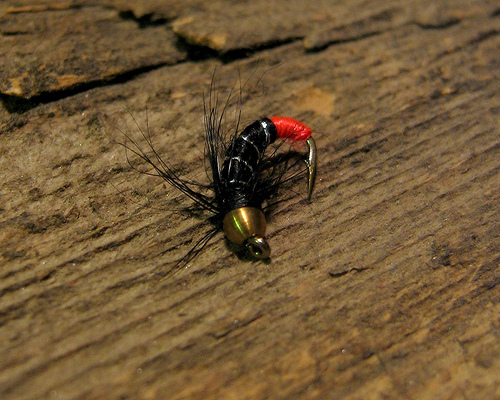
Zebra Midge
A devastatingly simple midge pupa pattern. Thread body with a bead head, and that's it. The Zebra Midge is the most effective winter pattern on Montana tailwaters and produces year-round on the Missouri and Bighorn rivers. The genius of the Zebra Midge lies in its simplicity. A small bead head, a thread body wrapped in even turns to create segmentation, and perhaps a few fibers for a collar, and that is all there is to it. Yet this pattern imitates the midge pupae that comprise an enormous percentage of a trout's diet on tailwater rivers. Midges hatch every day of the year on rivers like the Missouri and Bighorn, and the Zebra Midge matches them with astonishing effectiveness. The pattern's versatility is remarkable. Fished under an indicator in the classic dead-drift presentation, it produces fish consistently. But the Zebra Midge is also deadly when fished in the surface film as a midge cluster or suspended just below the surface on a greased leader. On winter days when other patterns fail, a small Zebra Midge in #18-22 fished deep and slow can save what might otherwise be a fishless outing. It is the great equalizer, the fly that always works when nothing else does.
Pattern Details
- Type
- Nymph
- Seasons
- spring, summer, fall, winter
- Hook Sizes
- #16-22
- Hook Type
- Standard nymph hook or curved scud hook
- Tying Difficulty
- Beginner
- Imitates
- Midge pupae (Chironomidae family)
Recipe & Materials
- Hook
- TMC 2457 or Dai-Riki 125, sizes 16-22Shop
- Bead
- Tungsten or brass, silver or black, 2-3mm
- Thread
- 8/0 or 10/0, black, red, olive, or wine
- Body
- Tying thread, wrapped in tight even turns
- Rib
- Fine silver or copper wire (optional)
Some links may earn a commission. Learn more
Technique & Presentation
The Zebra Midge is most effective when dead-drifted near the bottom in slower currents and tailouts where midges concentrate. Set your indicator shallower than you might for larger nymphs; midges often hatch in water that is 2-4 feet deep. Use minimal split shot or rely on the bead head alone, as the natural drift of a slowly sinking midge pupa is what trout key on.
For suspended midge fishing, grease your leader with floatant to within 18 inches of the fly. This keeps the Zebra Midge hanging just below the surface film, imitating a midge pupa about to emerge. This technique is devastatingly effective during midge clusters on the Missouri River, where pods of trout can be seen dimpling the surface as they sip pupae.
Color selection matters. Black and silver is the most universal combination, effective on every river in every season. Red is particularly deadly in winter and early spring. Olive matches many natural midge species found on the Missouri and Bighorn. Carry all three colors in sizes #18-22 and you will be prepared for nearly any midge situation.
History & Origin
The Zebra Midge's origins are somewhat murky, as many simple midge patterns were developed independently by tiers across the country. The pattern is generally associated with the tailwater fisheries of Colorado, particularly the South Platte River, where it gained prominence in the 1990s and early 2000s. The name 'Zebra' refers to the striped appearance created by the segmented thread body contrasting with the wire rib.
The pattern's popularity exploded as tailwater fishing grew across the West. On Montana's Missouri and Bighorn rivers, the Zebra Midge became the go-to midge imitation for guides and experienced anglers alike. Its simplicity makes it one of the easiest flies to tie (a beginning fly tier can produce dozens in an evening) and its effectiveness makes it one of the most important patterns in modern nymph fishing.
Where to Fish This Fly
Missouri River
Central Montana
Year-round staple, essential in winter
Bighorn River
Southeast Montana
#1 fly on the Bighorn year-round
Arkansas River
Upper Arkansas Valley / Central Mountains
Essential winter pattern; dead-drift through slow, deep runs
Frying Pan River
Roaring Fork Valley / Central Mountains
Year-round midge staple, the most important fly on the Pan
Gunnison River
Western Slope / Black Canyon Country
Midge pattern for slower sections and lower Gold Medal water
South Platte River
Front Range / South Park
#1 fly on the South Platte year-round, the single most important pattern
North Platte River
Central Wyoming
#1 fly on the Grey Reef year-round; essential in winter
Green River
Southwest Wyoming
Year-round midge pattern; foundation of Seedskadee fishing
Bighorn River (Wyoming)
North Central Wyoming
Year-round midge pattern; especially important in winter
Henry's Fork
Eastern Idaho
Zebra Midge for year-round subsurface midge fishing
South Fork Snake River
Eastern Idaho
Winter midge pattern for the tailwater section
Silver Creek
Central Idaho / Sun Valley
Zebra Midge for year-round subsurface midge fishing
South Fork Boise River
Southwestern Idaho
Year-round midge pattern, foundation of tailwater fishing
Deschutes River
Central Oregon
Winter midge fishing in the slower runs
Crooked River
Central Oregon
#1 fly on the Crooked River year-round. Size 18-22.
Owyhee River
Southeastern Oregon
Year-round subsurface staple. Essential in winter. Size 20-24.
Yakima River
Central Washington
Winter midge fishing through the canyon
Skagit River
Northwest Washington, Skagit County
Midge pattern for selective trout in slow water
Rocky Ford Creek
Central Washington, Grant County
Midge larva/pupa, essential during year-round midge hatches. Size 18-24
Lower Sacramento River
Northern California / Shasta County
Critical winter pattern; fish slow, deep runs
Hat Creek
Northern California / Shasta County
Year-round midge patterns; critical in Wild Trout Section
Fall River
Northern California / Shasta County
Year-round midge patterns; essential spring creek staple
Truckee River
Eastern Sierra / Nevada and Placer Counties
Zebra Midge for winter and early spring
East Walker River
Eastern Sierra / Mono County
Zebra Midge for subsurface work
Hot Creek
Eastern Sierra / Mono County
#1 fly year-round; midges are the primary food source
Truckee River
Western Nevada / Washoe County
Critical winter pattern; fish slow and deep
Pyramid Lake
Western Nevada / Pyramid Lake Paiute Reservation
Zebra Midge as dropper in two-fly rig
East Walker River
Western Nevada / Lyon County
Critical midge pattern for technical water
East Fork Carson River
Western Nevada / Douglas County
Midge nymph for technical water
South Fork Reservoir
Northern Nevada / Elko County
Zebra Midge for chironomid hatches, sizes 14-18
Wild Horse Reservoir
Northern Nevada / Elko County
Zebra Midge for chironomid fishing, sizes 14-18
San Juan River
Northwestern New Mexico / San Juan County
THE fly on the San Juan; year-round midge staple in sizes 20-28
Rio Grande
Northern New Mexico / Taos County
Midge patterns for winter fishing in slower sections
Colorado River at Lees Ferry
Northern Arizona / Coconino County
Year-round midge staple, the single most important fly at Lees Ferry
Oak Creek
Central Arizona / Oak Creek Canyon
Zebra Midge for winter fishing
Davidson River
Western North Carolina / Pisgah National Forest
Essential winter midge pattern for slow, deep runs
Tuckasegee River
Western North Carolina / Jackson County
Year-round midge pattern, critical in winter tailwater
Nantahala River
Western North Carolina / Macon County
#1 year-round pattern in the frigid tailwater, essential winter fly
Watauga River
Northwestern North Carolina / Watauga County
Essential winter midge pattern
Wilson Creek
Western North Carolina / Caldwell County
Midge pattern for winter fishing
Deep Creek
Western North Carolina / Great Smoky Mountains National Park
Year-round midge pattern
Linville River
Western North Carolina / Avery County
Midge pattern for slower pools
South Toe River
Western North Carolina / Yancey County
Essential winter midge pattern
Mitchell River
Northwestern North Carolina / Surry County
Midge pattern for winter trout
Upper Kennebec River
Western Maine / Somerset County
Zebra Midge in sizes 18-22 for year-round midge activity in the tailwater.
Kennebago River
Western Maine / Franklin County
Zebra Midge in sizes 20-22 when nothing else is hatching.
Roach River
North-Central Maine / Piscataquis County
Zebra Midge in sizes 20-22 for early season and late season midge activity.
Crooked River
Southern Maine / Cumberland and Oxford Counties
Zebra Midge in sizes 20-22 for year-round midge activity.
East Outlet of the Kennebec River
North-Central Maine / Piscataquis County
Zebra Midge in sizes 20-22 for midge activity in the cold lake-fed water.
Upper Connecticut River
Connecticut Lakes Region / Pittsburg
Year-round midge pattern for cold tailwater conditions. Size 18-24.
Swift River
White Mountains / Kancamagus Highway
Midge patterns in mountain stream. Size 18-22.
Mascoma River
Upper Valley / Grafton County
Midge patterns for early and late season. Size 18-22.
Souhegan River
Southern New Hampshire / Hillsborough County
Midge patterns for early and late season. Size 18-22.
Winooski River
Northern Vermont / Chittenden County
Midge patterns for early and late season.
Deerfield River (Upper)
Southern Vermont / Windham County
Midge patterns important in tailwater. Size 18-24.
Otter Creek
Western Vermont / Addison County
Midge patterns. Size 18-22.
Spring Creek
Central Pennsylvania / Centre County
Year-round midge, the single most important fly
Spruce Creek
Central Pennsylvania / Huntingdon County
Year-round midge essential
Yellow Breeches Creek
South Central Pennsylvania / Cumberland County
Midge pattern for winter fishing
Big Spring Creek
South Central Pennsylvania / Cumberland County
Year-round midge essential
Tulpehocken Creek
Southeastern Pennsylvania / Berks County
Midge pattern for winter tailwater fishing
Related Nymph Patterns
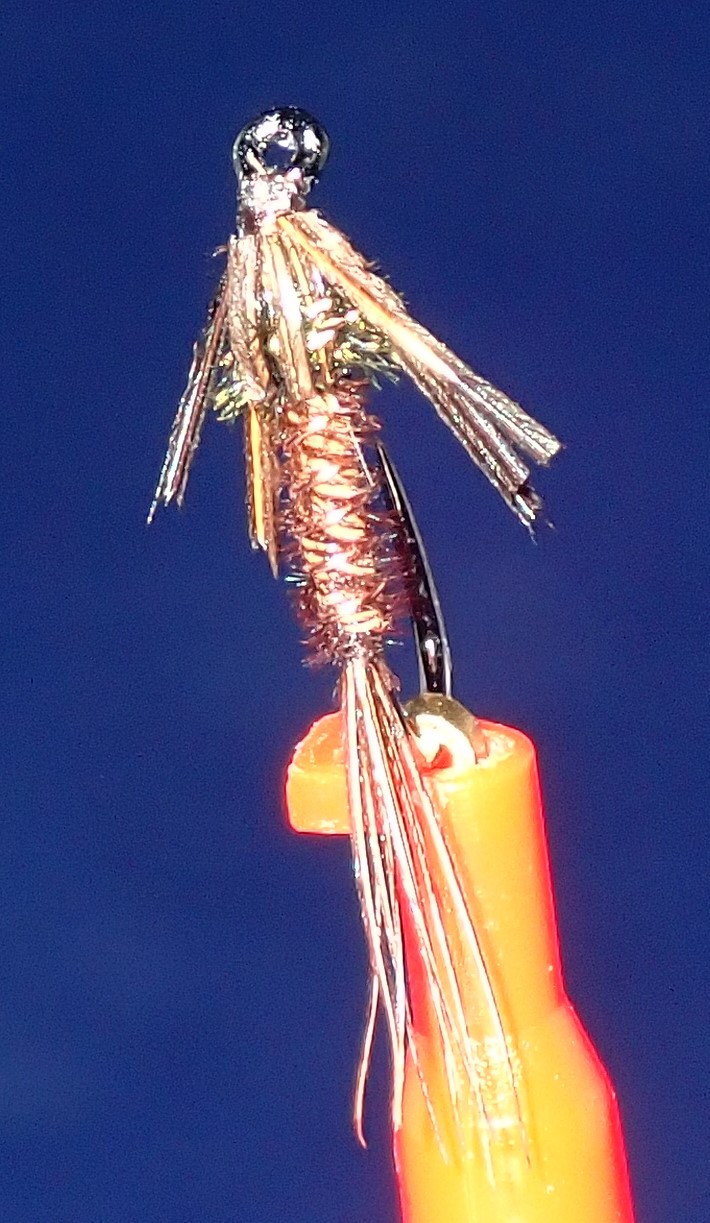
Pheasant Tail Nymph
Frank Sawyer's classic nymph pattern imitates a wide range of mayfly nymphs. The pheasant tail fibers create a realistic segmented body. Effective year-round in sizes #14-20, this pattern belongs in every Montana fly box. The Pheasant Tail Nymph is the most important subsurface fly in the history of fly fishing. Frank Sawyer's original design used nothing but pheasant tail fibers and copper wire, with no thread, no dubbing, no synthetics. The result was a slim, naturally segmented nymph that sinks quickly and perfectly imitates the profile of a swimming or drifting mayfly nymph. Modern variations have added a bead head for extra weight and flash, making an already deadly pattern even more effective. In Montana, the bead head Pheasant Tail is a year-round producer on every river in the state. It matches Baetis nymphs in fall and spring, PMD nymphs in summer, and various mayfly species throughout the seasons. Whether fished as a trailing nymph behind a dry fly, in a two-nymph Euro-style rig, or under an indicator, the Pheasant Tail consistently catches fish. Its slim profile sinks quickly and looks natural even to the most selective trout on the Missouri and Bighorn tailwaters.
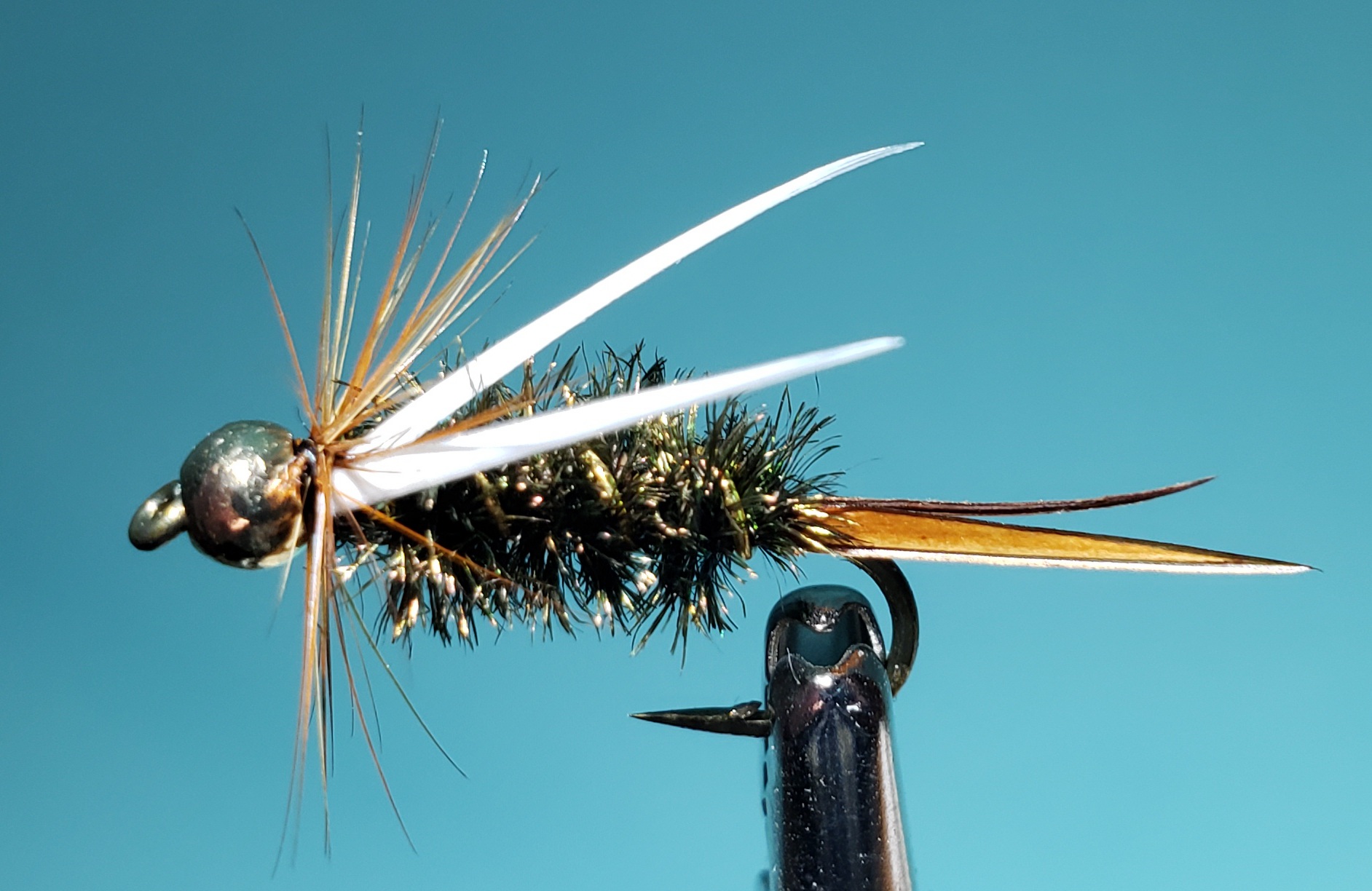
Prince Nymph
A classic attractor nymph with peacock herl body and white biots. The Prince Nymph doesn't imitate any specific insect but suggests many. It's a reliable searching pattern when drifted through riffles and runs on all Montana rivers. The Prince Nymph occupies a unique space in fly fishing; it is perhaps the most effective attractor nymph ever designed. The combination of a peacock herl body, white goose biot wing, and brown hackle creates a fly that doesn't precisely match any natural insect but somehow suggests dozens of them. Trout see the Prince Nymph and recognize it as food, plain and simple. The iridescent sheen of the peacock herl, the contrasting white wings, and the buggy profile all contribute to its universal appeal. In Montana, the Prince Nymph is a workhorse pattern that produces fish from the first runoff of spring through the cold days of late fall. It excels as a dropper behind large dry flies, as a searching nymph under an indicator, and as a point fly in a two-nymph rig. On the Madison, Gallatin, and Yellowstone rivers, the Prince Nymph consistently produces when conditions are changing, hatches are unclear, or fish seem unwilling to commit to specific imitations. It is the problem-solving nymph that every angler should carry.
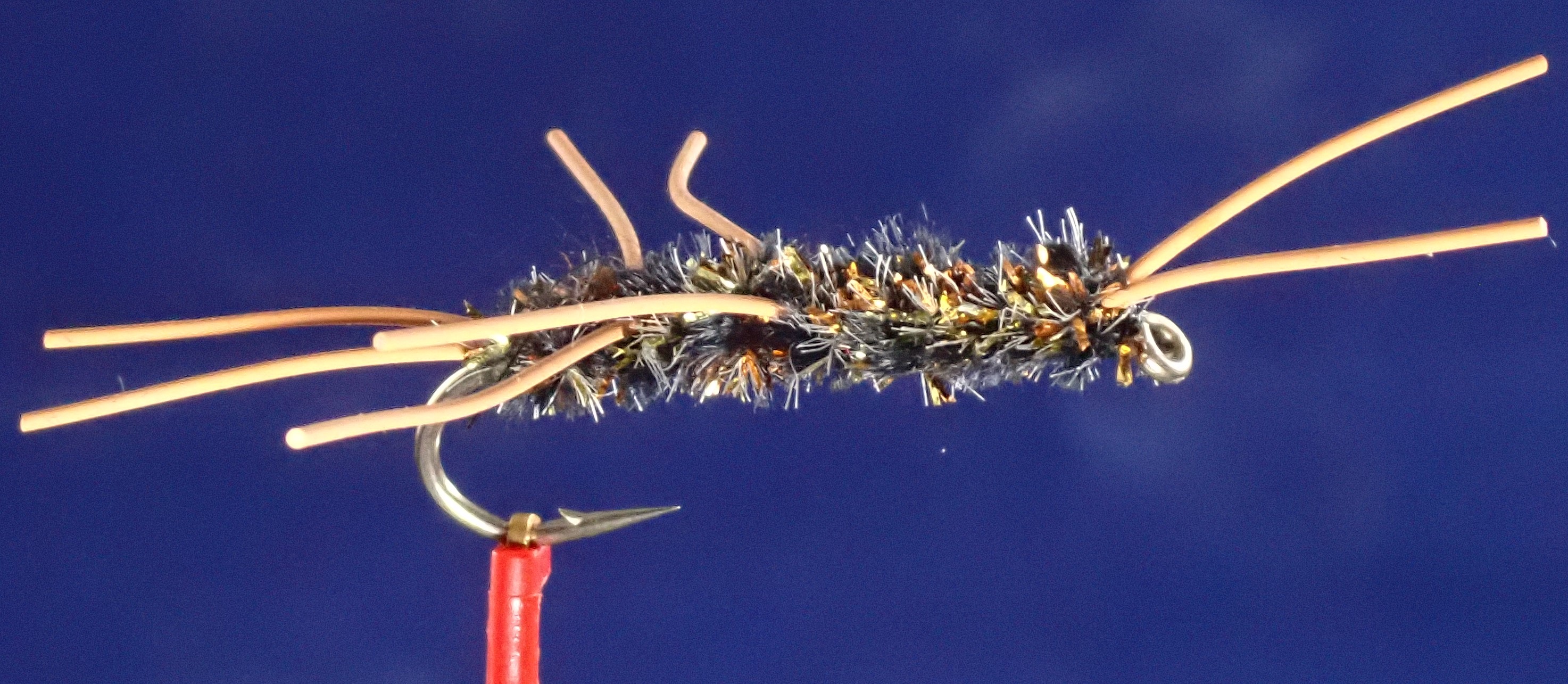
Pat's Rubber Legs
A large, heavily weighted stonefly nymph pattern. Pat's Rubber Legs is the go-to point fly for nymph rigs on the Madison, Yellowstone, and Gallatin rivers. The rubber legs pulse with every micro-current, driving trout wild. Pat's Rubber Legs is the definition of a workhorse nymph. This large, heavily weighted stonefly imitation serves as both an effective fish catcher and the anchor fly in a multi-nymph rig. Its weight gets the entire rig down to the bottom quickly, while its rubber legs provide continuous movement that attracts trout from a distance. The variegated chenille body suggests the mottled coloring of natural stonefly nymphs, and the overall profile matches the large Pteronarcys and Hesperoperla nymphs that inhabit Montana's freestone rivers. On the Madison, Yellowstone, and Gallatin rivers, all premier stonefly streams, Pat's Rubber Legs is arguably the most important fly in a guide's box. It produces fish 12 months of the year, not just during the stonefly emergence. Stonefly nymphs are always present in the drift, dislodged by current, wading anglers, and their own movements. A large Pat's Rubber Legs drifted along the bottom is a convincing imitation that trout eat with confidence. Pair it with a smaller trailing nymph like a Pheasant Tail or Lightning Bug for a devastating two-fly rig.
San Juan Worm
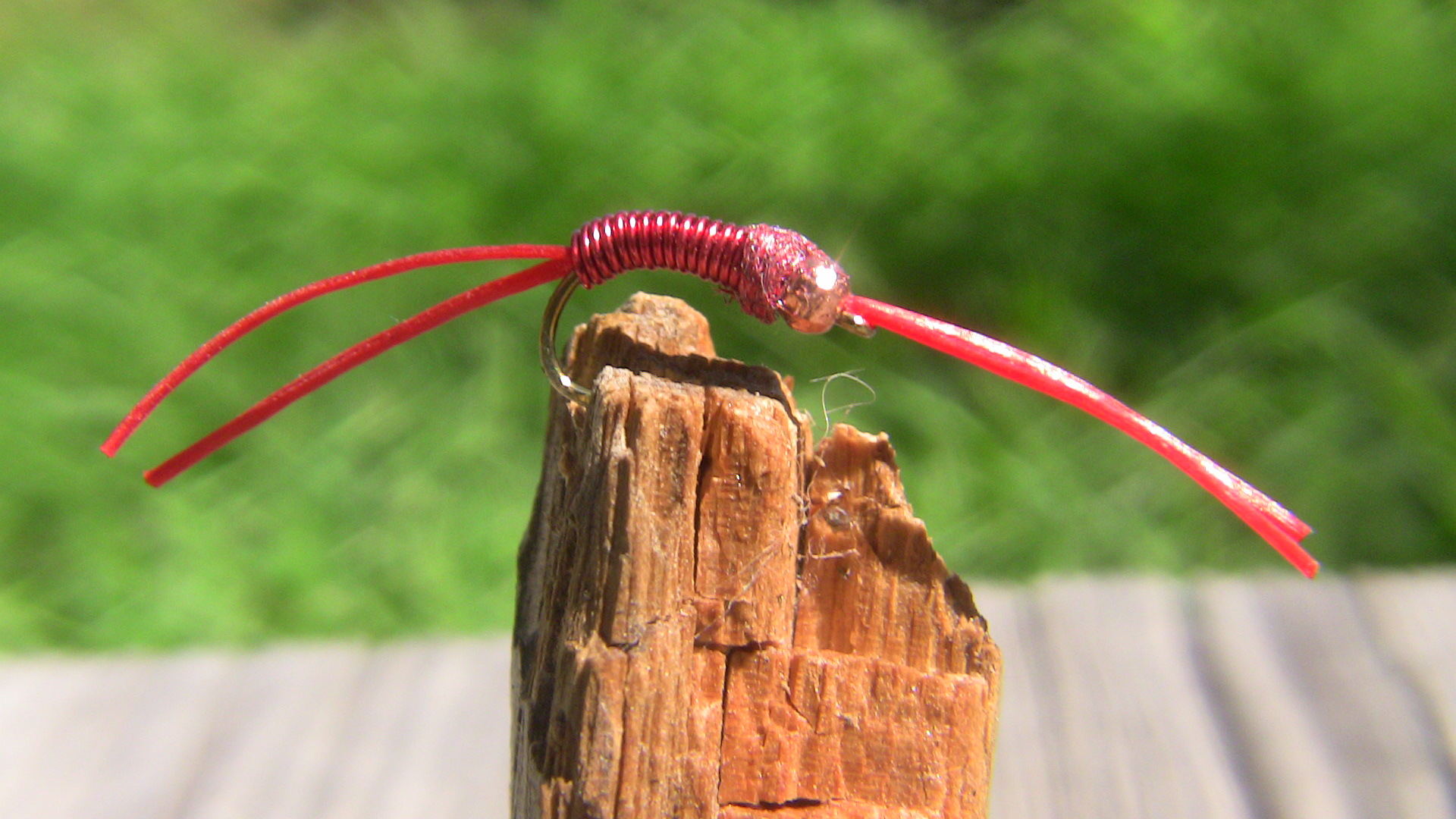
Love it or hate it, the San Juan Worm catches fish. This simple chenille or micro-tubing pattern imitates aquatic worms that are a significant food source in tailwater rivers. Particularly effective on the Bighorn and Missouri after rain events. The San Juan Worm divides the fly fishing community like no other pattern. Purists dismiss it as barely qualifying as a fly, while pragmatists point to its undeniable effectiveness and the scientific reality that aquatic worms (Oligochaeta) constitute a meaningful portion of trout diets, particularly in tailwater environments. On the Bighorn River, stomach sampling studies have shown that aquatic worms can represent up to 20 percent of a trout's diet during certain times of year. Regardless of where you fall in the debate, the San Juan Worm deserves a place in your fly box if you fish Montana's tailwaters. After rain events, rising water dislodges worms from the substrate and puts them into the drift, creating a feeding opportunity that trout exploit enthusiastically. Even during stable conditions, a San Juan Worm fished deep and slow on the Bighorn or Missouri can produce fish when more traditional patterns are not producing. The pattern is especially effective for large trout that have learned to target high-calorie food items with minimal effort.
Lightning Bug
A flashy variation of the Pheasant Tail that uses tinsel and flash for added attraction. The Lightning Bug excels in slightly off-color water and as a dropper behind large dry flies. A Montana guide favorite. The Lightning Bug takes the Pheasant Tail Nymph concept, a slim, segmented mayfly imitation, and adds a generous dose of flash. The tinsel body and flashback wingcase catch light in ways that natural materials cannot, creating a beacon that attracts trout from greater distances. This makes the Lightning Bug particularly effective in off-color water, during overcast conditions, and in deeper runs where light penetration is limited. Montana guides keep Lightning Bugs in their boxes for those days when standard patterns are producing but not as well as expected. A switch from a standard Pheasant Tail to a Lightning Bug can turn an average day into a great one. The flash element seems to trigger a competitive or aggressive response in trout, prompting strikes from fish that might otherwise let a natural-colored nymph pass. On the Madison, Gallatin, and Yellowstone rivers, the Lightning Bug is a consistent producer from spring through fall.
Ray Charles
A scud/sowbug pattern that is absolutely essential on the Bighorn River. Named because you'd have to be blind not to catch fish on it, the Ray Charles imitates the freshwater crustaceans that dominate the diet of Bighorn River trout. The Ray Charles is a deceptively simple pattern that imitates the sowbugs (Asellus) and scuds (Gammarus and Hyalella) that thrive in the weed-rich tailwaters of Montana. These small freshwater crustaceans are a year-round food source and represent a disproportionate percentage of the trout diet on rivers like the Bighorn, where aquatic vegetation provides ideal habitat for crustacean populations. The Ray Charles' slim profile and subtle coloring match these naturals with just enough detail to fool even educated tailwater trout. On the Bighorn River, the Ray Charles is not just a good fly; it is arguably the single most important pattern in a Bighorn angler's box. The river's prolific weed beds support enormous populations of sowbugs and scuds, and trout feed on them constantly. A size #16 Ray Charles in pink or gray, dead-drifted near the bottom, catches fish with a consistency that borders on unfair. The pattern also produces on the Missouri River and other tailwaters where crustaceans are an important food source.