Westslope Cutthroat Trout
Oncorhynchus clarkii lewisi
Overview
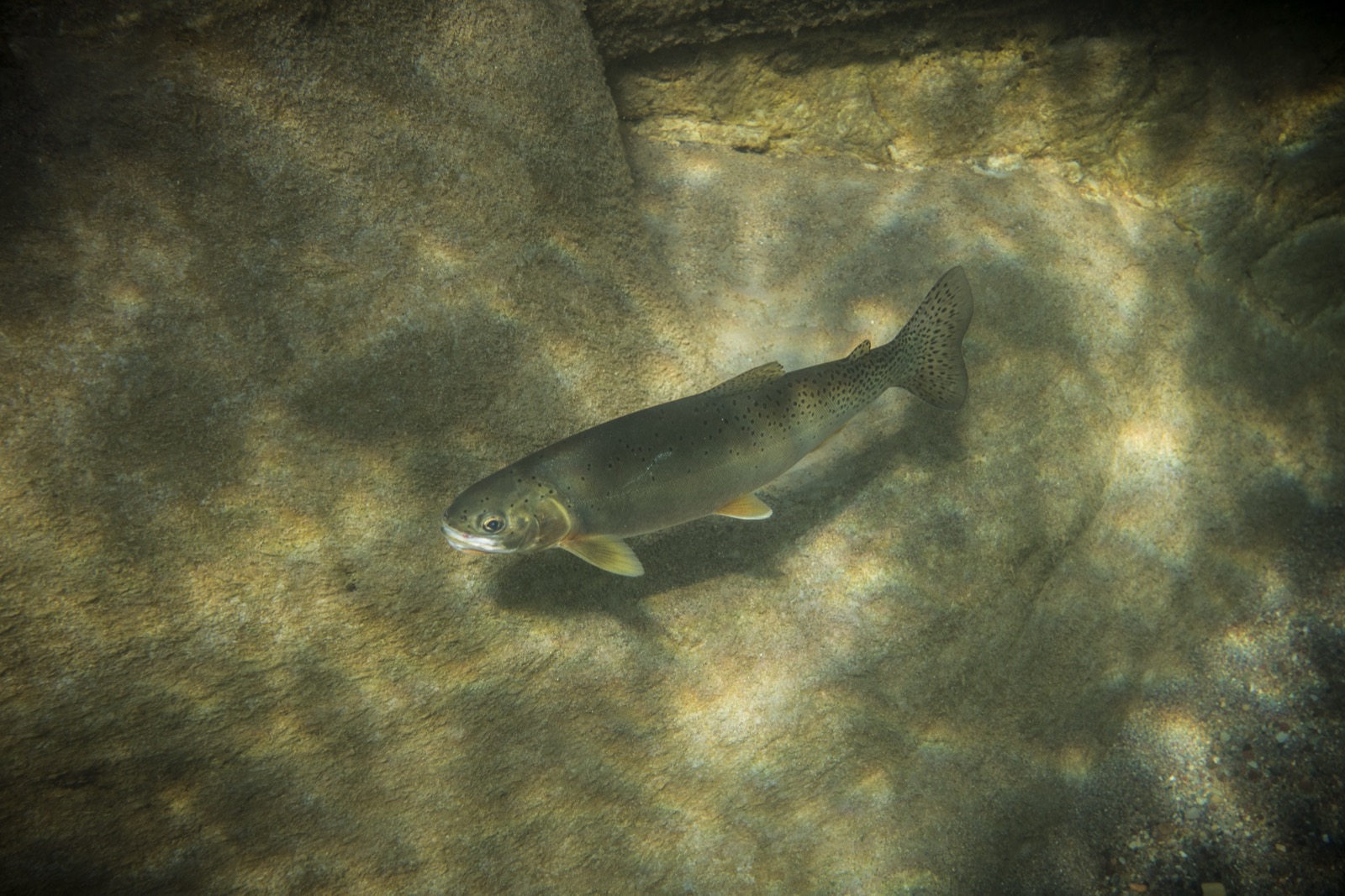
The westslope cutthroat trout is the most widely distributed native trout subspecies in the northern Rocky Mountains and holds the distinction of being Montana's official state fish. This interior subspecies of cutthroat trout evolved in the upper Columbia and Missouri River drainages west of the Continental Divide, inhabiting the cold, pristine mountain streams and alpine lakes of Idaho, western Montana, and pockets of eastern Washington and Oregon. Smaller and more delicately built than their Yellowstone cutthroat cousins, westslope cutthroats are a jewel of the backcountry, their buttery gold flanks peppered with fine black spots and accented by the hallmark crimson slashes beneath the jaw that define all cutthroat trout.
Westslope cutthroats are the quintessential dry-fly trout of the northern Rockies. Found in headwater streams, cascading mountain creeks, and glacially carved alpine lakes from the Bitterroot Range to the Bob Marshall Wilderness, they inhabit some of the most breathtaking landscapes in the American West. On waters like the upper Blackfoot River, Rock Creek, the South Fork Flathead, and the St. Joe River in Idaho, westslope cutthroats rise eagerly to well-presented dry flies, often in settings so remote and wild that the fishing feels almost primeval. Their willingness to eat on the surface, combined with the spectacular scenery of their home waters, makes targeting westslope cutthroats one of the most rewarding experiences in western fly fishing.
Despite their cultural and ecological importance, westslope cutthroat trout occupy only a fraction of their historic range. Hybridization with non-native rainbow trout and competition from introduced brook trout have eliminated genetically pure populations from many drainages. Today, the purest remaining westslope cutthroat populations persist in isolated headwater streams above natural or man-made barriers that prevent upstream migration of non-native species. Conservation efforts across Idaho, Montana, and Washington focus on protecting these stronghold populations, removing non-native competitors, and restoring connectivity where genetically pure fish still exist. Anglers who target westslope cutthroats become some of their strongest advocates, understanding firsthand the fragile beauty of the ecosystems these fish depend upon.
Identification
Like all cutthroat trout, the westslope cutthroat's most conspicuous identification feature is the pair of red-orange slash marks in the folds of the lower jaw, the namesake 'cutthroat' markings. On westslope cutthroats, these slashes tend to be vivid and clearly defined, ranging from orange-red to deep crimson. Look for them by gently lifting the gill plate or simply observing the fish from below while it is still in the water. No other trout species in the northern Rockies carries these markings, though hybrid fish with rainbow trout genetics may show faded or partial slashes.
The spot pattern is the key feature that distinguishes westslope cutthroats from the closely related Yellowstone cutthroat trout. Westslope cutthroats have smaller, more irregularly shaped spots that are concentrated above the lateral line and toward the posterior half of the body, with relatively few spots on the head and forward flanks. In contrast, Yellowstone cutthroats have larger, rounder spots that extend below the lateral line and are more evenly distributed across the body. The overall body coloration of westslope cutthroats is typically a warm golden-yellow to olive on the back and flanks, with a buttery or brassy sheen, and fish from different drainages may display subtle color variations; some populations carry a distinctive lavender or rose tint along the gill plates and lateral line.
To separate westslope cutthroats from rainbow trout, which is critically important for conservation, check for the jaw slashes (absent in pure rainbows), the spot concentration pattern (rainbows have spots distributed more evenly across the body and heavily on the tail), and the overall body shape (westslope cutthroats tend to be slimmer and more streamlined than stocky rainbows of equivalent length). In waters where hybridization has occurred, intermediate fish called 'cutbows' may appear, displaying faint slashes combined with rainbow-like spotting patterns. Where genetic purity matters for management decisions, only DNA testing can definitively confirm pure westslope cutthroat lineage.
Diet
Westslope cutthroat trout are enthusiastic and relatively opportunistic feeders, with a diet dominated by aquatic insects and supplemented heavily by terrestrial invertebrates during the warm months. In the mountain streams they inhabit, their primary food sources include mayfly nymphs and adults (Baetis, Epeorus, Drunella, and Rhithrogena), small stonefly species (Yellow Sallies, little brown stones), caddisflies (particularly Brachycentrus and Rhyacophila), and midges. Because the high-elevation streams westslope cutthroats call home often have less insect diversity than larger valley rivers, these fish tend to be less selective than brown trout or even rainbows, a trait that makes them receptive to a well-drifted dry fly even outside of active hatches.
Terrestrial insects play a disproportionately important role in the westslope cutthroat's diet compared to other trout species. In the small, heavily canopied mountain streams where these fish thrive, ants, beetles, spruce moths, and other land-born insects that tumble from overhanging vegetation can constitute a significant portion of summer caloric intake. On warm August afternoons, a westslope cutthroat stream may see very little aquatic insect activity, yet fish will rise freely to ant and beetle patterns dropping from the alders and conifers lining the banks. This terrestrial dependence makes late summer one of the best times to target these fish on dry flies.
Subsurface, westslope cutthroats feed on a variety of nymphs and larvae, as well as small crustaceans and aquatic worms where available. In alpine lakes, their diet shifts to include zooplankton, chironomid pupae, damselfly nymphs, and freshwater scuds, and lake-dwelling fish can grow substantially larger than their stream counterparts due to the richer food base. Westslope cutthroats rarely become piscivorous, even at larger sizes; their relatively small mouths and headwater habitat keep them oriented toward invertebrate prey throughout their lives.
Habitat Preferences
Westslope cutthroat trout are cold-water obligates that require the cleanest, coldest streams in the Rocky Mountain ecosystem, with optimal water temperatures between 45 and 58 degrees Fahrenheit. They are most abundant in small to medium-sized mountain streams at elevations above 4,000 feet, though historically they occupied mainstem rivers throughout the upper Columbia and Missouri basins before non-native species were introduced. Today, the best westslope cutthroat habitat is found in headwater streams with intact riparian corridors, dense conifer or alder canopy, and minimal human disturbance, the kind of wild, roadless country that defines Idaho's Selway-Bitterroot Wilderness, Montana's Bob Marshall Wilderness, and the Gospel Hump country of central Idaho.
Within a stream, westslope cutthroats occupy the classic cold-water trout habitats: plunge pools below small waterfalls, pocket water behind boulders, deep slots along undercut banks, and the slower-moving tails of runs where they can sip insects from the surface film. They are less structure-dependent than brown trout and more willing to hold in open water, particularly in riffles and shallow runs where insect drift is concentrated. In alpine lakes, westslope cutthroats cruise near the surface during calm mornings and evenings, rising to midges and terrestrials, then retreat to deeper water as the sun climbs and warms the shallows.
Spawning occurs in spring, typically from April through June depending on elevation and water temperature, when westslope cutthroats seek out small tributaries or the upper reaches of their home streams with clean gravel substrates and groundwater upwelling. This springtime spawning, in contrast to the fall spawning of brook trout and brown trout, means that westslope cutthroats must compete for rearing habitat with brook trout fry that are already established from the previous fall's spawn. This competitive disadvantage, combined with the westslope cutthroat's later maturation and lower reproductive rate, is a primary reason brook trout have displaced cutthroats in so many headwater streams across the northern Rockies.
Fishing Tactics
Dry-fly fishing is the premier method for catching westslope cutthroat trout, and for many anglers, it is the entire reason to hike into the remote mountain streams where these fish reside. Westslope cutthroats are eager surface feeders that will rise to attractor dry flies with an enthusiasm that borders on reckless: Royal Wulffs, Stimulators, Elk Hair Caddis, Yellow Sallies, and Parachute Adams in sizes 12 through 16 are the standard offerings. In the small streams that hold the best cutthroat populations, short, accurate casts are far more important than distance. Use a 7.5- to 9-foot rod in 3- or 4-weight, keep leaders short (7.5 to 9 feet tapered to 4X or 5X), and focus on placing your fly precisely into pocket water, plunge pools, and along undercut banks where fish hold.
Terrestrial patterns are devastatingly effective on westslope cutthroat water from mid-July through September. Small foam beetles in sizes 14 to 16, cinnamon ant patterns in sizes 16 to 18, and miniature hopper imitations in sizes 10 to 14 fished tight to overhanging banks and vegetation will draw explosive strikes. A hopper-dropper rig (a foam Chubby Chernobyl or small Club Sandwich on top with a beadhead Pheasant Tail or Prince Nymph trailing 14 to 18 inches below) is one of the most productive all-around setups for prospecting westslope cutthroat water. The dry fly acts as both an attractor and a strike indicator, and the subsurface nymph picks up fish that are not willing to come to the top.
In alpine lakes, westslope cutthroats cruise shoreline drop-offs and weed edges, and they can be targeted effectively with small Woolly Buggers in sizes 10 to 12, Callibaetis dry flies during midday hatches, and chironomid pupa patterns suspended under a small indicator during morning and evening feeding windows. For stream nymphing, keep rigs simple and light: a single beadhead nymph in sizes 14 to 18 with minimal split shot, drifted through deeper pockets and runs, is all that is needed. Westslope cutthroats fight with surprising energy for their size, using the current to their advantage, and on ultralight tackle they provide excellent sport. Always handle these fish gently and release them quickly; every genetically pure westslope cutthroat returned to the water represents an irreplaceable piece of Rocky Mountain natural heritage.
Conservation
The westslope cutthroat trout is classified as a Species of Special Concern in Montana, Idaho, and several other states, and it is a candidate for federal listing under the Endangered Species Act. Genetically pure populations occupy less than 20 percent of the subspecies' historic range, with the primary threats being hybridization with non-native rainbow trout, competition and displacement by introduced brook trout, and habitat degradation from logging, road construction, and climate change. The loss of genetic purity through hybridization is considered the single greatest long-term threat to the subspecies. Significant conservation and restoration efforts are underway across the westslope cutthroat's range. State and federal agencies, along with organizations like Trout Unlimited and the Western Native Trout Initiative, have implemented projects to remove non-native fish from headwater streams using piscicides, construct migration barriers to prevent reinvasion, and reintroduce genetically pure westslope cutthroats into restored habitat. In Montana, the Blackfoot River watershed has been a particular focus of restoration work, with notable success in re-establishing cutthroat populations in tributaries. Anglers are encouraged to practice careful catch-and-release, learn to identify pure westslope cutthroats versus hybrids, and support habitat protection in the wild mountain drainages these fish depend upon.
Rivers Where Found
Lakes & Ponds Where Found
Quick Facts
- Scientific Name
- Oncorhynchus clarkii lewisi
- Average Size
- 8-14"
- Trophy Size
- 18+"
- State Record
- 5 lbs 0 oz, caught in the South Fork Flathead River by Ray Schnurbusch in 2002 (Montana); Idaho catch-and-release record 25 inches from Clark Fork River by Daniel Whitesitt in 2024
- Found In
- Salmon River, Yakima River, Methow River, Skagit River, Georgetown Lake, Hebgen Lake, Placid Lake, Quake Lake