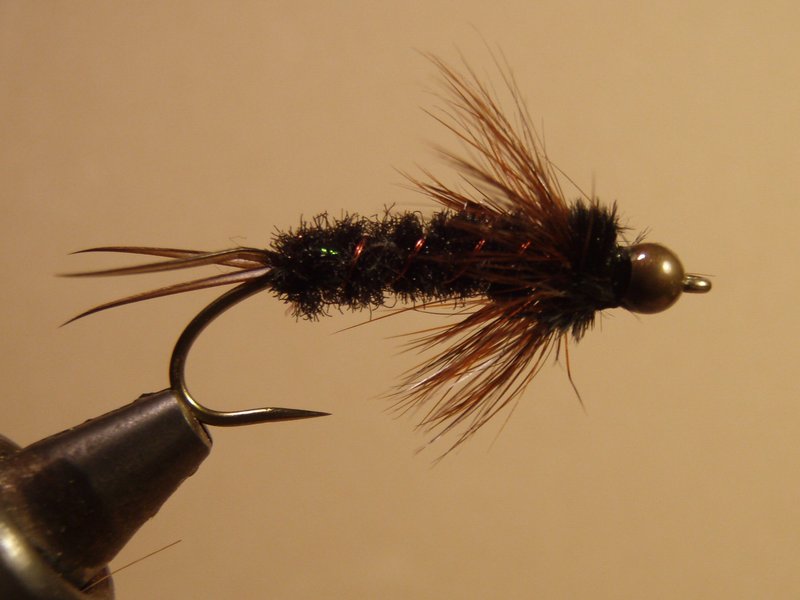
Stonefly Nymph
The Stonefly Nymph is a broad category of patterns designed to imitate the nymphal stage of Plecoptera, one of the most important aquatic insect orders for trout. These robust, protein-rich insects live for one to three years in clean, well-oxygenated freestone rivers, making them a year-round food source that trout actively seek. Generic stonefly nymph patterns use dark colors, bulky profiles, and rubber legs to suggest various species from small golden stones to giant salmonflies, providing versatile searching patterns effective in diverse water types. Stonefly nymphs are poor swimmers that crawl along the bottom among rocks and gravel, making them vulnerable to trout as they move between feeding areas or migrate toward shore to emerge. Their substantial size and meaty bodies make them high-value targets—a single large stonefly nymph provides more nutrition than dozens of small mayflies. Trout in freestone rivers key on stoneflies throughout the year, though feeding activity intensifies in spring and early summer when nymphs migrate toward shore in preparation for emergence. These patterns excel in fast, broken water where natural stoneflies thrive. Focus on boulder-strewn runs, pocket water behind rocks, deep riffles, and along rocky banks where nymphs crawl during migration. The flies work best when fished near the bottom using weighted patterns or added split shot. Dead-drifting through prime lies is the primary technique, though occasionally tumbling the fly along the substrate or adding slight movement can trigger strikes from aggressive fish. The Stonefly Nymph's effectiveness spans seasons because different species emerge at different times. Small golden stones emerge in late spring, larger species like salmonflies and golden stones hatch in early summer, and some species continue emerging into fall. Even when no hatch is occurring, trout feed opportunistically on stonefly nymphs year-round, making these patterns reliable searching flies. Their bulk and dark coloration create a strong silhouette that fish can see in turbid or stained water, adding to their versatility across varying conditions.
Pattern Details
- Type
- Nymph
- Seasons
- spring, summer
- Hook Sizes
- #6-10
- Hook Type
- 2X-3X long nymph hook
- Tying Difficulty
- Intermediate
- Imitates
- Generic stonefly nymphs (Plecoptera)
Recipe & Materials
- Hook
- TMC 5262 or 3761, sizes 6-10, 2X-3X long
- Thread
- 6/0 black or brown
- Weight
- Lead wire or tungsten bead
- Tail
- Goose biots, brown or black
- Body
- Dubbing (brown, black, or golden)
- Rib
- Copper wire or vinyl rib
- Wing case
- Turkey tail, Swiss Straw, or Thin Skin
- Legs
- Rubber legs or hackle fibers
- Thorax
- Dubbed fur or peacock herl
Technique & Presentation
Tying effective stonefly nymph patterns requires creating a robust, buggy appearance with proper proportions to suggest these substantial insects. Begin with a 2X or 3X long nymph hook in sizes 6-10, depending on the stonefly species you're imitating. Add weight to the hook shank using lead wire wraps or start with a tungsten bead for deeper presentations. Weight is critical—stonefly nymphs live on the bottom, so your pattern must reach the feeding zone quickly and stay there.
Create a segmented body using dubbed fur in brown, black, olive, or golden tones. The dubbing should be picked out slightly to create a buggy texture. Rib the body with copper wire or vinyl ribbing for durability and segmentation. Goose biots work well for the tail, providing a realistic forked appearance. The thorax should be bulkier than the abdomen, using darker dubbing or peacock herl to suggest the developing wing pads. Cover the thorax with a wing case made from turkey tail, Swiss Straw, or Thin Skin, securing it behind the head.
Rubber legs are a critical element that brings the pattern to life. Mount two or three pairs of legs along the thorax, using barred or solid black rubber. The legs should extend past the hook bend, creating a wide profile that suggests the natural nymph's sprawling legs. Some tiers add antennae using the same rubber leg material. Don't worry about perfection—stonefly nymphs are rough, buggy creatures, and your fly should reflect that irregular, organic appearance rather than neat precision.
Fishing stonefly nymphs effectively requires getting down to the bottom where naturals live. Use a tight-line or Euro-nymphing approach for maximum control, or fish beneath a strike indicator with sufficient weight to reach the substrate. Cast upstream and allow the fly to tumble naturally along the bottom through likely holding water. Watch for strikes that feel like gentle taps or sudden stops—stoneflies are large enough that fish often mouth them before committing. Set the hook firmly but not violently, as these big nymphs are typically tied on stout hooks. During stonefly migrations in spring and early summer, focus on water near the banks where nymphs crawl toward shore. This is when trout feed most aggressively on stoneflies, often in surprisingly shallow water close to the edges.
History & Origin
Stonefly nymph patterns have evolved alongside anglers' understanding of aquatic entomology and the importance of matching different life stages of trout food. Early fly fishers focused primarily on dry flies imitating adult insects, largely neglecting the subsurface stages where trout do most of their feeding. The development of effective nymph patterns in the early 20th century revolutionized fly fishing, and stonefly imitations became a crucial part of this evolution.
Pioneering nymph fishers like G.E.M. Skues in England and Edward Hewitt in America recognized that trout fed heavily on nymphs, including stoneflies. However, early patterns were often crude imitations that suggested general size and color without capturing the distinctive characteristics of stonefly nymphs. As fly tiers gained access to better materials and developed improved techniques, stonefly nymph patterns became more realistic while maintaining the durability needed for fishing rocky, fast water.
The Western United States, with its pristine freestone rivers hosting robust stonefly populations, became the center of stonefly nymph pattern development. Rivers like Montana's Madison and Yellowstone, Wyoming's Snake, and Idaho's Henry's Fork featured famous stonefly hatches that attracted anglers from around the world. Local guides and tiers developed patterns to match specific species, from small golden stones to massive salmonflies. The addition of modern materials like rubber legs, synthetic wing case materials, and tungsten beads dramatically improved pattern effectiveness.
Today's stonefly nymph patterns represent the culmination of decades of refinement. Patterns range from simple, durable searching flies to complex imitations with realistic wing cases, segmented bodies, and articulated sections. The generic Stonefly Nymph remains popular because it covers multiple species and life stages with a single versatile pattern. Whether fished on Montana's Big Hole during the salmonfly hatch or prospected through Colorado pocket water in mid-summer, these patterns continue catching trout because they accurately represent a food source that's been important to both trout and anglers for as long as fly fishing has existed. The stonefly nymph is more than a fly pattern—it's a fundamental tool for understanding how trout feed and how to present subsurface flies effectively in fast water.
Where to Fish This Fly
Truckee River
Eastern Sierra / Nevada and Placer Counties
West Branch Penobscot River
North-Central Maine / Piscataquis County
Rapid River
Western Maine / Oxford County
Roach River
North-Central Maine / Piscataquis County
East Outlet of the Kennebec River
North-Central Maine / Piscataquis County
Pemigewasset River
White Mountains / Grafton County
Baker River
White Mountains / Grafton County
Ammonoosuc River
White Mountains / Grafton County
White River
Central Vermont / White River Valley
Otter Creek
Western Vermont / Addison County
Klickitat River
South Central Washington, Klickitat County
Related Nymph Patterns
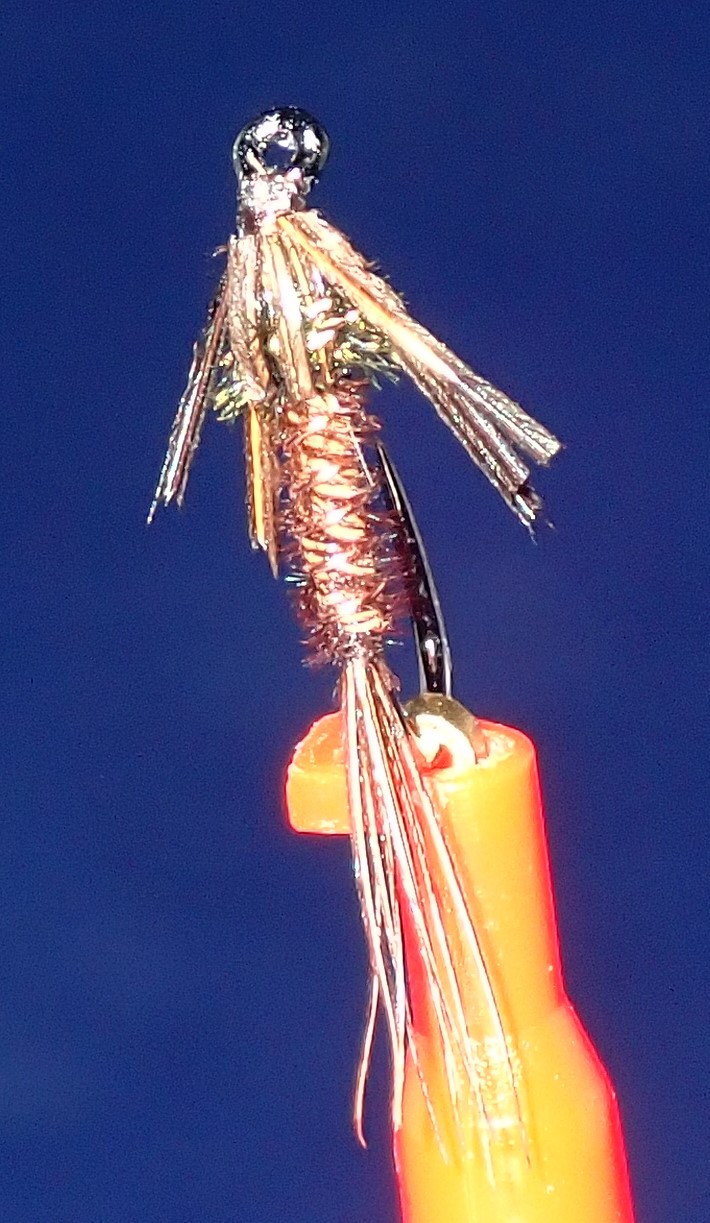
Pheasant Tail Nymph
Frank Sawyer's classic nymph pattern imitates a wide range of mayfly nymphs. The pheasant tail fibers create a realistic segmented body. Effective year-round in sizes #14-20, this pattern belongs in every Montana fly box. The Pheasant Tail Nymph is the most important subsurface fly in the history of fly fishing. Frank Sawyer's original design used nothing but pheasant tail fibers and copper wire, with no thread, no dubbing, no synthetics. The result was a slim, naturally segmented nymph that sinks quickly and perfectly imitates the profile of a swimming or drifting mayfly nymph. Modern variations have added a bead head for extra weight and flash, making an already deadly pattern even more effective. In Montana, the bead head Pheasant Tail is a year-round producer on every river in the state. It matches Baetis nymphs in fall and spring, PMD nymphs in summer, and various mayfly species throughout the seasons. Whether fished as a trailing nymph behind a dry fly, in a two-nymph Euro-style rig, or under an indicator, the Pheasant Tail consistently catches fish. Its slim profile sinks quickly and looks natural even to the most selective trout on the Missouri and Bighorn tailwaters.
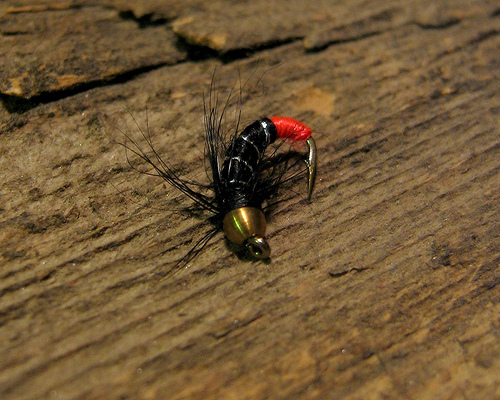
Zebra Midge
A devastatingly simple midge pupa pattern. Thread body with a bead head, and that's it. The Zebra Midge is the most effective winter pattern on Montana tailwaters and produces year-round on the Missouri and Bighorn rivers. The genius of the Zebra Midge lies in its simplicity. A small bead head, a thread body wrapped in even turns to create segmentation, and perhaps a few fibers for a collar, and that is all there is to it. Yet this pattern imitates the midge pupae that comprise an enormous percentage of a trout's diet on tailwater rivers. Midges hatch every day of the year on rivers like the Missouri and Bighorn, and the Zebra Midge matches them with astonishing effectiveness. The pattern's versatility is remarkable. Fished under an indicator in the classic dead-drift presentation, it produces fish consistently. But the Zebra Midge is also deadly when fished in the surface film as a midge cluster or suspended just below the surface on a greased leader. On winter days when other patterns fail, a small Zebra Midge in #18-22 fished deep and slow can save what might otherwise be a fishless outing. It is the great equalizer, the fly that always works when nothing else does.
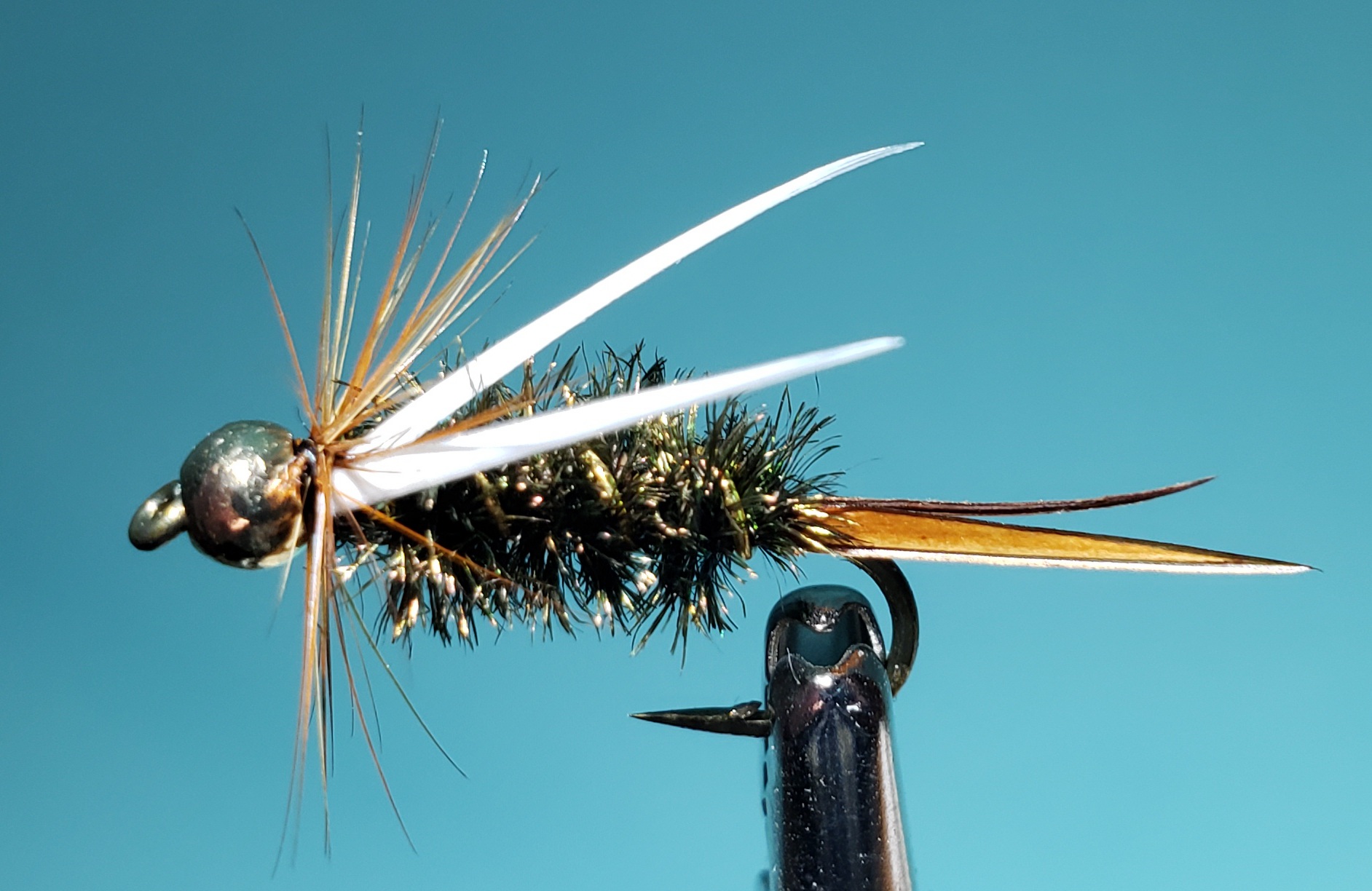
Prince Nymph
A classic attractor nymph with peacock herl body and white biots. The Prince Nymph doesn't imitate any specific insect but suggests many. It's a reliable searching pattern when drifted through riffles and runs on all Montana rivers. The Prince Nymph occupies a unique space in fly fishing; it is perhaps the most effective attractor nymph ever designed. The combination of a peacock herl body, white goose biot wing, and brown hackle creates a fly that doesn't precisely match any natural insect but somehow suggests dozens of them. Trout see the Prince Nymph and recognize it as food, plain and simple. The iridescent sheen of the peacock herl, the contrasting white wings, and the buggy profile all contribute to its universal appeal. In Montana, the Prince Nymph is a workhorse pattern that produces fish from the first runoff of spring through the cold days of late fall. It excels as a dropper behind large dry flies, as a searching nymph under an indicator, and as a point fly in a two-nymph rig. On the Madison, Gallatin, and Yellowstone rivers, the Prince Nymph consistently produces when conditions are changing, hatches are unclear, or fish seem unwilling to commit to specific imitations. It is the problem-solving nymph that every angler should carry.
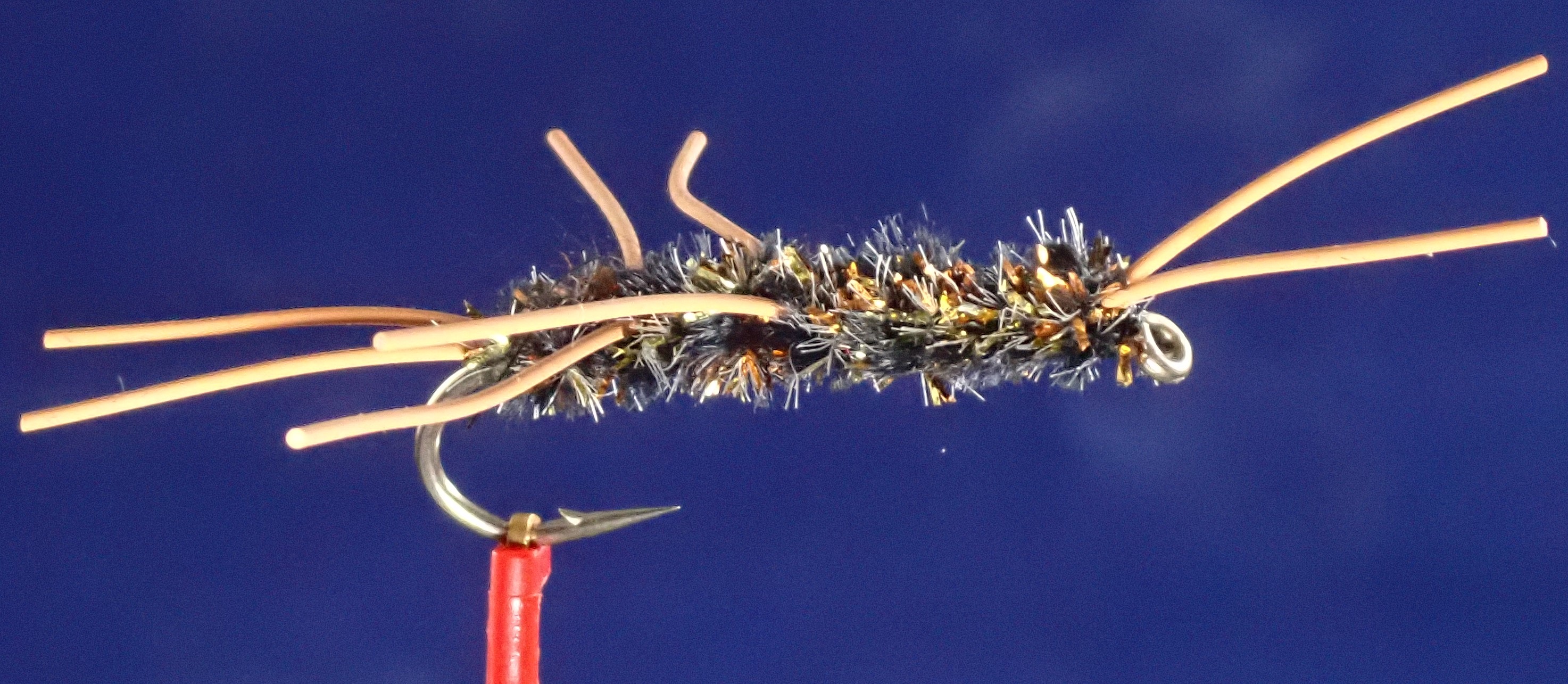
Pat's Rubber Legs
A large, heavily weighted stonefly nymph pattern. Pat's Rubber Legs is the go-to point fly for nymph rigs on the Madison, Yellowstone, and Gallatin rivers. The rubber legs pulse with every micro-current, driving trout wild. Pat's Rubber Legs is the definition of a workhorse nymph. This large, heavily weighted stonefly imitation serves as both an effective fish catcher and the anchor fly in a multi-nymph rig. Its weight gets the entire rig down to the bottom quickly, while its rubber legs provide continuous movement that attracts trout from a distance. The variegated chenille body suggests the mottled coloring of natural stonefly nymphs, and the overall profile matches the large Pteronarcys and Hesperoperla nymphs that inhabit Montana's freestone rivers. On the Madison, Yellowstone, and Gallatin rivers, all premier stonefly streams, Pat's Rubber Legs is arguably the most important fly in a guide's box. It produces fish 12 months of the year, not just during the stonefly emergence. Stonefly nymphs are always present in the drift, dislodged by current, wading anglers, and their own movements. A large Pat's Rubber Legs drifted along the bottom is a convincing imitation that trout eat with confidence. Pair it with a smaller trailing nymph like a Pheasant Tail or Lightning Bug for a devastating two-fly rig.
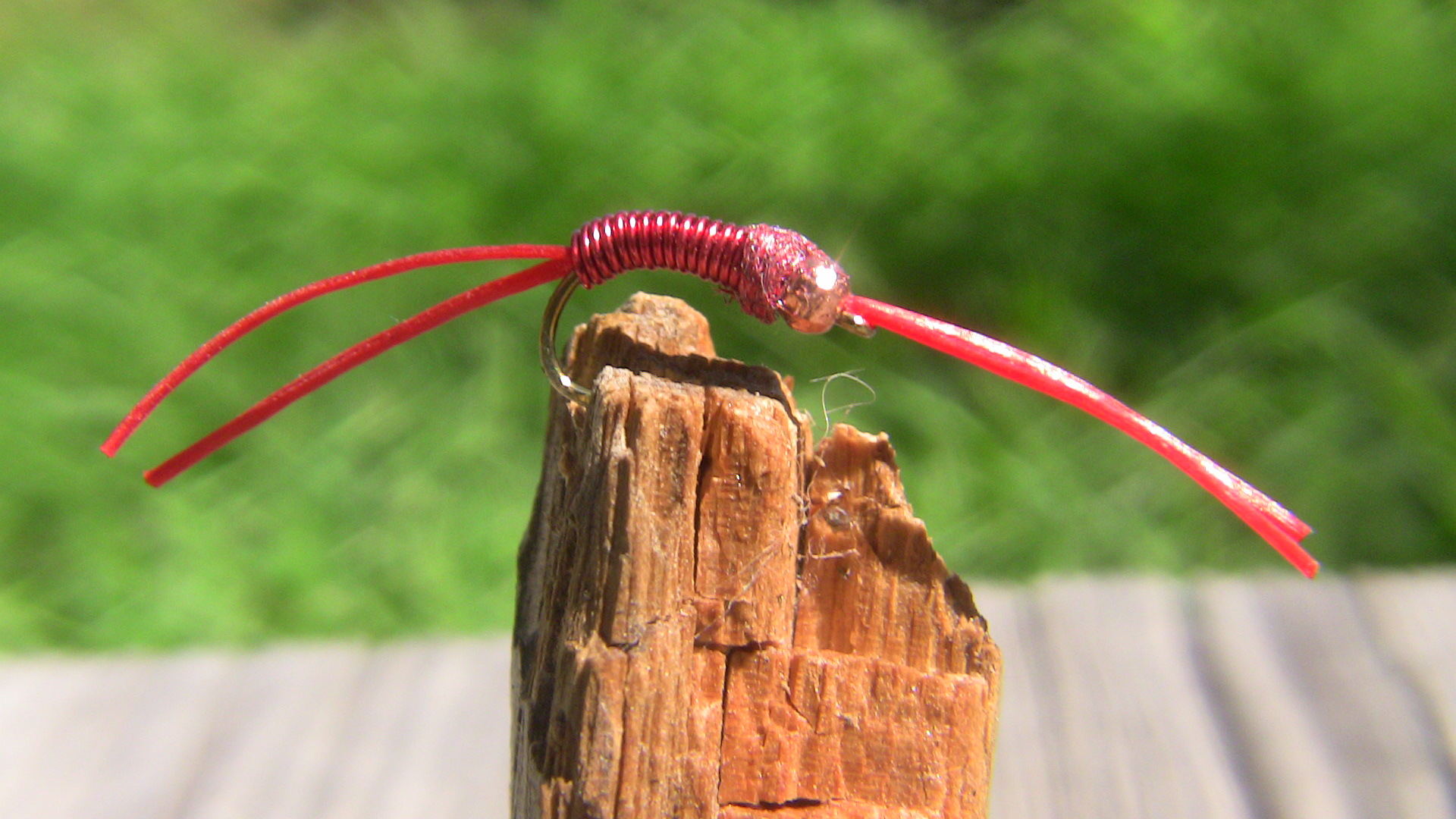
San Juan Worm
Love it or hate it, the San Juan Worm catches fish. This simple chenille or micro-tubing pattern imitates aquatic worms that are a significant food source in tailwater rivers. Particularly effective on the Bighorn and Missouri after rain events. The San Juan Worm divides the fly fishing community like no other pattern. Purists dismiss it as barely qualifying as a fly, while pragmatists point to its undeniable effectiveness and the scientific reality that aquatic worms (Oligochaeta) constitute a meaningful portion of trout diets, particularly in tailwater environments. On the Bighorn River, stomach sampling studies have shown that aquatic worms can represent up to 20 percent of a trout's diet during certain times of year. Regardless of where you fall in the debate, the San Juan Worm deserves a place in your fly box if you fish Montana's tailwaters. After rain events, rising water dislodges worms from the substrate and puts them into the drift, creating a feeding opportunity that trout exploit enthusiastically. Even during stable conditions, a San Juan Worm fished deep and slow on the Bighorn or Missouri can produce fish when more traditional patterns are not producing. The pattern is especially effective for large trout that have learned to target high-calorie food items with minimal effort.
Lightning Bug
A flashy variation of the Pheasant Tail that uses tinsel and flash for added attraction. The Lightning Bug excels in slightly off-color water and as a dropper behind large dry flies. A Montana guide favorite. The Lightning Bug takes the Pheasant Tail Nymph concept, a slim, segmented mayfly imitation, and adds a generous dose of flash. The tinsel body and flashback wingcase catch light in ways that natural materials cannot, creating a beacon that attracts trout from greater distances. This makes the Lightning Bug particularly effective in off-color water, during overcast conditions, and in deeper runs where light penetration is limited. Montana guides keep Lightning Bugs in their boxes for those days when standard patterns are producing but not as well as expected. A switch from a standard Pheasant Tail to a Lightning Bug can turn an average day into a great one. The flash element seems to trigger a competitive or aggressive response in trout, prompting strikes from fish that might otherwise let a natural-colored nymph pass. On the Madison, Gallatin, and Yellowstone rivers, the Lightning Bug is a consistent producer from spring through fall.