Kennebago Lake
Kennebago Lake is the largest fly-fishing-only lake east of the Mississippi, a cold, deep sheet of water in Maine's Rangeley high country sustained entirely by wild brook trout and landlocked salmon. Its evening rises, July Hex hatch, and fall run of big brookies into the Kennebago River make it a pilgrimage water for stillwater fly anglers.
Overview
Kennebago Lake occupies a class of its own among American stillwaters: at 1,764 acres it is the largest fly-fishing-only lake east of the Mississippi, a distinction it wears alongside more than a century of sporting-camp history in the Kennebago valley north of Rangeley. Set at roughly 1,777 feet in the Franklin County high country, the lake is deep, cold, and remarkably intact, and every trout and salmon in it is wild. The 2026 state stocking report shows no plants here at all; the fishery sustains itself on spawning runs up and down the Kennebago River, exactly as it has since anglers first rode buckboards in to the original camps.
The fish are wild brook trout and landlocked salmon, and the lake's structure works in the fly angler's favor. Kennebago plunges to 119 feet with a mean depth of 65 feet, which keeps the whole water column cold enough that trout and salmon never have to retreat into the abyss the way they do on shallower, warmer lakes. Fish stay within reach of a fly line through the heart of summer, holding along dropoffs and cruising the shorelines and river mouths in the mornings and evenings.
The calendar begins at ice-out, when streamers stripped off the river mouths take the year's first salmon and brook trout on smelt-style patterns. As the water warms into early summer, Kennebago becomes famous for its evening rises: caddis bring fish to the surface on calm June and July nights, the Hexagenia hatch in July pulls the lake's biggest brook trout up over the soft-bottomed flats at dusk, and flying-ant falls in August can carpet the surface and trigger the kind of gulping, bank-to-bank rise most lake anglers only read about.
Autumn belongs to the river. As September cools, large brook trout stage off the Kennebago River and begin their spawning run, and the weeks before the season closes offer the best shot of the year at a truly big wild Maine brookie. Streamers and buggers fished near the outflow and along the dropoffs account for most of these fish.
Access is part of what keeps Kennebago special. The private Kennebago Road is gated, and vehicle access is reserved for guests of Grant's Camps and the other Kennebago-area sporting camps; everyone else walks or bikes in. That gate, together with the fly-only rule, has preserved a low-pressure wild fishery of a quality that barely exists elsewhere in the eastern United States. For an angler who wants classic Maine stillwater fly fishing exactly as the sporting-camp era knew it, Kennebago is the destination.
Depth & Character
- Surface Area
- 1,764acres
- Max Depth
- 119ft
- Mean Depth
- 65ft
- Elevation
- 1,777ft
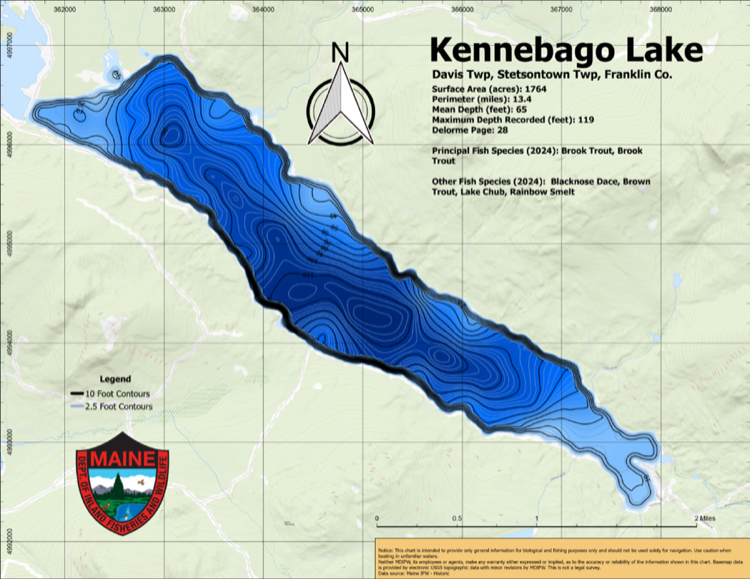
Bathymetric depth chart — click to open the full PDF. Source: Vermont DEC.
Source: Vermont DEC
Water Characteristics
Kennebago is a deep, cold, oligotrophic mountain lake. The state survey map shows 1,764 acres with a maximum depth of 119 feet and an unusually high mean depth of 65 feet, meaning most of the basin is deep water; the shoreline shelves fall away quickly into the main bowl. That depth-to-surface ratio keeps the lake cold from top to bottom, and it is the reason Kennebago fishes differently from most stillwaters: the water column never becomes hostile in summer, so trout and salmon stay shallow enough to reach with conventional fly lines all season instead of vanishing below a hard thermocline.
The productive fly water is concentrated where the depth chart shows structure: the shelves and dropoff edges rimming the basin, the mouths of the Kennebago River at the lake's ends, and the softer-bottomed coves and flats that host the July Hexagenia emergence. The river mouths concentrate baitfish and staging fish at ice-out and again in fall, while the shoreline margins carry the caddis and terrestrial activity that drives the famous evening rises.
Seasonal Fishing Guide
Spring
Ice-out comes late at 1,777 feet, and when it does, fish streamers off the river mouths. Salmon and brook trout concentrate around the Kennebago River inflow and outflow chasing baitfish; cast or slow-troll smelt-style streamers like the Grey Ghost on intermediate and sinking lines along the shelves and mouths. Overcast, choppy days fish best, and the first weeks after ice-out are the year's most reliable streamer window.
Summer
This is Kennebago's showcase season. Because the lake runs deep and cold, trout stay shallow enough to catch all summer. Fish caddis dries on the famous calm-evening rises in June and July, be on the soft-bottomed flats at dusk for the July Hexagenia hatch, and carry ant patterns for the August flying-ant falls. Midday, crawl a Woolly Bugger along the dropoffs on a sinking line.
Fall
September is trophy time. Large wild brook trout stage off the Kennebago River before their spawning run, and streamers fished near the outflow and along adjacent dropoffs take the biggest fish of the year. Salmon feed aggressively as the water cools. Fish hard until the season closes and check current lawbook dates for the Kennebago system.
Winter
Kennebago is a fly-fishing-only water managed for its wild coldwater fishery, and there is no winter fly fishery here; the lake's season is an open-water story. Use the off-season to book a camp stay, because prime ice-out and Hex-week dates at the Kennebago camps fill early.
Access & Boats
Access is controlled by the private, gated Kennebago Road off the Rangeley area. Vehicle access through the gate is reserved for guests of Grant's Camps and the other Kennebago-area sporting camps; non-guests may walk or bike in past the gate. On the water, small boats and float tubes are the standard approach, and the camps outfit their guests with boats. The inlets are wadeable, and the river mouths are the classic spots to fish on foot at ice-out and in September.
Fishing Pressure & Local Tips
Light, and deliberately so. The gated private road limits most traffic to sporting-camp guests, and the fly-fishing-only regulation filters the crowd further. Even in the prime July Hex window and the September staging period, Kennebago fishes like a private water compared to the drive-up lakes of the Rangeley chain. Anglers willing to walk or bike in past the gate can find weekday evenings with rising fish and almost no company.
Local Knowledge
Plan around the evening rise. Kennebago's reputation rests on its surface fishing, and the last two hours of light on a calm summer evening are worth more than the whole middle of the day. Carry caddis dries for June and July, Hex patterns for the July dusk emergence over the softer flats, and ant patterns in August; a flying-ant fall on this lake can bring up every fish in a cove, and being without ants when it happens is a mistake you only make once.
At ice-out and again in September, think like a streamer angler. Work smelt-style streamers and buggers off the river mouths early and late, when salmon and brook trout concentrate around the moving water. In September, the lake's largest brookies stage off the Kennebago River before running upstream to spawn, and a slowly stripped streamer along that transition is the highest-percentage cast of the year for a trophy wild fish.
In midsummer, do not assume the fish have gone deep. Kennebago's cold water keeps trout catchable all season, but midday fish slide down the dropoffs; a full-sinking line and a Woolly Bugger crawled along the edges of the shelves keeps you in the game between morning and evening sessions.
Species Present
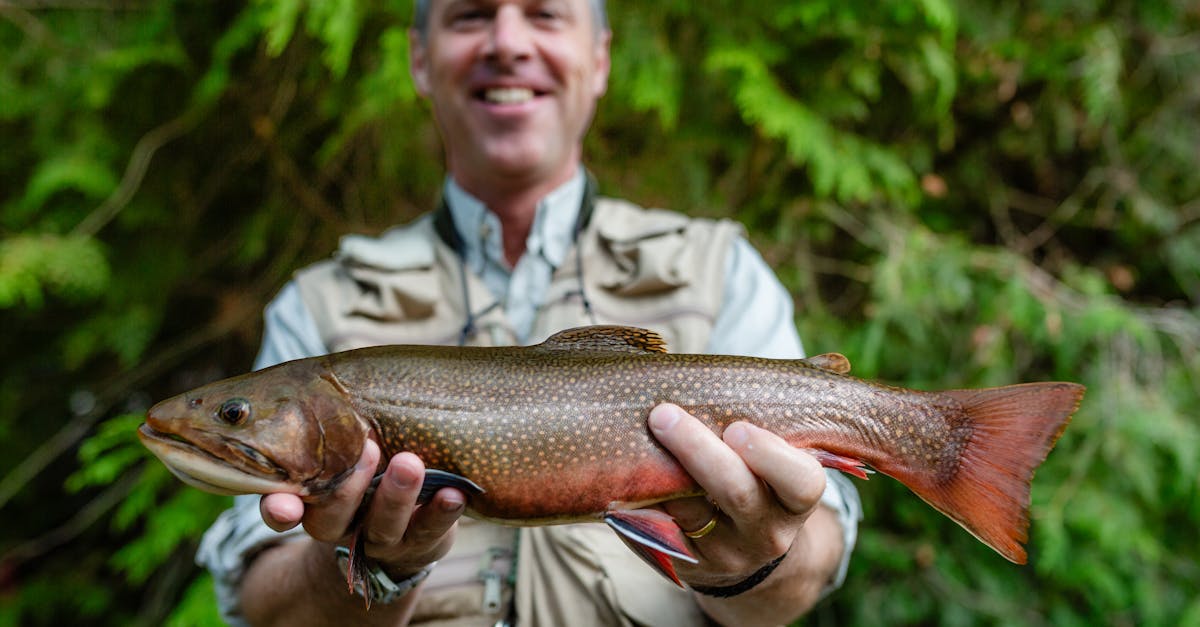
Brook Trout
The brook trout is widely considered the most beautiful freshwater fish in North America, and catching one in a pristine Montana mountain stream is an experience that captures the essence of backcountry fly fishing. Despite their common name, brook trout are not true trout at all; they are a species of char (genus Salvelinus), more closely related to lake trout and Arctic char than to rainbows or browns. Native to eastern North America from Georgia to Hudson Bay, brook trout were among the first salmonids introduced to Montana's waters in the late 1800s and have since established self-sustaining populations in cold, high-elevation streams and lakes throughout the state. In Montana, brook trout thrive best in small, cold headwater streams and high mountain lakes where competition from larger trout species is minimal. In these environments, they are often the dominant, or only, salmonid present. The trade-off is size: Montana stream-dwelling brook trout typically range from 6 to 10 inches, with fish over 12 inches considered noteworthy in most waters. What they lack in size, however, they more than make up for in beauty and willingness to eat a fly. Brookies are aggressive feeders that will strike attractor dry flies, nymphs, and small streamers with enthusiasm, making them an ideal species for beginning fly anglers and a delightful quarry for anyone who appreciates small-stream fishing. Brook trout do present a conservation paradox in Montana. While they are a beloved and beautiful gamefish, they are non-native and can negatively impact native species, particularly Yellowstone and westslope cutthroat trout. In headwater streams, brook trout often outcompete cutthroats for food and spawning habitat due to their higher reproductive rate and earlier maturation. As a result, Montana FWP has implemented brook trout removal projects on some streams to restore native cutthroat populations. In many waters, liberal harvest limits for brook trout are encouraged to reduce their numbers and benefit native fish. Anglers can enjoy excellent brook trout fishing while actively helping conservation by keeping a few for the pan.
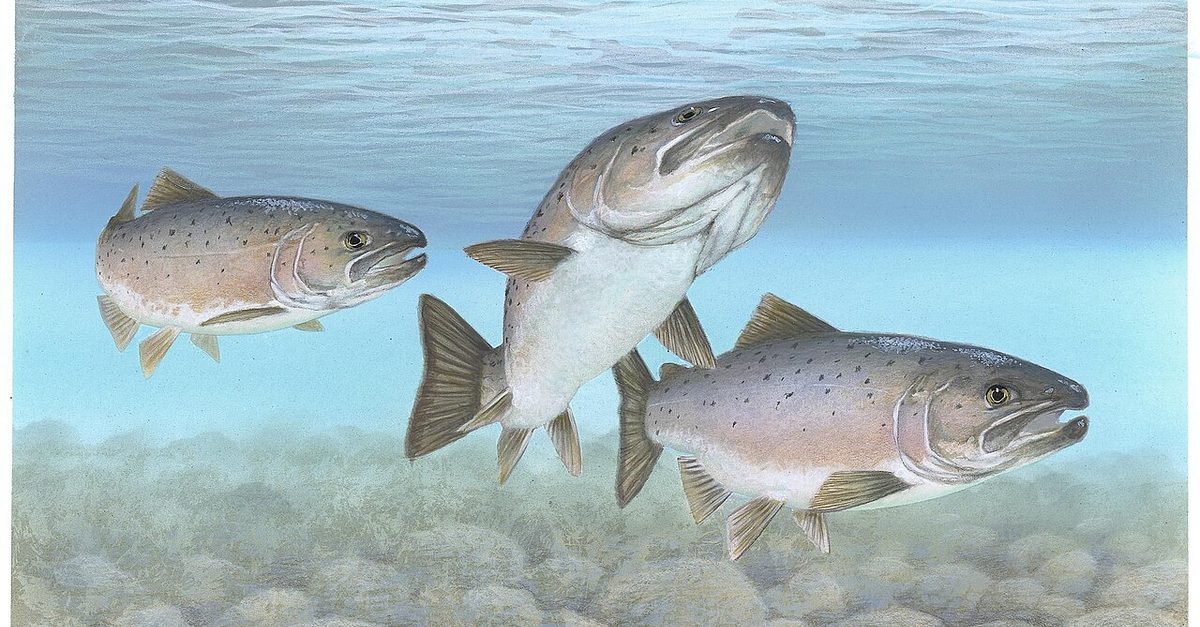
Landlocked Atlantic Salmon
The landlocked Atlantic salmon is one of New England's most prized gamefish, a freshwater-resident form of the Atlantic salmon that spends its entire life in lakes and rivers rather than migrating to the ocean. Found primarily in the lakes and rivers of Maine, New Hampshire, Vermont, and New York, landlocked salmon are genetically identical to their sea-run counterparts but have adapted to a completely freshwater life cycle, using large, cold lakes as their ocean substitute and tributary rivers as spawning habitat. Landlocked salmon are the signature gamefish of Maine's sporting camp tradition, where generations of anglers have gathered at remote wilderness lodges to fish for salmon in the Rangeley Lakes, Moosehead Lake, Sebago Lake, and the rivers that connect them. The fish combine the acrobatic fighting ability of their anadromous relatives with the accessibility of a freshwater species, leaping repeatedly when hooked and running with the kind of power and endurance that makes them one of the most exciting fish available on a fly rod in the northeastern United States. In rivers, landlocked salmon behave much like large resident trout, holding in classic lies and feeding on aquatic insects during hatches. They are particularly responsive to caddis and mayfly emergers, and the sight of a 3-pound landlocked salmon rising to a dry fly in a New England river is one of the defining experiences of northeastern fly fishing. In lakes, salmon are targeted with streamers that imitate smelt, their primary forage fish, trolled or cast from boats during the spring and fall when salmon cruise near the surface in cold-water conditions.
Food Sources & Hatches
| Insect | Suggested Fly | Jan | Feb | Mar | Apr | May | Jun | Jul | Aug | Sep | Oct | Nov | Dec |
|---|---|---|---|---|---|---|---|---|---|---|---|---|---|
Rainbow Smelt / Baitfish Early morning and evening | Grey Ghost | ||||||||||||
Caddisflies Evening | Elk Hair Caddis | ||||||||||||
Hexagenia Mayflies Dusk into dark | Hexagenia Nymph | ||||||||||||
Flying Ants Afternoon and evening | · | ||||||||||||
Chironomids (Midges) Morning and evening | Chironomid (Bomber) | ||||||||||||
Leeches All day; best in low light | Woolly Bugger |
Rainbow Smelt / Baitfish: Streamer fishing bookends the season: ice-out fish concentrate off the river mouths chasing baitfish, and September brings staging brook trout and aggressive salmon back to the mouths and dropoffs. Grey Ghosts and other smelt-style streamers on sinking lines are the classic approach.
Caddisflies: Kennebago's famous evening rises are built on caddis. Calm June and July nights bring fish to the surface along the shorelines and coves; an Elk Hair Caddis or X-Caddis fished to risers is the bread-and-butter dry-fly game.
Hexagenia Mayflies: The July Hex hatch is the lake's marquee event, pulling the biggest brook trout up over the softer-bottomed flats at last light. Fish a Hexagenia nymph before the emergence and a big dun pattern once fish start breaking the surface.
Flying Ants: August flying-ant falls can blanket the surface and trigger lake-wide rises. Carry foam or CDC ant patterns in sizes 14-18; fish key on the ants to the exclusion of everything else when a fall is on.
Chironomids (Midges): As on all cold northern lakes, midges emerge spring through fall and keep fish looking up between the major events. Chironomid pupae fished over 10-25 feet near the shelves produce during quiet midday stretches.
Leeches: A Woolly Bugger crawled along the dropoff edges on a sinking line is the standard midsummer searching tactic, keeping anglers connected to fish between the morning and evening rise windows.
Recommended Flies
Grey Ghost
Top PickThe definitive Rangeley-region smelt streamer, invented one lake chain away. Strip it off the river mouths at ice-out and again in September when big brook trout stage off the Kennebago River.
Best in Spring and fall
Hexagenia Nymph
Top PickFish the Hexagenia nymph over the soft-bottomed flats in the hour before dark during the July Hex hatch, then switch to a dun pattern when the lake's biggest brookies start showing on the surface.
Best in July
Elk Hair Caddis
Top PickThe workhorse dry for Kennebago's famous calm-evening caddis rises in June and July. Sizes 14-16 cover most nights.
Best in Summer evenings
Woolly Bugger
Top PickThe midsummer dropoff tool: crawl an olive or black Bugger along the shelf edges on a full-sinking line between the morning and evening windows.
Best in Summer
Also Effective
Access Points & Boat Launches
Kennebago Road Gate
ParkingModerateThe private Kennebago Road is gated, and vehicle passage is reserved for guests of the Kennebago-area sporting camps. Non-guests park outside the gate and walk or bike in to reach the lake. Coordinates approximate.
Grant's Kennebago Camps
Boat LaunchEasyHistoric sporting camp on the lakeshore whose guests receive vehicle access through the Kennebago Road gate and use of camp boats. The traditional base for fishing the lake and the surrounding Kennebago River water. Coordinates approximate.
Kennebago River Mouths
Wade AccessModerateThe inlets are wadeable, and the mouths of the Kennebago River are the classic on-foot fly water: streamer fishing for salmon and brook trout at ice-out and staging trophy brookies in September. Reached by boat, float tube, or on foot from the road. Coordinates approximate.
Regulations
Regulations
The entire lake is fly fishing only, one of Maine's crown-jewel FFO waters, with special bag and length limits protecting its wild brook trout and salmon. Maine open-water season rules apply, and a Maine fishing license is required. Regulations on the Kennebago system are detailed and can change; always verify current rules in the Maine fishing lawbook or at mefishwildlife.com before fishing.
Always verify current regulations with Montana Fish, Wildlife & Parks before fishing.
Quick Facts
- Surface Area
- 1,764 acres
- Max Depth
- 119 ft
- Elevation
- 1,777 ft
- Lake Type
- Natural Lake
- Region
- Rangeley Lakes / Franklin County
- Best Seasons
- spring, summer, fall
- Species
- Brook Trout, Landlocked Atlantic Salmon
- Difficulty
- Intermediate
- Depth Chart
- Download PDF
Nearby Lakes & Ponds
Sebago Lake
Sebago Lakes Region / Cumberland County
Rangeley Lake
Rangeley Lakes / Franklin County
Upper Richardson Lake
Rangeley Lakes / Oxford County
West Grand Lake
Downeast Lakes / Washington County
East Grand Lake
Downeast / Washington-Aroostook border, St. Croix headwaters
First Roach Pond
Moosehead Region / Piscataquis County