Landlocked Atlantic Salmon
Salmo salar sebago
Overview
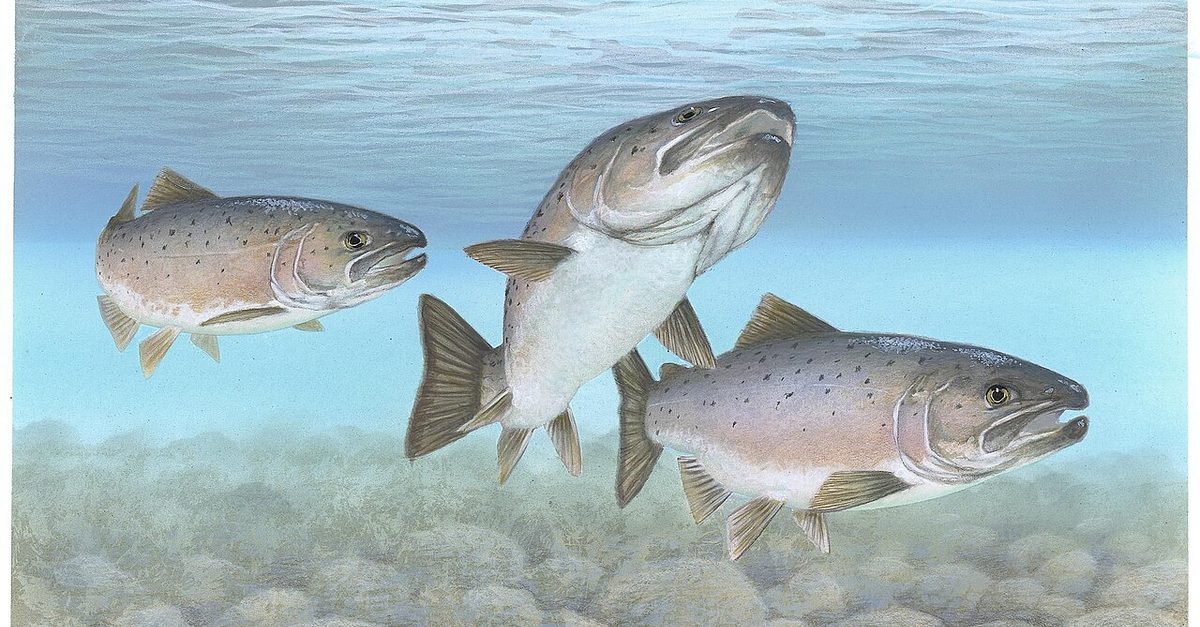
The landlocked Atlantic salmon is one of New England's most prized gamefish, a freshwater-resident form of the Atlantic salmon that spends its entire life in lakes and rivers rather than migrating to the ocean. Found primarily in the lakes and rivers of Maine, New Hampshire, Vermont, and New York, landlocked salmon are genetically identical to their sea-run counterparts but have adapted to a completely freshwater life cycle, using large, cold lakes as their ocean substitute and tributary rivers as spawning habitat.
Landlocked salmon are the signature gamefish of Maine's sporting camp tradition, where generations of anglers have gathered at remote wilderness lodges to fish for salmon in the Rangeley Lakes, Moosehead Lake, Sebago Lake, and the rivers that connect them. The fish combine the acrobatic fighting ability of their anadromous relatives with the accessibility of a freshwater species, leaping repeatedly when hooked and running with the kind of power and endurance that makes them one of the most exciting fish available on a fly rod in the northeastern United States.
In rivers, landlocked salmon behave much like large resident trout, holding in classic lies and feeding on aquatic insects during hatches. They are particularly responsive to caddis and mayfly emergers, and the sight of a 3-pound landlocked salmon rising to a dry fly in a New England river is one of the defining experiences of northeastern fly fishing. In lakes, salmon are targeted with streamers that imitate smelt, their primary forage fish, trolled or cast from boats during the spring and fall when salmon cruise near the surface in cold-water conditions.
Identification
Landlocked Atlantic salmon are distinguished from resident trout by several features. The body is streamlined and torpedo-shaped, more elongated than a brown trout of similar length, with a deeply forked tail and relatively small head. Fresh-run fish from lakes are bright silver with scattered black X-shaped spots on the upper body and gill covers, and a distinct lack of spots below the lateral line. This silvery appearance can closely resemble a steelhead or lake-run rainbow trout, so additional field marks are important.
The key distinguishing features from trout include: the jaw does not extend past the eye (in large brown trout, the jaw typically extends well behind the eye); the tail is more deeply forked than in any trout species; and there are no red or pink spots anywhere on the body (brown trout have red spots with pale halos). The adipose fin is gray or slate-colored without spots. When salmon spend time in rivers and begin to color up for spawning, they develop brownish or bronze flanks with more prominent spots, which can increase confusion with brown trout.
Young salmon in streams (parr) are identified by their distinctive parr marks: dark, vertical bars along the flanks with red spots interspersed between them. Salmon parr have more prominent and regular parr marks than young brown trout, and the parr marks are typically longer than the gaps between them. In Maine and New Hampshire, hatchery-origin salmon may have their adipose fin clipped, distinguishing them from wild fish.
Diet
The diet of landlocked Atlantic salmon varies significantly between their lake and river phases. In lakes, adult salmon are primarily piscivorous, feeding heavily on rainbow smelt (Osmerus mordax), which constitute the single most important forage species throughout their range. The abundance and health of the smelt population directly determines the growth rate and condition of landlocked salmon in any given lake. In Sebago Lake, Rangeley Lake, and Moosehead Lake, salmon that have access to abundant smelt can reach impressive sizes, with fish over 4 pounds common in productive systems.
When salmon enter rivers for spawning or during spring and fall feeding migrations, their diet shifts to aquatic and terrestrial insects. In river environments, landlocked salmon feed actively on mayfly nymphs and adults (particularly Hendricksons, BWOs, and Isonychia), caddisfly adults and pupae, stonefly nymphs, and midges. They are enthusiastic surface feeders during hatches, rising with the same selectivity and grace as brown trout but with more willingness to chase a fly across the current. Caddis hatches tend to produce the most aggressive surface feeding from landlocked salmon.
Juvenile salmon in streams feed on a diet similar to resident trout: small aquatic insects, particularly mayfly and caddisfly larvae, supplemented by terrestrial insects during the warm months. As they grow and migrate to lake environments, typically after one to three years in the river, their diet transitions rapidly to smelt and other small fish. This dietary transition drives the rapid growth that transforms a 6-inch stream parr into a 16-inch lake adult within a single growing season.
Habitat Preferences
Landlocked Atlantic salmon require large, deep, cold lakes connected to clean gravel-bottomed tributary streams for spawning. The ideal lake habitat features cold water temperatures (below 65 degrees Fahrenheit), abundant dissolved oxygen, and a healthy population of smelt or other suitable forage fish. The largest and most productive landlocked salmon fisheries occur in oligotrophic (nutrient-poor, cold, clear) lakes at moderate to high elevations in New England and New York, where cold-water conditions persist throughout the summer.
Spawning occurs in fall, typically from October through November, when adult salmon migrate from lakes into tributary streams. They select spawning sites similar to those used by sea-run Atlantic salmon: clean gravel runs with moderate current, adequate depth, and groundwater upwelling. Females construct redds (gravel nests) and deposit eggs that incubate over winter, hatching in spring. Young salmon (parr) spend one to three years in the stream before migrating to the lake, where they undergo a physiological transformation similar to the smoltification of sea-run fish.
In rivers, landlocked salmon occupy the classic salmonid habitats: the heads and tails of pools, current seams along boulders and ledges, and moderate-speed runs with depths of 2 to 6 feet. They tend to prefer slightly faster water than brown trout of similar size and are often found in the main current rather than along the slower edges. During their river phase, landlocked salmon are more social than brown trout, with multiple fish often holding in the same pool or run.
Fishing Tactics
River fishing for landlocked salmon combines the best elements of trout fishing with the added excitement of a larger, more acrobatic quarry. In rivers, salmon respond well to the same flies and techniques used for trout: nymphing with Pheasant Tail and Hare's Ear nymphs during non-hatch periods, dry fly fishing during caddis and mayfly emergences, and streamer fishing with smelt-imitating patterns like the Gray Ghost, Black Ghost, and Woolly Bugger. Salmon tend to hold in faster water than trout, so focus on the heads of pools, the main current seams, and the runs above and below rapids.
The classic New England technique for river salmon is swinging traditional wet flies and streamers through pools and runs, a method that originated in the Rangeley Lakes region and remains deadly effective today. Cast across and slightly downstream, allow the fly to swing across the current on a tight line, and be prepared for a jolting take as the fly completes its arc. Traditional featherwing streamers like the Gray Ghost, Nine-Three, and Magog Smelt are the iconic patterns, but modern articulated streamers and tube flies are equally effective.
In lakes, salmon are targeted from boats using trolling or casting methods, particularly during the spring ice-out period and fall pre-spawn migration when fish are near the surface. Spring trolling with smelt-imitating streamers on lead-core or sink-tip lines is the traditional approach, covering water along shoreline drop-offs and near tributary mouths. Fly anglers can also wade tributary mouths in spring and fall, casting streamers into the current where salmon stage before entering their spawning rivers. Use 6- to 8-weight rods with enough backbone to handle a powerful fish that will jump repeatedly and make strong runs.
Conservation
Landlocked Atlantic salmon are not federally listed under the Endangered Species Act, though their sea-run counterparts in the Gulf of Maine are listed as Endangered. Landlocked populations are managed as a sport fishery by state fish and game agencies throughout their range. In Maine, New Hampshire, Vermont, and New York, landlocked salmon are actively managed through stocking programs, habitat protection, and regulations designed to maintain healthy populations in key lakes and rivers. The primary management challenges for landlocked salmon include maintaining adequate forage fish (smelt) populations, protecting spawning tributary habitat from development and sedimentation, and addressing the effects of climate change on lake thermal regimes. Warming lake temperatures can reduce the volume of cold-water habitat available to salmon during summer, compressing the zone where both adequate temperatures and dissolved oxygen overlap. In some lakes, this thermal squeeze has become a significant management concern. Anglers support landlocked salmon management through license fees and through advocacy for habitat protection. Many of the most important landlocked salmon waters are managed with special regulations, including catch-and-release requirements, slot limits, and seasonal restrictions designed to protect spawning fish. The landlocked salmon also has significant cultural importance in New England, where it is closely tied to the region's sporting camp heritage and outdoor recreation economy.
Rivers Where Found
Upper Kennebec River
Western Maine / Somerset County
West Branch Penobscot River
North-Central Maine / Piscataquis County
Rapid River
Western Maine / Oxford County
Kennebago River
Western Maine / Franklin County
Magalloway River
Western Maine / Oxford County
Roach River
North-Central Maine / Piscataquis County
Grand Lake Stream
Downeast Maine / Washington County
Crooked River
Southern Maine / Cumberland and Oxford Counties
Moose River (Jackman)
Northwestern Maine / Somerset County
East Outlet of the Kennebec River
North-Central Maine / Piscataquis County
Androscoggin River
Northern White Mountains / Coos County
Upper Connecticut River
Connecticut Lakes Region / Pittsburg
Pemigewasset River
White Mountains / Grafton County
Mascoma River
Upper Valley / Grafton County
White River
Central Vermont / White River Valley
Winooski River
Northern Vermont / Chittenden County
Lamoille River
Northern Vermont / Lamoille County
Lakes & Ponds Where Found
Lake Willoughby
Northeast Kingdom / Orleans County
Seymour Lake
Northeast Kingdom / Orleans County
Lake Memphremagog
Northeast Kingdom / Orleans County
Maidstone Lake
Northeast Kingdom / Essex County
Harriman Reservoir
Southern Vermont / Windham County
Lake Dunmore
Western Vermont / Addison County
Crystal Lake
Northeast Kingdom / Orleans County
Great Averill Lake
Northeast Kingdom / Essex County
Echo Lake (Charleston)
Northeast Kingdom / Orleans County
Sebago Lake
Sebago Lakes Region / Cumberland County
Rangeley Lake
Rangeley Lakes / Franklin County
Upper Richardson Lake
Rangeley Lakes / Oxford County
West Grand Lake
Downeast Lakes / Washington County
East Grand Lake
Downeast / Washington-Aroostook border, St. Croix headwaters
First Roach Pond
Moosehead Region / Piscataquis County
Moosehead Lake
Moosehead Region / Piscataquis County
Mooselookmeguntic Lake
Rangeley Lakes / Franklin & Oxford Counties
Kennebago Lake
Rangeley Lakes / Franklin County
Pierce Pond
Upper Kennebec / Carrying Place — Somerset County
Newfound Lake
Lakes Region / Grafton County
Lake Winnipesaukee
Lakes Region / Belknap & Carroll Counties
Squam Lake
Lakes Region / Grafton, Carroll & Belknap Counties
Lake Sunapee
Dartmouth-Lake Sunapee / Sullivan & Merrimack Counties
First Connecticut Lake
Great North Woods / Coos County
Second Connecticut Lake
Great North Woods / Coos County
Lake Francis
Great North Woods / Coos County (Pittsburg)
Skaneateles Lake
Finger Lakes / Onondaga, Cortland & Cayuga Counties
Lake George
Adirondacks / Warren, Essex & Washington Counties
Schroon Lake
Adirondacks / Warren & Essex Counties
Canadice Lake
Finger Lakes / Ontario County
Chazy Lake
Northern Adirondacks / Clinton County
Quick Facts
- Scientific Name
- Salmo salar sebago
- Average Size
- 14-20"
- Trophy Size
- 24+"
- State Record
- 8 lbs 2 oz, caught in Sebago Lake, Maine; New York record 14 lbs 4 oz from Cayuga Lake; Vermont record 10 lbs 6 oz from Lake Champlain
- Found In
- Upper Kennebec River, West Branch Penobscot River, Rapid River, Kennebago River, Magalloway River, Roach River, Grand Lake Stream, Crooked River, Moose River (Jackman), East Outlet of the Kennebec River, Androscoggin River, Upper Connecticut River, Pemigewasset River, Mascoma River, White River, Winooski River, Lamoille River, Lake Willoughby, Seymour Lake, Lake Memphremagog, Maidstone Lake, Harriman Reservoir, Lake Dunmore, Crystal Lake, Great Averill Lake, Echo Lake (Charleston), Sebago Lake, Rangeley Lake, Upper Richardson Lake, West Grand Lake, East Grand Lake, First Roach Pond, Moosehead Lake, Mooselookmeguntic Lake, Kennebago Lake, Pierce Pond, Newfound Lake, Lake Winnipesaukee, Squam Lake, Lake Sunapee, First Connecticut Lake, Second Connecticut Lake, Lake Francis, Skaneateles Lake, Lake George, Schroon Lake, Canadice Lake, Chazy Lake