Mooselookmeguntic Lake
Mooselookmeguntic Lake is the largest water in Maine's Rangeley chain, 16,359 acres of wild brook trout and landlocked salmon water at 1,467 feet. Its outlet at Upper Dam is where Carrie Stevens tied the Grey Ghost in 1924, making this lake sacred ground for the American streamer tradition.
Overview
Mooselookmeguntic Lake sprawls across 16,359 acres of Franklin and Oxford county timberland, the largest lake in Maine's storied Rangeley chain. Sitting at roughly 1,467 feet of elevation, its basin is natural but dam-raised, its levels held by Upper Dam at the western outlet where Mooselookmeguntic spills down into Upper Richardson Lake. Everything about the place feels big: long wind-swept reaches, island-studded bays, and a shoreline that still reads mostly as forest. Among the Rangeley lakes, only Rangeley itself carries a more famous name, and many anglers would argue Mooselookmeguntic carries the better fishery.
What sets this lake apart is the wildness of its fish. Mooselookmeguntic shows no entries in the current MDIFW stocking report; its brook trout and landlocked salmon are self-sustaining populations, maintained by natural reproduction rather than the hatchery truck. In an era when most large New England salmonid lakes lean on annual plants, a 16,000-acre water running entirely on wild fish is a genuine rarity, and it shapes how the lake fishes. These are stream-bred fish that behave like it, keying on forage, moving with the seasons, and staging off tributary mouths when instinct calls them toward spawning water.
The lake's place in fly-fishing history is secured by a single fly. At Upper Dam, the pool at Mooselookmeguntic's outlet, Carrie Stevens tied the Grey Ghost in 1924, and the smelt-imitating streamer she created there went on to define an entire American school of fly design. The Upper Dam pool remains storied fly-fishing-only water, reached by a walk-in from the Mooselookmeguntic side, and fishing a Grey Ghost within sight of where it was invented is one of the great pilgrimages in the sport.
The fly angler's season follows the classic Rangeley rhythm. Ice-out brings the year's best big-fish window, with salmon and brook trout chasing bait in reachable water and big streamers doing the damage. Summer evenings turn to the surface, with Hexagenia and caddis activity in the coves around Toothaker Island drawing trout up in the fading light. Come September, brook trout stage off the Kennebago River outflow ahead of their spawning run, and streamer fishing sharpens again through the fall.
Access is honest and uncomplicated: a launch at Haines Landing in Oquossoc, canoe and float access with primitive campsites through the Stephen Phillips Preserve along the shoreline, and the walk-in at Upper Dam. Paddle out of a Phillips Preserve campsite at dawn with a box of streamers, and you are fishing the Rangeley country much as anglers did a century ago.
Depth & Character
- Surface Area
- 16,359acres
- Max Depth
- 139ft
- Mean Depth
- 36ft
- Elevation
- 1,467ft
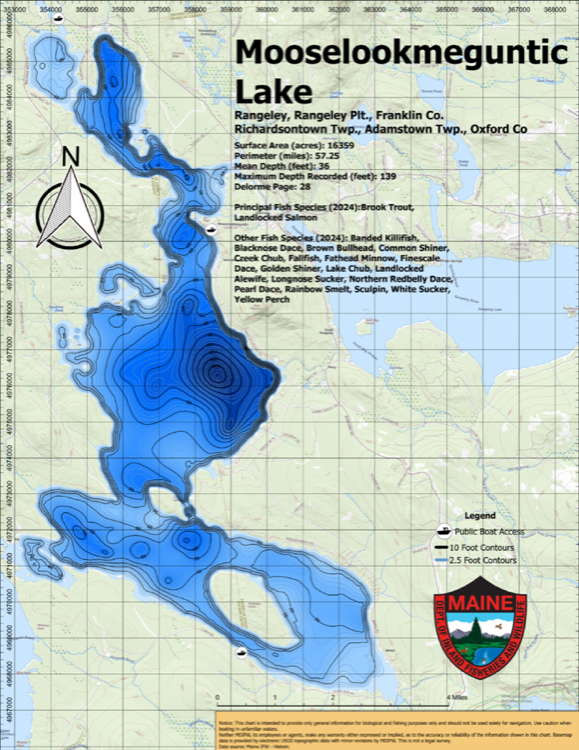
Bathymetric depth chart — click to open the full PDF. Source: Vermont DEC.
Source: Vermont DEC
Water Characteristics
Mooselookmeguntic is a large, cold, north-country lake with a maximum depth of 139 feet against a mean of just 36, a profile that leaves enormous acreage of fishable shoal and mid-depth structure relative to its deep water. The state depth chart shows the character clearly: broad shelves and island-studded reaches surrounding deeper basins, rather than a single plunging trench. That mix suits a two-story fishery, with salmon working open water and the drop-offs while brook trout use shoreline structure, coves, and tributary influence.
As on the rest of the Rangeley chain, coldwater forage drives the gamefish, and smelt-imitating streamers have been the local currency since Carrie Stevens' day. Insect life earns its place too: the sheltered coves around Toothaker Island produce Hexagenia and caddis activity on summer evenings, and the shallower bays carry the chironomid, damselfly, and leech life typical of northern lakes. The lake stratifies in summer, pushing salmon toward the thermocline, while evening insect activity keeps brook trout honest in the coves.
The lake's size gives wind a long fetch, and conditions can build quickly on the open reaches. Small craft should plan routes along the shorelines and island lees rather than committing to long open-water crossings.
Seasonal Fishing Guide
Spring
Ice-out is the premier big-fish window. Wild salmon and brook trout push into reachable water chasing bait, and casting or trolling big smelt streamers — Grey Ghosts above all, on this of all lakes — along shorelines, points, and the outlet reach produces the best fish of the year. Intermediate and sinking lines, long casts, and fast strips; overcast, choppy days often fish best.
Summer
As the lake stratifies, salmon slide deeper and the game moves to the margins and the evenings. Fish the coves around Toothaker Island at dusk for Hexagenia and caddis activity, with brook trout rising on warm, still nights. Mornings, work chironomids and leech patterns in the sheltered bays; salmon remain catchable early on sinking lines along the drop-offs.
Fall
September brings wild brook trout staging off the Kennebago River outflow ahead of the spawning run, and streamer fishing sharpens across the lake as surface temperatures fall. Work smelt patterns and leeches off tributary mouths and gravel points, and give the Upper Dam area a serious look. Check season closing dates and special rules before fall trips.
Winter
The open-water fly season is closed in winter; verify current MDIFW winter regulations for the Rangeley chain before planning any cold-season trip, as many waters in the region carry restrictive or closed winter seasons. Use the off-season to tie Rangeley streamers for ice-out.
Access & Boats
The primary launch is at Haines Landing in Oquossoc on the northeastern shore, the traditional jumping-off point for the lake. The Stephen Phillips Memorial Preserve protects a long stretch of shoreline and islands with primitive campsites and canoe and float access, making Mooselookmeguntic one of the best paddle-camping fisheries in the East. The famous Upper Dam pool at the lake's outlet is reached by a walk-in from the Mooselookmeguntic side. Canoes, kayaks, and small motorboats all see use; float tubes are practical in the sheltered coves but not on the open lake.
Fishing Pressure & Local Tips
Moderate by Rangeley standards and light relative to the water available. The lake's 16,359 acres swallow its traffic, and outside the ice-out weeks at Haines Landing and the well-known Upper Dam pool, an angler can fish long shorelines without company. The Phillips Preserve campsites draw paddlers in midsummer, but most are not fishing seriously. September streamer season is quieter still, and the Kennebago outflow reach sees a fraction of the attention its fall staging fish deserve.
Local Knowledge
Fish the calendar, not the clock. Ice-out and the first weeks of spring are streamer time: work big smelt patterns on sinking lines along drop-offs, points, and the outlet reach toward Upper Dam, and cover water until you find fish. A Grey Ghost is not just sentiment here — it imitates the forage these salmon and brookies actually eat, and fishing it fast is usually better than fishing it pretty.
In summer, be on the water at dusk in the coves around Toothaker Island. Hexagenia and caddis bring wild brook trout to the surface on warm, still evenings, and a Hex nymph swum toward the surface just before dark can outfish the dry. When September arrives, shift to the Kennebago River outflow, where brook trout stage before running upriver; a streamer or leech pattern worked through that water in the last hour of light is the lake's best shot at a truly large wild brookie.
Make the Upper Dam pilgrimage at least once. The pool is fly-fishing-only, walk-in, and steeped in a century of streamer history — mind the special regulations, and bring streamers with Rangeley lineage.
Species Present
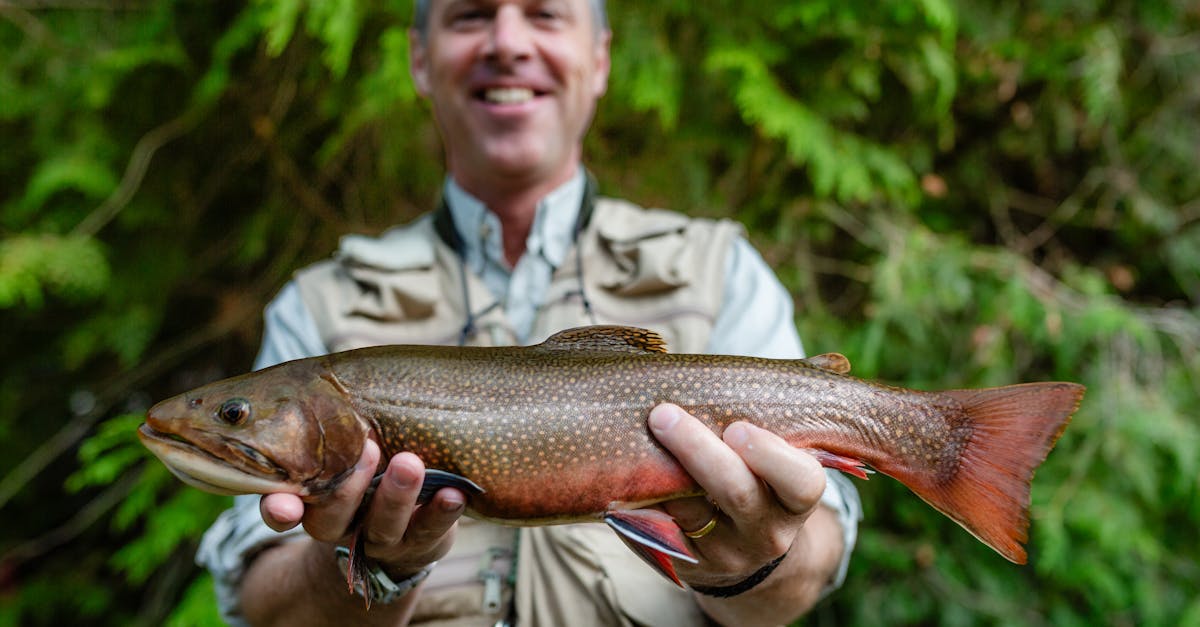
Brook Trout
The brook trout is widely considered the most beautiful freshwater fish in North America, and catching one in a pristine Montana mountain stream is an experience that captures the essence of backcountry fly fishing. Despite their common name, brook trout are not true trout at all; they are a species of char (genus Salvelinus), more closely related to lake trout and Arctic char than to rainbows or browns. Native to eastern North America from Georgia to Hudson Bay, brook trout were among the first salmonids introduced to Montana's waters in the late 1800s and have since established self-sustaining populations in cold, high-elevation streams and lakes throughout the state. In Montana, brook trout thrive best in small, cold headwater streams and high mountain lakes where competition from larger trout species is minimal. In these environments, they are often the dominant, or only, salmonid present. The trade-off is size: Montana stream-dwelling brook trout typically range from 6 to 10 inches, with fish over 12 inches considered noteworthy in most waters. What they lack in size, however, they more than make up for in beauty and willingness to eat a fly. Brookies are aggressive feeders that will strike attractor dry flies, nymphs, and small streamers with enthusiasm, making them an ideal species for beginning fly anglers and a delightful quarry for anyone who appreciates small-stream fishing. Brook trout do present a conservation paradox in Montana. While they are a beloved and beautiful gamefish, they are non-native and can negatively impact native species, particularly Yellowstone and westslope cutthroat trout. In headwater streams, brook trout often outcompete cutthroats for food and spawning habitat due to their higher reproductive rate and earlier maturation. As a result, Montana FWP has implemented brook trout removal projects on some streams to restore native cutthroat populations. In many waters, liberal harvest limits for brook trout are encouraged to reduce their numbers and benefit native fish. Anglers can enjoy excellent brook trout fishing while actively helping conservation by keeping a few for the pan.
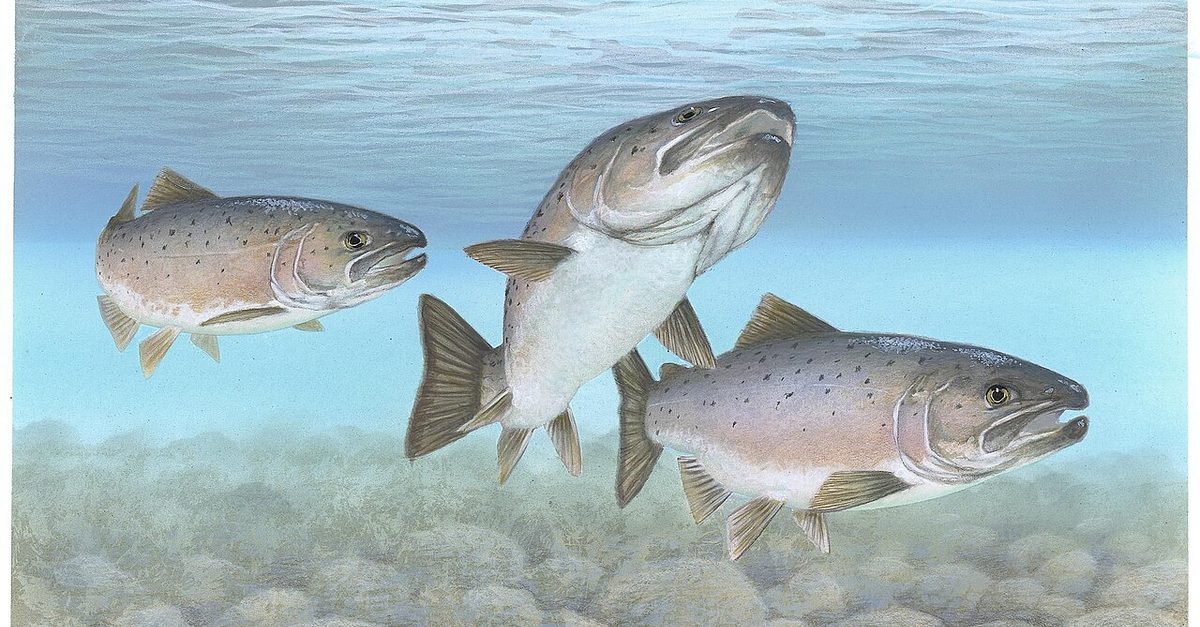
Landlocked Atlantic Salmon
The landlocked Atlantic salmon is one of New England's most prized gamefish, a freshwater-resident form of the Atlantic salmon that spends its entire life in lakes and rivers rather than migrating to the ocean. Found primarily in the lakes and rivers of Maine, New Hampshire, Vermont, and New York, landlocked salmon are genetically identical to their sea-run counterparts but have adapted to a completely freshwater life cycle, using large, cold lakes as their ocean substitute and tributary rivers as spawning habitat. Landlocked salmon are the signature gamefish of Maine's sporting camp tradition, where generations of anglers have gathered at remote wilderness lodges to fish for salmon in the Rangeley Lakes, Moosehead Lake, Sebago Lake, and the rivers that connect them. The fish combine the acrobatic fighting ability of their anadromous relatives with the accessibility of a freshwater species, leaping repeatedly when hooked and running with the kind of power and endurance that makes them one of the most exciting fish available on a fly rod in the northeastern United States. In rivers, landlocked salmon behave much like large resident trout, holding in classic lies and feeding on aquatic insects during hatches. They are particularly responsive to caddis and mayfly emergers, and the sight of a 3-pound landlocked salmon rising to a dry fly in a New England river is one of the defining experiences of northeastern fly fishing. In lakes, salmon are targeted with streamers that imitate smelt, their primary forage fish, trolled or cast from boats during the spring and fall when salmon cruise near the surface in cold-water conditions.
Food Sources & Hatches
| Insect | Suggested Fly | Jan | Feb | Mar | Apr | May | Jun | Jul | Aug | Sep | Oct | Nov | Dec |
|---|---|---|---|---|---|---|---|---|---|---|---|---|---|
Rainbow Smelt (baitfish) Early morning and overcast days | Grey Ghost | ||||||||||||
Hexagenia Mayflies Dusk into dark | Hexagenia Nymph | ||||||||||||
Caddisflies Evening | Elk Hair Caddis | ||||||||||||
Chironomids (midges) Morning | Chironomid (Bomber) | ||||||||||||
Leeches All day, best early and late | Woolly Bugger | ||||||||||||
Fall Baitfish Staging Last hours of light | Muddler Minnow |
Rainbow Smelt (baitfish): The engine of the Rangeley streamer tradition. At ice-out, salmon and brook trout chase bait in reachable water; the Grey Ghost was invented at this lake's outlet to imitate exactly this forage. Fish 3-5 inch streamers on sinking lines along drop-offs and points.
Hexagenia Mayflies: Big burrowing mayflies emerge on warm summer evenings in the sheltered coves around Toothaker Island, pulling wild brook trout to the surface. Swim a Hex nymph toward the surface before the duns show, then switch to the dry.
Caddisflies: Summer caddis activity in the island coves and along wooded shorelines brings evening risers. An Elk Hair Caddis skittered on the surface or a soft-hackle swung just under it both draw fish in the last light.
Chironomids (midges): Standard northern-lake midge life in the bays and shallower shelves. Anchor and fish chironomid pupae deep under an indicator on calm mornings when nothing is moving on top.
Leeches: A season-long searching option along drop-offs and cove edges. Slow-stripped buggers and leeches on sinking lines take both brook trout and salmon when no hatch is on.
Fall Baitfish Staging: September brook trout stage off the Kennebago River outflow ahead of the spawning run and turn aggressive toward baitfish patterns. Muddlers and smelt streamers worked through tributary-mouth water are the fall play.
Recommended Flies
Grey Ghost
Top PickThe signature fly of this lake — Carrie Stevens tied the original Grey Ghost at Upper Dam in 1924. Fish it on sinking lines at ice-out and again in September; nothing on the lake carries more history or catches more salmon.
Best in Spring and fall
Woolly Bugger
Top PickThe all-season searching pattern. Olive and black buggers stripped along drop-offs and cove edges move wild brook trout and salmon whenever streamer conditions are on.
Best in Spring through fall
Hexagenia Nymph
Top PickFor the evening Hexagenia emergences in the Toothaker Island coves. Swim it up through the water column at dusk before the duns appear.
Best in Late June through July
Muddler Minnow
Top PickA classic for September brook trout staging off the Kennebago River outflow. Waking or swimming a Muddler through tributary-mouth water draws territorial strikes from pre-spawn fish.
Best in Fall
Also Effective
Access Points & Boat Launches
Haines Landing
Boat LaunchEasyThe lake's traditional access point in Oquossoc on the northeastern shore, launching boats onto the upper end of Mooselookmeguntic. The primary jumping-off point for trips down the lake and toward the Kennebago outflow water.
Stephen Phillips Memorial Preserve
Wade AccessModerateConservation preserve protecting shoreline and islands on Mooselookmeguntic, offering canoe and float access plus primitive campsites. The best option for multi-day paddle-and-fish trips, putting anglers within reach of coves and shoreline structure far from the launch.
Upper Dam Walk-In
Wade AccessModerate (walk-in)Walk-in access to the historic Upper Dam pool at Mooselookmeguntic's outlet into Upper Richardson Lake, where Carrie Stevens tied the Grey Ghost in 1924. Storied fly-fishing-only water and one of the most famous pools in American angling.
Regulations
Regulations
Mooselookmeguntic falls under Maine's open-water fishing regulations with length and bag limits on salmon and brook trout, and the Upper Dam pool at the outlet is storied fly-fishing-only water with its own special rules. A Maine fishing license is required. Regulations on the Rangeley chain carry water-specific S-codes that change periodically, so always verify current rules in the MDIFW lawbook at maine.gov before fishing.
Always verify current regulations with Montana Fish, Wildlife & Parks before fishing.
Quick Facts
- Surface Area
- 16,359 acres
- Max Depth
- 139 ft
- Elevation
- 1,467 ft
- Lake Type
- Natural Lake
- Region
- Rangeley Lakes / Franklin & Oxford Counties
- Best Seasons
- spring, summer, fall
- Species
- Brook Trout, Landlocked Atlantic Salmon
- Difficulty
- Intermediate
- Depth Chart
- Download PDF
Nearby Lakes & Ponds
Sebago Lake
Sebago Lakes Region / Cumberland County
Rangeley Lake
Rangeley Lakes / Franklin County
Upper Richardson Lake
Rangeley Lakes / Oxford County
West Grand Lake
Downeast Lakes / Washington County
East Grand Lake
Downeast / Washington-Aroostook border, St. Croix headwaters
First Roach Pond
Moosehead Region / Piscataquis County