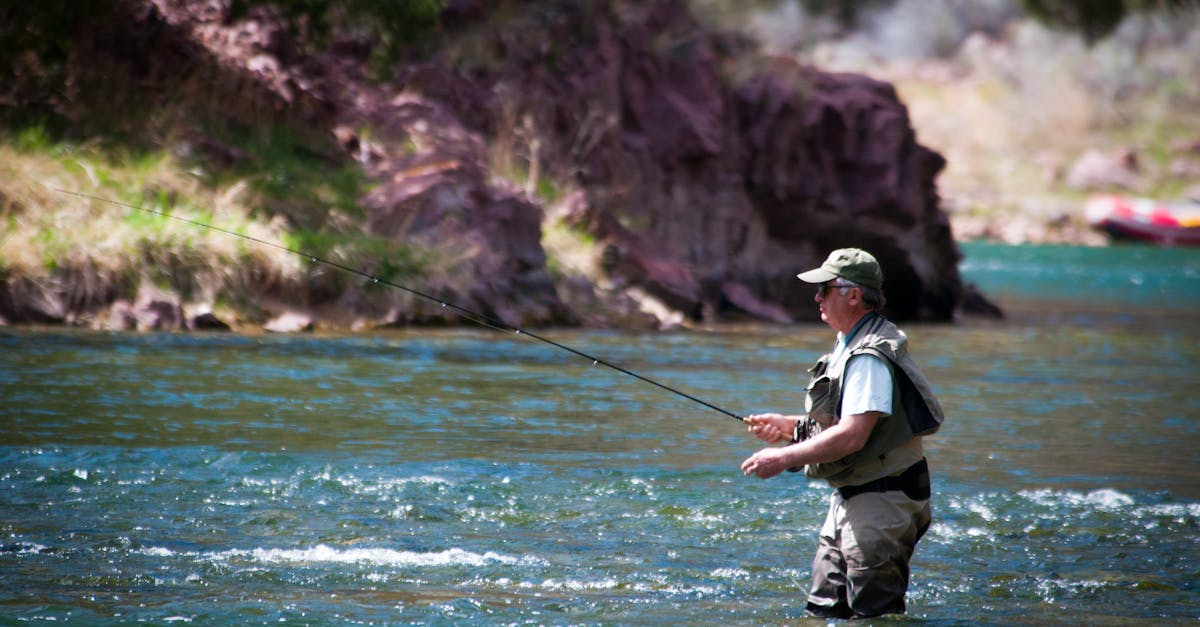
Missouri River
Below Holter Dam near Craig, Montana, the Missouri River becomes one of the most prolific tailwater trout fisheries in the world. Its nutrient-rich flows from the dam create ideal conditions for massive insect hatches and trophy-sized rainbow and brown trout.
Missouri River Fishing Report & Current Conditions
The Missouri River is a tailwater fishery, and it fishes best in spring, summer, fall and winter. Live USGS streamflow readings update throughout the day, while the monthly median flows below map the river's typical discharge across the year. Together they show current fishability and how today's water compares to the seasonal norm.
Current Conditions
Typical Monthly Flows
Historical median discharge (CFS) by month: Missouri River
Overview
The Missouri River below Holter Dam is a tailwater trout fishery of legendary proportions. The cold, clear water released from Canyon Ferry and Holter reservoirs creates conditions that support an estimated 5,000 to 7,000 trout per mile, numbers that rival any river in the world.
The Missouri's productivity is driven by aquatic vegetation and insect life that thrives in the stable, nutrient-laden tailwater flows. Hatches are prolific and predictable: midges year-round, Blue-Winged Olives in spring and fall, PMDs and caddis in summer, and Trico spinners that blanket the surface in August and September.
The most popular section runs from Holter Dam to the town of Cascade, roughly 35 miles of floatable water. The upper stretch near Craig is the epicenter, with multiple access points and world-class guides based in the area. Trout average 15 to 18 inches with fish over 20 inches caught regularly.
What makes the Missouri unique among Montana rivers is its consistency. As a tailwater, it doesn't suffer from the high, muddy runoff that can blow out freestone rivers for weeks in spring. The dam moderates flows and temperatures, creating fishable conditions nearly every day of the year.
The Missouri rewards technical fishing. During heavy hatches, trout become selective feeders that demand precise fly selection and drag-free drifts. Sight-nymphing with small flies is a year-round staple. Streamer fishing with articulated patterns produces the biggest fish, particularly on cloudy days and during fall.
Water Characteristics
The Missouri below Holter Dam is a classic tailwater fishery. Cold, clear water released from the bottom of Holter Reservoir maintains temperatures between 38-52 degrees F year-round, creating ideal conditions for trout metabolism and insect production. This temperature stability is the Missouri's greatest asset; it eliminates the thermal stress that affects freestone rivers in summer and keeps trout feeding actively through winter when freestone fish become torpid.
Water clarity on the Missouri is exceptional, often exceeding 8 feet of visibility during normal conditions. The river has a slightly greenish tint from dissolved minerals and the abundant aquatic vegetation (primarily Elodea, Chara, and various pondweeds) that carpets much of the riverbed. This vegetation is the engine of the Missouri's incredible productivity; it provides habitat for scuds, sowbugs, and aquatic insect larvae while oxygenating the water. The weed beds also create structure that trout use as holding lies and feeding stations. The substrate beneath the weeds is primarily gravel and small cobble, with larger cobble and boulders in the riffle sections.
Flow rates are controlled by dam releases and typically range from 3,500 to 6,000 cfs, with higher flows during irrigation season (June through September). The stable, nutrient-rich conditions support some of the densest aquatic insect populations of any North American river, including midges, Blue-Winged Olives, Pale Morning Duns, caddis, Tricos, and crustaceans (scuds and sowbugs). This extraordinary food supply is what produces the Missouri's famously dense trout populations and the large average fish size.
Wading & Float Guide
Wade fishing on the Missouri is productive but limited to specific areas. The river below Holter Dam is wide (typically 150 to 300 feet across) and deeper than most Montana freestone rivers, making much of it unwadeable from shore. However, several key wading areas exist and can produce exceptional fishing. The area immediately below Holter Dam is one of the most popular wading spots, where the dam release creates a wide, shallow tailout with gravel bottom that extends several hundred yards downstream. Anglers can wade waist-deep here and access feeding lanes that hold concentrations of trout year-round.
Near Craig, several FWP access points provide wading access to riffles, gravel bars, and shallower side channels. The Stickney Creek and Mountain Palace access areas offer productive wading water. The key to wade fishing the Missouri is identifying the shallower riffle sections and gravel bars where the river broadens; these areas concentrate feeding trout and provide stable footing on the gravel-cobble substrate.
The Missouri's bottom is a mix of gravel, cobble, and aquatic vegetation (primarily Elodea and other submergent weeds). Wading through the weedy sections can be challenging, as the vegetation hides uneven bottom and can entangle feet. Felt-soled boots provide the best traction on the Missouri's substrate. Overall, the Missouri is primarily a drift boat fishery, and most guided trips and experienced anglers float rather than wade. However, dedicated wade anglers who learn the access points and wading areas can have world-class days without a boat.
Holter Dam to Craig (Prewett Creek)
The most productive and most popular float on the Missouri. Crystal-clear tailwater with enormous trout densities. Prolific hatches of midges, BWOs, PMDs, and caddis throughout the season. Long glassy runs, weed-lined banks, and riffle sections hold fish everywhere. This section sees the highest guide traffic; expect company during peak season.
Craig to Mid-Canon
The river enters a short canyon section below Craig with basalt bluffs and deeper pools. Excellent streamer water on cloudy days. Hatches remain prolific. Slightly less boat traffic than above Craig. Notable spots include the Sheep Creek confluence and the weed beds that hold pods of rising fish during BWO and Trico hatches.
Mid-Canon to Mountain Palace
Continuing through the canyon with deeper pools and longer runs. Outstanding PMD and caddis water in summer. Fewer boats than the upper sections. The canyon walls provide shade that can extend hatches later into the morning. Nymphing with small Pheasant Tails and scuds through the deeper runs is exceptionally productive.
Mountain Palace to Pelican Point
The river opens up as it exits the canyon. Broader riffles and gravel bars appear, with some of the best wading access on the river. Trout densities remain impressive. This section receives noticeably less pressure than the water above Craig and can offer more solitary fishing.
Pelican Point to Cascade
The lowest section of prime tailwater. The river widens and warms slightly, but still holds excellent trout populations. Large brown trout patrol the deeper runs. This section fishes best in spring and fall when water temperatures are optimal. Significantly less boat traffic than the upper sections, a good choice for anglers seeking solitude.
Rod & Tackle Guide
Holter Dam to Craig (Dry Fly & Nymph)
- Rod
- 9' 5-weight
- Line
- Weight-forward floating
- Leader & Tippet
- 12' tapered to 5X-6X (dry fly), 9' to 4X-5X (nymph rigs)
The Missouri's gin-clear water and educated trout demand finesse. Long leaders are essential: 12' or longer tapered to 5X or 6X for dry-fly work during the prolific BWO, PMD, and Trico hatches. Fluorocarbon tippet makes a noticeable difference in refusal rates. The 5-weight handles the small #16-22 dry flies and emergers that dominate this fishery while still providing enough backbone for 18"+ rainbows.
Holter Dam to Craig (Streamer)
- Rod
- 9' 7-weight
- Line
- 250-grain sink-tip or integrated sinking line
- Leader & Tippet
- 4'-6' straight 1X-2X fluorocarbon
Trophy brown trout on the Missouri respond to large articulated streamers fished deep along weed-bed edges and undercut banks. A dedicated 7-weight streamer rod with a sink-tip line gets patterns like the Sex Dungeon and Drunk & Disorderly into the strike zone. Short, stout leaders turn over heavy flies and survive the savage takes of aggressive browns.
Craig to Cascade (Lower Tailwater)
- Rod
- 9' 5-weight or 6-weight
- Line
- Weight-forward floating
- Leader & Tippet
- 9' tapered to 4X-5X
The lower section is wider and less technical than the upper tailwater. A 6-weight helps manage the bigger water and persistent wind. Leaders can be slightly shorter (9') as the trout here are somewhat less selective. This stretch also holds smallmouth bass in the warmer water, and a 6-weight with a 3X leader doubles nicely for bass.
Recommended Gear
Orvis Clearwater 906-4
Rod · $479.00
Best Time to Fish the Missouri River
Spring
The Missouri's spring BWO hatch (March through May) is legendary. Fish Sparkle Dun, Comparadun, and Parachute BWO patterns (#18-22) during overcast afternoons when Baetis blanket the surface. Midge fishing (#18-24) remains strong throughout spring. As water temperatures climb in May, look for the first PMD emergence. Nymphing with RS2s, Pheasant Tails, and Mercury Midges is effective all spring. Unlike freestone rivers, the Missouri does not blow out during runoff; flows are dam-controlled, making this a reliable spring destination when other rivers are unfishable.
Summer
June through August brings the Missouri's most diverse hatches. PMDs (#16-18) hatch in the mornings, caddis (#14-18) in the evenings, and Trico spinners (#18-22) create blizzard-like spinner falls on August and September mornings. The key to summer success is matching the hatch precisely; Missouri trout see thousands of flies per season and become highly selective. Carry a full range of PMD, caddis, and Trico patterns in multiple stages (emerger, dun, spinner). Terrestrials (hoppers, ants, beetles) work along grassy banks from July onward.
Fall
The fall BWO hatch (September through November) rivals spring's. Fish Baetis emergers, cripples, and dun patterns (#18-22) on overcast afternoons. October and November offer the year's best streamer fishing; big brown trout move into pre-spawn aggression, and cloudy days with dropping barometric pressure trigger savage strikes on articulated streamers (#2-6). Cast tight to weed beds and undercut banks. Fall is many local guides' favorite season: hatches are reliable, browns are aggressive, and crowds thin substantially after Labor Day.
Winter
The Missouri is one of Montana's best winter fisheries. Consistent dam releases maintain water temperatures in the high 30s to low 40s, cold but fishable. Midge fishing (#20-26) during midday warming periods is the staple. Look for midge clusters on the surface and fish tiny Griffith's Gnats and midge emergers to rising trout. Nymphing with Zebra Midges, Mercury Midges, and small scuds (#16-18) through the slower runs produces consistently. Fish from 10 AM to 3 PM for the most active feeding. Winter crowds are minimal, and the solitude on a cold Montana tailwater is a special experience.
Fishing Pressure & Local Tips
The Missouri River near Craig is one of the most heavily guided rivers in Montana. During peak season (June through September), the Holter Dam to Craig float sees dozens of drift boats daily, and the launches at Holter Dam and Craig can be congested during morning launch windows. The concentration of outfitters, lodges, and guide services based in Craig and Wolf Creek reflects the river's popularity. Weekdays are noticeably less crowded than weekends, but even midweek floats during peak season will encounter other boats.
Fishing pressure on the Missouri is strongly concentrated in the upper 12 miles from the dam to Craig. Below Craig, boat traffic decreases progressively, and the lower sections from Mountain Palace to Cascade see a fraction of the upper river's pressure. Wade anglers can find relative solitude even during peak season by fishing early morning or late evening at the access points near Craig or by exploring the less-visited access sites downstream. Winter and early spring (December through March) offer the lightest pressure, with only a handful of dedicated anglers on the water during the best midge fishing of the year. The Missouri's reputation as a technical, demanding fishery also tends to self-select for experienced anglers; this is not a river where beginners typically book guided trips, which maintains a certain quality of experience even during busy periods.
Local Knowledge
The Missouri's weed beds are not obstacles; they are the key to the fishery. Learn to read the weed channels and edges where trout establish feeding lanes. During hatches, trout position themselves along the edges of weed beds where current funnels emerging insects into concentrated drift lines. Casting your fly into these weed-channel seams, rather than across open water, dramatically increases your catch rate. Many visiting anglers cast to the middle of the river and wonder why they catch fewer fish; the answer is that Missouri trout are weed-edge feeders.
Fly selection on the Missouri requires more precision than on most Montana rivers. Carry multiple stages of each major hatch (emerger, cripple, dun, and spinner) in sizes ranging from #16 to #22. When trout are refusing your fly during a hatch, try going one size smaller or switching life stages before changing patterns entirely. A #20 CDC BWO Emerger fished in the surface film often outperforms the #18 dun pattern that every other boat is throwing. Fluorocarbon tippet (5X to 7X) is essential for the Missouri's clear water and educated trout.
For the biggest fish, strip articulated streamers along weed-bed edges and undercut banks on overcast, windy days. The Missouri holds brown trout exceeding 24 inches that rarely eat dry flies but will chase a well-presented streamer. The best streamer days coincide with dropping barometric pressure, cloud cover, and wind chop on the surface, conditions that most dry-fly anglers consider unfavorable. Local guides who specialize in trophy browns actually prefer these "ugly" days.
Species Present
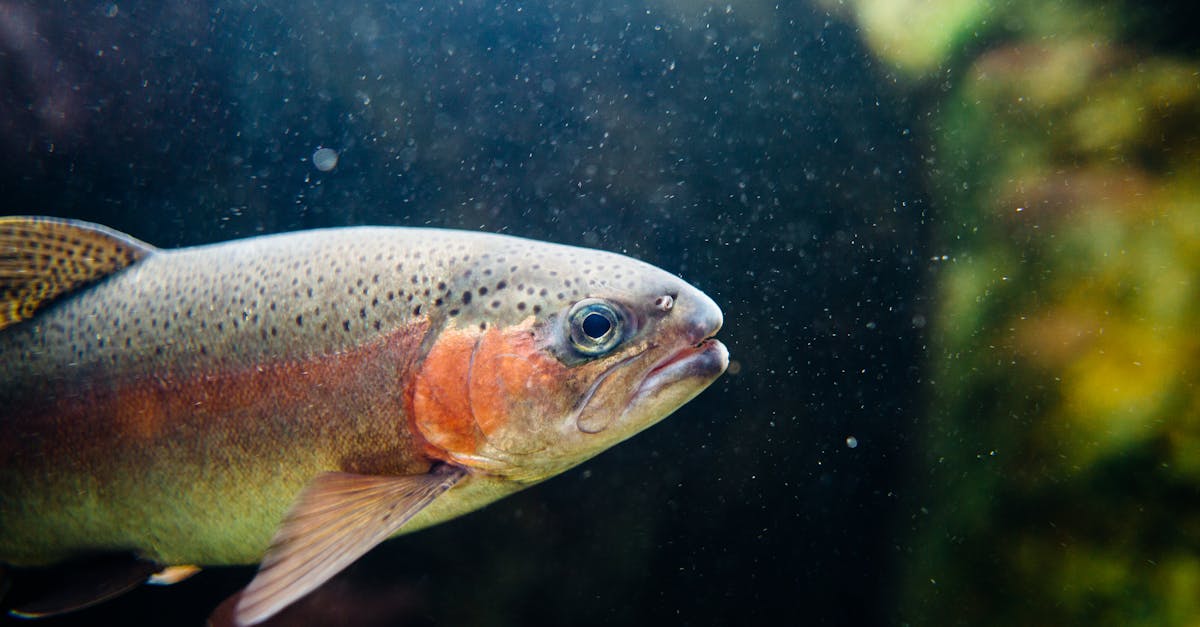
Rainbow Trout
The rainbow trout is Montana's most widespread and popular gamefish, celebrated for its explosive surface strikes, aerial acrobatics, and willingness to take a well-presented dry fly. Native to Pacific Coast drainages from Alaska to Mexico, rainbows were first introduced to Montana's waters in the late 1800s and have since established thriving populations in nearly every major river system in the state. On legendary waters like the Madison, Missouri, and Bighorn, wild rainbow trout grow fat on prolific insect hatches and provide some of the finest dry-fly fishing in North America. Rainbow trout in Montana display remarkable variation depending on their home water. Fish in nutrient-rich tailwaters like the Missouri River below Holter Dam can exceed 20 inches with regularity, their deep bodies and broad tails reflecting the abundant food supply. Freestone river rainbows, such as those in the upper Madison and Gallatin, tend to be leaner and more athletic, shaped by faster currents and colder water temperatures. In many Montana rivers, rainbows spawn in the spring from March through June, and anglers should be mindful of spawning redds during this period to protect future generations of fish. Rainbows are arguably the most versatile trout species for fly anglers. They respond well to dry flies during hatches, aggressively chase streamers, and feed heavily on nymphs subsurface throughout the year. Their fighting ability is legendary: a hooked rainbow will often launch itself completely out of the water multiple times during a battle. Montana's catch-and-release regulations on many blue-ribbon streams have produced exceptional rainbow trout fisheries with high densities of large, healthy fish that continue to draw anglers from around the world.
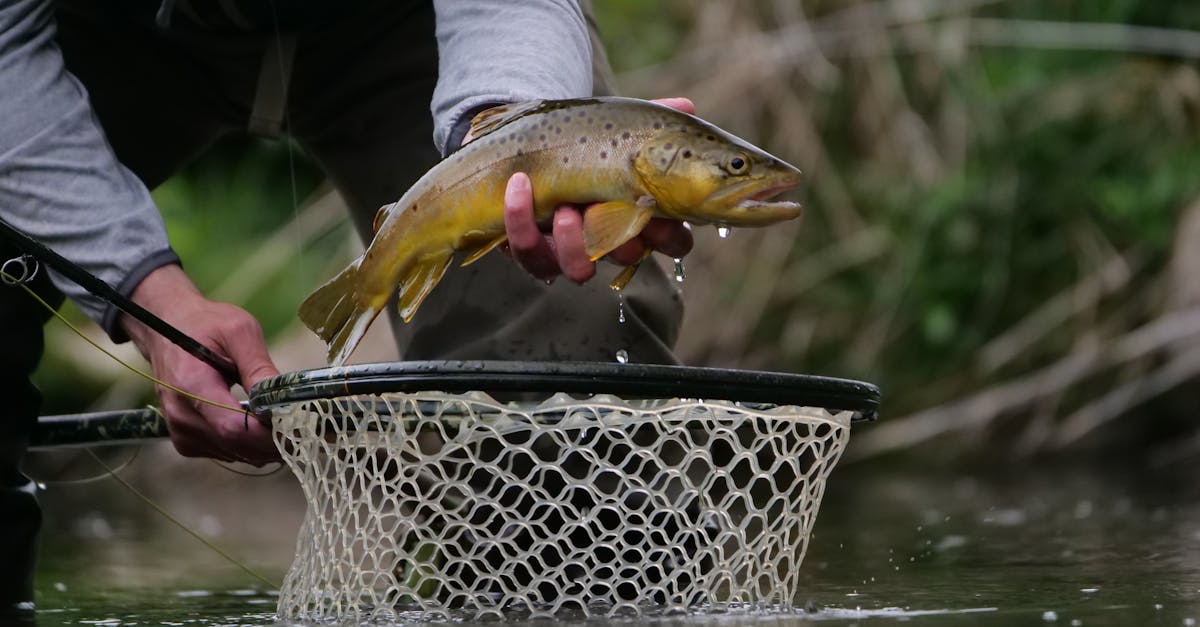
Brown Trout
The brown trout is the most cunning and elusive trout species swimming in Montana's rivers, and it rewards patient, skilled anglers with some of the state's most memorable catches. Originally native to Europe and western Asia, brown trout were first introduced to North American waters in 1883 and arrived in Montana shortly thereafter. They have since established robust, self-sustaining populations in virtually every major trout stream in the state, from the legendary spring creeks of the Paradise Valley to the sweeping runs of the lower Madison and the deep pools of the Bighorn. Brown trout grow larger than any other trout species in Montana, and fish exceeding 24 inches are caught with regularity on premium waters. The lower Madison River, the Missouri River below Holter Dam, and the Bighorn River are particularly renowned for producing trophy-class browns. Unlike rainbows, brown trout spawn in the fall (October through November), and their aggressive pre-spawn behavior creates an exciting window for streamer fishing as large males become territorial and attack anything that enters their domain. Browns are notably more nocturnal than other trout species, and many of the biggest fish are caught during low-light conditions. What sets brown trout apart from other species is their wariness and selectivity. Large browns are notoriously difficult to fool, often refusing flies that are even slightly off in size, color, or presentation. They tend to establish and defend prime feeding lies (undercut banks, logjams, deep pools, and boulder gardens), and an angler who learns to read water and identify these holding spots will consistently catch more and larger fish. This combination of difficulty, size potential, and intelligence makes the brown trout the most prized quarry for many serious Montana fly fishers.
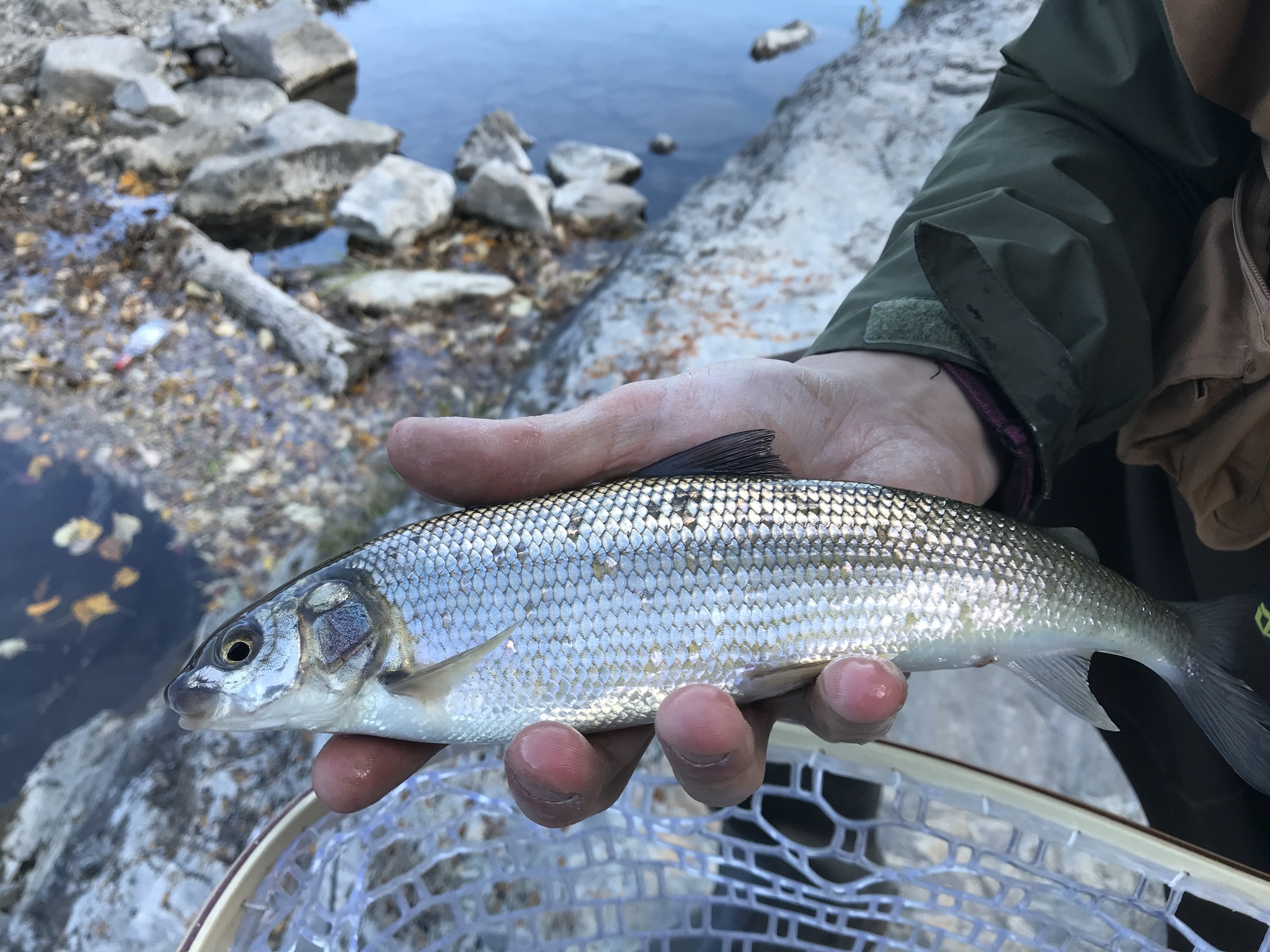
Mountain Whitefish
The mountain whitefish is one of Montana's most abundant native salmonids and arguably the most underappreciated gamefish in the state. A member of the whitefish subfamily (Coregoninae) within the broader salmonid family, mountain whitefish are present in virtually every cold-water river and large stream in Montana, often outnumbering trout by significant margins. On rivers like the Madison, Gallatin, Yellowstone, and Bitterroot, whitefish populations can exceed 1,000 fish per mile, making them the dominant salmonid species by biomass in many reaches. Despite this abundance, most fly anglers overlook whitefish entirely or view them as an unwelcome catch, which is unfortunate because they can provide outstanding sport on light tackle. Mountain whitefish are an important ecological component of Montana's river systems. They serve as a primary food source for larger brown trout, bald eagles, ospreys, otters, and other predators. Their fall spawning behavior (typically October through December) plays a critical role in nutrient cycling, and their eggs provide food for other fish and aquatic invertebrates during the lean winter months. In recent years, whitefish populations have been used as indicator species for overall river health, and declines in whitefish numbers on some Montana rivers have raised concerns about changing water conditions and disease pressure. For anglers willing to target them intentionally, mountain whitefish offer several advantages. They feed actively throughout the winter months when trout fishing can be slow, they are abundant and widely distributed, and they fight with surprising strength for their size; a 16-inch whitefish on a 3- or 4-weight rod provides a memorable tussle. Whitefish are also excellent table fare, with firm, mild-flavored white flesh that is delicious smoked or fried. Montana regulations typically allow a generous harvest limit for whitefish, recognizing their abundance and the role that harvest can play in managing populations on some waters.
Missouri River Hatch Chart
| Insect | Suggested Fly | Jan | Feb | Mar | Apr | May | Jun | Jul | Aug | Sep | Oct | Nov | Dec |
|---|---|---|---|---|---|---|---|---|---|---|---|---|---|
Midges morning | Zebra Midge | ||||||||||||
Blue-Winged Olive (Baetis) afternoon | BWO Emerger | ||||||||||||
Blue-Winged Olive (Baetis) afternoon | BWO Emerger | ||||||||||||
Caddisflies (various) evening | X-Caddis | ||||||||||||
Pale Morning Dun morning | PMD Comparadun | ||||||||||||
Trico morning | Trico Spinner | ||||||||||||
Terrestrials (hoppers) afternoon | Chubby Chernobyl |
Midges: Year-round. The foundation of Missouri River fishing. Size 18-24.
Blue-Winged Olive (Baetis): Incredible spring BWO hatches. Size 16-20.
Blue-Winged Olive (Baetis): Fall BWOs are equally impressive.
Caddisflies (various): Mother's Day caddis and summer caddis. Size 14-16.
Pale Morning Dun: World-class PMD hatches. The best dry fly fishing of the year.
Trico: Legendary Trico spinner falls. Technical, rewarding fishing. Size 18-22.
Terrestrials (hoppers): Hopper-dropper rigs work well along grassy banks.
Recommended Flies
Parachute Adams
Top PickDuring any mayfly hatch
Best in summer
PMD Comparadun
Top PickTHE fly during PMD hatches
Best in summer
Trico Spinner
Top PickTrico mornings are legendary
Best in summer
Zebra Midge
Top PickYear-round staple, essential in winter
Best in winter
RS2
Top PickBWO and midge emerger
Best in spring
Pheasant Tail Nymph
Top PickSight-nymphing mainstay
Best in spring
San Juan Worm
Top PickAfter rain events
Best in spring
Sex Dungeon
Top PickTrophy browns on cloudy days
Best in fall
Curated Fly Boxes
Missouri Hatch Matcher Box
SummerPrecise patterns for the Missouri's technical hatches. Multiple stages of each major insect (emerger, dun, and spinner) in the sizes that matter.
Missouri Winter Midge Box
WinterThe Missouri fishes year-round. This midge-focused box covers the winter and early spring when midges are the only game in town.
Access Points & Boat Launches
Holter Dam
Wade AccessDifficultDirectly below Holter Dam at the top of the famed Missouri River tailwater. Walk-in access leads to the most productive and heavily fished water on the entire river, where cold dam releases sustain enormous populations of rainbows and browns. The trail down to the river is steep and rocky, but the reward is year-round fishing in gin-clear water with prolific midge and BWO hatches.
Craig Bridge FAS
Boat LaunchEasyPrimary launch for the Craig section of the Missouri and the busiest access point on the river. Full facilities include a paved ramp, restrooms, and a large staging area used by the many outfitters and guides based in the town of Craig. This site anchors some of the most legendary trout water in the West, with the upper stretch to Holter Dam producing fish counts exceeding 5,000 per mile.
Mountain Palace
Boat LaunchModerateMid-section access between Holter Dam and Craig, offering a boat ramp and parking for anglers who want to break the long float into shorter sections. The ramp is gravel but well-maintained, and the surrounding canyon scenery is among the most dramatic on the Missouri. Mountain Palace is a good option for half-day floats when paired with Holter Dam or Craig Bridge.
Prewett Creek FAS
Boat LaunchEasyPopular take-out located below Craig with a well-maintained concrete ramp. Prewett Creek marks the end of the most productive tailwater section, and the majority of guided floats terminate here. The site has good facilities and enough parking to handle heavy traffic during prime hatches in spring and fall.
Cascade FAS
Boat LaunchEasyLower section access near the town of Cascade, where long floats from Craig typically end. The river here is wider and warmer than the upper tailwater, but still holds good numbers of trout along with smallmouth bass. Cascade FAS has a solid ramp and is a practical take-out for full-day guided trips covering the entire Craig-to-Cascade stretch.
Regulations
Regulations
Open year-round below Holter Dam. Holter Dam to Cascade: artificial flies/lures only, 5 trout daily combined, only 1 brown over 18" and only 1 rainbow over 18". Mountain whitefish: 20 daily. No hoot-owl restrictions typically apply (tailwater temperatures remain cold). Montana fishing license required; non-resident season license ~$96–110 (Conservation + Fishing). Check FWP at fwp.mt.gov for current regulations.
Always verify current regulations with Montana Fish, Wildlife & Parks before fishing.
Some links may earn a commission. Learn more
Quick Facts
- Region
- Central Montana
- Water Type
- Tailwater
- River Length
- ~35 miles of prime tailwater (Holter Dam to Cascade; ~12 miles of blue-ribbon water from dam to Craig)
- Difficulty
- Intermediate-Advanced
- Best Seasons
- spring, summer, fall, winter
- Trout Per Mile
- 5,000-7,000 (Holter Dam to Craig section; among the highest densities in North America)
- Record Trout
- 30" rainbow trout (multiple fish exceeding 10 lbs documented; brown trout to 28" reported regularly)
- Species
- Rainbow Trout, Brown Trout, Mountain Whitefish
- USGS Gauge
- 06066500
Local Shops & Guides
Headhunters Fly Shop
Craig, MT
Headhunters Fly Shop is the premier Missouri River fly fishing outfitter, located in the small town of Craig, Montana, right on the banks of one of the most productive trout rivers in the American West. The shop has built a sterling reputation among serious anglers for its expert guide staff, detailed fishing reports, and deep knowledge of the Missouri River tailwater from Holter Dam downstream. The shop offers a complete selection of flies, leaders, tippet, and gear tailored specifically to Missouri River conditions. Their online fishing reports are among the most respected and widely read in Montana, providing daily updates on flows, hatches, and productive patterns. Headhunters is known for stocking an exceptional selection of flies, with particular strength in the midge, PMD, caddis, and trico patterns that are essential for Missouri River success. Headhunters' guide service is widely regarded as one of the best on the Missouri River. Their guides are full-time professionals who spend hundreds of days per year on the water, offering both drift boat and walk-wade trips. The shop also provides shuttle services and can arrange lodging for visiting anglers.
(406) 235-3447
Montana Troutfitters
Bozeman, MT
Montana Troutfitters is a premier fly fishing outfitter and fly shop based in Bozeman, Montana, offering guided trips on the region's finest trout rivers. Established as one of Bozeman's original fly shops, Troutfitters has built a reputation for professional guide service, quality gear, and genuine expertise on the Gallatin, Madison, Yellowstone, and Missouri rivers. The shop on West Main Street in Bozeman serves as both a full-service fly shop and the base of operations for their guide service. They stock a comprehensive selection of flies, rods, reels, waders, and accessories, with staff who can provide detailed, up-to-date advice on local conditions. Their fly selection is particularly strong, covering all the major hatches on nearby waters. Montana Troutfitters' guide service is the heart of the operation, offering float trips and walk-wade outings led by experienced, professional guides. Their guides hold US Coast Guard licenses where required and are skilled at working with anglers of all abilities, from first-time fly fishers to seasoned veterans looking to explore new water. The shop also offers fly fishing instruction and can customize multi-day fishing itineraries covering multiple rivers.
(406) 587-4707
Where to Stay
Craig
A tiny hamlet that exists almost entirely for Missouri River fishing. Outfitters, lodges, and the iconic Craig bridge launch are the center of the Missouri fishing universe.
Stay in Craig and you're on the water in minutes. Several fishing lodges offer all-inclusive packages with guided trips. Book guided days well in advance for summer.
Wolf Creek / Helena
Wolf Creek is a small community between Craig and Helena, 10 minutes from the river. Helena, the state capital, offers more urban amenities 30 minutes away.
Helena offers budget-friendly options with chain hotels and restaurants. Wolf Creek puts you closer to the action. The drive from Helena to the Holter Dam launch is about 35 minutes.