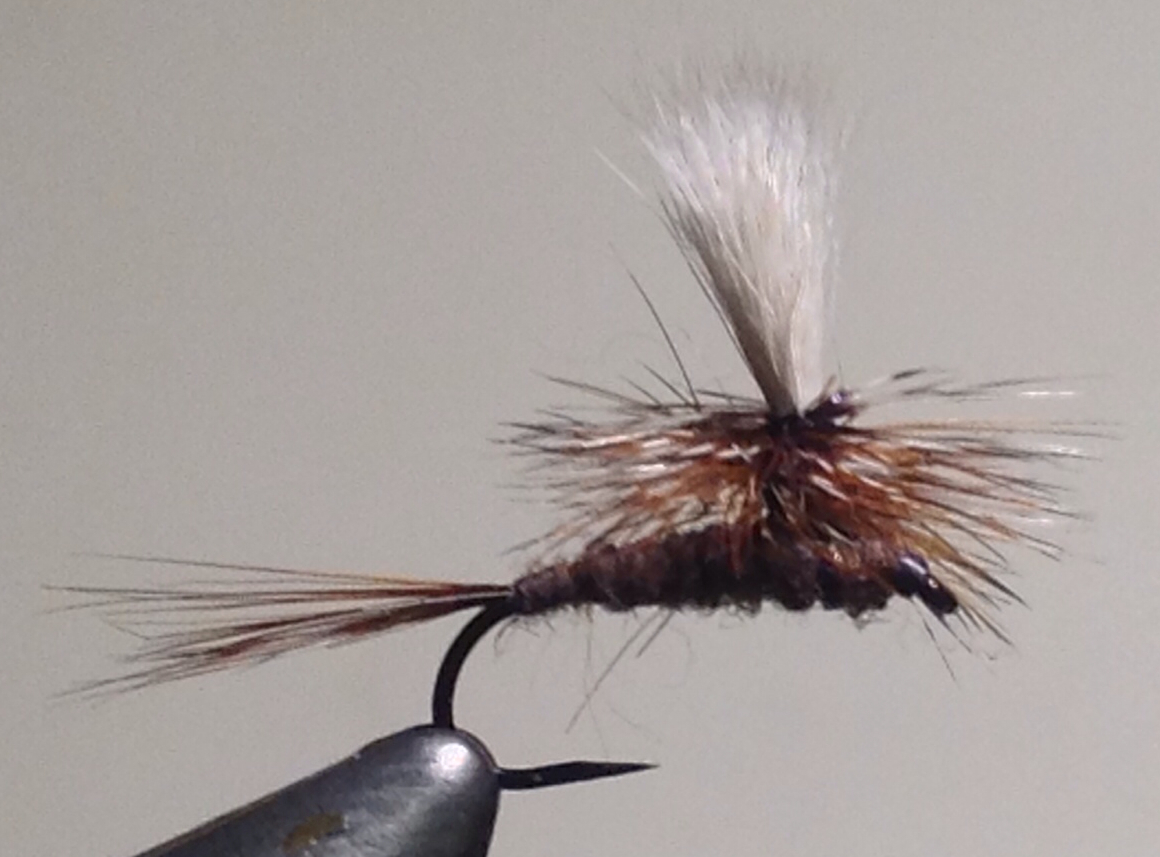
Parachute Adams
The most versatile dry fly ever created. The Parachute Adams imitates a wide range of mayflies and serves as an effective searching pattern when no specific hatch is occurring. The white parachute post makes it easy to track on the water. Originally tied with conventional upright wings, the parachute version wraps the hackle horizontally around the post, allowing the fly to land flush on the surface with a more realistic silhouette. This low-riding profile is why many experienced anglers prefer it over the standard Adams. The mixed brown and grizzly hackle suggests the mottled coloring of countless mayfly species, from tiny Baetis to larger Callibaetis. On Montana waters, the Parachute Adams is the quintessential searching pattern. When you arrive at the river and nothing is hatching, tie on a Parachute Adams in size #14 or #16 and start prospecting. During active hatches, sizing down to match the naturals makes this fly deadly. It works on every Montana river from the riffles of the Madison to the spring creek-like waters of the Missouri below Holter Dam.
Pattern Details
- Type
- Dry Fly
- Seasons
- spring, summer, fall
- Hook Sizes
- #12-22
- Hook Type
- Standard dry fly hook
- Tying Difficulty
- Intermediate
- Imitates
- Mayfly adults (Baetis, Callibaetis, PMDs, March Browns, and general mayfly profile)
Recipe & Materials
Some links may earn a commission. Learn more
Technique & Presentation
Fish the Parachute Adams on a dead drift with a drag-free presentation. Use a reach cast or mend upstream to extend the drift, especially on complex currents. The white post is a significant advantage in low-light conditions and on broken water where visibility is challenging.
During a hatch, match the size of the naturals and present the fly in the feeding lane of a rising trout. When prospecting, focus on seams, foam lines, and the heads and tails of pools. A light application of floatant to the hackle and post keeps the fly riding high, but avoid getting floatant on the body so it sits naturally in the surface film.
As an attractor or searching pattern, try sizes #14-16 on a 5X tippet. When matching specific hatches, drop down to the appropriate size and lengthen your tippet to 6X or 7X for pressured fish. The Parachute Adams excels in a dry-dropper rig with a small bead head nymph trailing 18 inches below.
History & Origin
The original Adams was created in 1922 by Leonard Halladay for his friend Charles Adams, who fished it on the Boardman River in Michigan. It quickly became the most popular dry fly in America. The parachute variation emerged in the mid-20th century as anglers recognized that the horizontal hackle provided a more natural silhouette and better visibility.
The parachute style of hackling was popularized in part by Vince Marinaro and other limestone creek anglers in Pennsylvania during the 1950s and 1960s. Applying the technique to the Adams created what many consider the single greatest improvement to an already legendary pattern. Today, if you ask any Montana fly shop to name one fly you should never be without, the Parachute Adams is the answer.
Where to Fish This Fly
Madison River
Southwest Montana
Essential during PMD hatches
Yellowstone River
South Central Montana
Works everywhere on the Yellowstone
Gallatin River
Southwest Montana
Always works in the canyon
Missouri River
Central Montana
During any mayfly hatch
Bighorn River
Southeast Montana
During summer mayfly hatches
Arkansas River
Upper Arkansas Valley / Central Mountains
Universal mayfly imitation, covers BWO and PMD hatches
Colorado River
Grand County / Northern Mountains
Universal mayfly pattern, effective during PMD and BWO hatches
Frying Pan River
Roaring Fork Valley / Central Mountains
During Green Drake and PMD hatches, rare chance at bigger dries
Gunnison River
Western Slope / Black Canyon Country
Universal mayfly dry, covers PMD and BWO hatches
South Platte River
Front Range / South Park
Versatile mayfly imitation for Baetis and PMD hatches
North Platte River
Central Wyoming
Universal mayfly imitation covering BWOs, PMDs, and Tricos
Snake River
Northwest Wyoming / Jackson Hole
Universal mayfly; covers Grey Drakes, PMDs, and BWOs
Green River
Southwest Wyoming
Covers PMD, BWO, and Trico hatches on the Seedskadee
Bighorn River (Wyoming)
North Central Wyoming
Universal mayfly covering BWO, PMD, and Trico hatches
New Fork River
Western Wyoming / Wind River Range
Grey Drake and PMD imitation; the top New Fork dry fly
Henry's Fork
Eastern Idaho
Universal mayfly covering Green Drakes, PMDs, and Mahogany Duns
Silver Creek
Central Idaho / Sun Valley
Parachute Adams for Callibaetis and general mayfly activity
Salmon River
Central Idaho
General mayfly pattern for PMDs and BWOs
South Fork Boise River
Southwestern Idaho
Universal mayfly covering BWOs, PMDs, and March Browns
Deschutes River
Central Oregon
Effective during PMD hatches and general searching. Size 16-18.
Crooked River
Central Oregon
BWO parachute for spring and fall hatches. Size 18-20.
Metolius River
Central Oregon (Cascades)
The most important dry fly, covering BWOs year-round. Size 16-20.
McKenzie River
Willamette Valley / Cascades
All-purpose mayfly pattern. Covers PMDs, BWOs, and general searching.
Owyhee River
Southeastern Oregon
BWO parachute. Year-round essential. Size 18-22.
Methow River
North Central Washington, Okanogan County
All-purpose mayfly dry for PMDs, BWOs, and Mahogany Duns
Skagit River
Northwest Washington, Skagit County
Parachute Adams for upper river trout during summer mayfly hatches
Klickitat River
South Central Washington, Klickitat County
All-purpose mayfly dry for upper river trout
Rocky Ford Creek
Central Washington, Grant County
Callibaetis dry fly imitation during summer hatches. Size 14-16
Lower Sacramento River
Northern California / Shasta County
Universal mayfly pattern for BWO and PMD hatches
McCloud River
Northern California / Shasta County
Universal attractor dry; works year-round
Hat Creek
Northern California / Shasta County
Hex patterns size 8-12 during legendary Hex hatch
Fall River
Northern California / Shasta County
Hex patterns for the legendary hatch; late June-July
Upper Sacramento River
Northern California / Siskiyou and Shasta Counties
Universal attractor dry; works year-round
Pit River
Northern California / Shasta County
Parachute Adams for BWO hatches
Truckee River
Eastern Sierra / Nevada and Placer Counties
Universal mayfly pattern for BWO and PMD
East Walker River
Eastern Sierra / Mono County
Parachute Adams for mayfly hatches
Hot Creek
Eastern Sierra / Mono County
Parachute Adams for mayfly hatches
Upper Klamath River
Northern California / Siskiyou County
Parachute Adams for resident trout BWO hatches
Truckee River
Western Nevada / Washoe County
Universal mayfly imitation for BWO hatches
East Walker River
Western Nevada / Lyon County
Universal dry fly for BWO hatches
East Fork Carson River
Western Nevada / Douglas County
Spring BWO dry fly
Jarbidge River
Northern Nevada / Elko County / Jarbidge Wilderness
Parachute Adams all-purpose dry
Ruby Mountains / Lamoille Creek
Northern Nevada / Elko County / Ruby Mountains
Parachute Adams universal dry
Bruneau River
Northern Nevada / Elko County
Parachute Adams for BWOs
Great Basin NP Streams
Eastern Nevada / White Pine County / Great Basin National Park
Parachute Adams all-purpose
San Juan River
Northwestern New Mexico / San Juan County
Parachute Adams for BWO dry fly fishing, sizes 20-22
Rio Grande
Northern New Mexico / Taos County
Universal mayfly dry for BWO and March Brown hatches
Pecos River
North-Central New Mexico / San Miguel & Santa Fe Counties
Universal mayfly dry for BWO and general prospecting
Rio Chama
North-Central New Mexico / Rio Arriba County
Parachute Adams for BWO and general mayfly hatches
Colorado River at Lees Ferry
Northern Arizona / Coconino County
Universal dry fly for BWO hatches
Oak Creek
Central Arizona / Oak Creek Canyon
Parachute Adams for BWO and general mayfly hatches
East Fork Black River
Eastern Arizona / White Mountains
Parachute Adams for small mayfly hatches
Chevelon Creek
Central Arizona / Mogollon Rim
Parachute Adams for general mayfly hatches
Davidson River
Western North Carolina / Pisgah National Forest
Universal dry fly for BWO and mayfly hatches in spring and fall
Tuckasegee River
Western North Carolina / Jackson County
Universal dry for BWO and mayfly hatches during Delayed Harvest
Nantahala River
Western North Carolina / Macon County
Versatile dry fly for BWO and small mayfly hatches
Watauga River
Northwestern North Carolina / Watauga County
Universal dry fly for BWO and mayfly hatches
Wilson Creek
Western North Carolina / Caldwell County
Universal dry for BWO and small mayfly hatches
Deep Creek
Western North Carolina / Great Smoky Mountains National Park
Universal dry fly for Smokies hatches
Linville River
Western North Carolina / Avery County
Versatile dry for BWO and small mayfly hatches
South Toe River
Western North Carolina / Yancey County
Universal dry fly for Delayed Harvest season
French Broad River
Western North Carolina / Asheville Area
Universal dry for upper trout sections
Mitchell River
Northwestern North Carolina / Surry County
Universal dry for trout and smallmouth surface feeding
Upper Kennebec River
Western Maine / Somerset County
Parachute Adams in sizes 14-16 covers a range of mayfly hatches and works as a general searching pattern.
West Branch Penobscot River
North-Central Maine / Piscataquis County
Parachute Adams in sizes 14-16 as a general dry fly searching pattern.
Rapid River
Western Maine / Oxford County
Parachute Adams in sizes 14-16 as a versatile searching pattern for brook trout.
Kennebago River
Western Maine / Franklin County
Parachute Adams in sizes 14-16 as a searching pattern on the upper river.
Magalloway River
Western Maine / Oxford County
Parachute Adams in sizes 14-16 as a versatile dry fly searching pattern.
Roach River
North-Central Maine / Piscataquis County
Parachute Adams in sizes 14-18 as a versatile dry fly for brook trout.
Grand Lake Stream
Downeast Maine / Washington County
Parachute Adams in sizes 14-16 as a general dry fly searching pattern.
Crooked River
Southern Maine / Cumberland and Oxford Counties
Parachute Adams in sizes 14-16 as a versatile dry fly for wild brook trout.
Moose River (Jackman)
Northwestern Maine / Somerset County
Parachute Adams in sizes 14-16 for small-stream brook trout in the headwaters.
East Outlet of the Kennebec River
North-Central Maine / Piscataquis County
Parachute Adams in sizes 14-16 as a general dry fly searching pattern.
Androscoggin River
Northern White Mountains / Coos County
Versatile mayfly dry for Quill Gordons and general surface activity.
Upper Connecticut River
Connecticut Lakes Region / Pittsburg
General dry fly for Hendrickson and mayfly hatches. Size 12-14.
Saco River
Mount Washington Valley / Carroll County
Match the legendary Gray Drake hatch. Size 10-12. Brings big browns up.
Pemigewasset River
White Mountains / Grafton County
Versatile dry fly for Hendrickson and general mayfly hatches. Size 12-16.
Swift River
White Mountains / Kancamagus Highway
High-floating attractor for wild brook trout pocket water. Size 14-16.
Ellis River
Mount Washington Valley / Carroll County
Versatile dry fly for Hendrickson and general mayfly activity. Size 14-16.
Ammonoosuc River
White Mountains / Grafton County
Versatile dry fly for Hendrickson and general hatches. Size 12-16.
Baker River
White Mountains / Grafton County
Universal dry fly for Hendrickson and general mayfly hatches. Size 12-16.
Mascoma River
Upper Valley / Grafton County
Parachute Adams for Hendrickson and general mayfly activity. Size 12-16.
Souhegan River
Southern New Hampshire / Hillsborough County
Versatile dry fly for Hendrickson and general mayfly activity. Size 12-16.
Battenkill River
Southern Vermont / Bennington County
Essential for Hendrickson hatch, the signature Battenkill experience. Size 12-14.
White River
Central Vermont / White River Valley
Universal mayfly pattern covering BWOs and other hatches. Size 14-18.
Winooski River
Northern Vermont / Chittenden County
Versatile mayfly dry fly for spring hatches.
Lamoille River
Northern Vermont / Lamoille County
Universal dry fly for spring mayfly hatches.
Dog River
Central Vermont / Washington County
Parachute Adams for mayfly hatches. Size 14-16.
Deerfield River (Upper)
Southern Vermont / Windham County
Parachute Adams for mayfly hatches.
Walloomsac River
Southern Vermont / Bennington County
Universal dry fly for trophy section.
Mettawee River
Western Vermont / Rutland County
Universal mayfly pattern for beginner-friendly water.
Otter Creek
Western Vermont / Addison County
Universal dry fly for upper sections and tributaries.
New Haven River
Central Vermont / Addison County
Parachute Adams for Hendrickson and general mayfly hatches.
Penns Creek
Central Pennsylvania / Centre County
Universal dry fly for Green Drakes, Sulphurs, and BWOs
Spring Creek
Central Pennsylvania / Centre County
Parachute Adams for various mayfly hatches
Little Juniata River
Central Pennsylvania / Blair County
Universal mayfly dry for various hatches
Spruce Creek
Central Pennsylvania / Huntingdon County
Parachute Adams for mayflies
Big Fishing Creek
North Central Pennsylvania / Columbia County
Universal mayfly dry
Yellow Breeches Creek
South Central Pennsylvania / Cumberland County
Universal mayfly dry for various hatches
Big Spring Creek
South Central Pennsylvania / Cumberland County
Parachute Adams for mayflies
Kettle Creek
North Central Pennsylvania / Clinton County
Universal dry fly for mayflies
Slate Run
North Central Pennsylvania / Lycoming County
Universal dry fly for brook trout
Tulpehocken Creek
Southeastern Pennsylvania / Berks County
Universal mayfly dry
Related Dry Fly Patterns
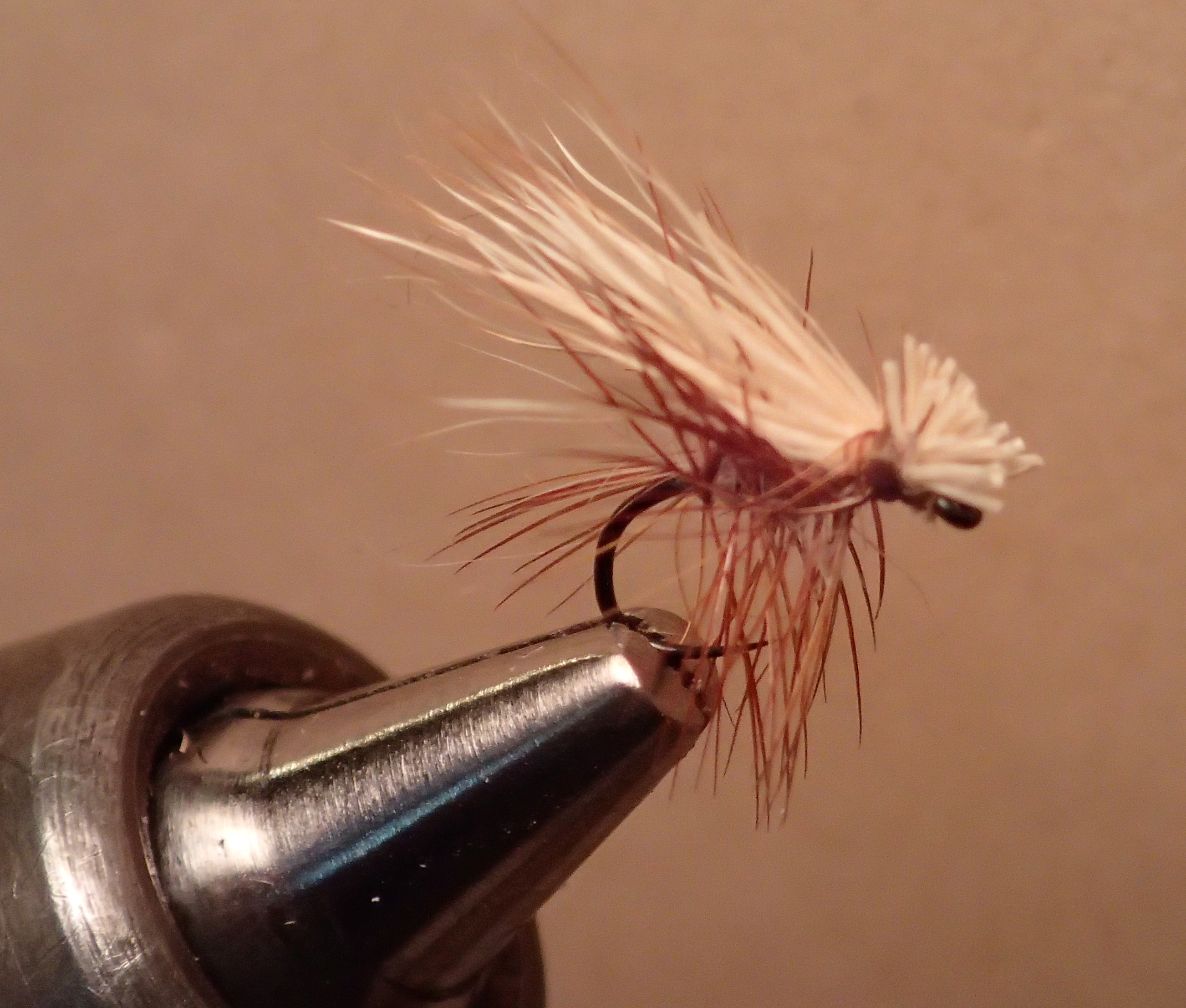
Elk Hair Caddis
Al Troth's iconic caddis imitation is a must-have on every Montana river. The elk hair wing provides excellent flotation, and the pattern effectively matches adult caddisflies throughout the season. Dead-drift, skate, or twitch it; all methods produce fish. The Elk Hair Caddis is one of those rare patterns that works from the moment caddisflies start appearing in spring through the last hatches of fall. The tent-shaped elk hair wing perfectly mimics the profile of a resting adult caddis, while the palmered hackle gives the fly exceptional buoyancy and creates the impression of legs touching the surface. Its durability is legendary; a well-tied Elk Hair Caddis can take dozens of fish before needing replacement. In Montana, caddis hatches are prolific on every major river. Mother's Day caddis hatches on the Yellowstone in late April and May are among the most anticipated events of the season. The Elk Hair Caddis is equally effective on the rock gardens of the Gallatin, the braided channels of the upper Madison, and the tailwater sections of the Missouri. Vary the body color between tan, olive, and green to match local populations.
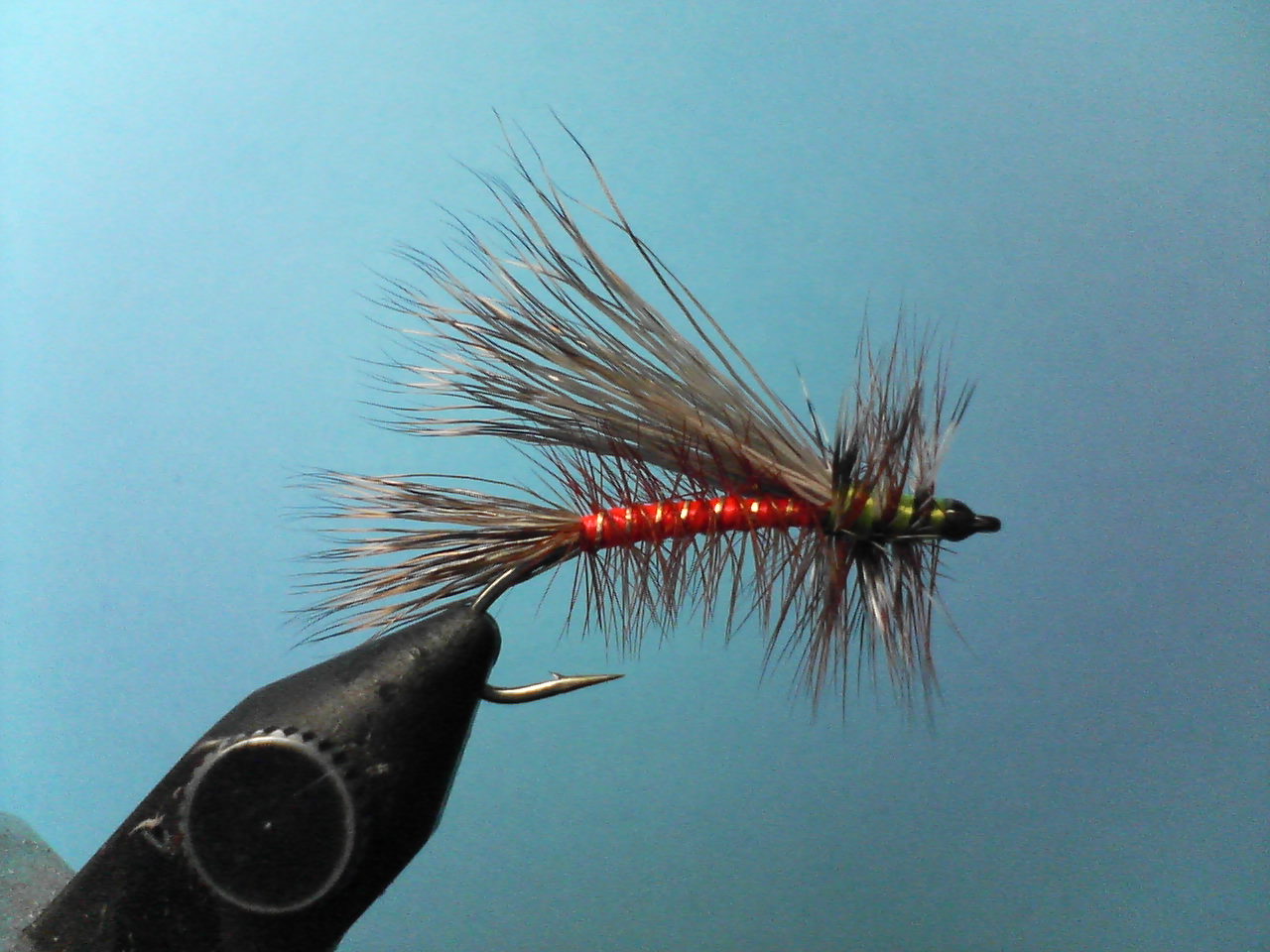
Stimulator
An outstanding attractor dry fly and stonefly imitation. The Stimulator excels as a top fly in a dry-dropper rig. Larger sizes (#6-8) match salmonflies and golden stones, while smaller sizes (#12-14) suggest various stoneflies and caddis. The Stimulator's genius lies in its buoyancy and suggestive profile. The combination of a heavily palmered hackle, elk hair wing, and robust body allows it to ride high on turbulent water where lesser flies would drown. The swept-back wing silhouette works as both a stonefly and large caddis imitation, making it effective even when no specific insect is hatching. Trout see the Stimulator and recognize it as a substantial, calorie-rich meal worth rising for. In Montana, the Stimulator truly shines during stonefly season on the Madison, Yellowstone, and Gallatin rivers. Tie on a size #6 orange Stimulator during the salmonfly hatch in late June and fish it tight to the banks. As summer progresses, switch to smaller sizes in yellow for golden stones. The Stimulator also serves as an excellent indicator fly for a heavy nymph dropper, especially when wading pocket water and riffles where it can be challenging to track a strike indicator.
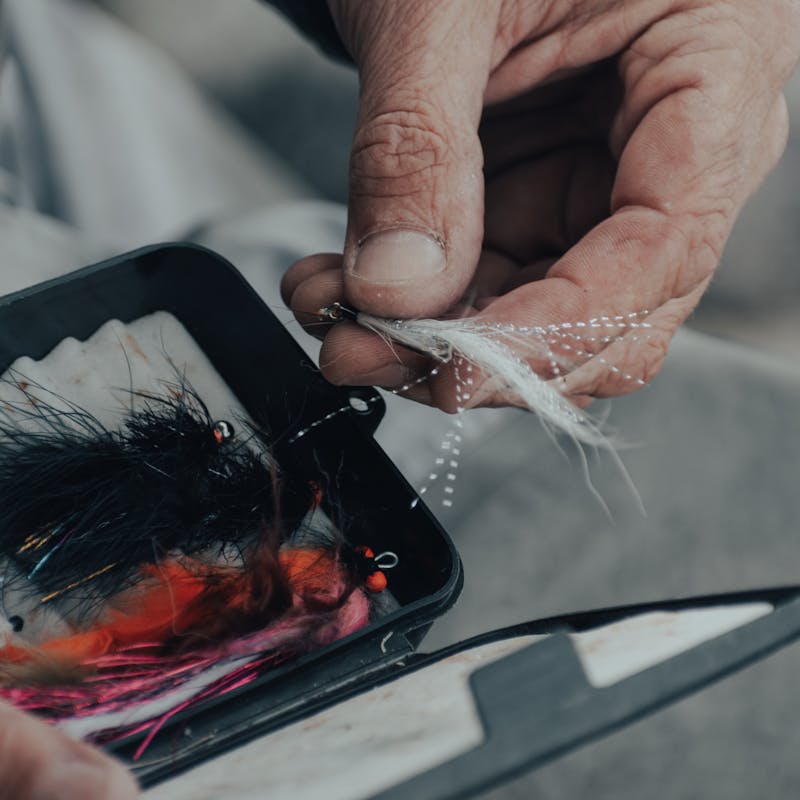
Chubby Chernobyl
A modern foam attractor pattern that has become a Montana staple. Virtually unsinkable, the Chubby floats heavy nymph droppers and draws aggressive strikes from trout looking for a large, easy meal. Available in numerous colors. The Chubby Chernobyl represents the evolution of the foam hopper and stonefly genre. Its layered foam body creates a nearly indestructible fly that requires no floatant and rides high on even the roughest water. The rubber legs provide enticing movement, and the flash wing catches light in a way that grabs attention from trout holding deep. Whether tied in tan, purple, pink, or any other color, the Chubby simply produces fish. Montana guides have embraced the Chubby Chernobyl as their go-to dry-dropper indicator fly, and for good reason. It supports one or even two heavy nymphs without sinking, it is visible at long distances, and trout eat it with startling aggression. On the Madison, Yellowstone, and Gallatin rivers, more fish are likely caught with a Chubby on top than any other dry fly. Its effectiveness extends from early July through October, covering the heart of Montana's fishing season.
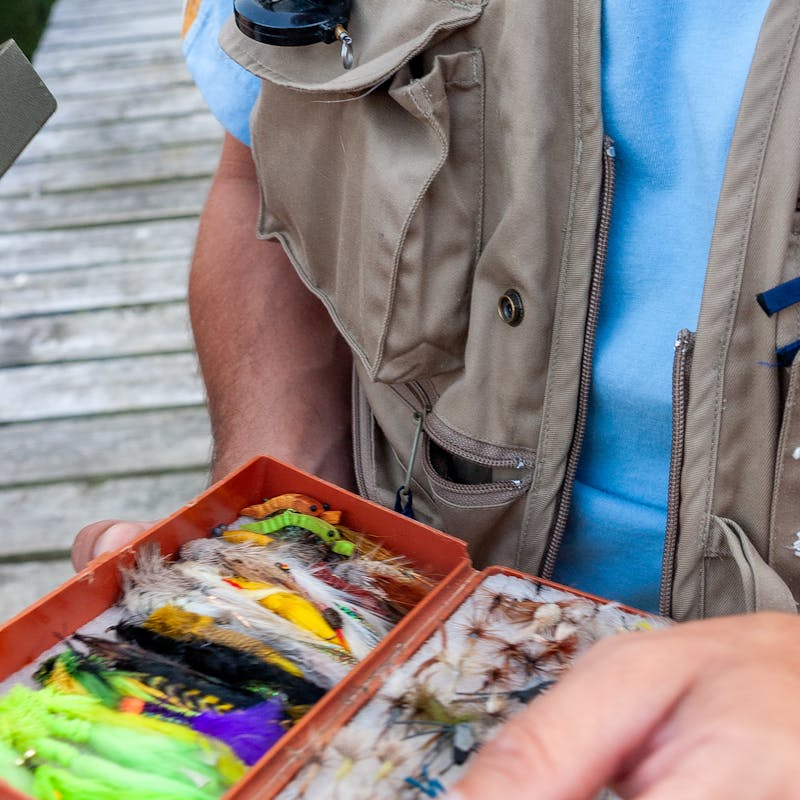
Purple Haze
A Montana-born variation of the Parachute Adams with purple dubbing. Created in the Gallatin Valley, this pattern has become a regional favorite that outperforms the standard Adams on many days, particularly during BWO and PMD hatches. The Purple Haze takes the proven Parachute Adams template and adds a subtle twist: a body of purple dubbing that seems to trigger something in trout that the standard gray does not. While purists may argue the color is unnatural, the results speak for themselves. Montana anglers have reported for years that the Purple Haze consistently outfishes the standard Adams, particularly on rivers that receive heavy fishing pressure. Theories about why the purple works vary. Some believe that the color more accurately represents the UV spectrum reflected by natural mayflies. Others suggest that the slightly different hue simply stands out enough on pressured water to be noticed without being refused. Whatever the reason, the Purple Haze has earned its place in the top tier of Montana dry flies. It is especially effective on the Gallatin, Madison, and Yellowstone rivers from late spring through early fall.
X-Caddis
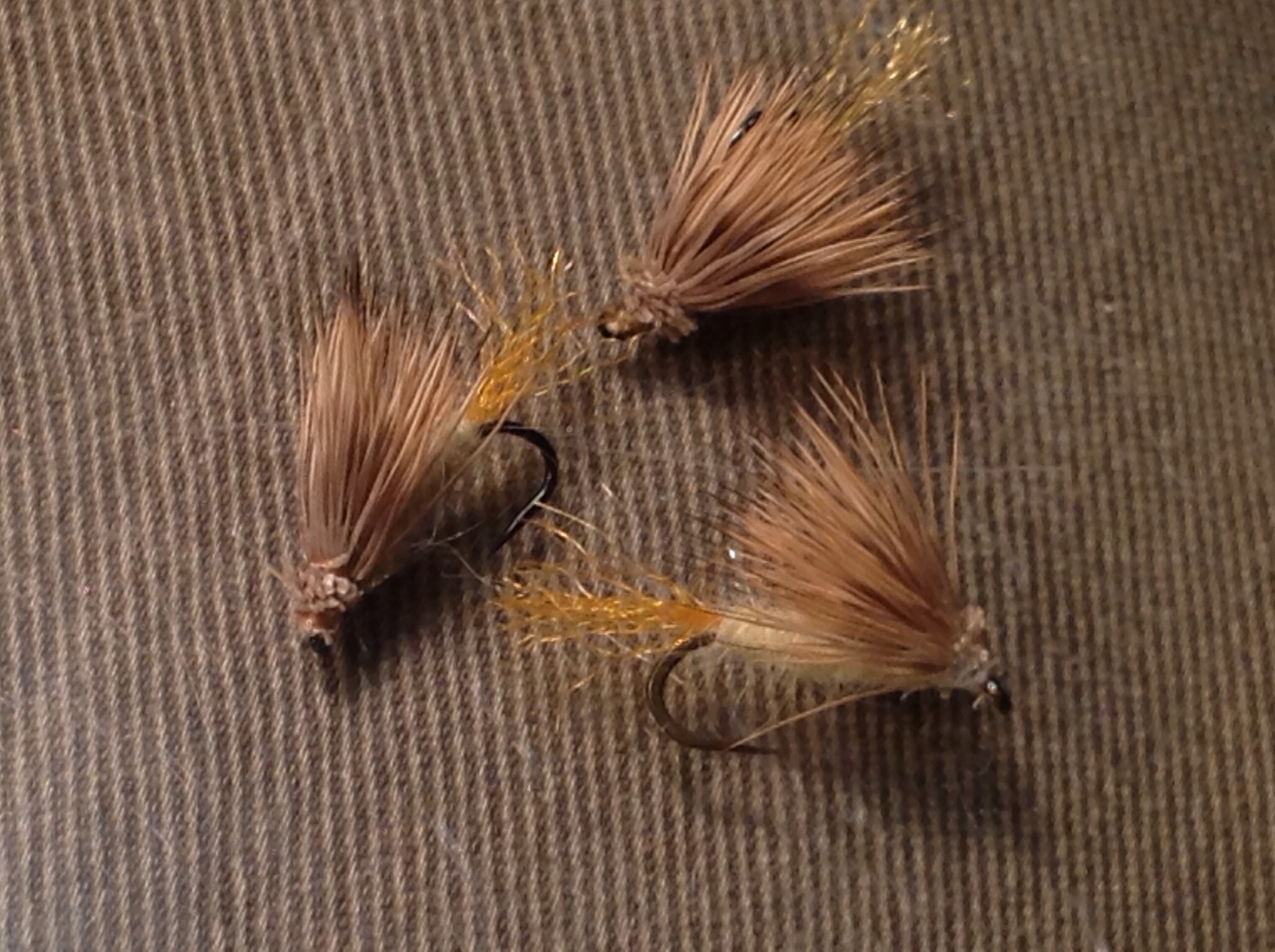
Craig Mathews' brilliant caddis emerger pattern sits in the surface film, imitating a caddis struggling to break through the meniscus. Deadly during caddis hatches when fish refuse higher-riding patterns. The trailing shuck is key to its effectiveness. The X-Caddis fills a critical gap in the caddis life cycle that most fly boxes lack. While traditional dry flies like the Elk Hair Caddis ride high on the surface, the X-Caddis sits flush in the film with its body partially submerged and a trailing Z-lon shuck extending behind. This precisely imitates the moment when a caddis pupa breaks through the surface and begins to shed its pupal shuck, the most vulnerable stage for the insect and the moment when trout feed with the least caution. On Montana's caddis-rich rivers, the X-Caddis can make the difference between a frustrating day of refusals and a banner day of steady action. When you see trout rising during a caddis hatch but refusing your Elk Hair Caddis, the X-Caddis is the answer. It is particularly effective on the Yellowstone during the Mother's Day caddis hatch, on the Madison during summer evening hatches, and anywhere trout have become educated to conventional caddis patterns.
PMD Comparadun
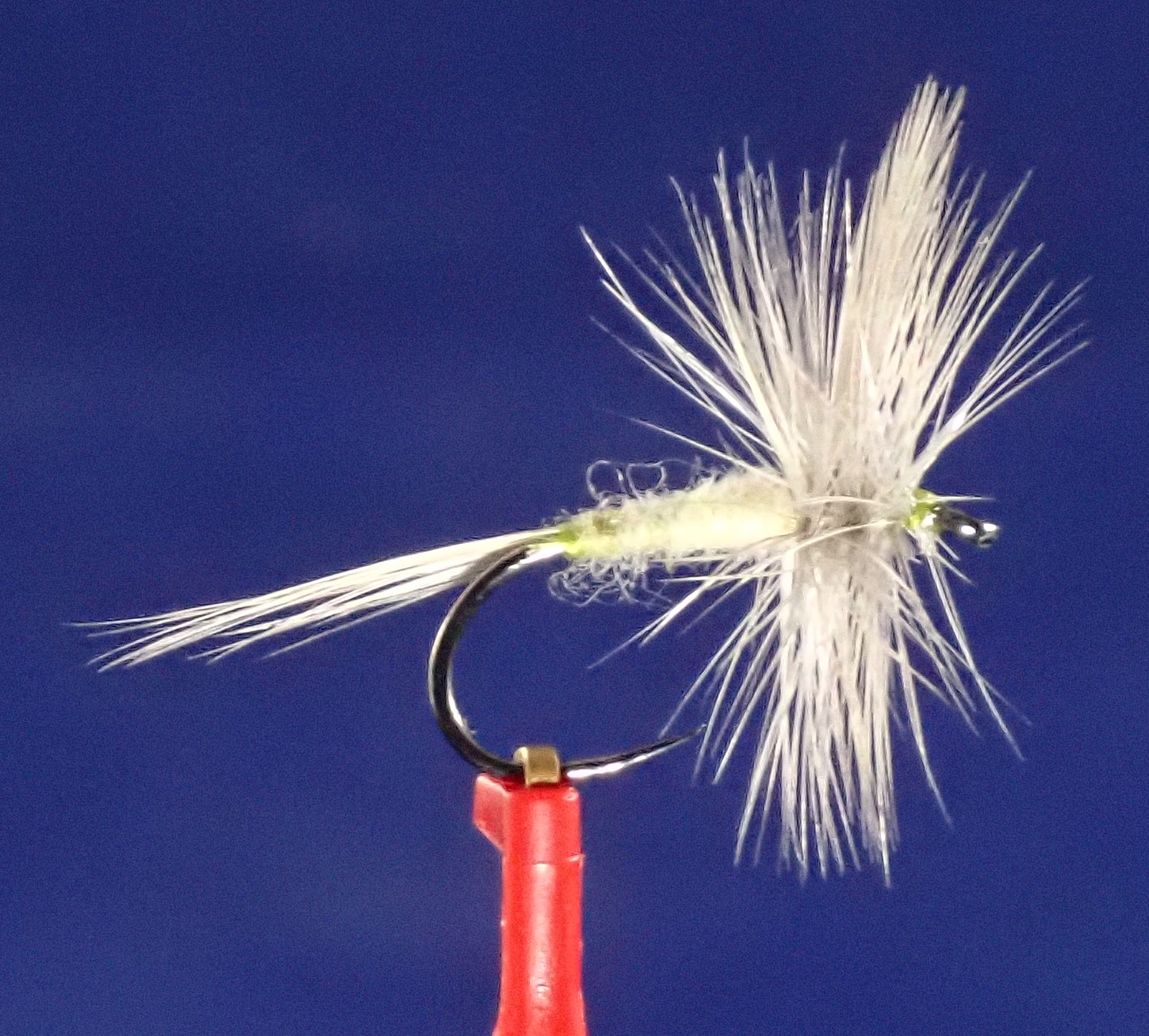
A flush-floating mayfly imitation that excels during Pale Morning Dun hatches. The deer hair wing creates a realistic silhouette, and the pattern sits low in the film like a natural dun. Essential during PMD hatches on the Missouri and Madison. The Comparadun design is one of the most elegant solutions in dry fly fishing. By using a fan-shaped deer hair wing instead of traditional hackle, the fly sits directly on the water surface with its body in the film. This creates a silhouette that is nearly indistinguishable from a natural mayfly dun when viewed from below, exactly the perspective that matters to a feeding trout. The PMD version, tied in pale yellow and olive, is one of the most important patterns for Montana's prolific Pale Morning Dun hatches. PMD hatches on Montana's premier rivers are events that every serious fly angler should experience. On the Missouri River below Holter Dam, PMD hatches from late June through August produce some of the best dry fly fishing in North America. The Madison River's upper sections also host excellent PMD activity. During these hatches, trout can become excruciatingly selective, and the low-riding Comparadun is often the pattern that cracks the code when parachute and traditional dun patterns fail.