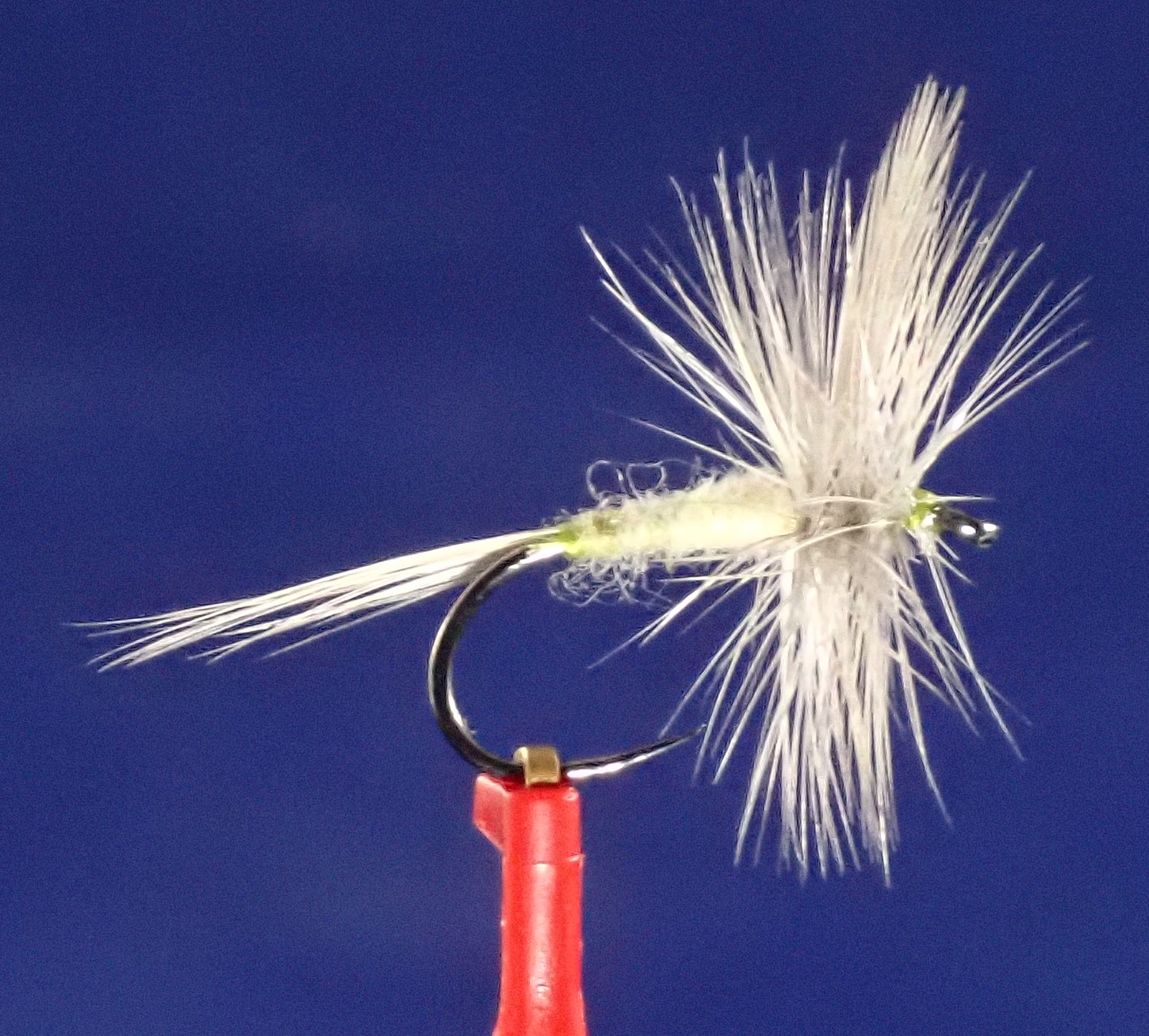
PMD Comparadun
A flush-floating mayfly imitation that excels during Pale Morning Dun hatches. The deer hair wing creates a realistic silhouette, and the pattern sits low in the film like a natural dun. Essential during PMD hatches on the Missouri and Madison. The Comparadun design is one of the most elegant solutions in dry fly fishing. By using a fan-shaped deer hair wing instead of traditional hackle, the fly sits directly on the water surface with its body in the film. This creates a silhouette that is nearly indistinguishable from a natural mayfly dun when viewed from below, exactly the perspective that matters to a feeding trout. The PMD version, tied in pale yellow and olive, is one of the most important patterns for Montana's prolific Pale Morning Dun hatches. PMD hatches on Montana's premier rivers are events that every serious fly angler should experience. On the Missouri River below Holter Dam, PMD hatches from late June through August produce some of the best dry fly fishing in North America. The Madison River's upper sections also host excellent PMD activity. During these hatches, trout can become excruciatingly selective, and the low-riding Comparadun is often the pattern that cracks the code when parachute and traditional dun patterns fail.
Pattern Details
- Type
- Dry Fly
- Seasons
- summer
- Hook Sizes
- #14-18
- Hook Type
- Standard dry fly hook
- Tying Difficulty
- Intermediate
- Imitates
- Pale Morning Dun mayflies (Ephemerella excrucians and E. inermis)
Recipe & Materials
- Hook
- TMC 100, sizes 14-18Shop
- Thread
- 8/0 pale yellow or light olive
- Tail
- Light dun Micro Fibetts, split
- Body
- Pale yellow-olive dubbing (PMD color)
- Wing
- Coastal deer hair, natural tan, fan-shaped 180 degrees
Some links may earn a commission. Learn more
Technique & Presentation
The PMD Comparadun demands precise presentation. During a PMD hatch, trout often establish rhythmic feeding patterns, rising at regular intervals as duns drift overhead. Watch a rising trout to determine its rhythm, then place your fly so it enters the feeding window just ahead of the next expected rise. Accuracy and timing are more important than distance.
Use 5X or 6X fluorocarbon tippet to minimize surface disturbance and reduce visibility to the fish. A long, fine leader of 12 feet or more is advisable on flat water. The fly should land softly without splash. Do not apply floatant to the body; the Comparadun is designed to ride in the film, not on top of it. A light dressing on the wing only will keep the fly visible.
When trout refuse the Comparadun, consider whether the fish are taking emergers rather than duns. A switch to a Sparkle Dun or RS2 can solve the problem. Also check your tippet diameter and drift quality. On the Missouri, where trout see hundreds of artificials each season, a micro-drag issue invisible to the angler will be instantly detected by the fish.
History & Origin
The Comparadun was developed in the 1970s by Al Caucci and Bob Nastasi, detailed in their groundbreaking book 'Hatches' published in 1975. The design was revolutionary for its time, eliminating hackle entirely and using a 180-degree fan of deer hair for the wing. This created a flush-floating fly with a far more realistic silhouette than hackled patterns.
While Caucci and Nastasi developed the Comparadun concept as a general design framework, the PMD version became especially important in the Mountain West where Pale Morning Dun hatches are a defining feature of summer fishing. The pattern gained widespread adoption on Montana's Missouri River in the 1980s and 1990s as catch-and-release management created large populations of educated trout that demanded more refined presentations.
Where to Fish This Fly
Missouri River
Central Montana
THE fly during PMD hatches
Bighorn River
Southeast Montana
PMD hatches can be prolific
Frying Pan River
Roaring Fork Valley / Central Mountains
PMD Comparadun during summer mayfly hatches
North Platte River
Central Wyoming
THE fly during PMD hatches at Grey Reef
Green River
Southwest Wyoming
PMD Comparadun during morning emergences
New Fork River
Western Wyoming / Wind River Range
PMD Comparadun during July-August morning hatches
Henry's Fork
Eastern Idaho
THE Ranch pattern: PMD Comparadun during the prolific summer hatches
South Fork Snake River
Eastern Idaho
PMD Comparadun for afternoon mayfly hatches
Silver Creek
Central Idaho / Sun Valley
PMD Comparadun for afternoon PMD hatches
South Fork Boise River
Southwestern Idaho
PMD Comparadun for the summer mayfly hatches
Deschutes River
Central Oregon
During PMD hatches May through July
Metolius River
Central Oregon (Cascades)
PMD hatch mid-morning through afternoon
McKenzie River
Willamette Valley / Cascades
Essential for reliable midday PMD hatches May through July
Owyhee River
Southeastern Oregon
PMD Comparadun for May-July hatches. Size 16-18.
Yakima River
Central Washington
PMD hatches throughout the canyon in summer
Rocky Ford Creek
Central Washington, Grant County
PMD Comparadun during summer mayfly hatches
Hat Creek
Northern California / Shasta County
PMD Comparadun for consistent summer hatches
Fall River
Northern California / Shasta County
PMD Comparadun for consistent spring/summer hatches
Hot Creek
Eastern Sierra / Mono County
PMD Comparadun for summer mayfly hatches
San Juan River
Northwestern New Mexico / San Juan County
PMD Comparadun during sporadic summer mayfly hatches
Rio Chama
North-Central New Mexico / Rio Arriba County
PMD Comparadun for late spring-summer mayfly hatches
Kennebago River
Western Maine / Franklin County
PMD Comparadun in sizes 12-14 during Hendrickson hatches.
Moose River (Jackman)
Northwestern Maine / Somerset County
PMD Comparadun in sizes 12-14 during Hendrickson hatches.
Androscoggin River
Northern White Mountains / Coos County
Matches Light Cahill hatch. Size 12-16. Evening fishing.
Saco River
Mount Washington Valley / Carroll County
Light Cahill for summer evening hatches. Size 12-16.
Pemigewasset River
White Mountains / Grafton County
Light Cahill for summer evening hatch. Size 12-16.
Ellis River
Mount Washington Valley / Carroll County
Light Cahill for evening hatches in Jackson section. Size 14-16.
Ammonoosuc River
White Mountains / Grafton County
Sulphur and Light Cahill match. Size 14-16.
Mascoma River
Upper Valley / Grafton County
Sulphur match for June-July evening hatches. Size 14-16.
Souhegan River
Southern New Hampshire / Hillsborough County
Sulphur match for early summer hatches. Size 14-16.
Penns Creek
Central Pennsylvania / Centre County
Essential for Sulphur hatches mid-May through June
Spring Creek
Central Pennsylvania / Centre County
Sulphur Comparadun for evening hatches
Little Juniata River
Central Pennsylvania / Blair County
Sulphur pattern for evening hatches
Spruce Creek
Central Pennsylvania / Huntingdon County
Sulphur Comparadun for prolific hatches
Big Fishing Creek
North Central Pennsylvania / Columbia County
Sulphur pattern for hatches
Yellow Breeches Creek
South Central Pennsylvania / Cumberland County
Sulphur pattern for evening hatches
Big Spring Creek
South Central Pennsylvania / Cumberland County
Sulphur Comparadun for prolific hatches
Tulpehocken Creek
Southeastern Pennsylvania / Berks County
Sulphur pattern for hatches
Related Dry Fly Patterns
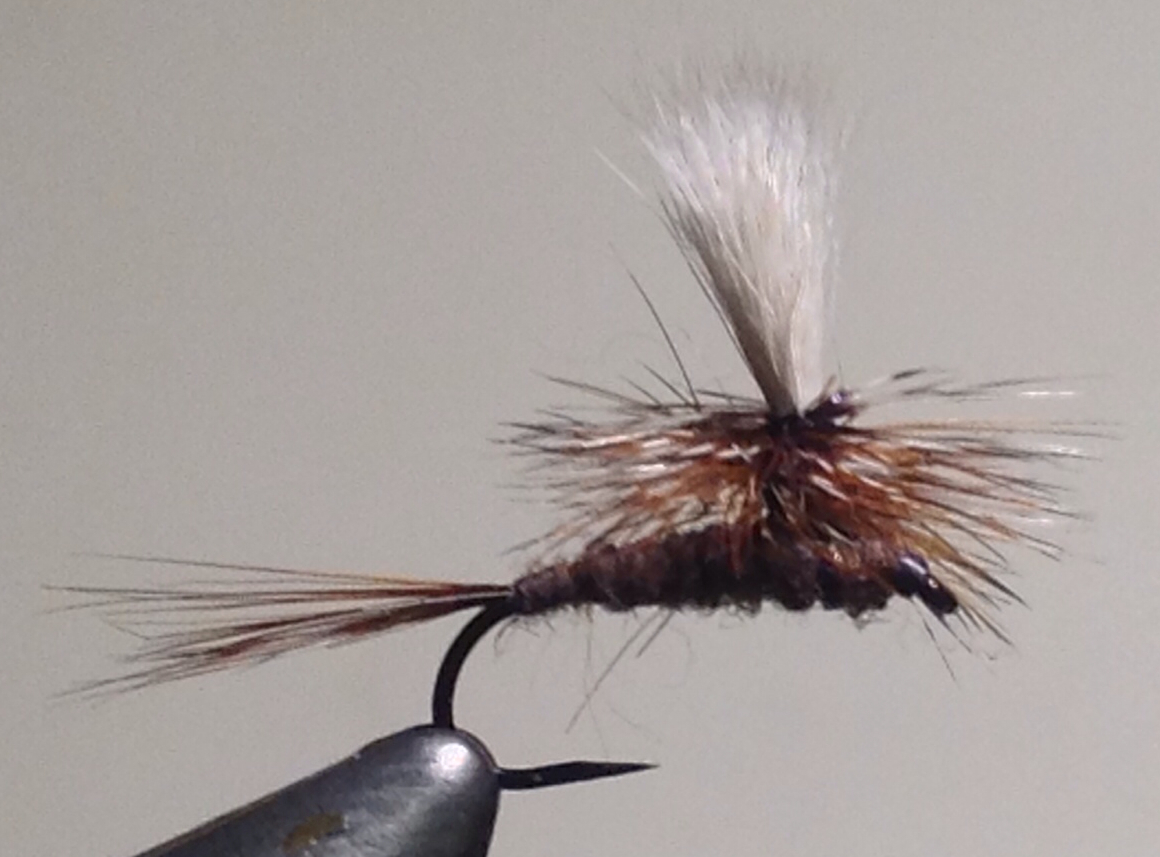
Parachute Adams
The most versatile dry fly ever created. The Parachute Adams imitates a wide range of mayflies and serves as an effective searching pattern when no specific hatch is occurring. The white parachute post makes it easy to track on the water. Originally tied with conventional upright wings, the parachute version wraps the hackle horizontally around the post, allowing the fly to land flush on the surface with a more realistic silhouette. This low-riding profile is why many experienced anglers prefer it over the standard Adams. The mixed brown and grizzly hackle suggests the mottled coloring of countless mayfly species, from tiny Baetis to larger Callibaetis. On Montana waters, the Parachute Adams is the quintessential searching pattern. When you arrive at the river and nothing is hatching, tie on a Parachute Adams in size #14 or #16 and start prospecting. During active hatches, sizing down to match the naturals makes this fly deadly. It works on every Montana river from the riffles of the Madison to the spring creek-like waters of the Missouri below Holter Dam.
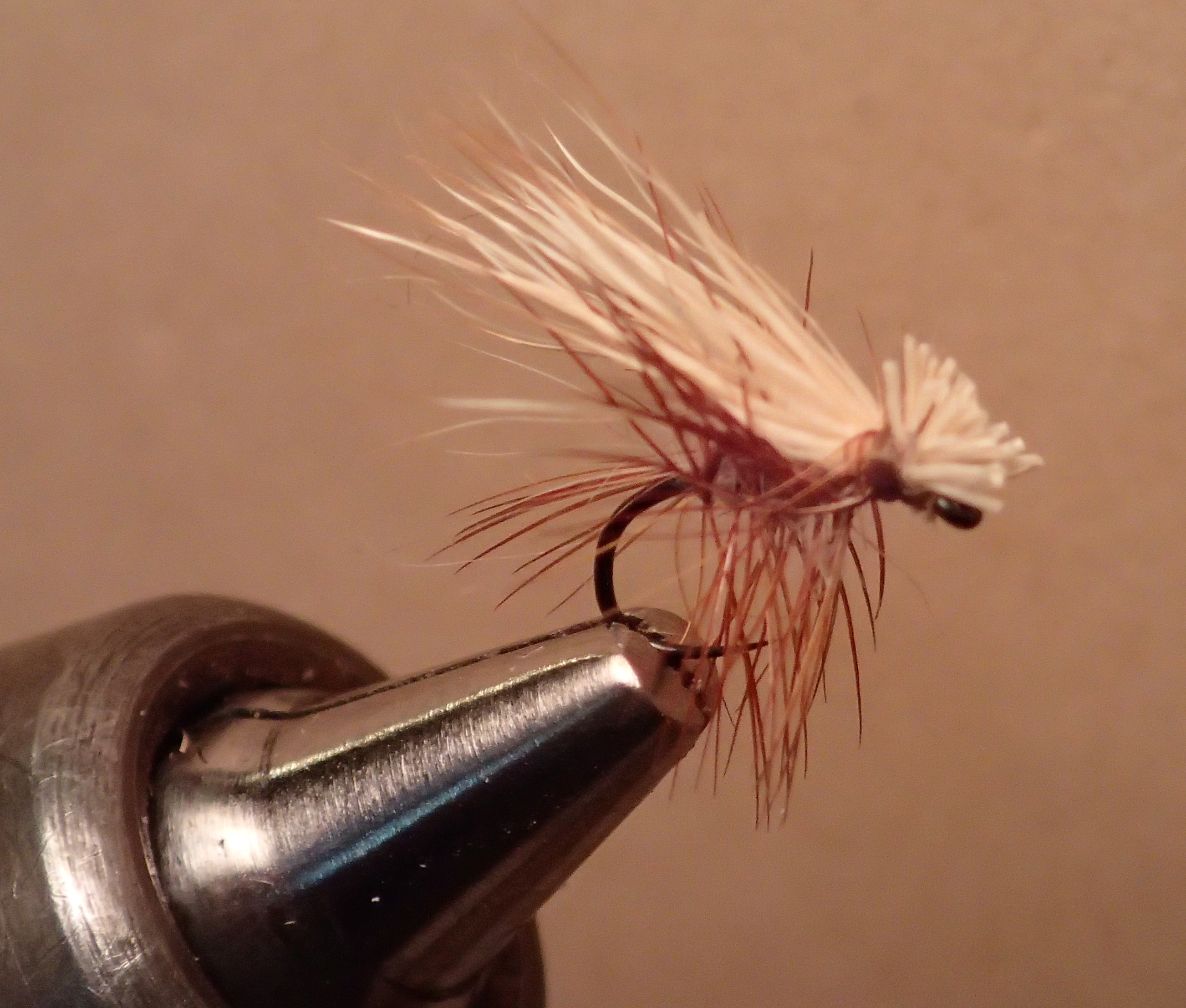
Elk Hair Caddis
Al Troth's iconic caddis imitation is a must-have on every Montana river. The elk hair wing provides excellent flotation, and the pattern effectively matches adult caddisflies throughout the season. Dead-drift, skate, or twitch it; all methods produce fish. The Elk Hair Caddis is one of those rare patterns that works from the moment caddisflies start appearing in spring through the last hatches of fall. The tent-shaped elk hair wing perfectly mimics the profile of a resting adult caddis, while the palmered hackle gives the fly exceptional buoyancy and creates the impression of legs touching the surface. Its durability is legendary; a well-tied Elk Hair Caddis can take dozens of fish before needing replacement. In Montana, caddis hatches are prolific on every major river. Mother's Day caddis hatches on the Yellowstone in late April and May are among the most anticipated events of the season. The Elk Hair Caddis is equally effective on the rock gardens of the Gallatin, the braided channels of the upper Madison, and the tailwater sections of the Missouri. Vary the body color between tan, olive, and green to match local populations.
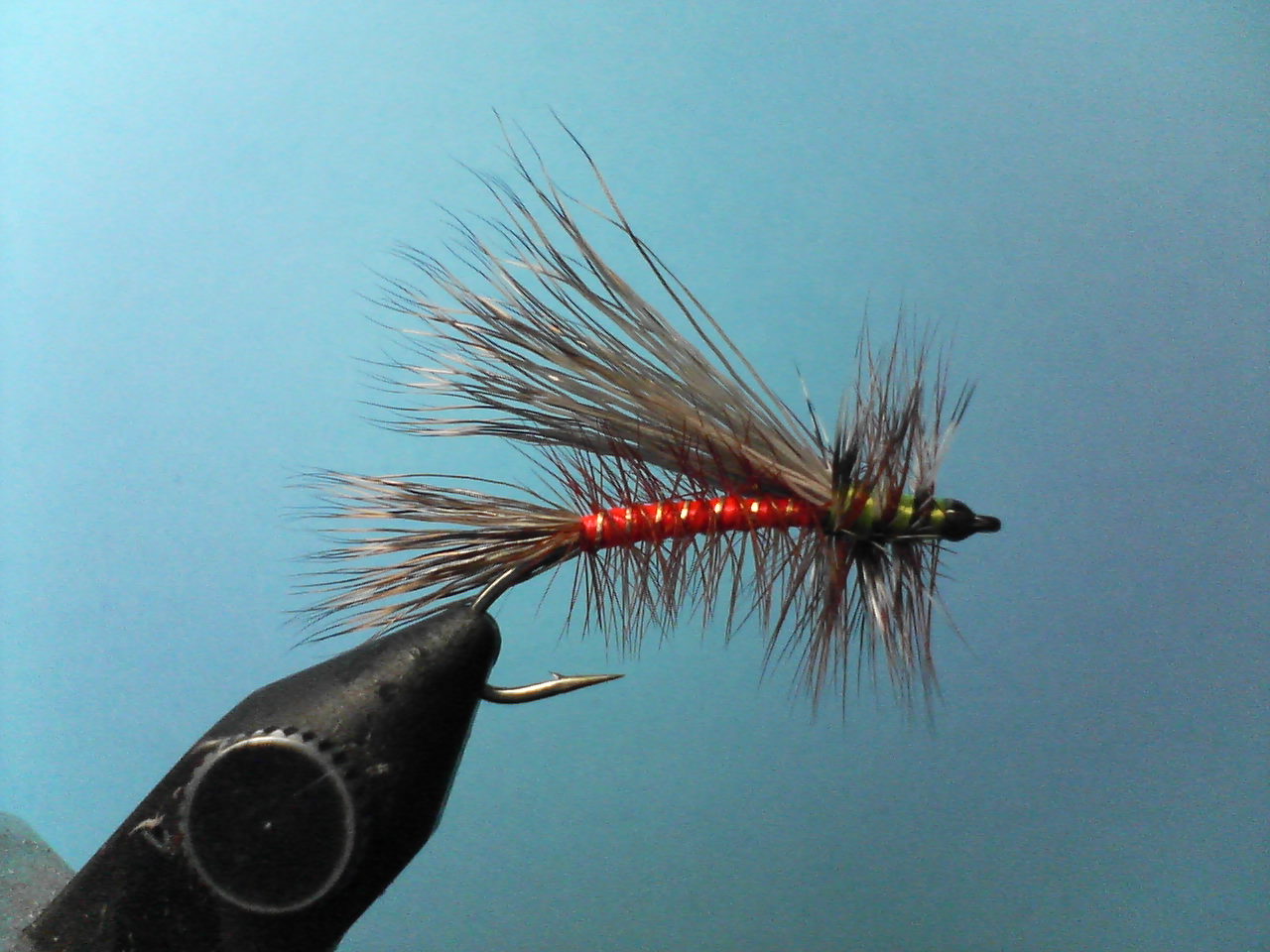
Stimulator
An outstanding attractor dry fly and stonefly imitation. The Stimulator excels as a top fly in a dry-dropper rig. Larger sizes (#6-8) match salmonflies and golden stones, while smaller sizes (#12-14) suggest various stoneflies and caddis. The Stimulator's genius lies in its buoyancy and suggestive profile. The combination of a heavily palmered hackle, elk hair wing, and robust body allows it to ride high on turbulent water where lesser flies would drown. The swept-back wing silhouette works as both a stonefly and large caddis imitation, making it effective even when no specific insect is hatching. Trout see the Stimulator and recognize it as a substantial, calorie-rich meal worth rising for. In Montana, the Stimulator truly shines during stonefly season on the Madison, Yellowstone, and Gallatin rivers. Tie on a size #6 orange Stimulator during the salmonfly hatch in late June and fish it tight to the banks. As summer progresses, switch to smaller sizes in yellow for golden stones. The Stimulator also serves as an excellent indicator fly for a heavy nymph dropper, especially when wading pocket water and riffles where it can be challenging to track a strike indicator.
Chubby Chernobyl
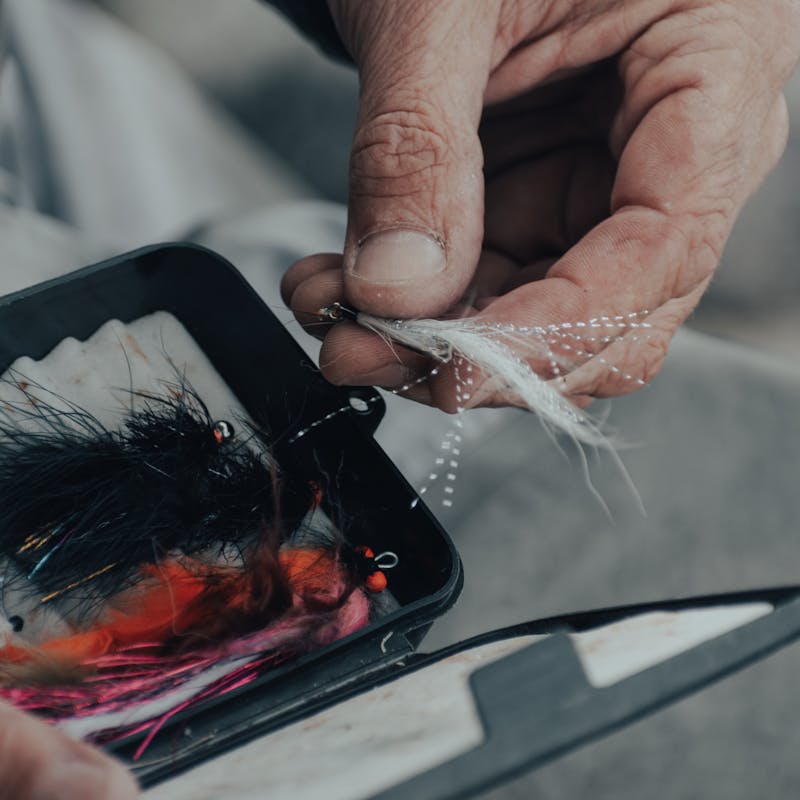
A modern foam attractor pattern that has become a Montana staple. Virtually unsinkable, the Chubby floats heavy nymph droppers and draws aggressive strikes from trout looking for a large, easy meal. Available in numerous colors. The Chubby Chernobyl represents the evolution of the foam hopper and stonefly genre. Its layered foam body creates a nearly indestructible fly that requires no floatant and rides high on even the roughest water. The rubber legs provide enticing movement, and the flash wing catches light in a way that grabs attention from trout holding deep. Whether tied in tan, purple, pink, or any other color, the Chubby simply produces fish. Montana guides have embraced the Chubby Chernobyl as their go-to dry-dropper indicator fly, and for good reason. It supports one or even two heavy nymphs without sinking, it is visible at long distances, and trout eat it with startling aggression. On the Madison, Yellowstone, and Gallatin rivers, more fish are likely caught with a Chubby on top than any other dry fly. Its effectiveness extends from early July through October, covering the heart of Montana's fishing season.
Purple Haze
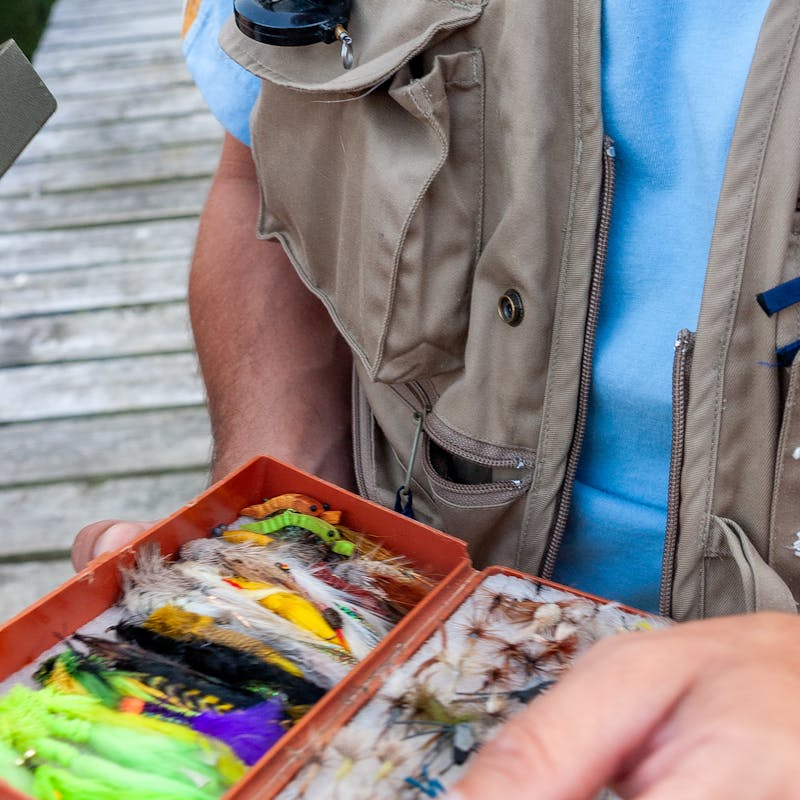
A Montana-born variation of the Parachute Adams with purple dubbing. Created in the Gallatin Valley, this pattern has become a regional favorite that outperforms the standard Adams on many days, particularly during BWO and PMD hatches. The Purple Haze takes the proven Parachute Adams template and adds a subtle twist: a body of purple dubbing that seems to trigger something in trout that the standard gray does not. While purists may argue the color is unnatural, the results speak for themselves. Montana anglers have reported for years that the Purple Haze consistently outfishes the standard Adams, particularly on rivers that receive heavy fishing pressure. Theories about why the purple works vary. Some believe that the color more accurately represents the UV spectrum reflected by natural mayflies. Others suggest that the slightly different hue simply stands out enough on pressured water to be noticed without being refused. Whatever the reason, the Purple Haze has earned its place in the top tier of Montana dry flies. It is especially effective on the Gallatin, Madison, and Yellowstone rivers from late spring through early fall.
X-Caddis
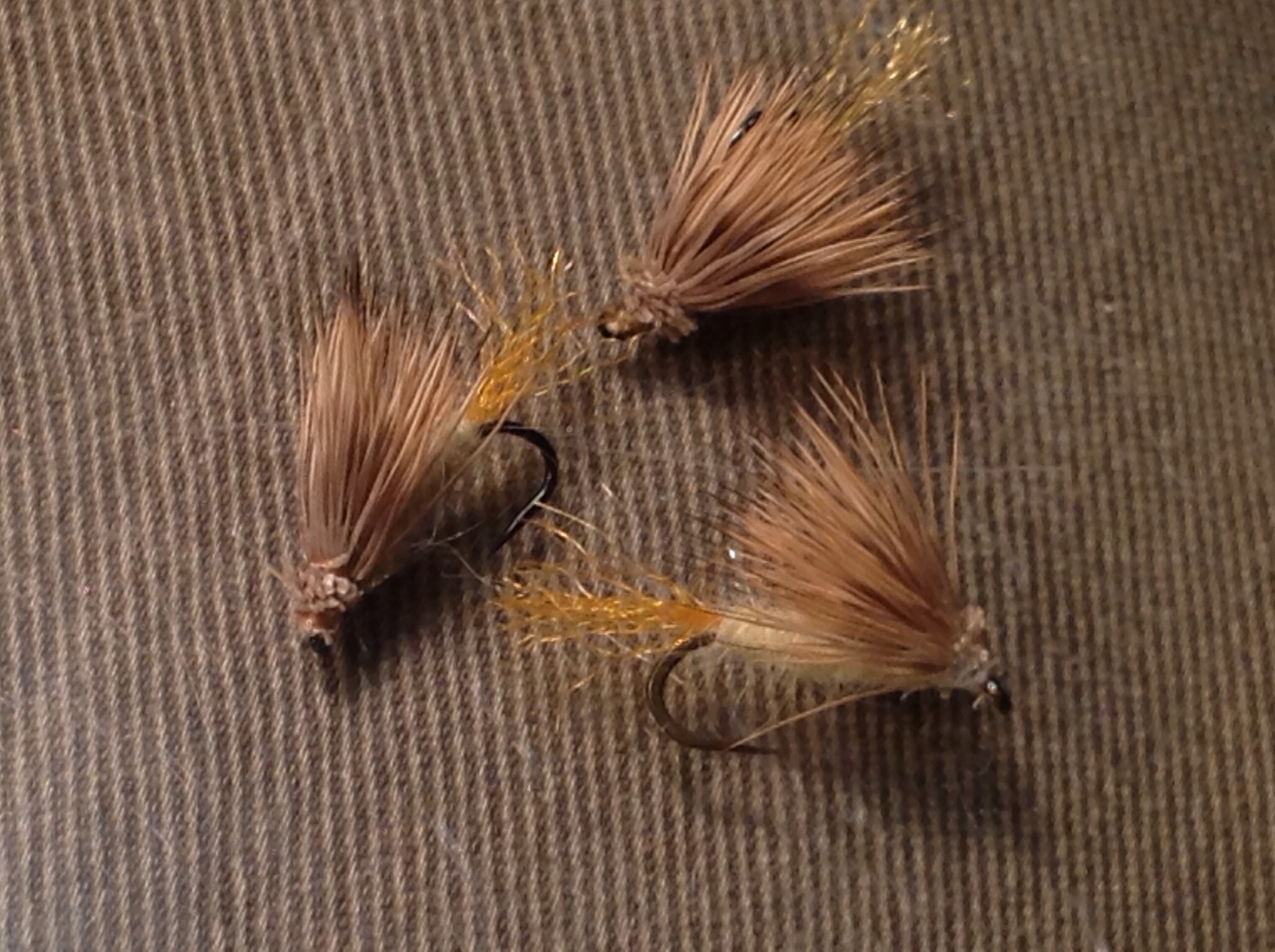
Craig Mathews' brilliant caddis emerger pattern sits in the surface film, imitating a caddis struggling to break through the meniscus. Deadly during caddis hatches when fish refuse higher-riding patterns. The trailing shuck is key to its effectiveness. The X-Caddis fills a critical gap in the caddis life cycle that most fly boxes lack. While traditional dry flies like the Elk Hair Caddis ride high on the surface, the X-Caddis sits flush in the film with its body partially submerged and a trailing Z-lon shuck extending behind. This precisely imitates the moment when a caddis pupa breaks through the surface and begins to shed its pupal shuck, the most vulnerable stage for the insect and the moment when trout feed with the least caution. On Montana's caddis-rich rivers, the X-Caddis can make the difference between a frustrating day of refusals and a banner day of steady action. When you see trout rising during a caddis hatch but refusing your Elk Hair Caddis, the X-Caddis is the answer. It is particularly effective on the Yellowstone during the Mother's Day caddis hatch, on the Madison during summer evening hatches, and anywhere trout have become educated to conventional caddis patterns.