Green River Reservoir
Green River Reservoir in Hyde Park is Vermont's flagship quiet-water experience: a 653-acre paddle-in state park where electric motors are the legal maximum and loons outnumber anglers. Smallmouth bass along its rocky, island-studded shorelines make it the state's finest wilderness bass paddle.
Overview
Green River Reservoir occupies a winding, many-fingered basin in the hills of Hyde Park and Eden, north of Morrisville in Lamoille County. Created by a dam on the Green River and operated for decades by the local utility, the 653-acre reservoir and its surrounding 5,500 acres became a state park in 1999, managed deliberately as a remote, quiet-water destination. The rules define the place: no gas motors (electric only, at no-wake speeds), no drive-up campsites — the 27 sites are reachable only by paddle — and 19 miles of shoreline left almost entirely wild. Nesting loons patrol the coves, and the evening quiet is the park's signature.
For the fly angler, Green River Reservoir is Vermont's best wilderness smallmouth trip. Bass thrive along the reservoir's rocky shorelines, ledge points, boulder fields, and drowned timber, and they see so few artificial flies that they behave like the bass of an earlier century: a popper twitched against a granite shore at dawn simply gets eaten. Fish run 10 to 16 inches with better fish every trip, and the numbers can be exceptional on midsummer mornings. Brook trout persist too — the Green River inlet and cold seeps hold them, and spring paddlers stripping small streamers in the northern arms meet them regularly.
The fishing program is inseparable from the paddling. Launch at the single access, load the canoe, and work shorelines as you travel: cast ahead of the boat to points and pockets, drift the deeper ledge walls with a sinking-tip and a crayfish pattern, and plan the day around a swim and a picnic on an island. Anglers who camp get the reservoir's best hours — the flat-calm evening rise and the misty first light — entirely to themselves, sharing the water with loons whose calls carry for a mile.
Seasonally, the reservoir wakes in May as bass move shallow, peaks June through September for surface fishing, and closes gorgeously in fall when the hardwood hills turn and the summer paddlers vanish. Spring and fall are the brook trout windows. Winter closes the park road; the reservoir is a snowshoe destination more than a fishery.
Bring everything, pack out everything, and mind the loons — rangers enforce nesting closures in early summer. Green River asks a little more effort than a ramp-side lake and returns it doubled: this is the wildest fishing experience per mile of driving in northern Vermont.
Depth & Character
- Surface Area
- 653acres
- Max Depth
- 80ft
- Mean Depth
- 25ft
- Elevation
- 1,200ft
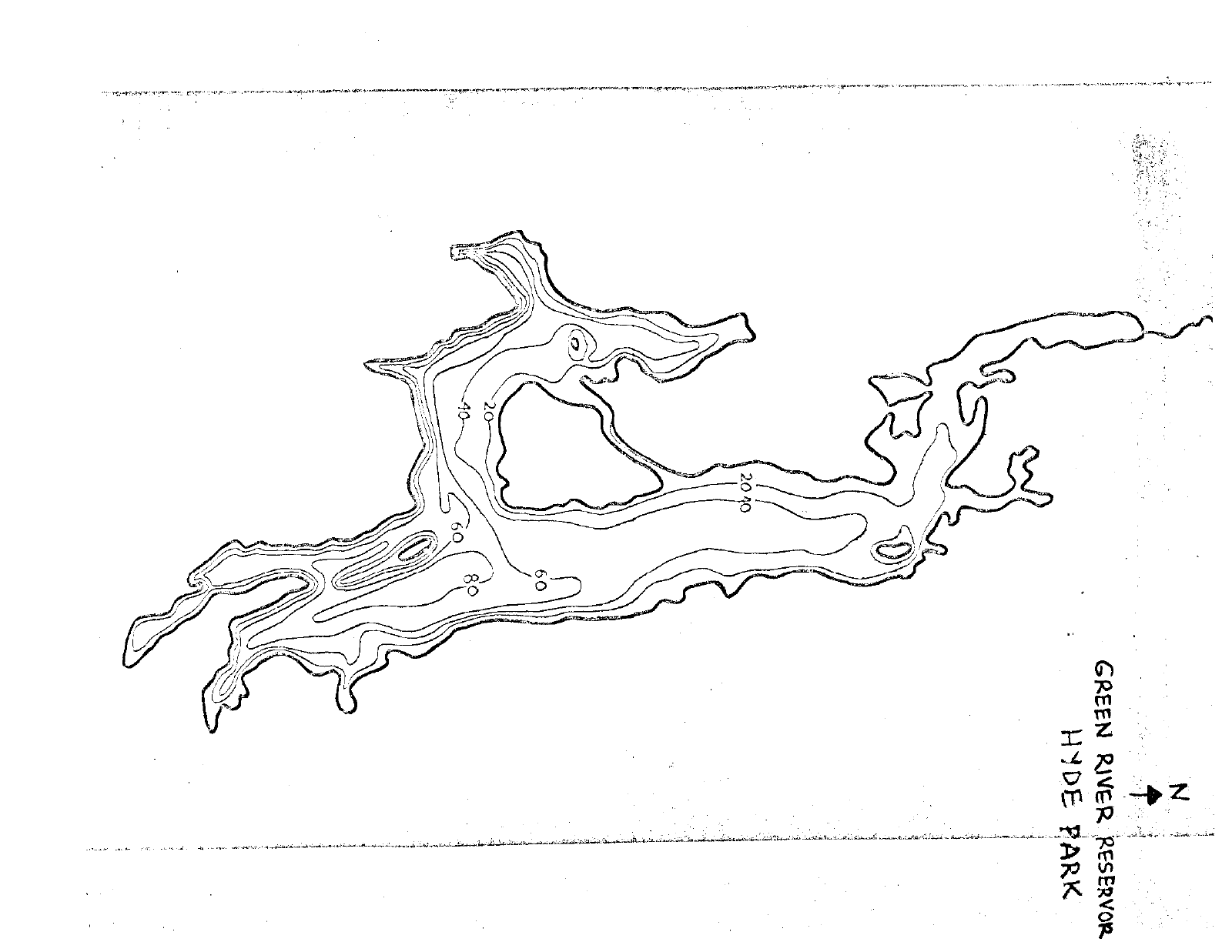
Bathymetric depth chart — click to open the full PDF. Source: Vermont DEC.
Source: Vermont DEC
Water Characteristics
Green River Reservoir is a flooded hill-country valley: an irregular, many-armed basin of rocky shorelines, granite ledge, boulder fields, islands, and standing drowned timber, with tannin-tinged but clean water and depths reaching roughly 80 feet in the old river channel. Most productive water is under 25 feet.
Crayfish, shiners, perch fry, and juvenile panfish feed the smallmouth; dragonflies and damselflies swarm the shorelines in summer and their nymphs are a primary fly-rod food. Chironomids, leeches, and late-summer flying-ant falls round out the stillwater menu. Cold inflows from the Green River and springs maintain the brook trout presence at the margins of the system.
Seasonal Fishing Guide
Spring
May brings pre-spawn smallmouth to the warming rocky shallows — buggers and crayfish patterns along southern-exposure shorelines. Brook trout hold off the Green River inlet and cold seeps in the northern arms; strip small streamers or a Little Brook Trout pattern there before the water warms. Loon nesting closures begin in late spring; respect postings.
Summer
Prime time. Poppers and sliders against rocky shores, points, and timber at dawn and dusk; Muddlers and crayfish flies on sink-tips along the ledge walls midday. Camp mid-week to have the evening bite alone. The many arms mean there is always a lee shore when afternoon wind rises.
Fall
September and early October offer the year's prettiest paddling and steady bass on slower subsurface presentations as the water cools. Brook trout reappear along the shorelines. After Columbus Day the reservoir empties of people almost entirely — bring layers and enjoy the silence.
Winter
The access road is unplowed and the park unstaffed; the reservoir is effectively closed as a fishery. Ski or snowshoe visits are beautiful but bring full backcountry precautions if venturing onto ice.
Access & Boats
Single park access and carry-in launch off Green River Dam Road, Hyde Park (day-use fee in season). Canoes and kayaks only in practice; electric motors permitted at no-wake speed. All 27 campsites are paddle-in, 1-2 miles from the launch, by reservation. No services on the water.
Motor Restrictions
Gas motors prohibited; electric motors only, at no-wake (5 mph) speeds. The reservoir is managed as quiet water — paddle craft dominate.
Ice Fishing
The park road is unmaintained in winter and the reservoir sees only occasional ice anglers willing to walk or ski in for perch and bass panfishing. It is not a managed winter fishery; treat any visit as a backcountry trip.
Fishing Pressure & Local Tips
Light, and lighter still for anglers. The reservoir's visitors are overwhelmingly paddlers and campers; fishing effort is a fraction of comparable lakes and fly fishing effort is negligible. Summer weekends bring canoe traffic but not competition for fish. The bass here are as unschooled as any in Vermont.
Local Knowledge
Fish while you travel. The efficient pattern is a slow paddle 60 feet off shore, casting ahead of the bow to every point, pocket, and boulder shadow — the first presentation to unpressured water is the one that gets eaten, and trolling a bugger between spots picks up bonus fish.
Reserve a campsite in the northern arms and treat the trip as an expedition: the water a mile-plus from the launch sees the fewest flies, the evening rise around the islands can be continuous, and dawn mist with loons calling is worth the portage of gear by itself. Pack out everything; rangers hold this park to a high standard.
Species Present
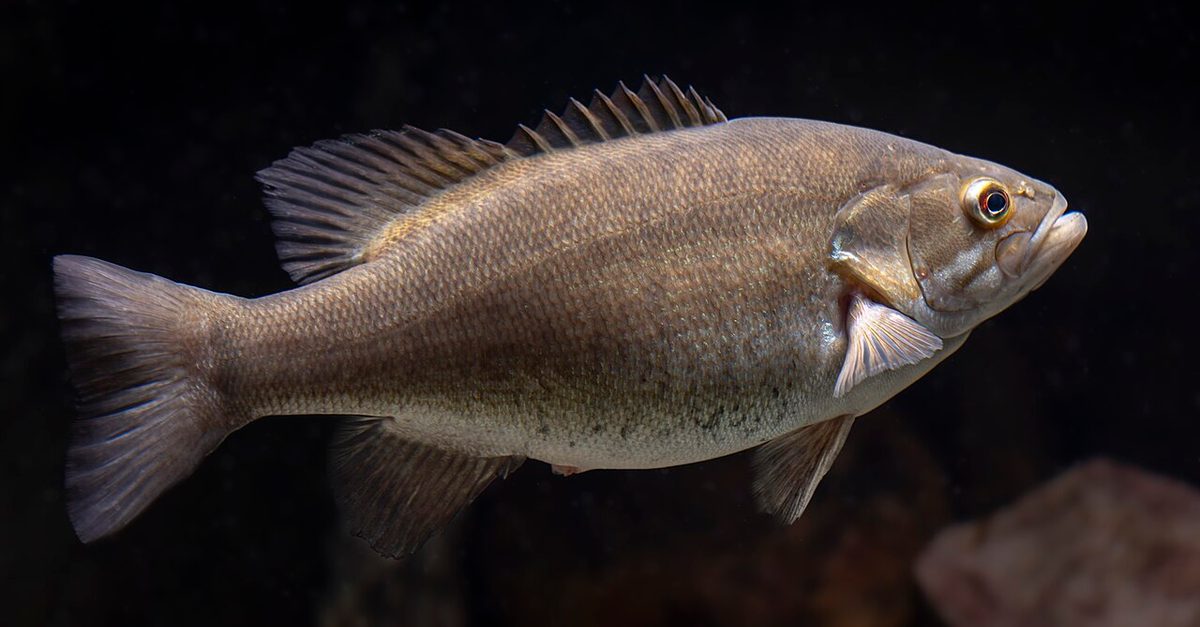
Smallmouth Bass
The smallmouth bass is one of the most popular and widely distributed gamefish in North America and one of the finest freshwater species available to fly anglers. Found in clear, cool rivers and lakes from the Great Lakes to the Southern Appalachians, smallmouth bass combine aggressive feeding behavior, remarkable fighting ability, and a preference for the kinds of rocky, current-rich habitats that are ideally suited to fly fishing. Pound for pound, the smallmouth bass is widely considered the hardest-fighting freshwater fish in North America, earning it the nickname 'the bronze bomber' for its explosive takes and powerful, acrobatic battles on the end of a line. While smallmouth bass are not a traditional trout-stream species, they have become increasingly important to fly anglers as warm-water fly fishing has grown in popularity. Rivers like the French Broad in North Carolina, the Susquehanna and Delaware in Pennsylvania, and the St. Lawrence in New York support world-class smallmouth fisheries that attract dedicated fly anglers. In many regions, smallmouth bass inhabit the lower reaches of the same river systems that hold trout in their upper reaches, providing fly anglers with a warm-water counterpart to their cold-water fishing. Smallmouth bass are particularly appealing to fly anglers because they readily take surface flies. On warm summer evenings, smallmouth will crush poppers, sliders, and large dry flies with explosive strikes that rival any trout rise. Their willingness to feed on the surface, combined with their strength and acrobatic leaping ability, makes smallmouth bass on a fly rod one of the most thrilling freshwater fly fishing experiences available.
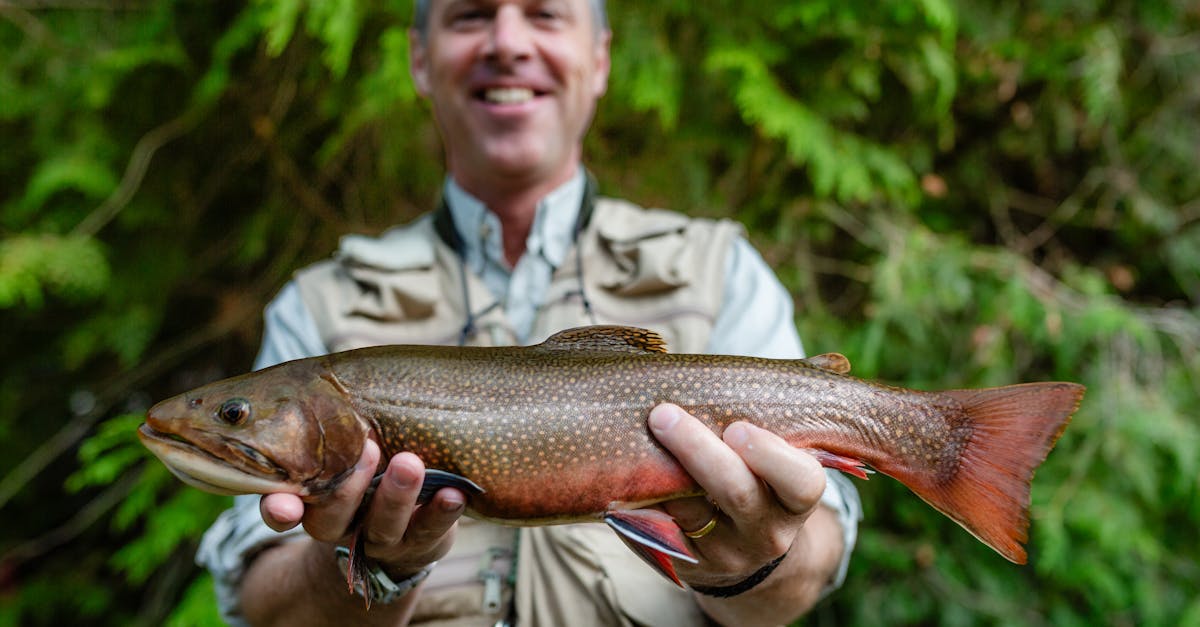
Brook Trout
The brook trout is widely considered the most beautiful freshwater fish in North America, and catching one in a pristine Montana mountain stream is an experience that captures the essence of backcountry fly fishing. Despite their common name, brook trout are not true trout at all; they are a species of char (genus Salvelinus), more closely related to lake trout and Arctic char than to rainbows or browns. Native to eastern North America from Georgia to Hudson Bay, brook trout were among the first salmonids introduced to Montana's waters in the late 1800s and have since established self-sustaining populations in cold, high-elevation streams and lakes throughout the state. In Montana, brook trout thrive best in small, cold headwater streams and high mountain lakes where competition from larger trout species is minimal. In these environments, they are often the dominant, or only, salmonid present. The trade-off is size: Montana stream-dwelling brook trout typically range from 6 to 10 inches, with fish over 12 inches considered noteworthy in most waters. What they lack in size, however, they more than make up for in beauty and willingness to eat a fly. Brookies are aggressive feeders that will strike attractor dry flies, nymphs, and small streamers with enthusiasm, making them an ideal species for beginning fly anglers and a delightful quarry for anyone who appreciates small-stream fishing. Brook trout do present a conservation paradox in Montana. While they are a beloved and beautiful gamefish, they are non-native and can negatively impact native species, particularly Yellowstone and westslope cutthroat trout. In headwater streams, brook trout often outcompete cutthroats for food and spawning habitat due to their higher reproductive rate and earlier maturation. As a result, Montana FWP has implemented brook trout removal projects on some streams to restore native cutthroat populations. In many waters, liberal harvest limits for brook trout are encouraged to reduce their numbers and benefit native fish. Anglers can enjoy excellent brook trout fishing while actively helping conservation by keeping a few for the pan.
Food Sources & Hatches
| Insect | Suggested Fly | Jan | Feb | Mar | Apr | May | Jun | Jul | Aug | Sep | Oct | Nov | Dec |
|---|---|---|---|---|---|---|---|---|---|---|---|---|---|
Crayfish all day | Muddler Minnow | ||||||||||||
Dragonflies all day | Dragonfly Nymph | ||||||||||||
Damselflies morning | Damselfly Nymph | ||||||||||||
Leeches all day | Black Woolly Bugger | ||||||||||||
Flying Ants (late summer) afternoon | Griffith's Gnat |
Crayfish: The smallmouth engine. Crawl crayfish patterns and Muddlers down the ledge walls.
Dragonflies: Swarms line the shorelines in summer; nymphs fished along rock and timber draw savage takes.
Damselflies: Cove weed edges; bass and the odd brook trout intercept migrating nymphs.
Leeches: Black buggers trolled between casting stations pick up fish all day.
Flying Ants (late summer): Forest ant falls blanket the arms in late summer; everything eats them.
Recommended Flies
Muddler Minnow
Top PickMuddler Minnow fished as crayfish and sculpin down the ledge walls — the reservoir's best subsurface bass fly.
Best in summer
Woolly Bugger
Top PickWoolly Bugger cast to points and timber or trolled between spots; the canoe angler's workhorse.
Best in summer
Dragonfly Nymph
Top PickDragonfly Nymph along rocky shorelines where summer swarms concentrate. Heavy takes.
Best in summer
Access Points & Boat Launches
Green River Reservoir State Park Launch
Boat LaunchEasy (short carry)The park's single carry-in launch off Green River Dam Road — a short carry from the parking area to the water. Canoes and kayaks rule here; electric motors at no-wake speed are the legal maximum. All 27 paddle-in campsites and the entire 19-mile shoreline are reached from this one point, so start early on summer weekends.
Northern Arms Paddle-In Shoreline
Wade AccessModerate (paddle required)The reservoir's remote northern arms, reachable only by a 1-2 mile paddle from the launch. The least-fished water on an already lightly fished lake: rocky points, drowned timber, and cold inflows from the Green River that hold spring brook trout. Campsites in these arms put the dawn bite outside your tent flap.
Regulations
Regulations
Vermont statewide bass and trout seasons and limits apply (general trout season second Saturday in April through October 31). Park rules prohibit gas motors — electric motors at no-wake speeds are the maximum — and camping is by reservation at designated paddle-in sites only. Seasonal loon nesting closures posted in coves. Vermont fishing license required; check vtstateparks.com and vtfishandwildlife.com.
Always verify current regulations with Vermont Fish & Wildlife Department before fishing.
Quick Facts
- Surface Area
- 653 acres
- Max Depth
- 80 ft
- Elevation
- 1,200 ft
- Lake Type
- Reservoir
- Region
- Northern Vermont / Lamoille County
- Best Seasons
- spring, summer, fall
- Species
- Smallmouth Bass, Brook Trout
- Difficulty
- Beginner-Intermediate
- Record Fish
- Smallmouth to 4+ lbs come from the ledge points every season; the reservoir's lightly pressured bass average larger than its remoteness would suggest.
- Depth Chart
- Download PDF
Nearby Lakes & Ponds
Lake Willoughby
Northeast Kingdom / Orleans County
Seymour Lake
Northeast Kingdom / Orleans County
Caspian Lake
Northeast Kingdom / Orleans County
Lake Memphremagog
Northeast Kingdom / Orleans County
Maidstone Lake
Northeast Kingdom / Essex County
Noyes Pond (Seyon Pond)
Central Vermont / Groton State Forest, Caledonia County