Seymour Lake
Seymour Lake in Morgan is one of the Northeast Kingdom's premier coldwater lakes, 1,732 acres of clear, deep water famous for its ice-out landlocked salmon and lake trout fishing. Smelt streamers stripped along its shorelines in late April are a Vermont rite of spring.
Overview
Seymour Lake spreads across 1,732 acres in the town of Morgan, a broad, open sheet of water in the rolling farm and forest country east of Lake Memphremagog. Native Abenaki called it Namagonic, the salmon trout spearing place, and the name still fits: Seymour remains one of Vermont's most dependable lakes for landlocked Atlantic salmon and lake trout. With a maximum depth of 169 feet and consistently cold, well-oxygenated water, it is one of only two deep oligotrophic lakes in the Clyde River drainage.
Seymour's reputation among fly anglers rests on its ice-out fishery. When the ice recedes in late April, rainbow smelt push toward shoreline gravel and tributary mouths to spawn, and Seymour's salmon and lake trout follow them into water a fly line can reach. For a few glorious weeks, anglers casting and trolling streamers from small boats, or working the shoreline shelves on foot, connect with salmon that spend the rest of the year in open water. It is classic north-country fishing: cold hands, a stripped Grey Ghost, and a silver fish cartwheeling across forty-degree water.
The lake supports more than the ice-out show. Wild brook trout hold near spring holes and tributary mouths, rainbow trout cruise the shallower bays, and the lake trout population, sustained by strong natural reproduction, includes fish into the teens of pounds. Smallmouth-style rocky structure along the shorelines holds fish in summer, though Seymour is managed and best known as a salmonid lake.
Through summer, the fly game turns technical and early: chironomid emergences in the bays at dawn, leeches and buggers along drop-offs on sinking lines, and midge clusters on still evenings. Salmon suspend near the thermocline and are mostly a troller's fish by July. September and October bring salmon back within reach as they stage near shore and off the mouths of spawning tributaries, and fall streamer fishing can rival the spring.
Access is straightforward, with a state boat launch off Route 111 near Morgan Center and public shoreline near the village beach. Seymour's size demands respect in wind, but its long shoreline shelves and defined drop-offs make it one of the more readable big lakes in the Kingdom for a newcomer with a fly rod.
Depth & Character
- Surface Area
- 1,732acres
- Max Depth
- 169ft
- Mean Depth
- 70ft
- Elevation
- 1,278ft
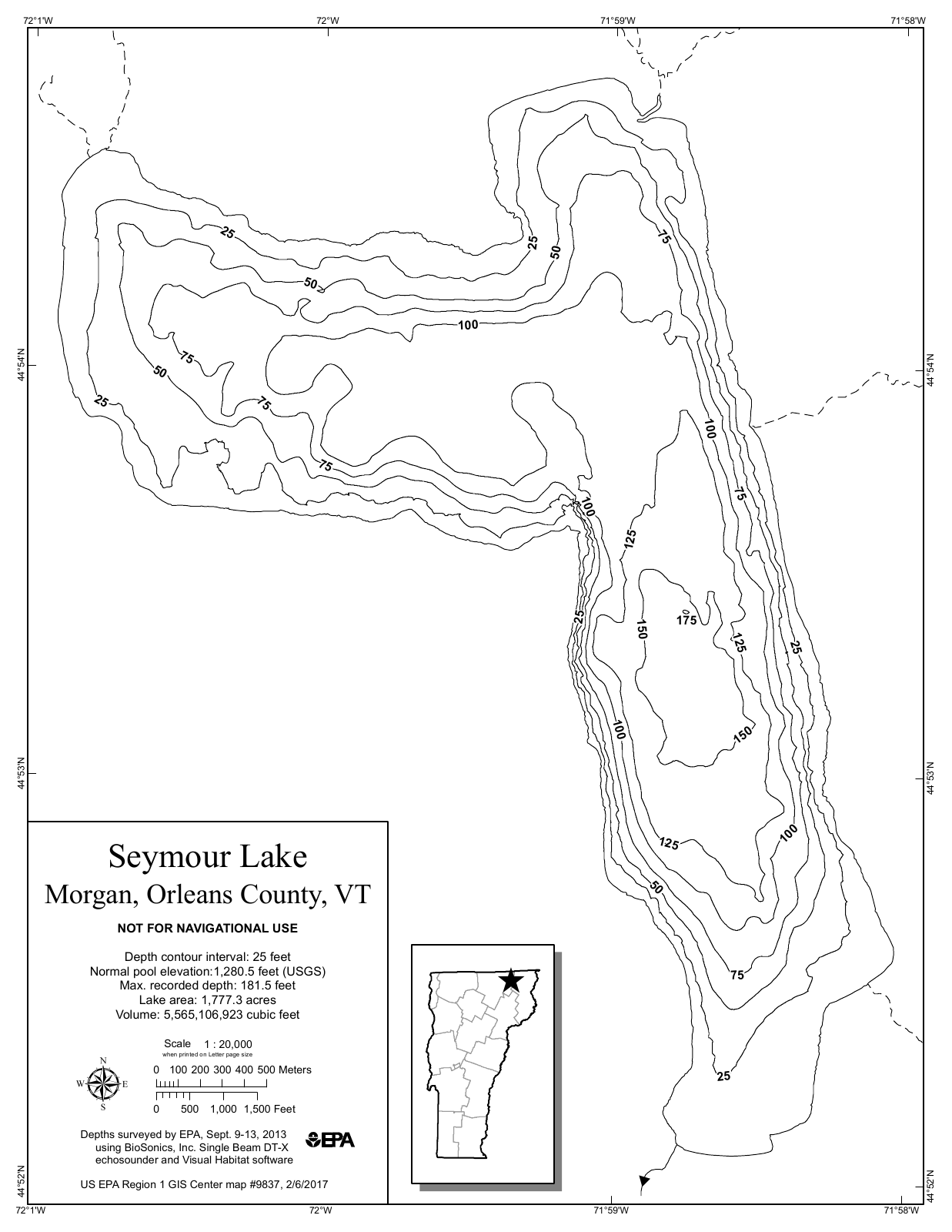
Bathymetric depth chart — click to open the full PDF. Source: Vermont DEC.
Source: Vermont DEC
Water Characteristics
Seymour is a deep, clear, oligotrophic lake with a broad central basin over 150 feet deep, rimmed by gravel and rubble shorelines that shelve into the depths at well-defined drop-offs. Water quality is excellent and the lake stays cold at depth all year, ideal habitat for lake trout, salmon, and the rainbow smelt that feed them.
Rainbow smelt are the engine of the fishery. Insect life is typical of northern oligotrophic lakes: strong chironomid populations in the bays, with damselflies, dragonflies, and leeches around the limited weedbeds in shallower water. The lake's open, rounded shape gives the wind a long fetch, and a chop builds fast; that same chop often turns the salmon on.
Stocking
| Species | Size | Number | Program |
|---|---|---|---|
| Landlocked Atlantic Salmon | Two-year-old (11 in) | 1,100 | VT F&W fall stocking (2025 actual) |
Seasonal Fishing Guide
Spring
Ice-out in late April is the event of the year. Cast or slow-troll smelt streamers (Grey Ghost, black-and-white bucktails) on intermediate and sinking lines along shoreline shelves, gravel points, and tributary mouths where smelt spawn. The best fishing is often in the first hour of light and on overcast, choppy days. Fish the top 10 feet; salmon at ice-out are shallow.
Summer
Salmonids drop to the thermocline by July. Fly anglers do best at dawn with chironomid pupae fished deep in the bays on anchor, and with leeches and Woolly Buggers stripped along drop-offs on full-sink lines. Evening midge activity on calm water gives a Griffith's Gnat window. Brook trout hold off cold tributary mouths all summer.
Fall
September cooling pulls salmon and lake trout back toward shore. Streamer fishing off points and tributary mouths improves through October, with staging fish aggressive toward smelt patterns and Egg-Sucking Leeches. Dress for hard weather; the fall fishing is best when conditions are worst.
Winter
Ice fishing for lake trout and salmon is excellent, with most effort over 40-100 feet of water. Jigged smelt imitations take lakers all winter. Follow Vermont's winter season dates for trout and salmon and check ice thickness with local sources.
Access & Boats
State fish and wildlife boat launch off Route 111 near Morgan Center on the northern shore; additional public shoreline at the Morgan town beach. Shore casting is practical near the launch and tributary mouths at ice-out, but a boat opens up the full shoreline and drop-off structure.
Ice Fishing
Seymour is a marquee Northeast Kingdom ice fishery, with anglers jigging and setting tip-ups for lake trout and salmon through the winter trout/salmon ice season. Its broad, open basin generally makes reliable ice by mid-winter; verify season dates and safe ice locally.
Fishing Pressure & Local Tips
Moderate. Seymour has a devoted local following, and the launch is busy at ice-out and during the ice fishing season. Fly-specific pressure is light. Summer sees more recreational boating than fishing effort. Early mornings and weekdays in May, or anytime in October, offer plenty of solitude.
Local Knowledge
At ice-out, find the smelt and you find the fish. Gravel shorelines with a hint of current from an inlet are the highest-percentage water, especially at dawn and dusk when smelt move shallow to spawn. A fly moving fast draws salmon; if follows outnumber grabs, speed up rather than slow down.
Watch the wind forecast rather than the sunshine. A gray, breezy 45-degree day in early May is prime; bluebird calm is the toughest condition on this clear lake. In fall, concentrate on the northeast shore and tributary mouths where staging fish gather.
Species Present

Lake Trout
The lake trout is the largest member of the char family and the signature deep-water gamefish of northern New England's coldest, cleanest glacial lakes. A native coldwater char of the northern tier of North America, the lake trout reaches the southern edge of its natural range in the deep, oligotrophic lakes carved by Pleistocene glaciers across northern New England, including Vermont's Lake Champlain and the remote glacial lakes of the Northeast Kingdom. Unlike the stream-dwelling brook trout to which it is related, the lake trout is a true creature of the depths, spending most of the year in the cold, dark, well-oxygenated water far below the surface. Lake trout are long-lived, slow-growing fish that can survive for decades in the frigid depths of their home lakes. Average fish run 18 to 24 inches, but trophy specimens exceeding 30 inches and 15 pounds are taken each season from the best Vermont waters, and the state record approaches 35 pounds. Their size and strength, combined with the challenge of reaching them in deep water, make lake trout a prized quarry for anglers willing to adapt their tactics to the fish's coldwater lifestyle. For fly anglers, the lake trout presents a unique seasonal opportunity. Through most of the year these fish hold too deep for practical fly fishing, but during the narrow windows of ice-out in spring and the fall turnover, lake trout move into the shallows to feed and spawn, bringing them within reach of a well-presented streamer. Casting large baitfish patterns near rocky shorelines and drop-offs during these periods can produce the fish of a lifetime, connecting the angler to the deep glacial history of Vermont's finest coldwater lakes.
Landlocked Atlantic Salmon
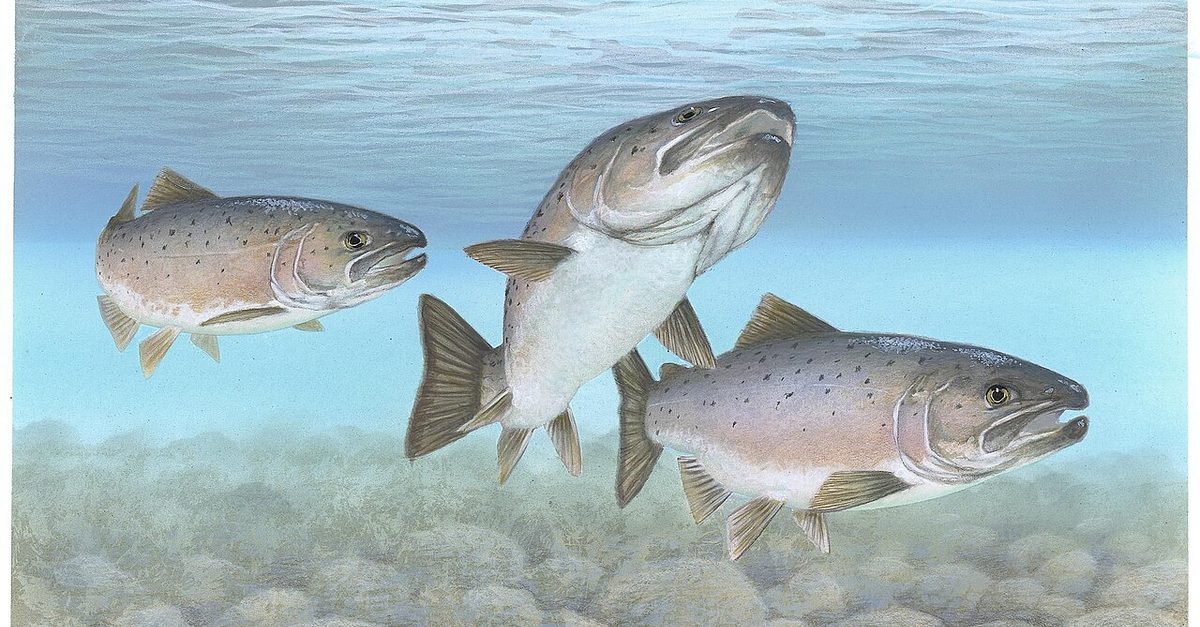
The landlocked Atlantic salmon is one of New England's most prized gamefish, a freshwater-resident form of the Atlantic salmon that spends its entire life in lakes and rivers rather than migrating to the ocean. Found primarily in the lakes and rivers of Maine, New Hampshire, Vermont, and New York, landlocked salmon are genetically identical to their sea-run counterparts but have adapted to a completely freshwater life cycle, using large, cold lakes as their ocean substitute and tributary rivers as spawning habitat. Landlocked salmon are the signature gamefish of Maine's sporting camp tradition, where generations of anglers have gathered at remote wilderness lodges to fish for salmon in the Rangeley Lakes, Moosehead Lake, Sebago Lake, and the rivers that connect them. The fish combine the acrobatic fighting ability of their anadromous relatives with the accessibility of a freshwater species, leaping repeatedly when hooked and running with the kind of power and endurance that makes them one of the most exciting fish available on a fly rod in the northeastern United States. In rivers, landlocked salmon behave much like large resident trout, holding in classic lies and feeding on aquatic insects during hatches. They are particularly responsive to caddis and mayfly emergers, and the sight of a 3-pound landlocked salmon rising to a dry fly in a New England river is one of the defining experiences of northeastern fly fishing. In lakes, salmon are targeted with streamers that imitate smelt, their primary forage fish, trolled or cast from boats during the spring and fall when salmon cruise near the surface in cold-water conditions.
Rainbow Trout
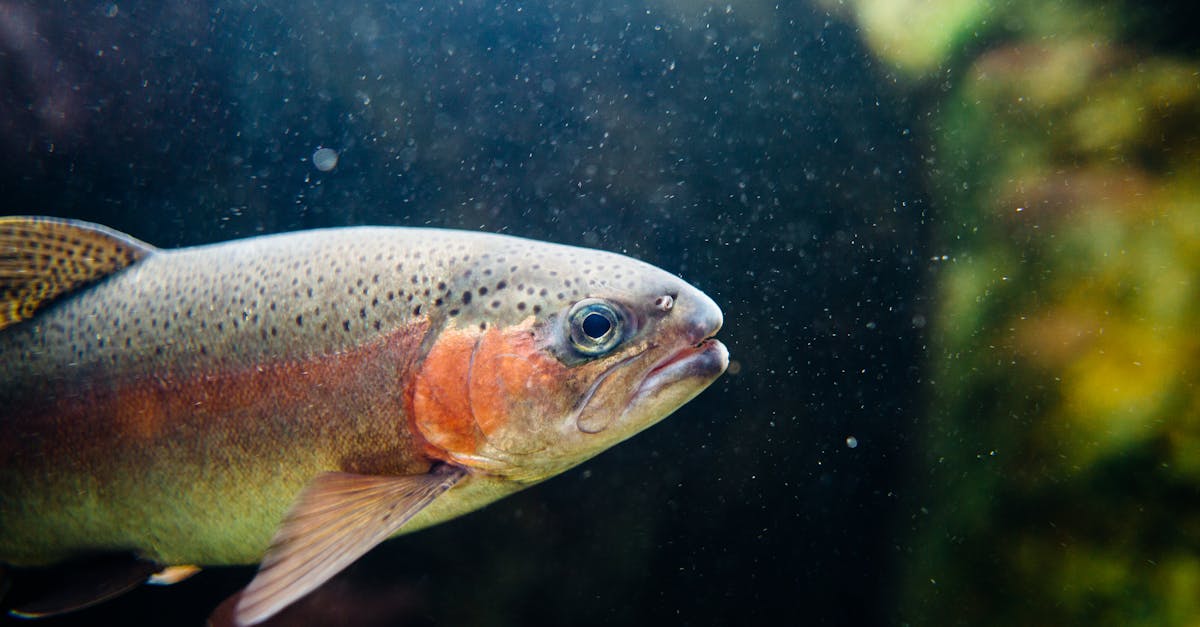
The rainbow trout is Montana's most widespread and popular gamefish, celebrated for its explosive surface strikes, aerial acrobatics, and willingness to take a well-presented dry fly. Native to Pacific Coast drainages from Alaska to Mexico, rainbows were first introduced to Montana's waters in the late 1800s and have since established thriving populations in nearly every major river system in the state. On legendary waters like the Madison, Missouri, and Bighorn, wild rainbow trout grow fat on prolific insect hatches and provide some of the finest dry-fly fishing in North America. Rainbow trout in Montana display remarkable variation depending on their home water. Fish in nutrient-rich tailwaters like the Missouri River below Holter Dam can exceed 20 inches with regularity, their deep bodies and broad tails reflecting the abundant food supply. Freestone river rainbows, such as those in the upper Madison and Gallatin, tend to be leaner and more athletic, shaped by faster currents and colder water temperatures. In many Montana rivers, rainbows spawn in the spring from March through June, and anglers should be mindful of spawning redds during this period to protect future generations of fish. Rainbows are arguably the most versatile trout species for fly anglers. They respond well to dry flies during hatches, aggressively chase streamers, and feed heavily on nymphs subsurface throughout the year. Their fighting ability is legendary: a hooked rainbow will often launch itself completely out of the water multiple times during a battle. Montana's catch-and-release regulations on many blue-ribbon streams have produced exceptional rainbow trout fisheries with high densities of large, healthy fish that continue to draw anglers from around the world.
Brook Trout
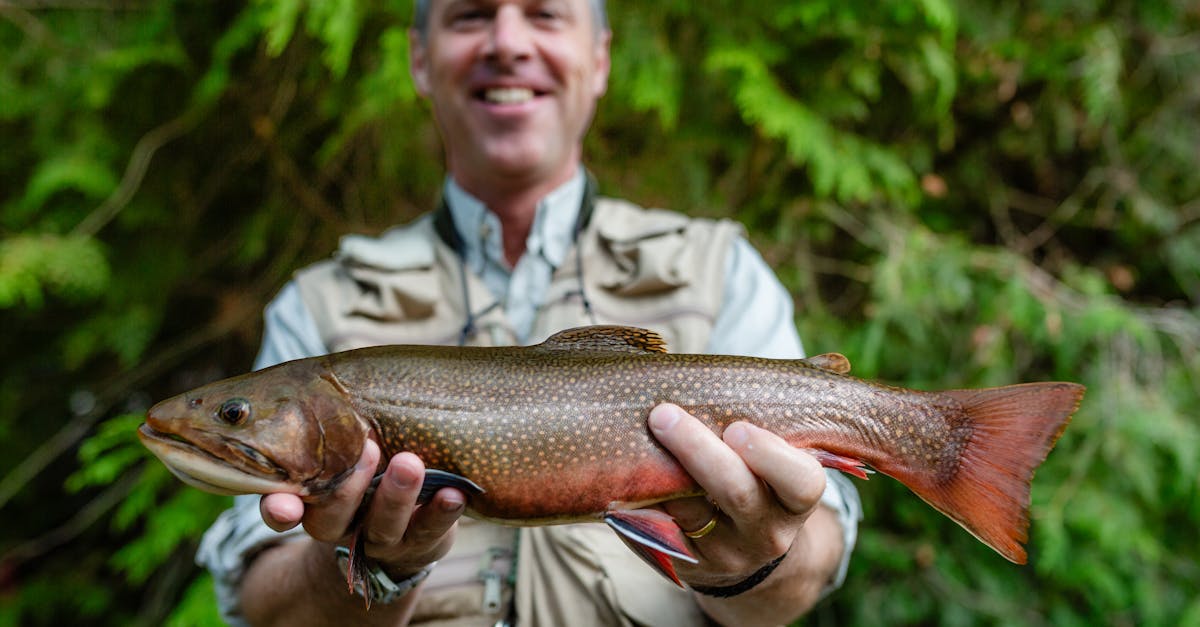
The brook trout is widely considered the most beautiful freshwater fish in North America, and catching one in a pristine Montana mountain stream is an experience that captures the essence of backcountry fly fishing. Despite their common name, brook trout are not true trout at all; they are a species of char (genus Salvelinus), more closely related to lake trout and Arctic char than to rainbows or browns. Native to eastern North America from Georgia to Hudson Bay, brook trout were among the first salmonids introduced to Montana's waters in the late 1800s and have since established self-sustaining populations in cold, high-elevation streams and lakes throughout the state. In Montana, brook trout thrive best in small, cold headwater streams and high mountain lakes where competition from larger trout species is minimal. In these environments, they are often the dominant, or only, salmonid present. The trade-off is size: Montana stream-dwelling brook trout typically range from 6 to 10 inches, with fish over 12 inches considered noteworthy in most waters. What they lack in size, however, they more than make up for in beauty and willingness to eat a fly. Brookies are aggressive feeders that will strike attractor dry flies, nymphs, and small streamers with enthusiasm, making them an ideal species for beginning fly anglers and a delightful quarry for anyone who appreciates small-stream fishing. Brook trout do present a conservation paradox in Montana. While they are a beloved and beautiful gamefish, they are non-native and can negatively impact native species, particularly Yellowstone and westslope cutthroat trout. In headwater streams, brook trout often outcompete cutthroats for food and spawning habitat due to their higher reproductive rate and earlier maturation. As a result, Montana FWP has implemented brook trout removal projects on some streams to restore native cutthroat populations. In many waters, liberal harvest limits for brook trout are encouraged to reduce their numbers and benefit native fish. Anglers can enjoy excellent brook trout fishing while actively helping conservation by keeping a few for the pan.
Food Sources & Hatches
| Insect | Suggested Fly | Jan | Feb | Mar | Apr | May | Jun | Jul | Aug | Sep | Oct | Nov | Dec |
|---|---|---|---|---|---|---|---|---|---|---|---|---|---|
Rainbow Smelt (post ice-out) morning | Grey Ghost | ||||||||||||
Chironomids (midges) morning | Chironomid (Bomber) | ||||||||||||
Leeches all day | Egg Sucking Leech | ||||||||||||
Flying Ants (late summer) afternoon | Griffith's Gnat |
Rainbow Smelt (post ice-out): Ice-out salmon fishing runs on the smelt spawn. Shoreline shelves and tributary mouths at first light.
Chironomids (midges): Bay emergences on calm mornings; anchor over 12-25 feet. Size 12-16 pupae.
Leeches: Egg-Sucking Leech doubles as leech and attractor for staging fall salmon.
Flying Ants (late summer): Late-summer ant falls bring cruising rainbows and salmon to the surface. Carry ants and Griffith's Gnats 14-18.
Recommended Flies
Grey Ghost
Top PickIce-out salmon standard. Cast and strip fast along shelves and tributary mouths. Sizes 4-6.
Best in spring
Chironomid (Bomber)
Top PickAnchor-and-indicator chironomid fishing in the bays at dawn. Size 12-16.
Best in summer
Egg Sucking Leech
Top PickEgg-Sucking Leech for staging fall salmon and lakers off the tributary mouths.
Best in fall
Access Points & Boat Launches
Seymour Lake State Fishing Access
Boat LaunchEasyState fish and wildlife launch off Route 111 near Morgan Center on the northern shore. Concrete ramp and good parking make this the working access for the ice-out salmon fleet. The shoreline shelves east of the ramp fish well from shore in late April when smelt push shallow.
Morgan Town Beach
Wade AccessEasyTown beach near Morgan providing shoreline access to a gravel flat that draws spawning smelt at ice-out. Early-morning shore casting with streamers before swimmers arrive can be productive in May; the flat also fishes at dusk in September and October.
Regulations
Regulations
Vermont general trout and salmon season applies (second Saturday in April through October 31 for open water), with specific length and bag limits for lake trout and landlocked salmon. Seymour is a designated ice fishing lake for trout and salmon in winter under state season dates. Vermont fishing license required. Check vtfishandwildlife.com for current rules.
Always verify current regulations with Vermont Fish & Wildlife Department before fishing.
Quick Facts
- Surface Area
- 1,732 acres
- Max Depth
- 169 ft
- Elevation
- 1,278 ft
- Lake Type
- Natural Lake
- Region
- Northeast Kingdom / Orleans County
- Best Seasons
- spring, fall, winter
- Species
- Lake Trout, Landlocked Atlantic Salmon, Rainbow Trout, Brook Trout
- Difficulty
- Intermediate
- Record Fish
- Lake trout into the mid-teens of pounds are caught most winters; salmon in the 3-5 lb class show up every ice-out, with occasional fish larger.
- Depth Chart
- Download PDF
Nearby Lakes & Ponds
Lake Willoughby
Northeast Kingdom / Orleans County
Caspian Lake
Northeast Kingdom / Orleans County
Lake Memphremagog
Northeast Kingdom / Orleans County
Maidstone Lake
Northeast Kingdom / Essex County
Noyes Pond (Seyon Pond)
Central Vermont / Groton State Forest, Caledonia County
Harriman Reservoir
Southern Vermont / Windham County