Ricker Pond
Ricker Pond is an 85-acre brook trout pond at the south end of Groton State Forest, paired with the forest's oldest state campground and offering clear water over a hard sand-and-boulder bottom.
Overview
Ricker Pond marks the southern gateway to Groton State Forest, its shoreline shared between Ricker Pond State Park — the forest's oldest campground, on the site of a 19th-century mill settlement — and quiet forest. The pond covers 85 acres, averages about 12 feet deep, and bottoms out at 31 feet in a hole along the western shore. Brook trout are the featured fish, supported by annual stocking, with perch, pickerel, and bullhead filling out the warm-water cast.
The water is notably clear over a hard bottom of sand, cobble, and boulders, which makes sight-oriented fly fishing realistic from a canoe. Work chironomid pupae over the deep hole in May, switch to damsels and small leeches along the boulder lines in June, and finish the season casting to cruising fall brookies off the campground shore. The state park boat launch and rental fleet make logistics as easy as any pond in the forest.
Depth & Character
- Surface Area
- 85acres
- Max Depth
- 31ft
- Mean Depth
- 12ft
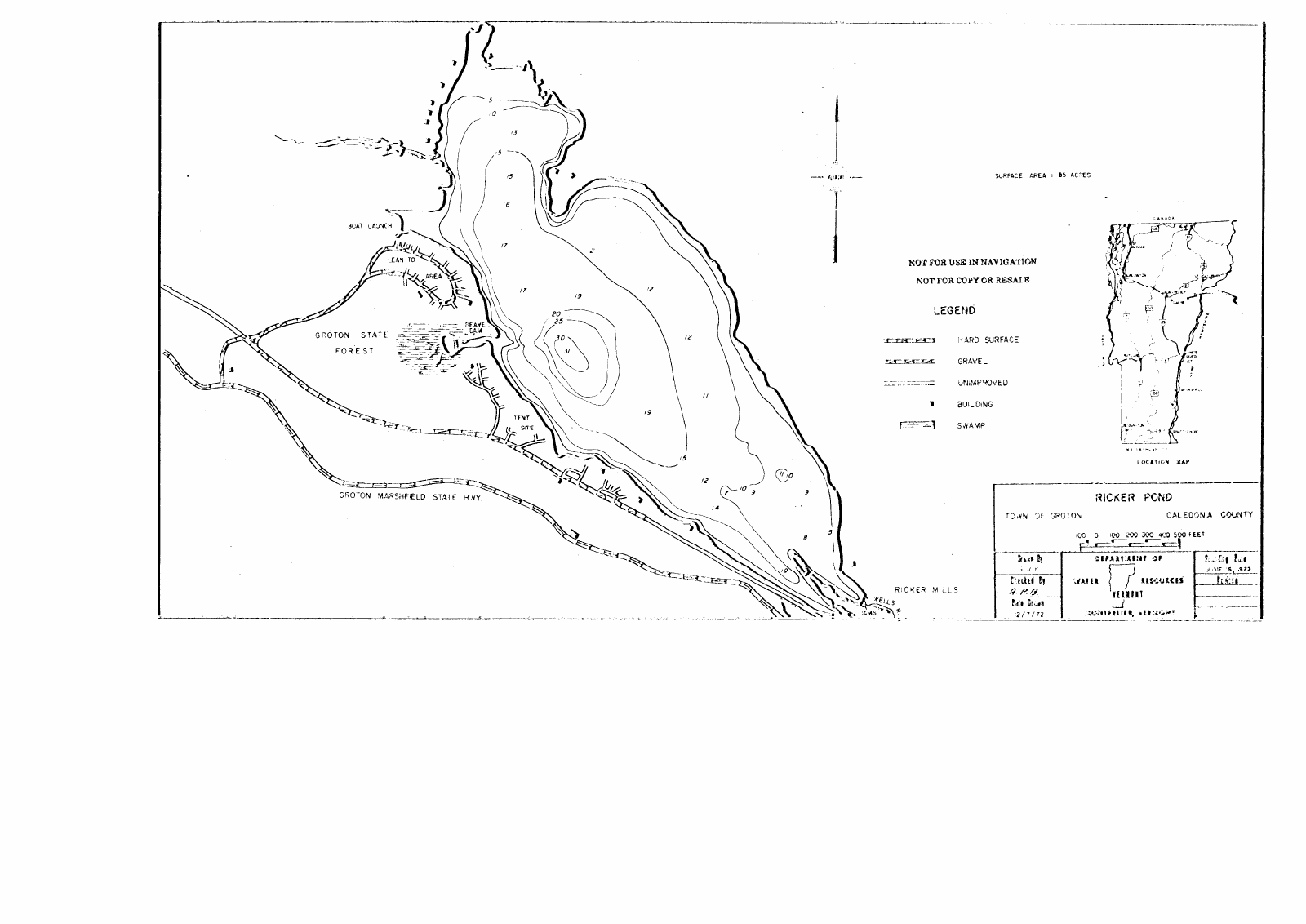
Bathymetric depth chart — click to open the full PDF. Source: Vermont DEC.
Source: Vermont DEC
Water Characteristics
Clear water over hard sand, cobble, and boulders, averaging 12 feet with a 31-foot hole near the west shore. The historic mill dam at the outlet maintains the pond level.
Access & Boats
Ricker Pond State Park (open roughly Memorial Day through Columbus Day) provides a boat launch, boat rentals, and a campground with lean-tos and cabins off Route 232. A lean-to area near the launch serves day users.
Fishing Pressure & Local Tips
Moderate in campground season, light in spring and fall. Most summer traffic is paddlers rather than anglers.
Local Knowledge
Anchor over the 30-foot hole in late May and fish a Chironomid Bomber 12 to 15 feet down — the biggest holdover brookies in the pond sit on that edge before summer scatters them.
Species Present
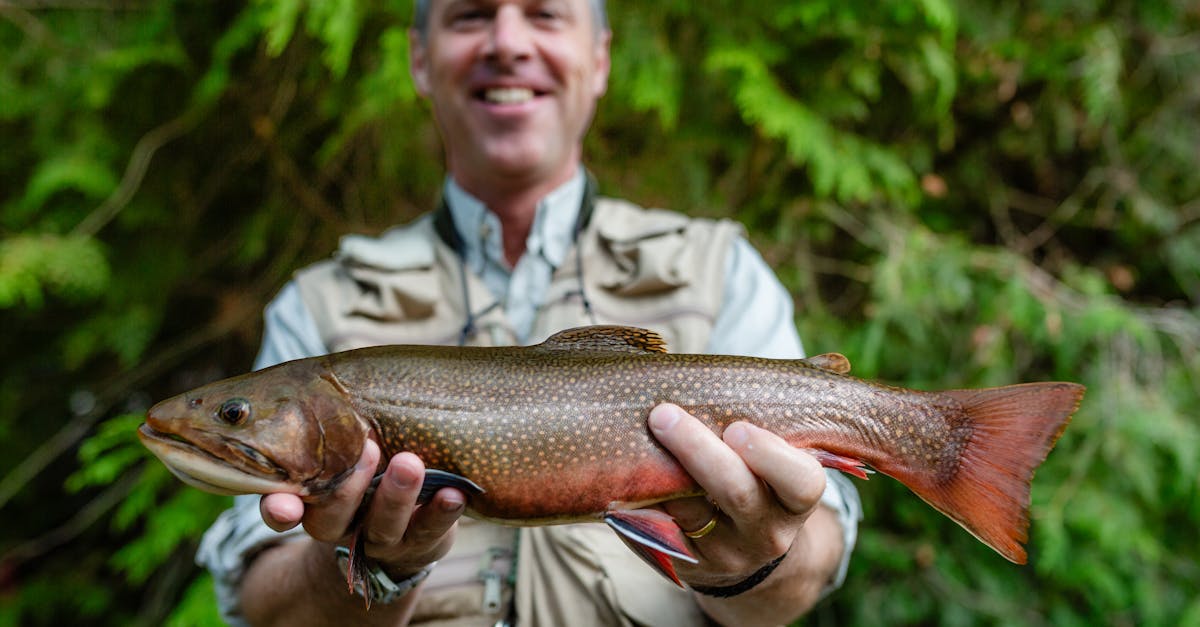
Food Sources & Hatches
| Insect | Suggested Fly | Jan | Feb | Mar | Apr | May | Jun | Jul | Aug | Sep | Oct | Nov | Dec |
|---|---|---|---|---|---|---|---|---|---|---|---|---|---|
Chironomids (midges) morning | Chironomid (Bomber) | ||||||||||||
Damselflies morning | Damselfly Nymph | ||||||||||||
Leeches evening | Black Woolly Bugger |
Chironomids (midges): Fish pupae over the 31-foot hole before summer scatters the brookies.
Damselflies: Migrations along the boulder lines on the eastern shore.
Leeches: Small black buggers at dusk off the campground shore.
Recommended Flies
Chironomid (Bomber)
Top PickChironomid Bomber over the 30-foot hole in late May; the best big-fish window.
Best in spring
Black Woolly Bugger
Top PickBlack buggers at dusk off the campground shore.
Best in summer
Also Effective
Access Points & Boat Launches
Ricker Pond State Park Launch
Boat LaunchEasyState park boat launch at the north end of the pond off Route 232, with boat rentals, a campground, lean-tos, and cabins. The 31-foot hole along the western shore is a five-minute paddle from the dock.
Regulations
Regulations
General trout season runs from the second Saturday in April through October 31 with standard bag limits. Vermont fishing license required. Verify current rules at vtfishandwildlife.com.
Always verify current regulations with Vermont Fish & Wildlife Department before fishing.
Quick Facts
- Surface Area
- 85 acres
- Max Depth
- 31 ft
- Lake Type
- Natural Lake
- Region
- Central Vermont / Groton State Forest
- Best Seasons
- spring, summer, fall
- Species
- Brook Trout
- Difficulty
- Beginner
- Depth Chart
- Download PDF
Nearby Lakes & Ponds
Lake Willoughby
Northeast Kingdom / Orleans County
Seymour Lake
Northeast Kingdom / Orleans County
Caspian Lake
Northeast Kingdom / Orleans County
Lake Memphremagog
Northeast Kingdom / Orleans County
Maidstone Lake
Northeast Kingdom / Essex County
Noyes Pond (Seyon Pond)
Central Vermont / Groton State Forest, Caledonia County