Crooked River
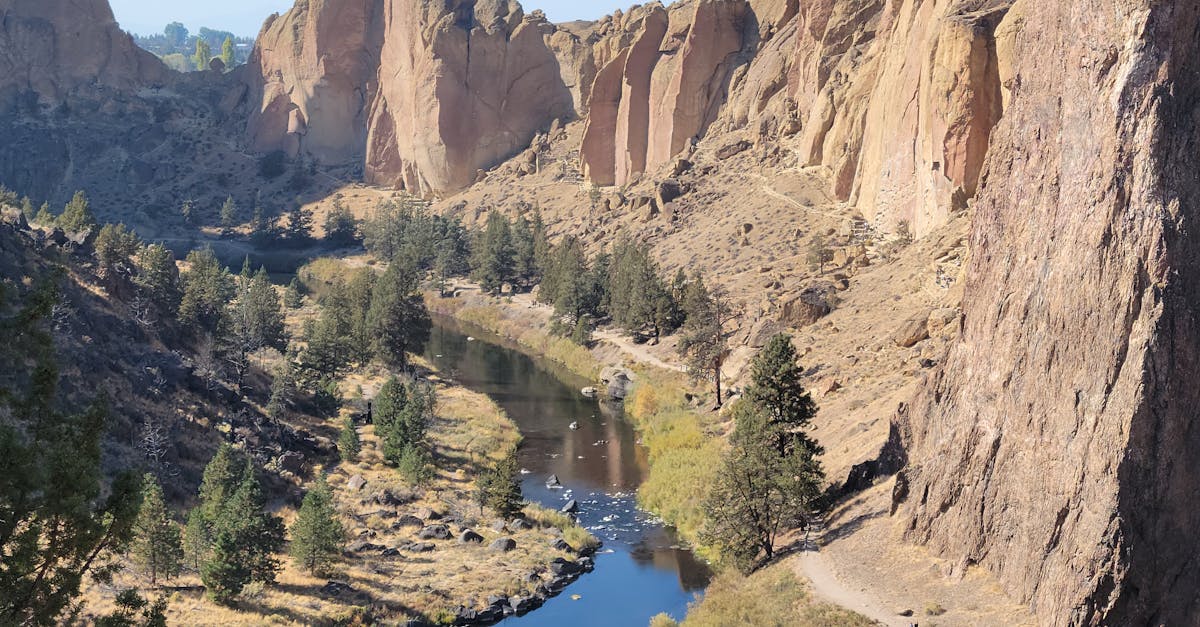
The Crooked River below Bowman Dam is a world-class tailwater fishery tucked into a dramatic rimrock canyon just south of Prineville, Oregon. With redband trout densities exceeding 8,000 fish per mile in its best reaches, this intimate stream offers technical nymph fishing that rivals any tailwater in the West. Open year-round and easily waded by anglers of all abilities, the Crooked River is Central Oregon's most accessible quality trout stream.
Crooked River Fishing Report & Current Conditions
The Crooked River is a tailwater fishery, and it fishes best in spring, fall and winter. Live USGS streamflow readings update throughout the day, while the monthly median flows below map the river's typical discharge across the year. Together they show current fishability and how today's water compares to the seasonal norm.
Current Conditions
Typical Monthly Flows
Historical median discharge (CFS) by month: Crooked River
Overview
The Crooked River originates in the Ochoco Mountains east of Prineville and flows 125 miles westward through the high desert of Central Oregon before joining the Deschutes River at Lake Billy Chinook. While the river system is extensive, the fly fishing fame of the Crooked River centers on one remarkable stretch: the 8 miles of cold, clear tailwater immediately below Bowman Dam, which impounds Prineville Reservoir.
This section of river flows through a stunning basalt-walled canyon along the Crooked River Back Country Byway (Highway 27), providing easy road access to virtually every pool, riffle, and run. The canyon walls rise 300-500 feet above the river, creating a dramatic backdrop of columnar basalt, rimrock, and juniper-studded hillsides. The road parallels the river closely, with numerous pullouts and nine developed BLM campgrounds providing walk-in access to the water.
The fishery is built on a population of native redband rainbow trout, a hardy, colorful subspecies adapted to the high-desert environment. During optimal flow periods, fish densities in the best reaches have been documented at over 8,000 trout per mile, making this one of the most densely populated trout streams in the Pacific Northwest. The average fish runs 8-12 inches, with plenty of 14-16 inch fish and occasional trophy redband exceeding 18 inches.
What makes the Crooked River special is its accessibility and year-round fishing. While other Central Oregon waters are locked in ice or blown out by snowmelt, the Crooked River's tailwater flows remain fishable throughout the winter. January and February midge hatches can produce outstanding sight-nymphing to rising fish on mild days. The river's intimate size, typically 30-50 feet wide, makes it approachable for beginning fly anglers while still offering enough technical challenge to engage experts.
The Crooked River's health is directly tied to flow releases from Bowman Dam. In drought years, irrigation demands can reduce flows to critically low levels, stressing the fishery and reducing trout densities. Conservation groups, ODFW, and the Bureau of Reclamation have worked to establish minimum flow agreements that protect the fishery, but flows remain a year-to-year concern that anglers should monitor.
Water Characteristics
The Crooked River below Bowman Dam is a classic tailwater, with cold, clear releases from the bottom of Prineville Reservoir providing stable water temperatures and consistent clarity year-round. Water temperatures in the prime fishing section typically range from 40-48 degrees F in winter to 52-60 degrees F in summer, though low-flow years can push summer temperatures uncomfortably high. Clarity is generally excellent (4-8 feet of visibility is standard), allowing for sight-fishing to individual trout in many pools and runs.
The substrate is a mix of gravel, small cobble, and silt, with larger basalt boulders providing structure and cover. The gravel beds are critical spawning habitat for the resident redband population and should not be waded through during spring spawning season (typically March-May). The relatively fine substrate supports prolific midge and mayfly populations, while caddis larvae thrive on the cleaner cobble sections. Scuds (freshwater shrimp) are also present and are an important food source.
The insect life, while not as diverse as the Deschutes, is remarkably abundant for a river of this size. Midges are the dominant food source year-round, with Blue-winged Olives and Pale Morning Duns providing the primary mayfly hatches. Caddis are present but less significant than on larger rivers. Scuds and aquatic worms round out the subsurface menu. On the Crooked River, the mantra is "small and precise beats big and flashy."
Wading & Float Guide
The Crooked River is one of the most wadeable trout streams in Oregon, making it an excellent learning ground for newer anglers. The river typically runs 30-50 feet wide and 1-3 feet deep through most of its prime fishing water, with occasional deeper pools reaching 4-5 feet. Flows during fishing season generally range from 60-200 cfs, creating a manageable current that rarely exceeds knee-deep in the riffles and runs where most fishing occurs.
The riverbed is composed of a mix of gravel, cobble, and silt over a basalt base. While the rocks are moderately slippery with algae, particularly in the slower runs, the relatively gentle current means that a slip here is an inconvenience rather than a danger. Felt-soled or studded boots are still recommended, and a wading staff provides welcome security for less experienced waders. Many productive runs can be fished from the bank or while standing in just a few inches of water.
Despite its friendliness, the Crooked River does demand wading discipline. The fish are extremely spooky in the clear, shallow water, and heavy-footed wading will put fish down for hundreds of yards. The most successful anglers on the Crooked River wade slowly and deliberately, staying low and keeping their shadow off the water. Upstream approaches are generally most effective. Polarized sunglasses are essential; sight-fishing to visible redband trout in the clear water is one of the Crooked River's great pleasures.
Bowman Dam to Chimney Rock
The uppermost section directly below the dam, with the coldest water and often the highest fish densities. Access from Highway 27 pullouts and Chimney Rock Campground. Small stream character with riffles, runs, and pocket water. Wading only; no floating.
Chimney Rock to Cobble Rock
Continues through the scenic canyon with excellent trout water. Multiple BLM campground access points. Deeper pools interspersed with classic riffle-run-pool sequences. This reach often produces the largest fish in the system.
Cobble Rock to Lone Pine Bridge
The lower end of the prime tailwater section. Water warms slightly as it moves downstream. Still productive but fish densities begin to decrease. Good BWO water with longer, slower pools that reward careful presentations.
Rod & Tackle Guide
General nymphing (euro / tight-line)
- Rod
- 10'-10'6" 3-weight euro nymph rod
- Line
- Euro nymph line (level or competition-style mono)
- Leader & Tippet
- 20' mono leader with sighter section, tippet to 6X-7X
The Crooked River is arguably the best euro nymphing water in Oregon. A purpose-built euro rod excels here. If you only own standard gear, a 9' 4-weight with a long leader works.
Dry fly / indicator nymphing
- Rod
- 9' 3-weight or 4-weight
- Line
- Weight-forward floating
- Leader & Tippet
- 12' tapered to 6X (dries) or 9' with indicator for nymphing
Light rods are appropriate for this small water. Go as light as your casting ability allows; the presentation advantage of a 3-weight is significant on spooky fish. Carry 6X and 7X tippet.
Best Time to Fish the Crooked River
Spring
Spring is one of the best times on the Crooked River, with warming temperatures triggering increasingly robust hatches. March and early April bring excellent Blue-winged Olive hatches; overcast, drizzly days are ideal. Fish small (#18-20) BWO parachutes over rising fish, or nymph with RS2s and Pheasant Tails. By May, Pale Morning Dun hatches begin and the river transitions to its summer pattern. Flows are typically good in spring before irrigation demands ramp up. A 9-foot 4-weight rod with a long (12-foot), fine (6X) leader is the standard spring setup.
Summer
Summer is the trickiest season on the Crooked River. Irrigation withdrawals can reduce flows to 30-50 cfs, stressing fish and warming water. If flows drop below 60 cfs, consider fishing early morning only and using barbless hooks with quick releases. Caddis and PMD hatches can still be good in the early hours. Evening terrestrial fishing, including tiny ants (#18-20) and beetles, can produce when nothing else works. Watch for tricos beginning in July. The most conservation-minded approach during low summer flows is to fish other waters.
Fall
Fall reinvigorates the Crooked River as irrigation season ends and flows stabilize. September through November is prime time, with BWO hatches returning in force. October in particular can produce magic days: overcast skies, light rain, heavy BWO hatches, and actively rising trout in nearly every pool. This is also a great time for euro nymphing. The canyon colors are stunning in fall. Fishing pressure drops significantly after Labor Day. A 3 or 4-weight rod, long leaders, and fine tippet (6X-7X) are the keys.
Winter
Winter fishing on the Crooked River is a hidden gem. Midge hatches can be prolific on mild, sunny days, particularly between 11am and 2pm when the canyon warms. Fish cluster in the deeper, slower pools, and tiny Zebra Midges (#20-22) drifted through these pools on long, fine leaders are the primary technique. Sight-nymphing to visible fish is possible on bright days. Expect the road to be icy in spots; bring tire chains. This is some of the best technical midge fishing in Oregon.
Fishing Pressure & Local Tips
The Crooked River receives moderate to heavy pressure on weekends, particularly from the Bend and Redmond fly fishing community for whom it is a convenient day trip. The 8-mile tailwater section is compact enough that even modest crowds can feel dense, especially around the most accessible pullouts near Chimney Rock and Cobble Rock campgrounds. During prime BWO hatches in spring and fall, the most popular pools may have multiple anglers in sight of one another. Winter weekdays, conversely, can feel like a private stream.
To avoid pressure, fish midweek or during marginal weather when fair-weather anglers stay home. Walk upstream or downstream from the parking pullouts; most anglers fish within a few hundred yards of their vehicle. The lower section near Lone Pine Bridge sees less pressure than the water closest to the dam. Early morning arrivals (before 8am) can secure the best pools before the weekend crowd arrives.
Local Knowledge
The single most important factor on the Crooked River is flow. Before making the drive, check the USGS gauge (14087380); ideal fishing flows are between 80-200 cfs. Below 60 cfs, the river is stressed and fishing should be limited to early morning with quick releases. Above 250 cfs, clarity drops and fish become harder to locate. Flows between 100-150 cfs are the sweet spot where fish are well-distributed, hatches are consistent, and wading is easy.
The Crooked River is a nymph fishery first and foremost. While dry fly opportunities exist during hatches, 80% of your fish will come on small nymphs fished subsurface. Euro nymphing (tight-line / Czech nymphing) has become the dominant technique for good reason: the shallow, clear water rewards precise, drag-free drifts. If you are new to euro nymphing, the Crooked River is one of the best classrooms in the country. Carry Zebra Midges, Pheasant Tails, RS2s, and small scud patterns in sizes #18-22.
Local anglers know that the fish in the Crooked River are extraordinarily spooky. Approach every pool from downstream, stay low, move slowly, and make your first cast count. These fish see a lot of flies, and the clear water means they can spot an angler at a surprising distance. Wearing muted earth-tone clothing rather than bright colors makes a measurable difference. Always pinch your barbs; barbless hooks reduce handling time on these small fish and help maintain the health of this precious resource.
Species Present
Rainbow Trout
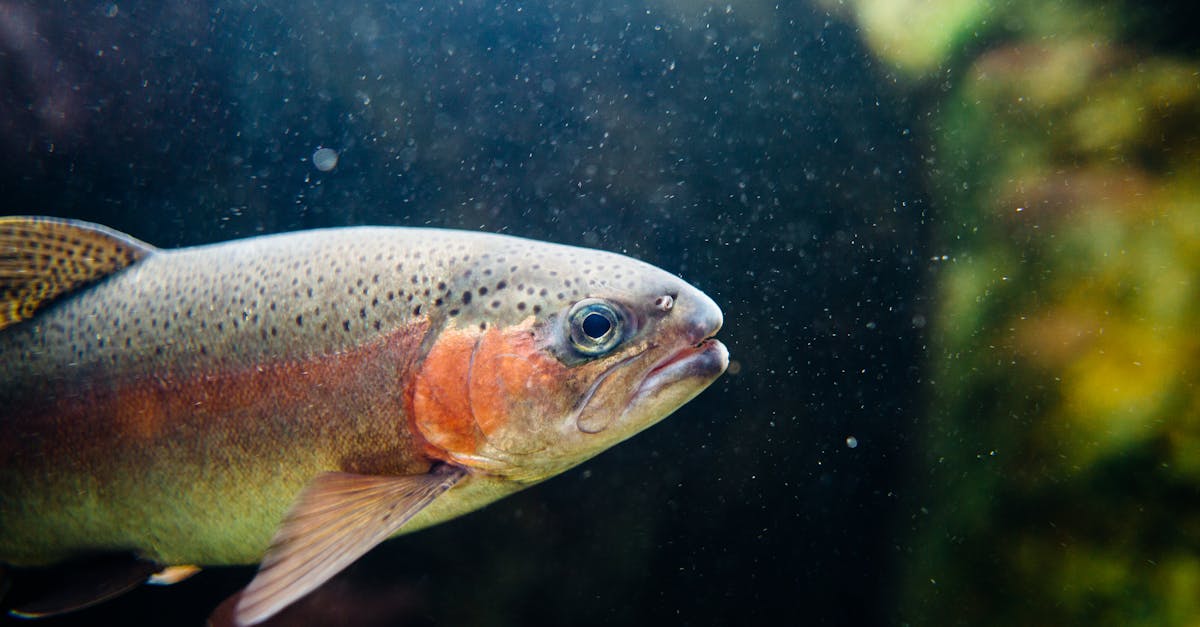
The rainbow trout is Montana's most widespread and popular gamefish, celebrated for its explosive surface strikes, aerial acrobatics, and willingness to take a well-presented dry fly. Native to Pacific Coast drainages from Alaska to Mexico, rainbows were first introduced to Montana's waters in the late 1800s and have since established thriving populations in nearly every major river system in the state. On legendary waters like the Madison, Missouri, and Bighorn, wild rainbow trout grow fat on prolific insect hatches and provide some of the finest dry-fly fishing in North America. Rainbow trout in Montana display remarkable variation depending on their home water. Fish in nutrient-rich tailwaters like the Missouri River below Holter Dam can exceed 20 inches with regularity, their deep bodies and broad tails reflecting the abundant food supply. Freestone river rainbows, such as those in the upper Madison and Gallatin, tend to be leaner and more athletic, shaped by faster currents and colder water temperatures. In many Montana rivers, rainbows spawn in the spring from March through June, and anglers should be mindful of spawning redds during this period to protect future generations of fish. Rainbows are arguably the most versatile trout species for fly anglers. They respond well to dry flies during hatches, aggressively chase streamers, and feed heavily on nymphs subsurface throughout the year. Their fighting ability is legendary: a hooked rainbow will often launch itself completely out of the water multiple times during a battle. Montana's catch-and-release regulations on many blue-ribbon streams have produced exceptional rainbow trout fisheries with high densities of large, healthy fish that continue to draw anglers from around the world.
Mountain Whitefish
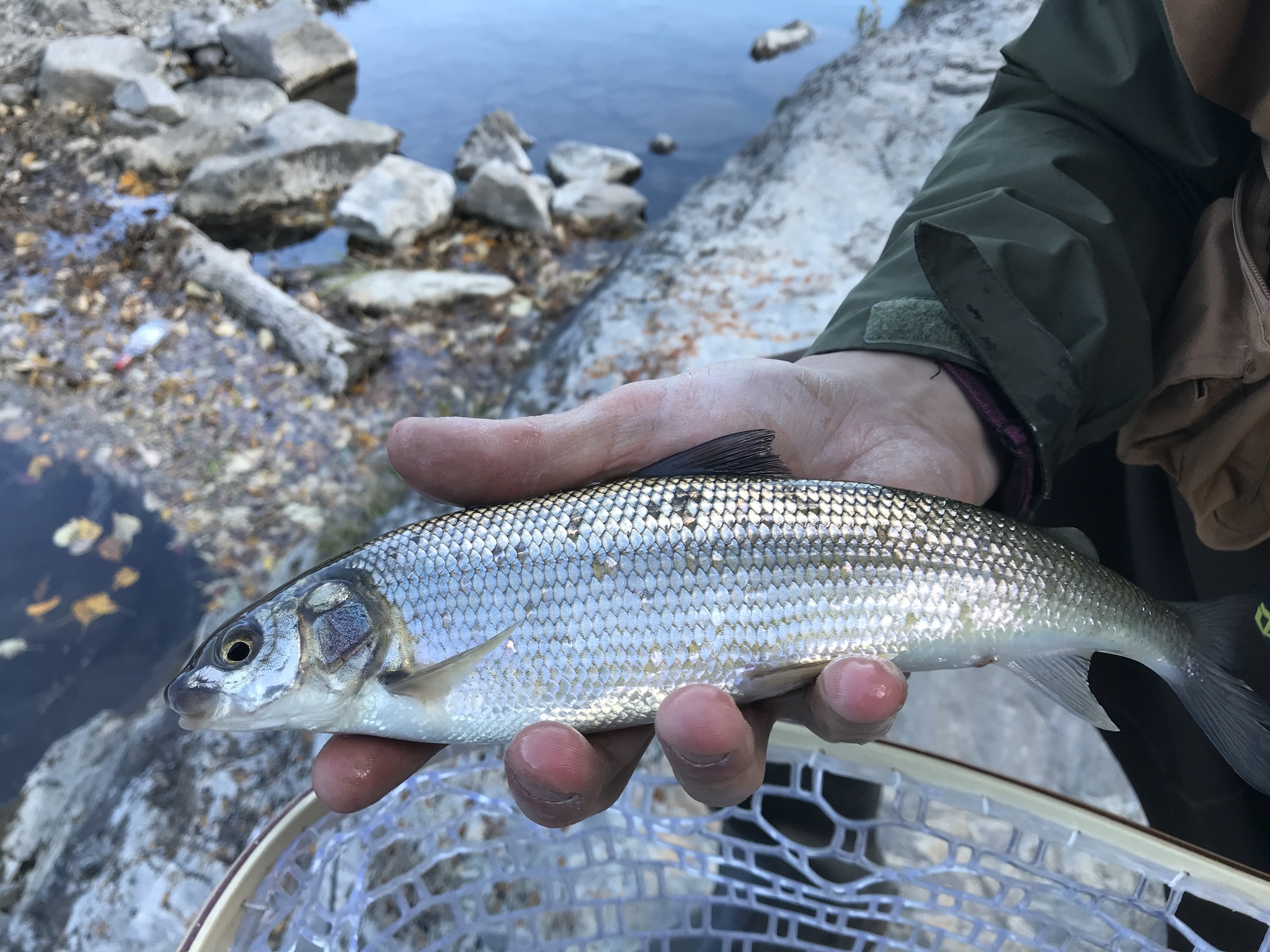
The mountain whitefish is one of Montana's most abundant native salmonids and arguably the most underappreciated gamefish in the state. A member of the whitefish subfamily (Coregoninae) within the broader salmonid family, mountain whitefish are present in virtually every cold-water river and large stream in Montana, often outnumbering trout by significant margins. On rivers like the Madison, Gallatin, Yellowstone, and Bitterroot, whitefish populations can exceed 1,000 fish per mile, making them the dominant salmonid species by biomass in many reaches. Despite this abundance, most fly anglers overlook whitefish entirely or view them as an unwelcome catch, which is unfortunate because they can provide outstanding sport on light tackle. Mountain whitefish are an important ecological component of Montana's river systems. They serve as a primary food source for larger brown trout, bald eagles, ospreys, otters, and other predators. Their fall spawning behavior (typically October through December) plays a critical role in nutrient cycling, and their eggs provide food for other fish and aquatic invertebrates during the lean winter months. In recent years, whitefish populations have been used as indicator species for overall river health, and declines in whitefish numbers on some Montana rivers have raised concerns about changing water conditions and disease pressure. For anglers willing to target them intentionally, mountain whitefish offer several advantages. They feed actively throughout the winter months when trout fishing can be slow, they are abundant and widely distributed, and they fight with surprising strength for their size; a 16-inch whitefish on a 3- or 4-weight rod provides a memorable tussle. Whitefish are also excellent table fare, with firm, mild-flavored white flesh that is delicious smoked or fried. Montana regulations typically allow a generous harvest limit for whitefish, recognizing their abundance and the role that harvest can play in managing populations on some waters.
Crooked River Hatch Chart
| Insect | Suggested Fly | Jan | Feb | Mar | Apr | May | Jun | Jul | Aug | Sep | Oct | Nov | Dec |
|---|---|---|---|---|---|---|---|---|---|---|---|---|---|
Midges morning | Zebra Midge | ||||||||||||
Blue-Winged Olive (Baetis) afternoon | Parachute Adams | ||||||||||||
Blue-Winged Olive (Baetis) afternoon | BWO Emerger | ||||||||||||
Pale Morning Dun morning | Sparkle Dun | ||||||||||||
Caddisflies (various) evening | Elk Hair Caddis | ||||||||||||
Trico morning | Trico Spinner | ||||||||||||
Scuds & Sowbugs all day | Ray Charles |
Midges: Year-round and the dominant food source. Zebra Midge #18-22 is the single most effective fly.
Blue-Winged Olive (Baetis): Spring BWO hatches on overcast days are outstanding. Size 18-20.
Blue-Winged Olive (Baetis): Fall BWOs return in force. October is prime. Size 18-20.
Pale Morning Dun: PMD hatches begin in May. Sparkle Dun #16-18 is the top dry fly.
Caddisflies (various): Less significant than on larger rivers but present. Size 14-16.
Trico: Challenging early morning spinner falls beginning in July. Size 20-22.
Scuds & Sowbugs: Not a hatch, but scuds are a year-round food source, especially near the dam. Size 14-16.
Recommended Flies
Zebra Midge
Top Pick#1 fly on the Crooked River year-round. Size 18-22.
Best in winter
Pheasant Tail Nymph
Top PickVersatile mayfly nymph. Tungsten bead version for deeper runs.
Best in spring
RS2
Top PickOutstanding BWO emerger. Deadly during hatch transitions.
Best in spring
Perdigon
Top PickModern euro nymph; sinks fast. Ideal for the Crooked River's clear water.
Best in spring
Sparkle Dun
Top PickBest dry fly during PMD hatches May through July. Sparkle Dun #16-18.
Best in summer
Parachute Adams
Top PickBWO parachute for spring and fall hatches. Size 18-20.
Best in spring
Ray Charles
Top PickScud pattern; fish near dam where scuds concentrate. Size 14-16.
Best in spring
Curated Fly Boxes
Crooked River Technical Nymph Box
Year-roundSmall flies for a small tailwater. The Crooked River's pressured rainbows see a lot of flies; these patterns consistently produce when others fail.
Access Points & Boat Launches
Chimney Rock Campground
Wade AccessEasyThe most popular access point on the Crooked River, located about 2 miles below Bowman Dam in the heart of the best fishing water. The BLM campground provides direct walk-in access to productive riffles and pools. This is ground zero for the Crooked River's legendary euro nymphing. Expect company on weekends.
Cobble Rock Campground
Wade AccessEasyBLM campground access in the mid-section of the tailwater, approximately 4 miles below the dam. This reach often produces the largest fish in the system, with deeper pools interspersed between quality riffles. Slightly less crowded than Chimney Rock. Excellent BWO water in spring and fall.
Lone Pine Bridge
Wade AccessEasyAccess at the lower end of the prime tailwater section, roughly 8 miles below the dam. The water here is slightly warmer and fish densities are lower, but this translates to significantly less fishing pressure. Longer, slower pools reward careful presentations. Good fall BWO water for anglers seeking solitude.
Regulations
Regulations
Crooked River below Bowman Dam: Open year-round. Artificial flies and lures only. 2 trout per day; no trout over 20 inches may be kept. Barbless hooks recommended. Mountain whitefish: 25 per day, no size limit. No bait fishing. Check ODFW for any emergency flow-related closures during drought years.
Always verify current regulations with Oregon Dept. of Fish and Wildlife before fishing.
Some links may earn a commission. Learn more
Quick Facts
- Region
- Central Oregon
- Water Type
- Tailwater
- River Length
- 125 miles total (8 miles of prime tailwater below Bowman Dam)
- Difficulty
- Beginner-Intermediate
- Best Seasons
- spring, fall, winter
- Trout Per Mile
- 4,000-8,000+ (peak estimates exceed 8,000 redband trout per mile in best reaches)
- Record Trout
- Redband rainbow trout to 22+ inches documented; most fish 8-14 inches with quality 16-18 inch fish present
- Species
- Rainbow Trout, Mountain Whitefish
- USGS Gauge
- 14087380
Where to Stay
Prineville
The gateway to the Crooked River tailwater. This small ranching community sits just downstream of the fishable water with motels, restaurants, and a fly shop.
Stay in Prineville and you're 15 minutes from the best nymphing water below Bowman Dam. Check flows before you go; the Crooked fishes best between 60-200 CFS.
Prineville Reservoir / Chimney Rock Area
Campgrounds and cabins along the canyon between Prineville and the dam put you right on the river with minimal driving to prime water.
Chimney Rock Campground is popular with anglers, so reserve early. BLM land along the canyon offers dispersed camping. The closest water is steps from camp.