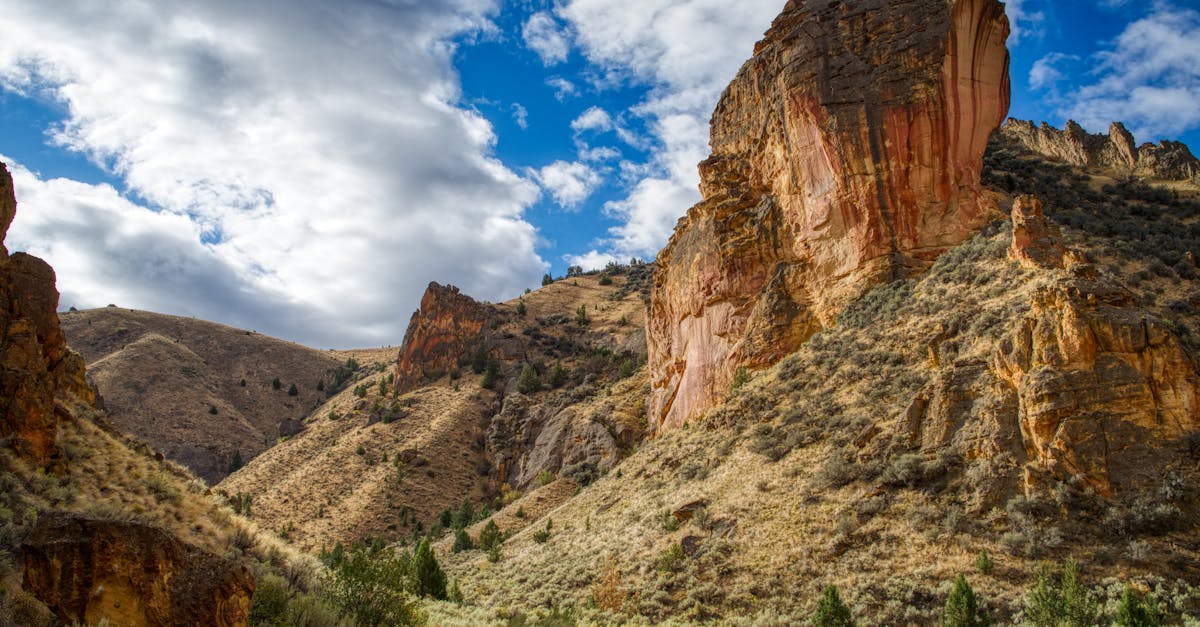
Owyhee River
The Owyhee River below Owyhee Dam is southeastern Oregon's premier tailwater fishery, renowned for its trophy brown trout and stunning high-desert canyon scenery. Flowing through a remote, arid landscape of volcanic rock and sagebrush in Malheur County, this 10-mile tailwater produces some of the largest brown trout in the Pacific Northwest with year-round fly fishing opportunity.
Owyhee River Fishing Report & Current Conditions
The Owyhee River is a tailwater fishery, and it fishes best in spring, summer, fall and winter. Live USGS streamflow readings update throughout the day, while the monthly median flows below map the river's typical discharge across the year. Together they show current fishability and how today's water compares to the seasonal norm.
Current Conditions
Typical Monthly Flows
Historical median discharge (CFS) by month: Owyhee River
Overview
The Owyhee River originates in the remote high desert of northeastern Nevada and flows roughly 280 miles northward through the rugged canyonlands of southwestern Idaho and southeastern Oregon before joining the Snake River near Nyssa, Oregon. For fly anglers, the Owyhee's legendary reputation centers on the tailwater section immediately below Owyhee Dam, where cold, nutrient-rich releases from the bottom of Lake Owyhee sustain one of Oregon's finest brown trout fisheries in an improbable desert setting.
The dam, completed in 1932 by the Bureau of Reclamation, inadvertently created a blue-ribbon trout fishery in what was otherwise marginal warm-water habitat. The roughly 10-12 miles of river from the base of Owyhee Dam downstream to the Snively Hot Springs area is the prime fishing water, accessible via Owyhee Lake Road which parallels the river through a dramatic canyon of volcanic rhyolite and basalt.
The Owyhee tailwater is most famous for its brown trout, which grow to remarkable sizes on a diet of abundant insects and sculpin. Browns averaging 17-21 inches are common, with fish exceeding 24 inches caught each season and occasional monsters over 28 inches reported. The river also supports a population of rainbow trout, locally celebrated as thick, deep-bodied "footballs", that average 12-16 inches with occasional specimens reaching 20 inches.
What makes the Owyhee special among western tailwaters is its extraordinary hatch diversity relative to its small size. The river supports Skwala stoneflies in March and April, Blue-winged Olives nearly year-round, prolific caddis from mid-April through September, Pale Morning Duns and Callibaetis in summer, and one of the finest hopper fisheries west of the Rocky Mountains from mid-July through September. This hatch richness, combined with clear-to-slightly-tinted water and selective trout, creates fishing that rewards technical skill and careful observation.
The Owyhee's remote location is both its greatest asset and its primary challenge. The nearest towns are Adrian and Nyssa, Oregon, and the drive from Boise, the closest major city, takes over an hour. Services near the river are minimal. But this remoteness also means that midweek visitors may have long stretches of world-class brown trout water entirely to themselves, a rare luxury in the modern American West.
Water Characteristics
The Owyhee below Owyhee Dam is a classic western tailwater, drawing cold, nutrient-rich water from the depths of Lake Owyhee. Water temperatures remain trout-friendly year-round, typically ranging from the low 40s in winter to the mid-50s in summer. The water has a characteristic greenish tint from algae and dissolved minerals that varies in intensity from year to year. Some years the water runs nearly clear; other years a milky-green opacity provides a veil of cover that actually benefits the fish. Visibility typically ranges from 2-6 feet depending on conditions.
The riverbed is a mix of gravel, cobble, and volcanic rock, with fine silt accumulating in the slower pools. The gravel substrates are critical brown trout spawning habitat, and ODFW and conservation partners have conducted gravel augmentation projects below the dam. The river's low gradient means that substrate features (deeper channels, undercut banks, submerged boulders, and fallen willows) concentrate fish and define the best holding lies.
The insect life of the Owyhee is remarkably diverse and abundant for a desert tailwater. Midges are present year-round and form the baseline diet. Blue-winged Olives hatch from fall through spring with particular intensity in October-November and March-April. Skwala stoneflies provide the first major dry-fly event in March. Caddis are prolific from mid-April through September. Pale Morning Duns and Callibaetis emerge in late spring and summer. Terrestrial insects (grasshoppers, ants, beetles, and crickets) are critical from July through September. Sculpins and baitfish round out the diet for larger brown trout.
Wading & Float Guide
The Owyhee below the dam is a highly wadeable tailwater, particularly during the irrigation season when flows range from 150-250 cfs. The river runs 40-70 feet wide through most of the prime fishing section, with depths commonly ranging from 2-4 feet in the runs and riffles, and occasional deeper pools reaching 5-6 feet. The gradient is gentle, with short riffles connecting a series of large, slow pools, classic brown trout water that rewards careful, methodical wading and long, drag-free drifts.
The riverbed consists primarily of gravel, cobble, and volcanic rock, overlaid in places with silt and algae. Wading can be slippery, particularly on the algae-covered rocks in the slower pools and runs. Felt-soled wading boots or boots with studded rubber soles are strongly recommended, and a wading staff is a valuable asset. The slightly off-colored, greenish tint of the tailwater release makes it harder to read the bottom than on a gin-clear spring creek, so cautious foot placement is essential.
During the non-irrigation season (October through spring), flows drop dramatically to 20-30 cfs, making the river extremely shallow and intimate. Wading becomes physically easier but the fish become far more concentrated and spooky; heavy-footed wading or silhouetting yourself against the sky will clear a pool instantly. During low-flow periods, stealth is paramount: stay low, move slowly, approach from downstream, and minimize false casts. Many experienced Owyhee anglers prefer to fish from the bank during low flows.
Owyhee Dam to Snively Hot Springs
The prime tailwater section. Walk-and-wade only; drift boats are not recommended due to the small river size and high concentration of wade anglers. Owyhee Lake Road provides vehicle access to numerous pullouts along the entire stretch. The upper 3-4 miles closest to the dam hold the coldest water and highest fish densities.
Snively Hot Springs to Concrete Bridge
Below Snively Hot Springs, public access becomes more limited and the river transitions to warmer water. Brown trout are still present but in lower densities. Less fishing pressure than the upper tailwater. Some private land; respect access boundaries.
Rome to Birch Creek (Wild and Scenic Section)
The upper Owyhee canyon is a world-renowned multi-day whitewater rafting trip, not a fishing-focused float. Some fishing for wild redband trout and smallmouth bass is possible. Flows of 1,000-5,000 cfs required for rafts. Spring-only run (typically March-June). BLM permit may be required.
Rod & Tackle Guide
General dry fly / nymphing (tailwater)
- Rod
- 9' 5-weight, medium-fast action
- Line
- Weight-forward floating
- Leader & Tippet
- 12' tapered to 5X (dries) or 9' with small indicator for nymphing; carry 5X, 6X, and 7X tippet
The 5-weight is the workhorse rod on the Owyhee. A medium-fast action provides accuracy needed for technical presentations while protecting light tippets. Longer leaders (12-15 feet) are essential during low-flow periods.
Hopper / terrestrial fishing (summer-fall)
- Rod
- 9' 5-weight or 6-weight
- Line
- Weight-forward floating
- Leader & Tippet
- 9' tapered to 4X-5X
When the hopper bite is on, go slightly heavier to turn over big foam patterns with nymph droppers. A 6-weight handles wind common in the Owyhee canyon.
Winter midge / BWO fishing (low flow)
- Rod
- 9' 3-weight or 4-weight
- Line
- Weight-forward floating (supple cold-weather line recommended)
- Leader & Tippet
- 14-15' tapered to 6X-7X
Low winter flows (20-30 cfs) and spooky fish demand the lightest, most delicate presentations. A cold-weather fly line that stays supple below 40 degrees is a worthwhile investment.
Best Time to Fish the Owyhee River
Spring
Spring is the premier season on the Owyhee. The Skwala stonefly hatch begins in mid-to-late March, when large (#8-10) olive stoneflies get big browns looking up. By early April, March Browns and Blue-winged Olives join, creating overlapping hatches. April sees the first caddis of the year. May is the Owyhee at its finest: PMDs, Callibaetis, caddis, and Yellow Sallys all active. A 9-foot 5-weight rod with a 12-foot leader tapered to 5X is the standard spring rig. Irrigation flows typically ramp up during spring, bringing ideal levels of 150-250 cfs.
Summer
Summer brings warm air temperatures regularly exceeding 90 degrees F but the tailwater release keeps river temperatures trout-friendly. June and July see peak caddis activity. By mid-July, the Owyhee transforms into one of the premier hopper fisheries in the West. A foam hopper pattern in #8-10 with a small nymph dropper is the classic summer setup. Wet wading is comfortable from June through September. Fish early and late to avoid midday heat. Polarized sunglasses with amber lenses are essential for spotting fish.
Fall
Fall offers outstanding fishing, reduced crowds, and spectacular desert light. September continues the hopper bite. BWO and Mahogany Dun hatches return with increasing intensity. October brings some of the best dry fly fishing of the year. Brown trout begin spawning October through January; avoid wading through visible redds. Irrigation flows typically end in early October, and river levels drop significantly. November brings technical, intimate low-flow fishing. Fall is the best time for streamer fishing: Woolly Buggers stripped through deeper pools at dawn and dusk can move trophy fish.
Winter
Winter fishing on the Owyhee rewards dedicated anglers with solitude. Flows are at their annual minimum (20-30 cfs), and the river is at its most intimate. Midges are the primary food source, with tiny (#20-24) midges hatching on sunny days between 11am and 2pm. A Zebra Midge or WD-40 nymph drifted through deeper slots is the bread-and-butter technique. On milder days, BWO hatches can surprise. Winter fishing demands stealth above all else. The road to the river can be icy or muddy, cell service is nonexistent, and the nearest help is an hour away.
Fishing Pressure & Local Tips
The Owyhee tailwater receives moderate pressure overall, but the distribution is highly uneven. Summer weekends, particularly Saturdays from June through August, can see heavy traffic, with reports of up to 90 vehicles parked along Owyhee Lake Road near the dam. The proximity to Boise (approximately 75 minutes) means the Owyhee functions as the closest quality trout water for a metro area of over 400,000 people. During peak weekends, the most accessible pools near the dam can feel crowded.
The good news is that pressure drops dramatically with small adjustments to timing and location. Midweek fishing, particularly Tuesday through Thursday, offers a fraction of the weekend crowds. Spring and fall shoulder seasons see noticeably fewer anglers. Winter is nearly deserted. Even on busy summer weekends, walking a quarter-mile from popular pullouts dramatically reduces encounters. The lower tailwater section below the 5-mile mark receives less pressure. Early morning arrivals (before 7am) secure the best water before the day-trip crowd arrives from Boise.
Local Knowledge
The most important local knowledge on the Owyhee concerns flows and timing. Before making the drive, check the USGS gauge below Owyhee Dam (13183000). Irrigation season flows of 150-250 cfs provide the best overall fishing conditions. When non-irrigation flows drop to 20-30 cfs, the fishing becomes much more technical. Both flow regimes produce excellent fishing, but they demand fundamentally different approaches. Plan your tactics around the current flow, not last month's trip report.
The Owyhee's brown trout are notoriously leader-shy and selective. Matching the hatch matters more here than on many western rivers. Carry BWO patterns in sizes #18-22, midges in #20-24, and caddis emergers in #16-18. During hopper season, do not overlook dropping a small nymph (#18-20 Pheasant Tail) 18 inches behind your hopper; many fish that follow but refuse the hopper will eat the trailer without hesitation. For the biggest browns, early morning and late evening streamer fishing through the deeper pools is the best approach.
Come prepared for self-sufficiency. There are no fly shops, gas stations, or restaurants near the river. The nearest fuel is in Adrian or Nyssa (30-45 minutes). Cell service is unreliable to nonexistent. Pack more food, water, and fuel than you think you need. Snively Hot Springs, a natural geothermal spring about 5 miles below the dam, is a popular stopping point and excellent place to warm up after winter wading. BLM dispersed camping is available along Owyhee Lake Road, making multi-day trips feasible and rewarding.
Species Present
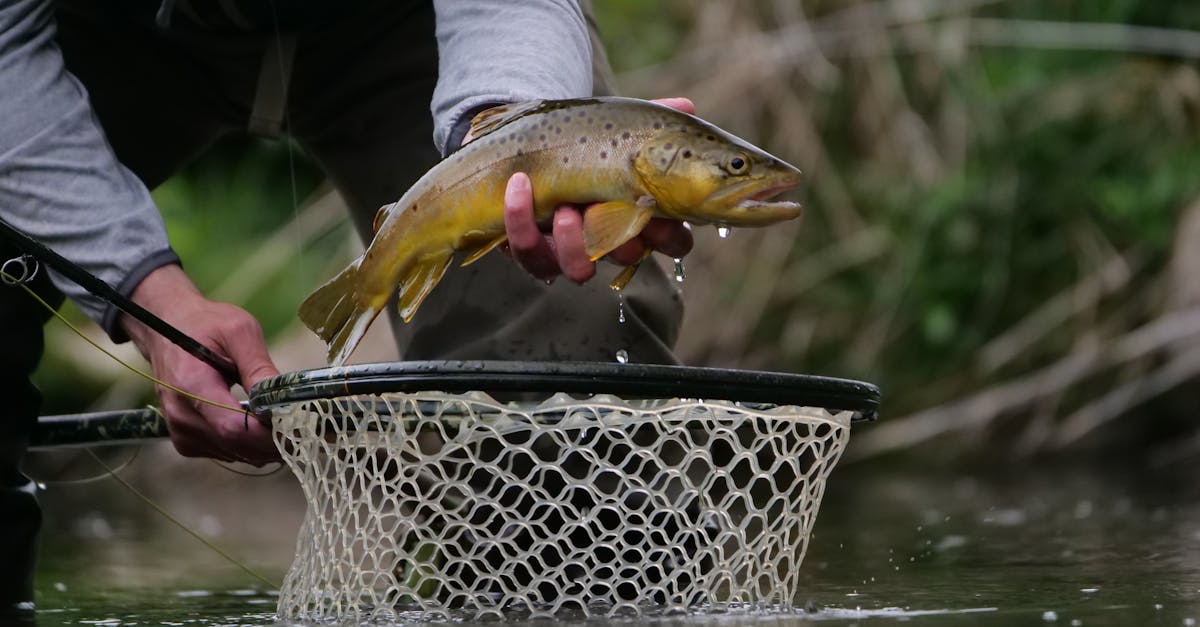
Brown Trout
The brown trout is the most cunning and elusive trout species swimming in Montana's rivers, and it rewards patient, skilled anglers with some of the state's most memorable catches. Originally native to Europe and western Asia, brown trout were first introduced to North American waters in 1883 and arrived in Montana shortly thereafter. They have since established robust, self-sustaining populations in virtually every major trout stream in the state, from the legendary spring creeks of the Paradise Valley to the sweeping runs of the lower Madison and the deep pools of the Bighorn. Brown trout grow larger than any other trout species in Montana, and fish exceeding 24 inches are caught with regularity on premium waters. The lower Madison River, the Missouri River below Holter Dam, and the Bighorn River are particularly renowned for producing trophy-class browns. Unlike rainbows, brown trout spawn in the fall (October through November), and their aggressive pre-spawn behavior creates an exciting window for streamer fishing as large males become territorial and attack anything that enters their domain. Browns are notably more nocturnal than other trout species, and many of the biggest fish are caught during low-light conditions. What sets brown trout apart from other species is their wariness and selectivity. Large browns are notoriously difficult to fool, often refusing flies that are even slightly off in size, color, or presentation. They tend to establish and defend prime feeding lies (undercut banks, logjams, deep pools, and boulder gardens), and an angler who learns to read water and identify these holding spots will consistently catch more and larger fish. This combination of difficulty, size potential, and intelligence makes the brown trout the most prized quarry for many serious Montana fly fishers.
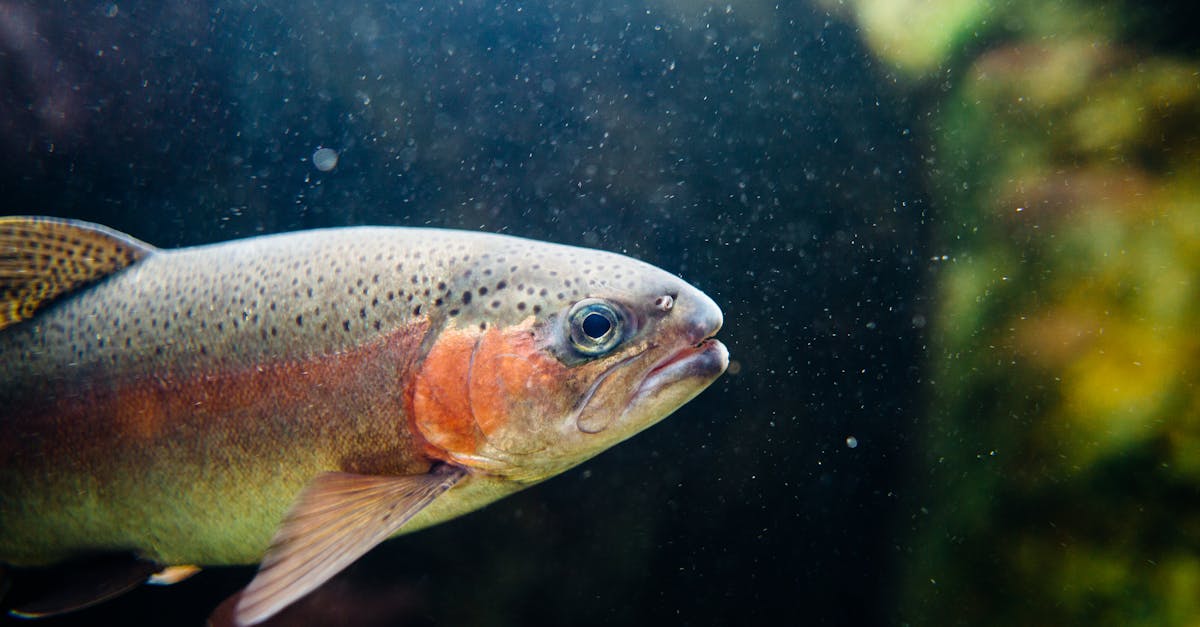
Rainbow Trout
The rainbow trout is Montana's most widespread and popular gamefish, celebrated for its explosive surface strikes, aerial acrobatics, and willingness to take a well-presented dry fly. Native to Pacific Coast drainages from Alaska to Mexico, rainbows were first introduced to Montana's waters in the late 1800s and have since established thriving populations in nearly every major river system in the state. On legendary waters like the Madison, Missouri, and Bighorn, wild rainbow trout grow fat on prolific insect hatches and provide some of the finest dry-fly fishing in North America. Rainbow trout in Montana display remarkable variation depending on their home water. Fish in nutrient-rich tailwaters like the Missouri River below Holter Dam can exceed 20 inches with regularity, their deep bodies and broad tails reflecting the abundant food supply. Freestone river rainbows, such as those in the upper Madison and Gallatin, tend to be leaner and more athletic, shaped by faster currents and colder water temperatures. In many Montana rivers, rainbows spawn in the spring from March through June, and anglers should be mindful of spawning redds during this period to protect future generations of fish. Rainbows are arguably the most versatile trout species for fly anglers. They respond well to dry flies during hatches, aggressively chase streamers, and feed heavily on nymphs subsurface throughout the year. Their fighting ability is legendary: a hooked rainbow will often launch itself completely out of the water multiple times during a battle. Montana's catch-and-release regulations on many blue-ribbon streams have produced exceptional rainbow trout fisheries with high densities of large, healthy fish that continue to draw anglers from around the world.
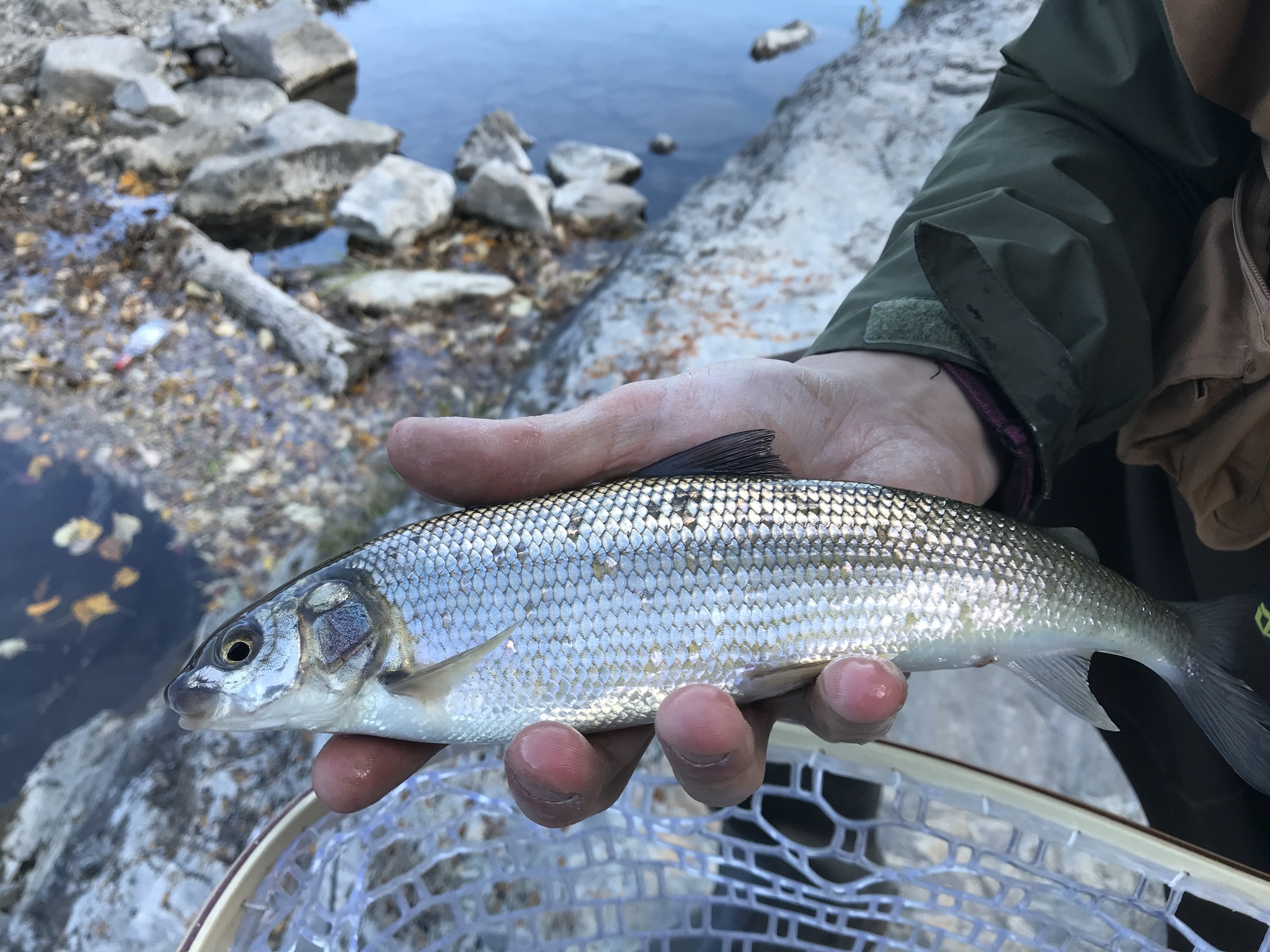
Mountain Whitefish
The mountain whitefish is one of Montana's most abundant native salmonids and arguably the most underappreciated gamefish in the state. A member of the whitefish subfamily (Coregoninae) within the broader salmonid family, mountain whitefish are present in virtually every cold-water river and large stream in Montana, often outnumbering trout by significant margins. On rivers like the Madison, Gallatin, Yellowstone, and Bitterroot, whitefish populations can exceed 1,000 fish per mile, making them the dominant salmonid species by biomass in many reaches. Despite this abundance, most fly anglers overlook whitefish entirely or view them as an unwelcome catch, which is unfortunate because they can provide outstanding sport on light tackle. Mountain whitefish are an important ecological component of Montana's river systems. They serve as a primary food source for larger brown trout, bald eagles, ospreys, otters, and other predators. Their fall spawning behavior (typically October through December) plays a critical role in nutrient cycling, and their eggs provide food for other fish and aquatic invertebrates during the lean winter months. In recent years, whitefish populations have been used as indicator species for overall river health, and declines in whitefish numbers on some Montana rivers have raised concerns about changing water conditions and disease pressure. For anglers willing to target them intentionally, mountain whitefish offer several advantages. They feed actively throughout the winter months when trout fishing can be slow, they are abundant and widely distributed, and they fight with surprising strength for their size; a 16-inch whitefish on a 3- or 4-weight rod provides a memorable tussle. Whitefish are also excellent table fare, with firm, mild-flavored white flesh that is delicious smoked or fried. Montana regulations typically allow a generous harvest limit for whitefish, recognizing their abundance and the role that harvest can play in managing populations on some waters.
Owyhee River Hatch Chart
| Insect | Suggested Fly | Jan | Feb | Mar | Apr | May | Jun | Jul | Aug | Sep | Oct | Nov | Dec |
|---|---|---|---|---|---|---|---|---|---|---|---|---|---|
Skwala Stonefly afternoon | Stimulator | ||||||||||||
Blue-Winged Olive (Baetis) afternoon | Parachute Adams | ||||||||||||
Blue-Winged Olive (Baetis) afternoon | BWO Emerger | ||||||||||||
Caddisflies (various) evening | X-Caddis | ||||||||||||
Pale Morning Dun morning | PMD Comparadun | ||||||||||||
Midges morning | Zebra Midge | ||||||||||||
Terrestrials (hoppers, ants) afternoon | Chubby Chernobyl | ||||||||||||
Mahogany Dun afternoon | Parachute Adams | ||||||||||||
March Brown afternoon | Parachute Adams |
Skwala Stonefly: First major dry fly event of the year. Large (#8-10) olive stoneflies get big browns looking up.
Blue-Winged Olive (Baetis): Spring BWOs overlap with Skwalas. Size 18-22. Critical on overcast days.
Blue-Winged Olive (Baetis): Fall/early winter BWOs with particular intensity in October-November. Size 18-20.
Caddisflies (various): Prolific from mid-April through September. X Caddis #14-18.
Pale Morning Dun: May through July emergence. Size 16-18. Excellent mid-morning dry fly fishing.
Midges: Year-round. Essential in winter. Zebra Midge #20-24. Primary food source Dec-Feb.
Terrestrials (hoppers, ants): One of the premier hopper fisheries in the West. Foam hopper #8-10 tight to sagebrush banks.
Mahogany Dun: Fall mayfly adding surface opportunities as BWOs intensify. Size 14-16.
March Brown: Overlaps with Skwalas and BWOs in early spring. Parachute Adams #12-14.
Recommended Flies
Stimulator
Top PickSkwala stonefly imitation, the first big dry fly event of the year. Size 8-10.
Best in spring
Parachute Adams
Top PickBWO parachute. Year-round essential. Size 18-22.
Best in spring
X-Caddis
Top PickCaddis dry. Skitter through riffles for explosive strikes.
Best in summer
Chubby Chernobyl
Top PickHopper pattern, the Owyhee's 'cheat code' July-September. Size 8-10.
Best in summer
Zebra Midge
Top PickYear-round subsurface staple. Essential in winter. Size 20-24.
Best in winter
Pheasant Tail Nymph
Top PickVersatile mayfly nymph. Outstanding dropper behind hopper.
Best in spring
PMD Comparadun
Top PickPMD Comparadun for May-July hatches. Size 16-18.
Best in summer
Woolly Bugger
Top PickDawn and dusk pattern for trophy browns. Strip through deeper pools.
Best in fall
Also Effective
Curated Fly Boxes
Owyhee Desert Tailwater Box
Year-roundA technical tailwater box for the Owyhee's educated brown trout. Small, precise patterns for the clear desert canyon: midges, BWOs, and PMDs dominate this fishery.
Access Points & Boat Launches
Owyhee Dam Tailwater Access
Wade AccessEasyPrimary access directly below Owyhee Dam, the starting point of the prime tailwater section. The water closest to the dam holds the coldest temperatures and highest fish densities. Multiple pullouts along Owyhee Lake Road provide access to different pools and runs. This is the most heavily fished water on the river.
Mid-Canyon Pullouts (Mile 3-5)
Wade AccessEasy-ModerateSeries of roadside pullouts along Owyhee Lake Road providing access to the mid-section of the tailwater. The fishing here is excellent with slightly less pressure than the water immediately below the dam. This section features some of the best hopper water on the river, with sagebrush-covered banks providing a steady supply of terrestrial insects in summer.
Snively Hot Springs Area
Wade AccessEasyAccess near the natural Snively Hot Springs, roughly 5 miles below the dam at the lower end of the prime fishing water. The hot springs provide a welcome warming spot after cold-weather wading. Fishing pressure is lighter here than upstream. Brown trout can still be found but densities decrease as the water warms from the springs. BLM dispersed camping available.
Regulations
Regulations
Owyhee River below Owyhee Dam (Southeast Zone): Open year-round for trout fishing. Artificial flies and lures only (zone-wide stream regulation). General Southeast Zone trout bag limit: 2 trout per day, 8-inch minimum. No limit on size or number of brown trout that may be kept (zone-wide). Barbless hooks strongly recommended. Brown trout spawn October-January; avoid wading on gravelly spawning areas during this period. ODFW is conducting ongoing tagging studies on brown trout; report any tagged fish. Check current ODFW regulations at eregulations.com/oregon/fishing/southeast-zone.
Always verify current regulations with Oregon Dept. of Fish and Wildlife before fishing.
Some links may earn a commission. Learn more
Quick Facts
- Region
- Southeastern Oregon
- Water Type
- Tailwater
- River Length
- 280 miles total (10-12 miles of prime tailwater below Owyhee Dam)
- Difficulty
- Intermediate-Advanced
- Best Seasons
- spring, summer, fall, winter
- Trout Per Mile
- Robust population with redd counts of 197.3 brown trout redds per mile in peak years
- Record Trout
- Brown trout to 28+ inches and 12 lbs documented; most browns 17-21 inches; rainbows commonly 12-16 inches with occasional fish to 20 inches
- Species
- Brown Trout, Rainbow Trout, Mountain Whitefish
- USGS Gauge
- 13183000
Local Shops & Guides
Owyhee Fly Fisher
Middleton, ID
Owyhee Fly Fisher is a dedicated fly fishing guide service specializing in Oregon's Owyhee River, one of the most remarkable and least-known trophy brown trout fisheries in the American West. Though based in Middleton, Idaho, the guide service's primary water is the Owyhee River in southeastern Oregon, where desert canyon walls tower above a spring-fed stream holding brown trout that regularly exceed 20 inches. The Owyhee River below the dam is a tailwater fishery that flows through a stunning desert canyon, offering year-round fishing in a landscape of dramatic rimrock, sage-covered hillsides, and crystalline water. Owyhee Fly Fisher is one of only a handful of guides dedicated full-time to this exceptional river, and their intimate knowledge of the canyon's holds, runs, and seasonal patterns gives their clients a significant advantage. The fishing here is often technical, with sight-fishing opportunities for large, educated brown trout that reward precise presentations. Owyhee Fly Fisher offers guided wade and float trips, fly fishing instruction, seasonal fishing reports, and all necessary equipment. Their guides are passionate about the Owyhee and its unique character, and they bring a level of dedication and knowledge that can only come from spending hundreds of days per year on this one special river. For anglers looking to target trophy brown trout in a spectacular and uncrowded setting, the Owyhee with a dedicated specialist guide is an unforgettable experience.
(208) 573-1904
Little Creek Outfitters
Fossil, OR
Little Creek Outfitters is an eastern Oregon outfitter based in Fossil, specializing in multi-day float trips on the John Day and Owyhee rivers since 1984. Located in the small ranching town of Fossil along the John Day River, the outfitter provides access to two of Oregon's most remote, productive, and visually stunning desert trout fisheries. The John Day River is the longest free-flowing river in Oregon, winding through colorful canyon country that rivals any landscape in the American West. Little Creek's multi-day float trips take anglers through this spectacular scenery, fishing for smallmouth bass and wild redband rainbow trout along the way. The Owyhee River in southeastern Oregon is another crown jewel — a desert canyon stream that holds outstanding populations of brown and rainbow trout in a setting of towering rimrock and solitude. Little Creek Outfitters' veteran guides have decades of experience navigating these remote rivers, setting up comfortable riverside camps, and putting anglers on fish in waters that most people will never see. Their expeditions are fully outfitted, with all camping gear, meals, and fishing equipment provided. For anglers seeking a genuine wilderness fishing adventure in the dramatic desert canyons of eastern Oregon, Little Creek Outfitters offers an experience that is truly one of a kind.
(541) 468-2055
Where to Stay
Adrian
A small farming community near the Owyhee's fishable tailwater section below the dam. Very limited services but the closest town to the best fishing.
Lodging options are extremely limited in Adrian, so plan ahead or consider camping near the river. Bring everything you need. The drive from the dam to town is about 30 minutes on gravel roads.
Ontario
An Oregon border town on I-84 with chain hotels, restaurants, and a Walmart for last-minute supplies. The most reliable lodging base for Owyhee trips.
Ontario is about 45 minutes from the Owyhee tailwater. Stock up here; there's nothing between Ontario and the river. Check dam release schedules before driving out; the Owyhee can blow out fast.