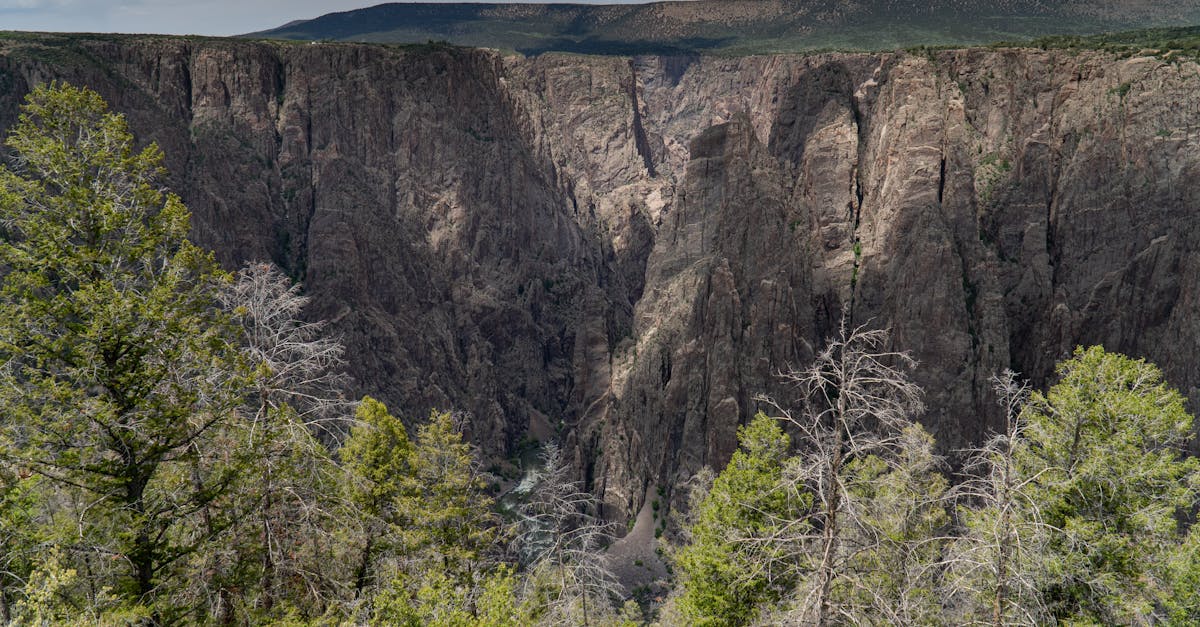
Gunnison River
The Gunnison River through the Black Canyon and Gunnison Gorge is Colorado's ultimate wilderness fly fishing experience, combining the highest trout density of any river in the state with breathtaking 2,000-foot canyon walls and a remote backcountry setting. Designated both Gold Medal and Wild Trout water, the Gorge demands effort to reach but rewards with fishing that rivals any destination in the West.
Gunnison River Fishing Report & Current Conditions
The Gunnison River is a tailwater fishery, and it fishes best in spring, summer and fall. Live USGS streamflow readings update throughout the day, while the monthly median flows below map the river's typical discharge across the year. Together they show current fishability and how today's water compares to the seasonal norm.
Current Conditions
Typical Monthly Flows
Historical median discharge (CFS) by month: Gunnison River
Overview
The Gunnison River carves one of the most dramatic landscapes in North America as it flows through the Black Canyon of the Gunnison National Park and the adjacent Gunnison Gorge National Conservation Area. Rising from the confluence of the Taylor and East rivers near Almont, the Gunnison flows westward through a series of reservoirs before plunging into the Black Canyon, a vertigo-inducing chasm where Precambrian rock walls rise 2,000 feet above the river.
The Gold Medal trout water begins below Crystal Dam and extends approximately 39 miles downstream to the confluence with the North Fork of the Gunnison near Delta. This expansive Gold Medal stretch encompasses two distinct environments: the Black Canyon / Gunnison Gorge (roughly 20 miles of canyon-bound river) and the lower valley section from the mouth of the Gorge to Delta.
The Gunnison Gorge is the crown jewel. Managed by the Bureau of Land Management as a National Conservation Area and designated as a Wilderness Study Area, the Gorge holds the highest documented trout density of any river in Colorado, averaging approximately 7,000 fish per mile. Both rainbow and brown trout thrive here in roughly equal numbers, with many fish exceeding 16 inches and trophy-class fish over 20 inches a genuine possibility on any given day.
Access to the Gorge is the defining characteristic. Four trails descend from the canyon rim to the river: Chukar, Bobcat, Duncan, and Ute. All require a 4WD vehicle to reach the trailheads, and the hikes are moderately strenuous (1-2 miles with 800-1,200 feet of elevation loss). Multi-day float trips with pack-horse-assisted boat launches are the most popular way to experience the Gorge.
The Black Canyon itself (within the National Park boundaries upstream of the Gorge) is even more dramatic and more difficult to access. Only experienced, fit hikers should attempt the steep, unmaintained routes that descend as much as 2,000 feet from the rim.
Water Characteristics
The Gunnison River below Crystal Dam carries the characteristics of a major tailwater: cold, clear water released from the bottom of Crystal Reservoir maintains temperatures in the 40-55 degrees F range throughout the fishing season. Water clarity is typically 4-8 feet of visibility, occasionally exceeding 10 feet during low, stable flows in late summer and fall.
The river's substrate in the Gorge is a dramatic mix of massive boulders (some the size of houses, fallen from the canyon walls), bedrock shelves, cobble, and pockets of clean spawning gravel. This structural diversity creates an extraordinary range of trout habitat. The density of holding water per river mile is exceptional, which explains the 7,000 fish-per-mile population estimates.
The insect community is one of the richest in the state. The Gunnison supports massive Salmonfly (Pteronarcys) and Golden Stonefly populations. Caddis, Blue Winged Olives, Pale Morning Duns, and midges round out the community. The river also supports healthy populations of sculpin, crayfish, and other forage species that provide the protein base for trophy-class trout growth.
Wading & Float Guide
Wading in the Gunnison Gorge and Black Canyon ranges from challenging to extreme. The river flows through a narrow, steep-walled canyon with a bottom composed of massive boulders, bedrock shelves, and deep plunge pools. Water depth varies from a few inches on gravel bars to well over head-deep in the pools and chutes. The current is powerful; this is a big river compressed into a tight canyon. Chest waders with felt soles or studded boots are essential, and a wading staff is not optional.
In the Gorge section accessed by the hiking trails, anglers can wade the margins and work the boulder gardens, pocket water, and eddy lines. The best strategy is to pick your way along one bank, fishing each piece of productive water as you encounter it, rather than attempting to cross the river. At typical summer flows (1,500-3,000 cfs), wading is limited to the edges and shallower riffles.
The Black Canyon within the National Park presents even more extreme conditions. The approaches to the river are strenuous scrambles down near-vertical rock faces, and once at the river, movement requires climbing over car-sized boulders and navigating narrow ledges above deep, fast water. This is not a place for casual anglers.
Gunnison Gorge: Chukar Trail to Gorge Take-Out
The signature Gunnison Gorge float. Access requires pack-horse-assisted boat launch at Chukar Trail (4WD required). Class II-III rapids throughout. Typically done as a 2-3 day overnight trip with camping on sand beaches. Spectacular canyon scenery with 7,000 trout per mile. BLM permit required.
Gorge Take-Out to Austin Bridge
Below the Gorge, the river opens into a wider valley with easier floating and road access. Still Gold Medal water with good trout populations. Half-day float with mostly mellow water.
Austin Bridge to Escalante Bridge
Lower Gold Medal water through agricultural valley. Gentle gradient, wide river, and easier wading access from multiple points. Full-day float with productive bank water and deep pools holding large browns.
Crystal Dam to Chukar Trail (Black Canyon / Upper Gorge)
The most remote and difficult section. Requires expert whitewater skills and specialized equipment. Class III-IV rapids in a narrow canyon with no easy egress. Rarely floated; most fishing in this section is by hikers descending canyon walls.
Rod & Tackle Guide
Gunnison Gorge (wade fishing from trails)
- Rod
- 9' 5-weight (primary) and 9' 6-weight (streamers/big nymphs)
- Line
- Weight-forward floating; sink-tip for the 6-weight
- Leader & Tippet
- 9' tapered to 4X or 5X for dries/nymphs; 4' of 2X-3X fluoro for streamers
Carry both rods if possible; the 5-weight handles dries and small nymphs elegantly, while the 6-weight throws big stonefly nymphs and streamers. Pack light for the hike in; leave non-essentials in the vehicle.
Gunnison Gorge (multi-day float trips)
- Rod
- 9' 6-weight (primary) with 9' 5-weight as backup
- Line
- Weight-forward floating and 200-grain sink-tip
- Leader & Tippet
- 9' tapered to 3X-5X; heavy fluoro for streamers
The 6-weight is the better all-around choice for boat fishing; it handles wind, large Salmonfly patterns, and streamer casting. Bring a stripping basket for streamer work from the boat.
Lower Gunnison (below Gorge to Delta)
- Rod
- 9' 5-weight or 6-weight
- Line
- Weight-forward floating
- Leader & Tippet
- 9' tapered to 4X or 5X
Standard Western trout setup. The lower river is more approachable and forgiving. Good euro-nymphing water in the deeper runs.
Best Time to Fish the Gunnison River
Spring
Spring is when the Gunnison Gorge truly comes alive. Blue Winged Olive hatches begin in April and provide the first consistent dry fly fishing of the year. By late May, the legendary Salmonfly hatch begins. These giant stoneflies (size 4-8) emerge in staggering numbers. Following the Salmonfly hatch upstream as it progresses through the canyon can produce some of the most explosive dry fly fishing in the American West. Large Sofa Pillow and Chubby Chernobyl patterns in sizes 4-8 draw savage strikes. Be aware that spring flows can be high and fast.
Summer
Summer is the prime season for multi-day Gorge float trips. Flows moderate as runoff subsides (typically by late June), and the full spectrum of hatches unfolds. Golden Stoneflies follow the Salmonflies, PMDs hatch from mid-morning through early afternoon, and evening caddis emergences bring aggressive surface feeding. July and August are hopper-dropper paradise. Book guided float trips well in advance as BLM limits launches. Carry plenty of water; the canyon is hot and dry. Snake awareness is important, as rattlesnakes inhabit the canyon slopes.
Fall
Fall in the Gunnison Gorge is a special time. The summer crowds are gone, the canyon walls glow with autumn light, and the fishing is excellent. BWO hatches return as the dominant surface activity. Brown trout begin their spawning run in October, becoming more aggressive and susceptible to streamer patterns. Swing Woolly Buggers and sculpin imitations through deep runs and tailouts. The hiking trails are most pleasant in fall with cooler temperatures. By November, ice begins to form in the canyon. Fall is considered by many experienced Gunnison anglers to be the best overall time.
Fishing Pressure & Local Tips
Despite its extraordinary quality, the Gunnison Gorge receives relatively moderate fishing pressure thanks to its remote location and difficult access. The nearest major airport is Montrose (45 minutes from the Gorge). The combination of 4WD roads, strenuous hikes, and BLM-regulated float trip launches naturally limits the number of anglers who reach the river on any given day. During the peak Salmonfly hatch, pressure increases significantly, but even then the canyon absorbs anglers across 14+ miles of river.
The day-use hiking trails (Chukar and Bobcat in particular) see the most concentrated pressure during summer and fall. The longer trails (Duncan and Ute) receive considerably less traffic and are worth the additional effort. The Black Canyon within the National Park sees very few anglers due to the extreme access difficulty. Below the Gorge, the lower Gold Medal sections near Delta receive moderate pressure from local anglers but are largely overlooked by visiting fly fishers.
Local Knowledge
The Gunnison Gorge rewards preparation and fitness. Before your first trip, get in hiking shape, as the trails are steep and the canyon floor is rugged. Bring trekking poles for the hike, convert to a wading staff once at the river. Start fishing at the bottom of the trail and work upstream, as most anglers fish downstream from the access points.
For the Salmonfly hatch, timing is everything. The hatch progresses upstream over 2-3 weeks, typically beginning in the lower Gorge in mid-to-late May. Call the local fly shops (Black Canyon Anglers in Crawford and Cimarron Creek Tackle in Cimarron) for real-time hatch progression reports. When the Salmonflies are on, fish big and bold: large stonefly dries (sizes 4-8) skated or dead-drifted tight to boulders and banks. For multi-day float trips, book with a licensed outfitter who holds a BLM permit. Bring warm layers even in summer; the canyon can be 20 degrees cooler than the rim.
Species Present
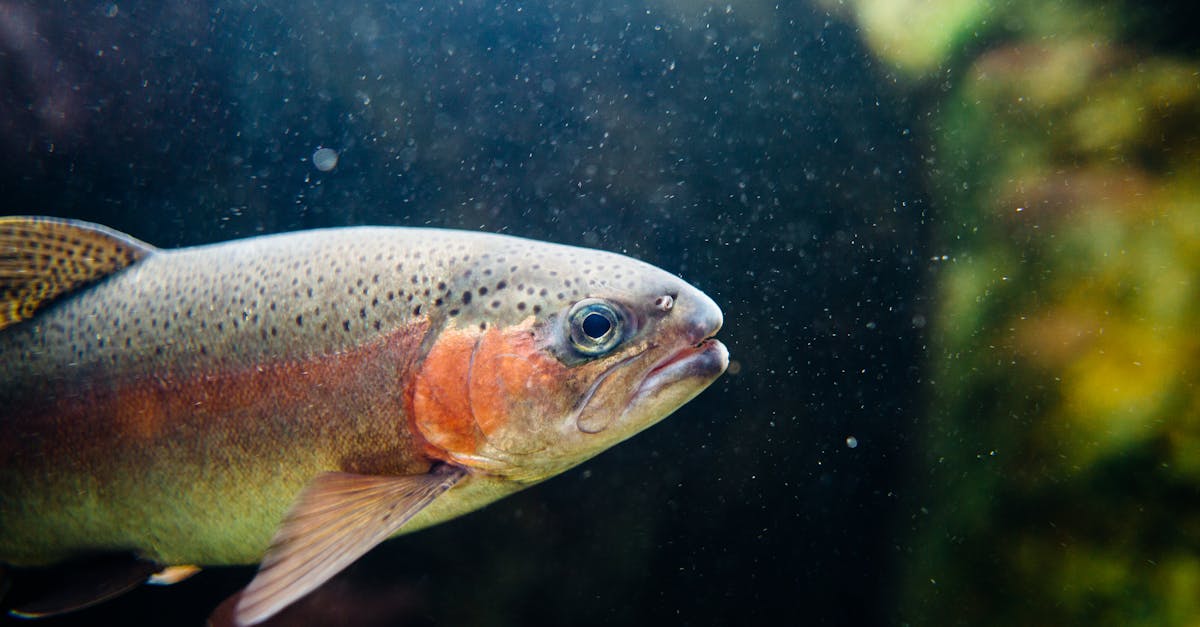
Rainbow Trout
The rainbow trout is Montana's most widespread and popular gamefish, celebrated for its explosive surface strikes, aerial acrobatics, and willingness to take a well-presented dry fly. Native to Pacific Coast drainages from Alaska to Mexico, rainbows were first introduced to Montana's waters in the late 1800s and have since established thriving populations in nearly every major river system in the state. On legendary waters like the Madison, Missouri, and Bighorn, wild rainbow trout grow fat on prolific insect hatches and provide some of the finest dry-fly fishing in North America. Rainbow trout in Montana display remarkable variation depending on their home water. Fish in nutrient-rich tailwaters like the Missouri River below Holter Dam can exceed 20 inches with regularity, their deep bodies and broad tails reflecting the abundant food supply. Freestone river rainbows, such as those in the upper Madison and Gallatin, tend to be leaner and more athletic, shaped by faster currents and colder water temperatures. In many Montana rivers, rainbows spawn in the spring from March through June, and anglers should be mindful of spawning redds during this period to protect future generations of fish. Rainbows are arguably the most versatile trout species for fly anglers. They respond well to dry flies during hatches, aggressively chase streamers, and feed heavily on nymphs subsurface throughout the year. Their fighting ability is legendary: a hooked rainbow will often launch itself completely out of the water multiple times during a battle. Montana's catch-and-release regulations on many blue-ribbon streams have produced exceptional rainbow trout fisheries with high densities of large, healthy fish that continue to draw anglers from around the world.
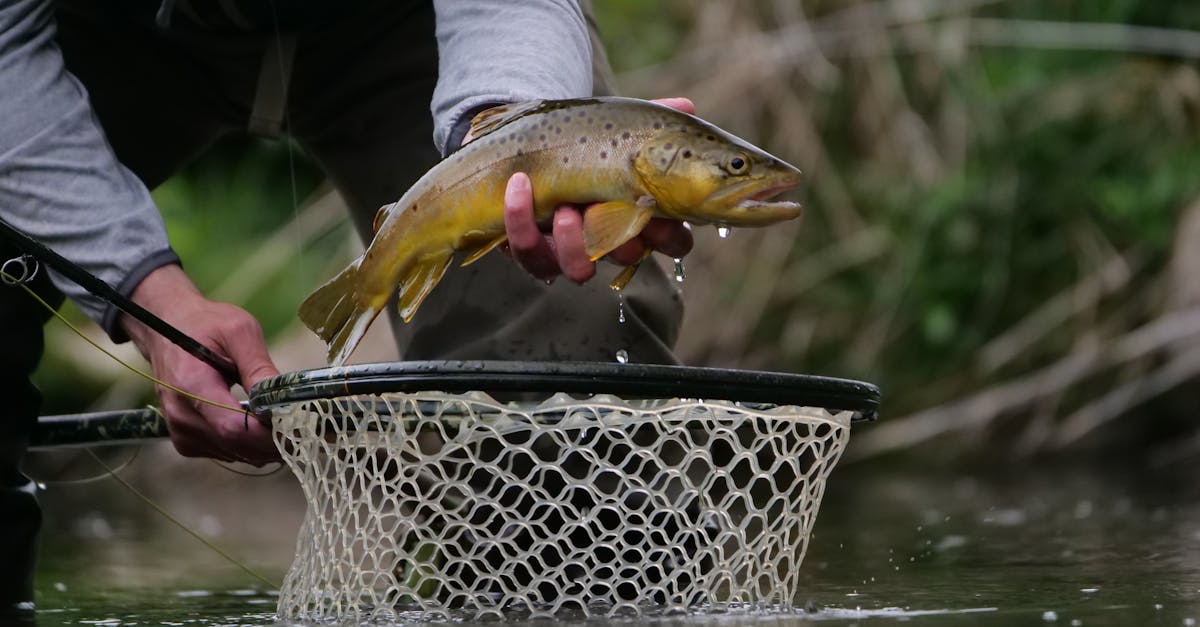
Brown Trout
The brown trout is the most cunning and elusive trout species swimming in Montana's rivers, and it rewards patient, skilled anglers with some of the state's most memorable catches. Originally native to Europe and western Asia, brown trout were first introduced to North American waters in 1883 and arrived in Montana shortly thereafter. They have since established robust, self-sustaining populations in virtually every major trout stream in the state, from the legendary spring creeks of the Paradise Valley to the sweeping runs of the lower Madison and the deep pools of the Bighorn. Brown trout grow larger than any other trout species in Montana, and fish exceeding 24 inches are caught with regularity on premium waters. The lower Madison River, the Missouri River below Holter Dam, and the Bighorn River are particularly renowned for producing trophy-class browns. Unlike rainbows, brown trout spawn in the fall (October through November), and their aggressive pre-spawn behavior creates an exciting window for streamer fishing as large males become territorial and attack anything that enters their domain. Browns are notably more nocturnal than other trout species, and many of the biggest fish are caught during low-light conditions. What sets brown trout apart from other species is their wariness and selectivity. Large browns are notoriously difficult to fool, often refusing flies that are even slightly off in size, color, or presentation. They tend to establish and defend prime feeding lies (undercut banks, logjams, deep pools, and boulder gardens), and an angler who learns to read water and identify these holding spots will consistently catch more and larger fish. This combination of difficulty, size potential, and intelligence makes the brown trout the most prized quarry for many serious Montana fly fishers.
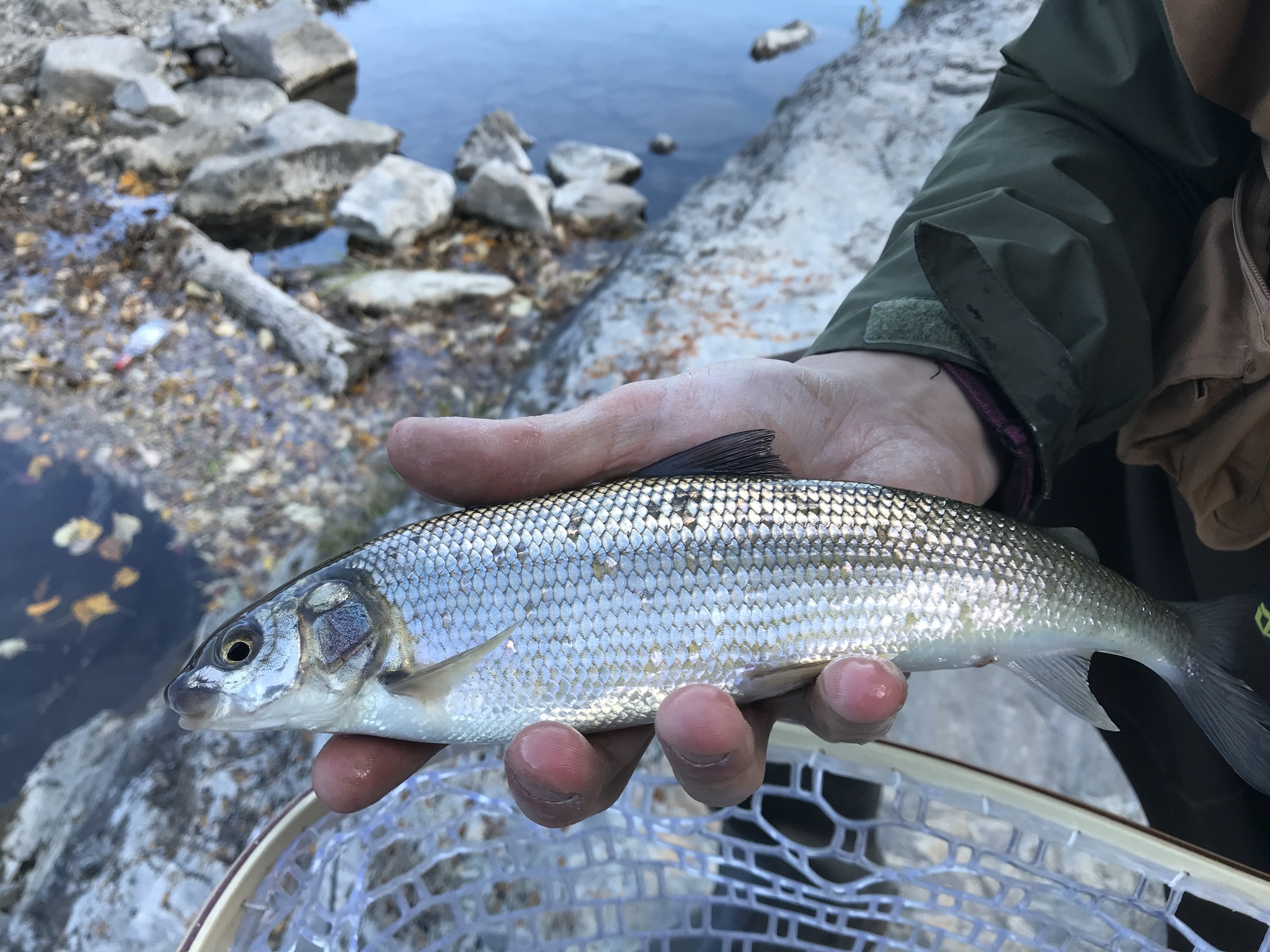
Mountain Whitefish
The mountain whitefish is one of Montana's most abundant native salmonids and arguably the most underappreciated gamefish in the state. A member of the whitefish subfamily (Coregoninae) within the broader salmonid family, mountain whitefish are present in virtually every cold-water river and large stream in Montana, often outnumbering trout by significant margins. On rivers like the Madison, Gallatin, Yellowstone, and Bitterroot, whitefish populations can exceed 1,000 fish per mile, making them the dominant salmonid species by biomass in many reaches. Despite this abundance, most fly anglers overlook whitefish entirely or view them as an unwelcome catch, which is unfortunate because they can provide outstanding sport on light tackle. Mountain whitefish are an important ecological component of Montana's river systems. They serve as a primary food source for larger brown trout, bald eagles, ospreys, otters, and other predators. Their fall spawning behavior (typically October through December) plays a critical role in nutrient cycling, and their eggs provide food for other fish and aquatic invertebrates during the lean winter months. In recent years, whitefish populations have been used as indicator species for overall river health, and declines in whitefish numbers on some Montana rivers have raised concerns about changing water conditions and disease pressure. For anglers willing to target them intentionally, mountain whitefish offer several advantages. They feed actively throughout the winter months when trout fishing can be slow, they are abundant and widely distributed, and they fight with surprising strength for their size; a 16-inch whitefish on a 3- or 4-weight rod provides a memorable tussle. Whitefish are also excellent table fare, with firm, mild-flavored white flesh that is delicious smoked or fried. Montana regulations typically allow a generous harvest limit for whitefish, recognizing their abundance and the role that harvest can play in managing populations on some waters.
Gunnison River Hatch Chart
| Insect | Suggested Fly | Jan | Feb | Mar | Apr | May | Jun | Jul | Aug | Sep | Oct | Nov | Dec |
|---|---|---|---|---|---|---|---|---|---|---|---|---|---|
Salmonfly (Pteronarcys) all day | Norm Wood Special | ||||||||||||
Golden Stonefly all day | Stimulator | ||||||||||||
Blue-Winged Olive (Baetis) afternoon | Parachute Adams | ||||||||||||
Blue-Winged Olive (Baetis) afternoon | BWO Emerger | ||||||||||||
Pale Morning Dun morning | PMD Comparadun | ||||||||||||
Caddisflies (various) evening | Elk Hair Caddis | ||||||||||||
Terrestrials (hoppers) afternoon | Chubby Chernobyl | ||||||||||||
Midges morning | Zebra Midge | ||||||||||||
Stonefly nymphs (various) all day | Pat's Rubber Legs |
Salmonfly (Pteronarcys): The legendary hatch. Giant stoneflies in staggering numbers. Size 4-8.
Golden Stonefly: Follows the Salmonfly hatch. Size 8-12.
Blue-Winged Olive (Baetis): Spring BWOs provide the first consistent dry fly fishing. Size 16-20.
Blue-Winged Olive (Baetis): Fall BWOs return as dominant surface activity. Size 18-20.
Pale Morning Dun: Summer PMDs hatch mid-morning through early afternoon. Size 14-18.
Caddisflies (various): Evening caddis emergences bring aggressive surface feeding. Size 14-16.
Terrestrials (hoppers): Hopper-dropper paradise in the Gorge. Bang foam patterns against canyon walls. Size 8-12.
Midges: Year-round midge activity, especially in slower sections. Size 18-24.
Stonefly nymphs (various): Massive stonefly nymph populations. Year-round subsurface staple. Size 6-10.
Recommended Flies
Norm Wood Special
Top PickTHE fly during the legendary Salmonfly hatch; fish tight to boulders
Best in spring
Pat's Rubber Legs
Top PickYear-round stonefly nymph, essential point fly for tandem rigs
Best in spring
Chubby Chernobyl
Top PickVersatile attractor and hopper imitation, primary float trip dry
Best in summer
Woolly Bugger
Top PickClassic streamer for probing deep water; strip or swing
Best in fall
Sculpzilla
Top PickSculpin imitation, deadly for large browns in fall
Best in fall
Parachute Adams
Top PickUniversal mayfly dry, covers PMD and BWO hatches
Best in summer
Elk Hair Caddis
Top PickMatches prolific summer caddis hatches in the Gorge
Best in summer
Prince Nymph
Top PickAttractor nymph, effective dropper behind Rubber Legs or Chubby
Best in spring
Also Effective
Curated Fly Boxes
Gunnison Gorge Stonefly & Attractor Box
SummerBig-water patterns for the Gunnison Gorge's legendary stonefly hatches and aggressive trout. High-floating attractors and heavy nymphs for the canyon's powerful currents.
Access Points & Boat Launches
Chukar Trail Access
Wade AccessDifficultThe primary hiking trail into the Gunnison Gorge, descending approximately 1 mile with 1,000 feet of elevation loss to the river. 4WD vehicle required to reach the trailhead. This is also the launch point for multi-day float trips (pack-horse-assisted boat launches). BLM recreation permit required. The trail delivers you to some of the best trout water in the American West, with 7,000 fish per mile in a wilderness canyon setting.
Bobcat Trail Access
Wade AccessDifficultSecondary hiking trail into the Gunnison Gorge, slightly shorter than Chukar with approximately 800 feet of elevation loss. 4WD required for the trailhead road. Bobcat delivers you to a different section of the Gorge with outstanding pocket water, boulder gardens, and deep eddies. Less crowded than Chukar on most days. BLM recreation permit required.
Gorge Take-Out (Pleasure Park)
Boat LaunchEasyThe designated take-out for Gunnison Gorge float trips. Accessible by paved road, this is where multi-day canyon trips conclude. Also serves as a put-in for the easier lower Gorge-to-Austin Bridge float. Good wade access to the river at the canyon mouth, where the river opens up into a broader valley with productive riffles and runs.
Austin Bridge
Boat LaunchEasyLower Gold Medal water access with a developed boat ramp, serving as both a take-out from the Gorge mouth float and a put-in for the Austin Bridge to Escalante Bridge section. Easier access than the Gorge trails, with productive wade fishing in the surrounding valley section. Good brown trout population in the deeper runs and pool tailouts.
Regulations
Regulations
Crystal Dam downstream to North Fork of the Gunnison (Gold Medal / Wild Trout Water): Artificial flies and lures only. All Rainbow Trout must be released immediately. Brown Trout: bag limit of 2 fish (check current size restrictions). No fishing within 200 yards downstream of Crystal Dam. Within Black Canyon of the Gunnison National Park: Artificial flies and lures only, no bait, only non-motorized watercraft, valid National Park entrance fee required. Gunnison Gorge NCA: BLM recreation permit required, pack out all trash. Colorado fishing license required. Verify regulations at cpw.state.co.us/fishing and nps.gov/blca.
Always verify current regulations with Colorado Parks and Wildlife before fishing.
Some links may earn a commission. Learn more
Quick Facts
- Region
- Western Slope / Black Canyon Country
- Water Type
- Tailwater
- River Length
- 164 miles total; ~39 miles of Gold Medal water (Crystal Dam to North Fork confluence)
- Difficulty
- Advanced
- Best Seasons
- spring, summer, fall
- Trout Per Mile
- ~7,000 in the Gunnison Gorge, highest density in Colorado
- Record Trout
- Rainbow trout exceeding 28 inches documented; brown trout over 10 lbs caught in the Gorge
- Species
- Rainbow Trout, Brown Trout, Mountain Whitefish
- USGS Gauge
- 09128000
Where to Stay
Montrose
The largest town near the Gunnison Gorge with full services: chain hotels, restaurants, grocery stores, and fly shops. About 45 minutes from the Gorge trailheads. A practical base with reliable amenities.
Stock up on supplies in Montrose before heading to the Gorge; there are no services at the trailheads. RIGS Fly Shop & Guide Service in nearby Ridgway is the premier Gunnison outfitter. Book Gorge permits early.
Gunnison / Black Canyon Area
A college town (Western Colorado University) with a lively downtown, affordable lodging, and proximity to the lower Gunnison below the Gorge. Also provides access to the East and Taylor Rivers, excellent backup options.
Gunnison is a great base if you want to fish multiple rivers; the Taylor, East, and lower Gunnison are all within 30 minutes. More affordable than Montrose or Crested Butte with a good selection of motels and vacation rentals.