Bull Trout
Salvelinus confluentus
Overview
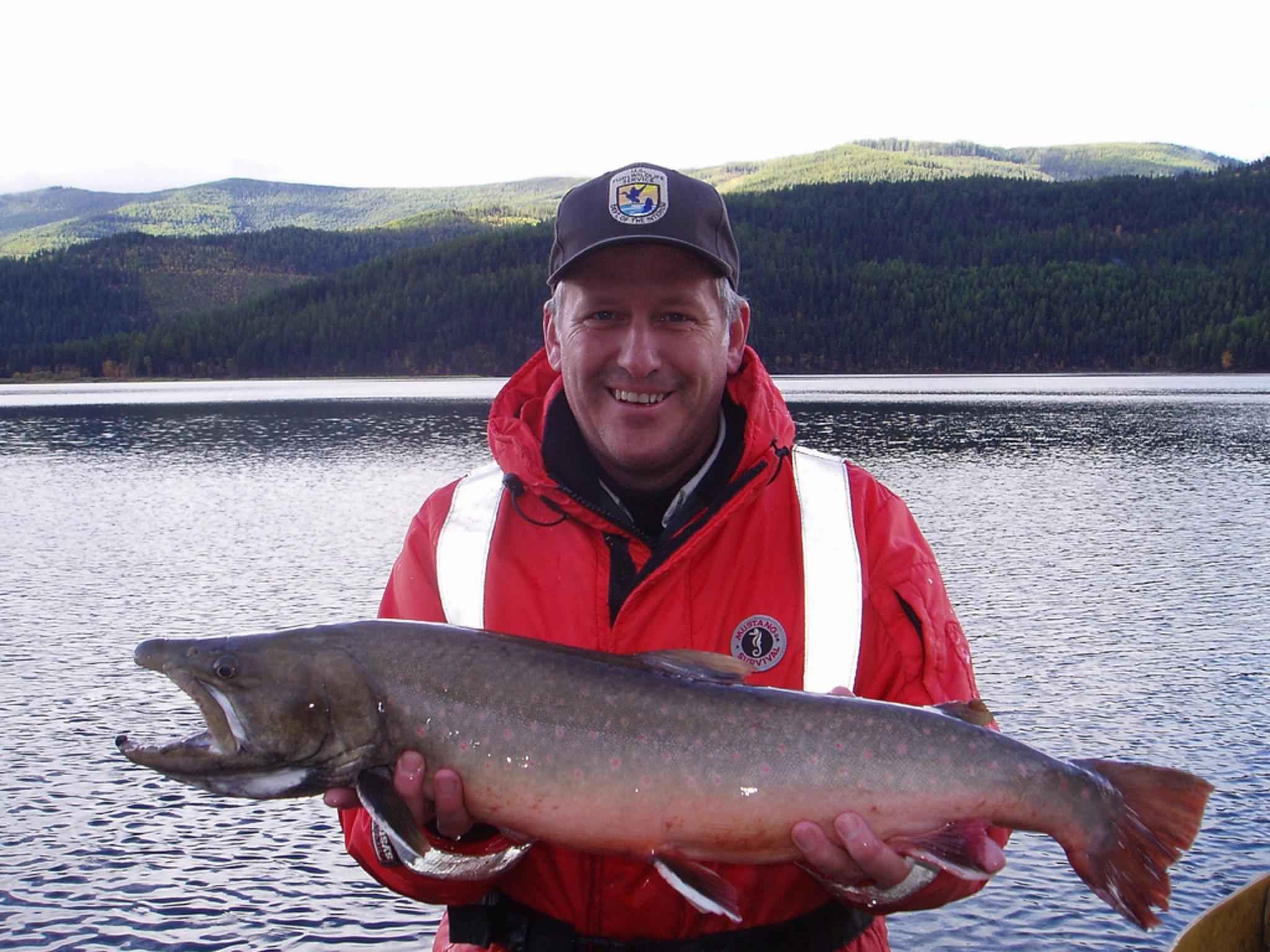
The bull trout is the largest native char in the inland waters of the Pacific Northwest, a powerful and elusive predator that inhabits the coldest, cleanest rivers and lakes in Idaho, Montana, Oregon, and Washington. Despite its common name, the bull trout is not a true trout at all; it belongs to the char genus Salvelinus, making it a close relative of brook trout, lake trout, and Arctic char. Bull trout are distinguished by their massive heads, broad jaws, and overall bulk, which earned them the 'bull' moniker from early settlers who encountered these imposing fish in the frigid headwaters of the Columbia, Snake, and Klamath river basins.
For fly anglers in the Pacific Northwest, the bull trout occupies a unique and somewhat complicated position. These fish are federally listed as Threatened under the Endangered Species Act throughout their range in the contiguous United States, meaning that catch-and-release only regulations apply universally: no bull trout may be harvested anywhere in Idaho, Montana, Oregon, or Washington. Despite this protected status, bull trout can be legally targeted in many waters, and they are a thrilling quarry on the fly rod. Migratory bull trout that move between lakes and tributary streams can exceed 30 inches and 10 pounds, with the power and aggression of a fish that feeds primarily on other fish. Hooking a large bull trout on a streamer in a clear mountain river is one of the most electrifying experiences in western fly fishing.
Bull trout are also critically important as an indicator species for watershed health. They require the coldest water temperatures of any salmonid in North America (sustained temperatures above 59 degrees Fahrenheit can be lethal), and they depend on connected networks of streams, rivers, and lakes to complete their complex life cycle. Where bull trout thrive, you can be confident the watershed is intact, the water is clean, and the habitat is functioning at a high level. Their decline across much of the Pacific Northwest has been driven by dam construction, logging-related sedimentation, water temperature increases from climate change, and competition with non-native brook trout, with which they readily hybridize. Understanding bull trout identification is essential for every western angler, as many are caught incidentally while targeting other species, and proper handling and release are legally mandated.
Identification
Bull trout are distinctive fish that can be identified with confidence once you learn their key features, and knowing how to tell them apart from brook trout is essential given their protected status. The most reliable identification feature is the absence of black spots on the dorsal fin: bull trout have a clean, unspotted dorsal fin, while brook trout display the characteristic dark, wavy vermiculations (worm-like markings) on the dorsal fin and back. Bull trout instead have pale yellow, orange, or pinkish spots on an olive-green to dark gray body, without any dark spots or vermiculations whatsoever.
The overall body shape and head structure of bull trout are diagnostic. Bull trout have a notably large, broad, and flattened head with a wide mouth that extends well past the eye, a feature that reflects their predatory lifestyle. The lower jaw is prominent and slightly protruding. This big, flat head gives the fish a distinctly different profile than the more streamlined brook trout. Bull trout also tend to be larger and more heavily built than brook trout of equivalent age, with deeper bodies and broader tails. The pectoral, pelvic, and anal fins of bull trout lack the bold white leading edges that are diagnostic of brook trout; this is one of the quickest and most reliable field marks.
A useful mnemonic for distinguishing bull trout from brook trout is 'BLIWS': Bull trout have spots that are Light (pale yellow, orange, or pink) against a dark background, while brook trout have spots that are both light (pale spots with blue halos) and dark (worm-like vermiculations). If the fish has no worm-like markings on the back, no dark spots on the dorsal fin, no white fin edges, and pale spots on a dark background, you are looking at a bull trout. When in doubt, treat any char caught in waters known to hold bull trout as a bull trout: handle it carefully in the water, remove the hook quickly, and release it without lifting it from the stream.
Diet
Bull trout are apex predators in their river ecosystems and are among the most aggressively piscivorous salmonids in North America. Adult bull trout feed primarily on other fish, including juvenile whitefish, sculpins, juvenile trout and salmon, and even smaller bull trout. In lake systems like Lake Pend Oreille in Idaho, Flathead Lake in Montana, and Lake Billy Chinook in Oregon, bull trout grow to enormous sizes by feeding on kokanee salmon and other abundant forage fish. This fish-heavy diet is why bull trout achieve the largest body sizes of any char species in the lower 48 states, with Lake Pend Oreille historically producing fish over 30 pounds.
Juvenile and small resident bull trout have a more varied diet that includes aquatic insect larvae, stonefly nymphs, mayfly nymphs, and other invertebrates, similar to the diet of brook trout and other small char. As they grow, bull trout undergo a pronounced dietary shift toward piscivory, typically becoming primarily fish-eaters by the time they reach 12 to 14 inches. This transition is tied to habitat: migratory bull trout that have access to large rivers and lakes with abundant forage fish grow much larger than resident fish that remain in small headwater streams.
Bull trout are ambush predators that use structure (submerged logs, large boulders, deep pools, and undercut banks) to conceal themselves before attacking prey with a sudden burst of speed. They feed most actively during low-light conditions, including dawn, dusk, and overcast days, and they can be particularly aggressive during the fall pre-spawn period when they move into tributary streams. Crayfish and large aquatic invertebrates supplement the diet of stream-resident bull trout year-round, but fish constitute the overwhelming majority of calories consumed by adults in both river and lake environments.
Habitat Preferences
Bull trout have the most stringent habitat requirements of any salmonid in the western United States. They require sustained water temperatures below 55 degrees Fahrenheit for optimal health, with temperatures above 59 degrees approaching lethal thresholds, making them the most cold-water-dependent trout or char species in North America. This extreme thermal sensitivity confines bull trout to the coldest headwater streams, deep lakes, and groundwater-influenced river reaches throughout their range in Idaho, Montana, Oregon, and Washington. In practical terms, if you are fishing water cold enough for bull trout, you are likely in some of the most pristine and remote habitat in the region.
Bull trout exhibit two primary life history strategies: resident and migratory. Resident bull trout spend their entire lives in small headwater streams, where they remain relatively small (8 to 14 inches). Migratory bull trout are born in headwater tributaries but move downstream to large rivers or lakes to feed and grow, returning to their natal streams to spawn in the fall. These migratory fish can reach exceptional sizes (24 to 30 inches or more), and their dependence on connected habitat networks (small streams, large rivers, and lakes) makes them particularly vulnerable to dams, culverts, and other migration barriers that fragment their habitat.
Spawning occurs in September and October in the coldest, smallest tributary streams with clean gravel and groundwater upwelling. Bull trout are fall spawners, and their spawning habitat often overlaps with brook trout, leading to hybridization that produces sterile offspring and effectively removes both parent fish from the breeding population. This hybridization threat is one of the primary reasons bull trout populations have declined, and it is a key focus of conservation management. Bull trout spawning streams are often protected with seasonal closures, and anglers should be aware of these restrictions when fishing in bull trout habitat during the fall months.
Fishing Tactics
Streamer fishing is by far the most effective and exciting method for targeting bull trout. As aggressive piscivores, bull trout respond to large, flashy streamer patterns that imitate the sculpins, whitefish fry, and juvenile salmonids they prey upon. Articulated patterns in sizes 2 through 6 (including Woolly Buggers, Sculpzillas, Circus Peanuts, and white or chartreuse bunny leeches) are standard bull trout offerings. Fish them on 6- or 7-weight rods with sink-tip or full-sinking lines, casting tight to structure (submerged logs, boulder gardens, deep pool heads) and stripping with a varied, aggressive retrieve. Bull trout often follow a fly for several strips before committing, so do not lift the line until the fly is directly below you.
Timing and water conditions are critical when fishing for bull trout. The best action typically occurs during the fall months (September and October) when migratory fish move into tributary streams for spawning, and again in spring when post-spawn fish return to their feeding habitat in larger rivers and lakes. Low-light conditions (early morning, late evening, and overcast or rainy days) consistently produce the best results, as bull trout are highly light-sensitive and avoid bright sunlight. In lake environments, trolling large streamers behind a pontoon or drift boat along shoreline drop-offs and near tributary mouths can be very productive, particularly where bull trout are intercepting runs of kokanee salmon or other forage fish.
Because bull trout are federally protected, anglers must use barbless hooks (required by regulation in most bull trout waters), handle fish in the water whenever possible, and release them immediately. Use heavy enough tippet (0X to 2X) to land fish quickly and avoid prolonged fights that exhaust the fish. If you must lift a bull trout for a photograph, support the fish horizontally with both hands, keep it over the water, and limit air exposure to no more than a few seconds. In rivers where bull trout are caught incidentally while fishing for other species, be prepared to identify them quickly and release them without delay. Many bull trout waters are subject to seasonal closures during spawning; check current regulations carefully before fishing any stream or river within bull trout range.
Conservation
Bull trout are federally listed as Threatened under the Endangered Species Act throughout their range in the contiguous United States. This listing, first enacted in 1999, means that strict catch-and-release regulations apply everywhere bull trout are found, and intentional killing or harming of bull trout is a federal offense. The primary threats driving their decline include habitat fragmentation by dams and road culverts, degradation of spawning and rearing habitat from logging and development, rising water temperatures linked to climate change, and hybridization with non-native brook trout. Critical habitat has been designated across Idaho, Montana, Oregon, Washington, and Nevada. Recovery efforts for bull trout are extensive and multifaceted. Federal and state agencies have invested heavily in removing migration barriers (replacing undersized culverts, constructing fish passage facilities at dams), restoring riparian habitat along spawning streams, and managing brook trout populations in key bull trout drainages to reduce hybridization. In some areas, such as the upper Jarbidge River in Nevada and certain tributaries in central Idaho, brook trout removal projects using electrofishing and piscicides have shown success in stabilizing bull trout populations. Anglers play an important conservation role by correctly identifying bull trout, handling them with extreme care, and reporting catches to state fish and game agencies to support population monitoring.
Rivers Where Found
Salmon River
Central Idaho
South Fork Boise River
Southwestern Idaho
Metolius River
Central Oregon (Cascades)
McKenzie River
Willamette Valley / Cascades
Methow River
North Central Washington, Okanogan County
Skagit River
Northwest Washington, Skagit County
Jarbidge River
Northern Nevada / Elko County / Jarbidge Wilderness
Quick Facts
- Scientific Name
- Salvelinus confluentus
- Average Size
- 12-18"
- Trophy Size
- 24+"
- State Record
- 32 lbs 0 oz, caught in Lake Pend Oreille, Idaho by N. Higgins in 1949; Oregon record 23 lbs 2 oz from Lake Billy Chinook in 1989
- Found In
- Salmon River, South Fork Boise River, Metolius River, McKenzie River, Methow River, Skagit River, Jarbidge River