Chittenden Reservoir
Chittenden Reservoir spreads 750 acres beneath the Green Mountain ridgelines east of Rutland, a scenic mountain impoundment holding brook trout, brown trout, and strong smallmouth bass. Mountain views, a quiet launch, and dawn mist make it central Vermont's prettiest stillwater commute.
Overview
Chittenden Reservoir lies in a mountain bowl at 1,480 feet in the town of Chittenden, ten twisting miles northeast of Rutland. The roughly 750-acre impoundment is ringed by the Green Mountain National Forest, with Bloodroot Mountain and the main Green Mountain ridge rising directly from its eastern shore; on a still morning the reflection doubles the mountains and the loons, and it is easy to forget Rutland's traffic is twenty minutes away. A hydroelectric dam controls the outlet, feeding East Creek toward the city.
The fishery mixes cold and cool water. Wild and holdover brook trout and brown trout work the reservoir's cooler reaches and tributary mouths, with the best trout fishing in the weeks after ice-out and again in fall. Smallmouth bass are abundant and underappreciated, patrolling the rocky shorelines, stump fields, and drop-offs all season, and a warm-evening popper bite here against the mountain backdrop is one of central Vermont's finer fly fishing experiences. Yellow perch and the occasional walleye round out the community.
Fly anglers treat Chittenden as an early and late water for trout and a summer water for bass. At ice-out, trout cruise the margins and tributary inflows — Lefferts Pond's outlet and the mountain brooks entering the eastern shore are focal points — and respond to buggers, leeches, and chironomids. June brings damselfly migrations along the weedy northern coves and the smallmouth shallow; July and August belong to bass and to early-morning chironomid fishing over deeper water; September and October return the trout to the banks.
Adjacent Lefferts Pond, a shallow, motorless appendage at the southeastern corner, adds a wild, marshy counterpoint favored by paddlers and evening-rise hunters, and the whole complex is a designated quiet-water gem: the reservoir carries restrictive horsepower rules that keep water skiing and fast traffic away. A canoe, kayak, or small motorboat launched at the Chittenden Dam access covers the water comfortably.
Chittenden does not grow the giants of the Kingdom lakes — the basin is only moderately deep — but as an accessible, beautiful, lightly pressured mixed fishery within a short drive of Rutland and the Killington corridor, it has no local rival. It is the right lake for a traveling angler with one free morning and a float tube in the trunk.
Depth & Character
- Surface Area
- 750acres
- Max Depth
- 50ft
- Mean Depth
- 20ft
- Elevation
- 1,480ft
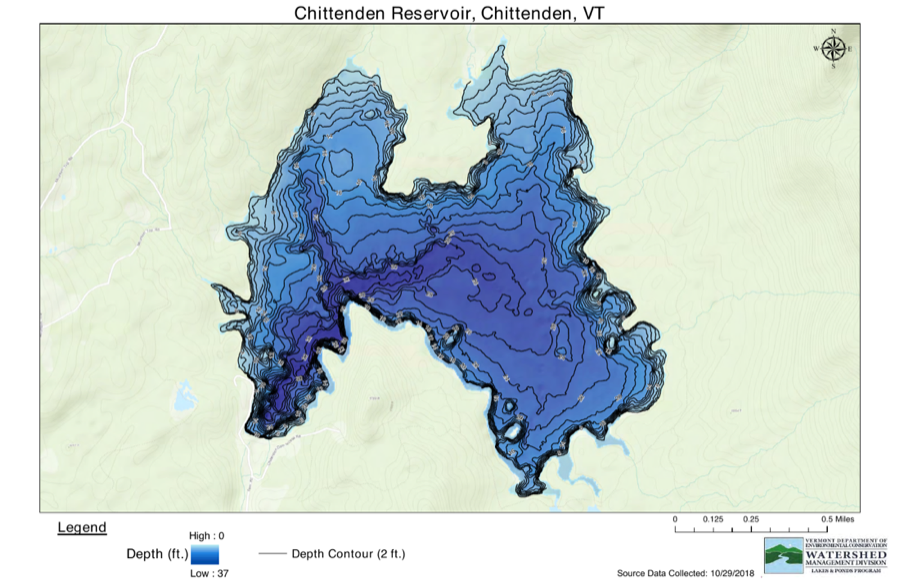
Bathymetric depth chart — click to open the full PDF. Source: Vermont DEC.
Source: Vermont DEC
Water Characteristics
Chittenden is a moderately deep mountain impoundment with a flooded-valley bottom of stumps, rock, and old channels, weedy coves at the northern and southeastern ends, and clear, cool water fed by Green Mountain brooks. The basin deepens toward the dam; most of the reservoir is under 30 feet.
Forage runs to yellow perch, shiners, and crayfish, with strong chironomid populations, June damselfly migrations, dragonflies over the weedbeds, and late-summer flying-ant falls. The elevation keeps water temperatures friendlier to trout than most central Vermont lakes, and the mountain walls moderate — but sometimes funnel — the wind.
Seasonal Fishing Guide
Spring
Ice-out into late May is trout time: cruise the shorelines and tributary mouths with buggers, leeches, and chironomid rigs. The water off Lefferts Pond's outlet and the eastern brook inlets fishes best. Fresh stocked fish concentrate near the launch; holdover browns patrol the drop-offs at first light.
Summer
Smallmouth on poppers and sliders at dawn and dusk along rocky shores and stumps; damselfly nymphs along the weedy northern coves in June and July. Trout retreat to the deepest basin and the spring inflows — get them at daybreak on full-sink lines or wait for fall. Evening rises to midges are dependable on calm nights.
Fall
September and October bring browns and brookies back along the banks, aggressive toward streamers ahead of the spawn. The foliage over the reservoir peaks early at this elevation — late September mornings are both the prettiest and the most productive of the year.
Winter
Ice fishing in season for perch and stocked trout, with early ice at this elevation. The access road is maintained but can be sporty after storms; carry chains and check conditions in Chittenden village.
Access & Boats
Public boat launch at the Chittenden Dam access off Chittenden Dam Road (parking, gravel ramp suited to small craft). Adjacent Lefferts Pond has carry-in paddle access. Shoreline fishing near the dam and along the access road; the eastern shore is national forest and reachable by boat or trail.
Motor Restrictions
Restrictive horsepower/no-wake rules keep the reservoir quiet water; Lefferts Pond, attached at the southeast corner, is paddle-craft only.
Ice Fishing
A steady local winter fishery for perch and stocked trout through the ice in season; the mountain elevation makes early, reliable ice most years. Snowmobile and ski traffic shares the plateau in winter — the reservoir stays pleasantly uncrowded.
Fishing Pressure & Local Tips
Light to moderate. A local following of bass and perch anglers uses the launch, and the Killington corridor brings some tourist traffic, but the quiet-water rules and modest size filter the crowds. Fly anglers are rare enough to draw questions at the ramp. Weekday mornings are essentially private.
Local Knowledge
Fish the stump fields. The flooded timber along the old channel edges holds smallmouth all season and browns in the shoulder months, and a bugger or Thin Mint crawled past the wood draws the best fish in the reservoir. Approach quietly — the water is clear and the fish get few casts to learn from.
Bring the canoe over to Lefferts Pond for the evening rise if the reservoir turns windy: it is sheltered, shallow, and often dimpled with rising fish when the main lake is whitecapped. In fall, work the eastern shore's brook mouths — the coldest water and the brightest brook trout are there.
Species Present
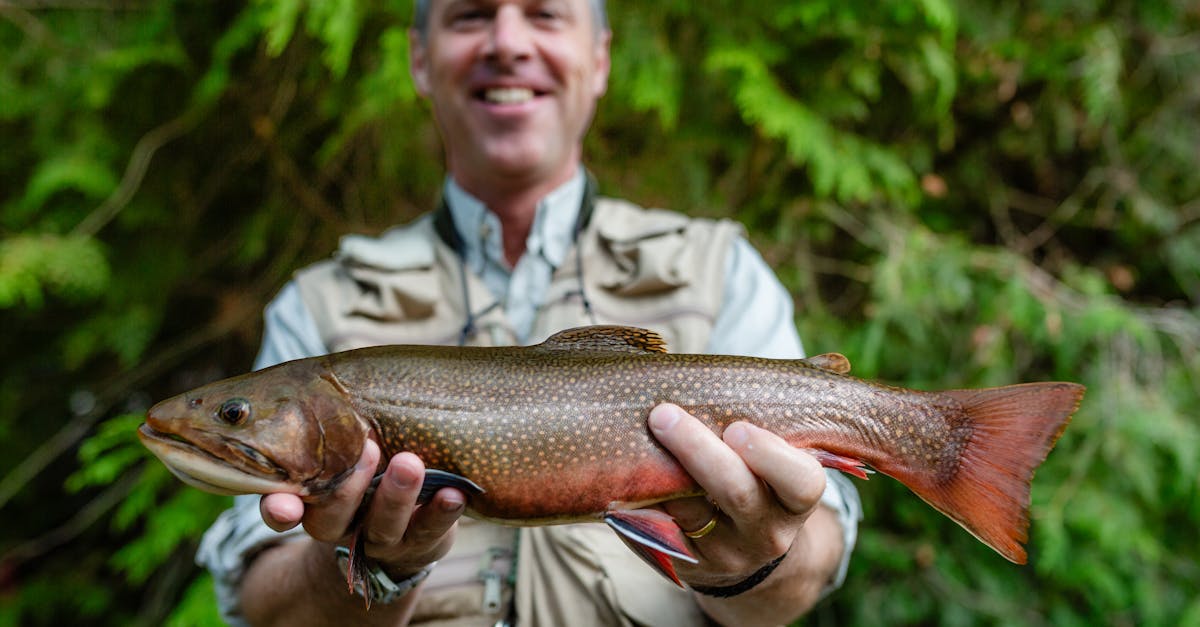
Brook Trout
The brook trout is widely considered the most beautiful freshwater fish in North America, and catching one in a pristine Montana mountain stream is an experience that captures the essence of backcountry fly fishing. Despite their common name, brook trout are not true trout at all; they are a species of char (genus Salvelinus), more closely related to lake trout and Arctic char than to rainbows or browns. Native to eastern North America from Georgia to Hudson Bay, brook trout were among the first salmonids introduced to Montana's waters in the late 1800s and have since established self-sustaining populations in cold, high-elevation streams and lakes throughout the state. In Montana, brook trout thrive best in small, cold headwater streams and high mountain lakes where competition from larger trout species is minimal. In these environments, they are often the dominant, or only, salmonid present. The trade-off is size: Montana stream-dwelling brook trout typically range from 6 to 10 inches, with fish over 12 inches considered noteworthy in most waters. What they lack in size, however, they more than make up for in beauty and willingness to eat a fly. Brookies are aggressive feeders that will strike attractor dry flies, nymphs, and small streamers with enthusiasm, making them an ideal species for beginning fly anglers and a delightful quarry for anyone who appreciates small-stream fishing. Brook trout do present a conservation paradox in Montana. While they are a beloved and beautiful gamefish, they are non-native and can negatively impact native species, particularly Yellowstone and westslope cutthroat trout. In headwater streams, brook trout often outcompete cutthroats for food and spawning habitat due to their higher reproductive rate and earlier maturation. As a result, Montana FWP has implemented brook trout removal projects on some streams to restore native cutthroat populations. In many waters, liberal harvest limits for brook trout are encouraged to reduce their numbers and benefit native fish. Anglers can enjoy excellent brook trout fishing while actively helping conservation by keeping a few for the pan.
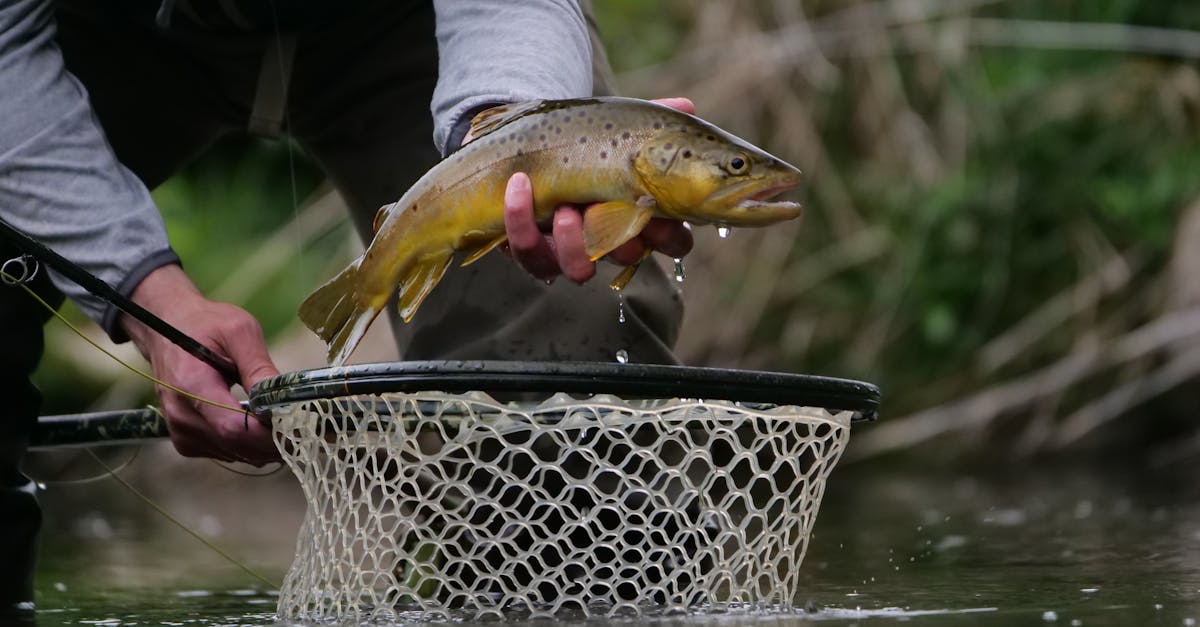
Brown Trout
The brown trout is the most cunning and elusive trout species swimming in Montana's rivers, and it rewards patient, skilled anglers with some of the state's most memorable catches. Originally native to Europe and western Asia, brown trout were first introduced to North American waters in 1883 and arrived in Montana shortly thereafter. They have since established robust, self-sustaining populations in virtually every major trout stream in the state, from the legendary spring creeks of the Paradise Valley to the sweeping runs of the lower Madison and the deep pools of the Bighorn. Brown trout grow larger than any other trout species in Montana, and fish exceeding 24 inches are caught with regularity on premium waters. The lower Madison River, the Missouri River below Holter Dam, and the Bighorn River are particularly renowned for producing trophy-class browns. Unlike rainbows, brown trout spawn in the fall (October through November), and their aggressive pre-spawn behavior creates an exciting window for streamer fishing as large males become territorial and attack anything that enters their domain. Browns are notably more nocturnal than other trout species, and many of the biggest fish are caught during low-light conditions. What sets brown trout apart from other species is their wariness and selectivity. Large browns are notoriously difficult to fool, often refusing flies that are even slightly off in size, color, or presentation. They tend to establish and defend prime feeding lies (undercut banks, logjams, deep pools, and boulder gardens), and an angler who learns to read water and identify these holding spots will consistently catch more and larger fish. This combination of difficulty, size potential, and intelligence makes the brown trout the most prized quarry for many serious Montana fly fishers.
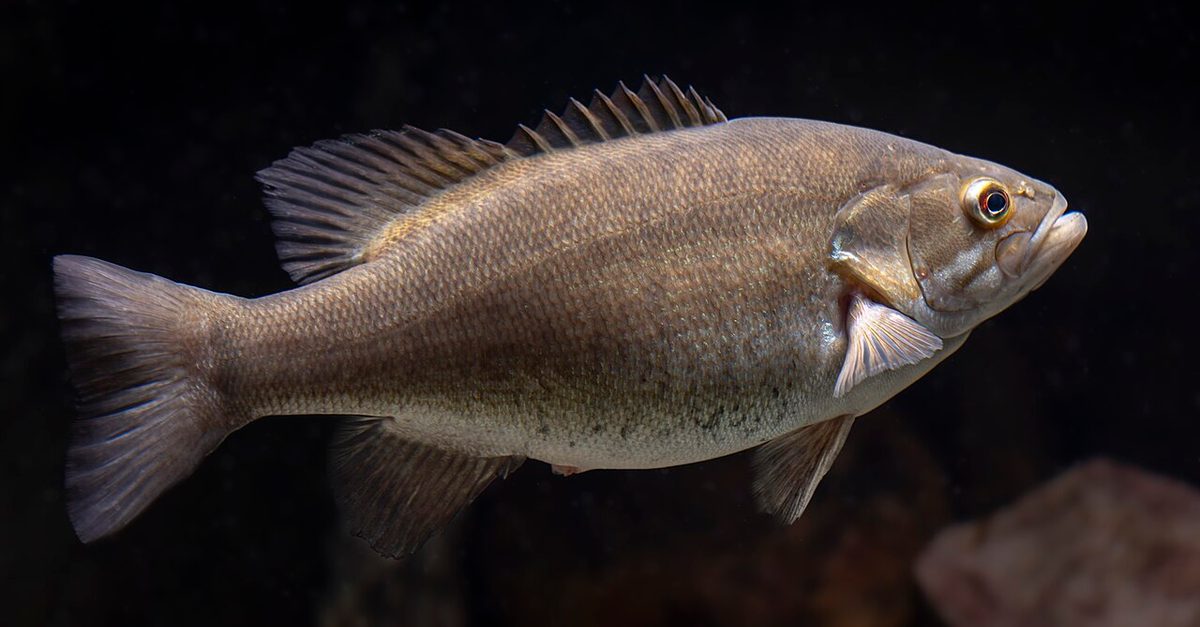
Smallmouth Bass
The smallmouth bass is one of the most popular and widely distributed gamefish in North America and one of the finest freshwater species available to fly anglers. Found in clear, cool rivers and lakes from the Great Lakes to the Southern Appalachians, smallmouth bass combine aggressive feeding behavior, remarkable fighting ability, and a preference for the kinds of rocky, current-rich habitats that are ideally suited to fly fishing. Pound for pound, the smallmouth bass is widely considered the hardest-fighting freshwater fish in North America, earning it the nickname 'the bronze bomber' for its explosive takes and powerful, acrobatic battles on the end of a line. While smallmouth bass are not a traditional trout-stream species, they have become increasingly important to fly anglers as warm-water fly fishing has grown in popularity. Rivers like the French Broad in North Carolina, the Susquehanna and Delaware in Pennsylvania, and the St. Lawrence in New York support world-class smallmouth fisheries that attract dedicated fly anglers. In many regions, smallmouth bass inhabit the lower reaches of the same river systems that hold trout in their upper reaches, providing fly anglers with a warm-water counterpart to their cold-water fishing. Smallmouth bass are particularly appealing to fly anglers because they readily take surface flies. On warm summer evenings, smallmouth will crush poppers, sliders, and large dry flies with explosive strikes that rival any trout rise. Their willingness to feed on the surface, combined with their strength and acrobatic leaping ability, makes smallmouth bass on a fly rod one of the most thrilling freshwater fly fishing experiences available.
Food Sources & Hatches
| Insect | Suggested Fly | Jan | Feb | Mar | Apr | May | Jun | Jul | Aug | Sep | Oct | Nov | Dec |
|---|---|---|---|---|---|---|---|---|---|---|---|---|---|
Chironomids (midges) morning | Chironomid (Bomber) | ||||||||||||
Damselflies morning | Damselfly Nymph | ||||||||||||
Crayfish all day | Muddler Minnow | ||||||||||||
Leeches all day | Thin Mint | ||||||||||||
Midge clusters (evening) evening | Griffith's Gnat |
Chironomids (midges): Reliable over the deeper dam-end basin; fish pupae 10-25 feet down.
Damselflies: Strong migrations along the weedy northern coves and Lefferts Pond edges.
Crayfish: Smallmouth food number one around the stump fields and rocky shores.
Leeches: Thin Mints crawled past drowned timber take browns and bass alike.
Midge clusters (evening): Dependable calm-evening rises, especially on sheltered Lefferts Pond.
Recommended Flies
Woolly Bugger
Top PickBuggers along shorelines and brook mouths for stocked and holdover trout at ice-out.
Best in spring
Muddler Minnow
Top PickMuddler around the stump fields — the top smallmouth producer.
Best in summer
Chironomid (Bomber)
Top PickChironomid Bomber over the dam-end basin at dawn. Size 14-16.
Best in summer
Also Effective
Access Points & Boat Launches
Chittenden Dam Boat Launch
Boat LaunchEasyGravel launch at the dam end off Chittenden Dam Road — the reservoir's main access. Suits canoes, kayaks, and small motorboats operating under the quiet-water rules. The dam-end basin is the deepest water and holds trout in the shoulder seasons; stump fields begin a short paddle north.
Lefferts Pond Carry-In Access
Wade AccessEasyCarry-in paddle access to Lefferts Pond, the shallow, motorless appendage at the reservoir's southeastern corner. A marshy, wild pocket favored for evening rises and wildlife; paddle through the connector to reach the main reservoir. Loon nesting area — respect posted closures in early summer.
Regulations
Regulations
Vermont general season applies: trout from the second Saturday in April through October 31; bass under statewide seasons and limits. Motor restrictions keep boat wakes minimal (low-horsepower/no-wake character); adjacent Lefferts Pond is paddle-only. Ice fishing permitted in season. Vermont fishing license required; check vtfishandwildlife.com for current rules.
Always verify current regulations with Vermont Fish & Wildlife Department before fishing.
Quick Facts
- Surface Area
- 750 acres
- Max Depth
- 50 ft
- Elevation
- 1,480 ft
- Lake Type
- Reservoir
- Region
- Central Vermont / Rutland County
- Best Seasons
- spring, summer, fall
- Species
- Brook Trout, Brown Trout, Smallmouth Bass
- Difficulty
- Beginner-Intermediate
- Record Fish
- Brown trout to 20 inches hold over in the cooler reaches; smallmouth in the 3-4 lb class are caught every summer.
- Depth Chart
- Download PDF
Nearby Lakes & Ponds
Lake Willoughby
Northeast Kingdom / Orleans County
Seymour Lake
Northeast Kingdom / Orleans County
Caspian Lake
Northeast Kingdom / Orleans County
Lake Memphremagog
Northeast Kingdom / Orleans County
Maidstone Lake
Northeast Kingdom / Essex County
Noyes Pond (Seyon Pond)
Central Vermont / Groton State Forest, Caledonia County