Crystal Lake
Crystal Lake at Barton lives up to its name: 763 acres of deep, transparent coldwater framed by granite ledges, holding wild lake trout, rainbows, and landlocked salmon. Crystal Lake State Park and easy village access make it the most approachable of the Kingdom's deep lakes.
Overview
Crystal Lake fills a steep-walled glacial trough on the edge of Barton village, three miles of water pinched between wooded ridges at the southern gateway to the Northeast Kingdom's lake country. The name is earned — clarity here rivals any lake in Vermont — and the setting is unusually convenient: Route 5 and the village touch the northwestern corner, where Crystal Lake State Park occupies a historic beach with granite bathhouses built by the CCC, while the remaining shoreline rises quickly into ledge and forest.
Under the surface, Crystal is a serious coldwater fishery. The lake drops to 100 feet, stays cold and oxygenated through summer, and supports a wild, self-sustaining lake trout population — one of Vermont's notable native lacustrine stocks — alongside rainbow trout (both wild and stocked) and landlocked Atlantic salmon. Rainbow smelt provide the forage. The mix means a fly angler can reasonably meet three salmonids in a morning during the shoulder seasons.
Ice-out, late April here, opens the lake's best window: lakers, salmon, and rainbows work the shoreline shelves and ledge drop-offs for spawning smelt, and streamer fishing from a small boat along the eastern ledges or off the beach flats produces the year's heaviest fish. The lake's narrow shape concentrates cruising fish along predictable contour lines, making it friendlier to reading than the broader Kingdom lakes.
Summer pushes the coldwater fish deep, and the fly game turns to dawn chironomid sessions over the 30-to-50-foot shelves, damsel and dragonfly nymphs along the limited weedbeds near the inlet, and evening midge rises in the coves. Rainbows stay most catchable, cruising the margins early. In fall the lake empties of tourists and refills with opportunity: October streamer fishing for staging lake trout and salmon along the gravel shoals is quietly excellent, and the wild lakers deserve careful release.
Crystal is an easy lake to fish well: a defined shape, honest structure, a state park access, and the village of Barton for coffee and bearings. As an introduction to Northeast Kingdom deepwater fly fishing — or a half-day stop between Willoughby and Seymour — it has no equal.
Depth & Character
- Surface Area
- 763acres
- Max Depth
- 100ft
- Mean Depth
- 50ft
- Elevation
- 968ft
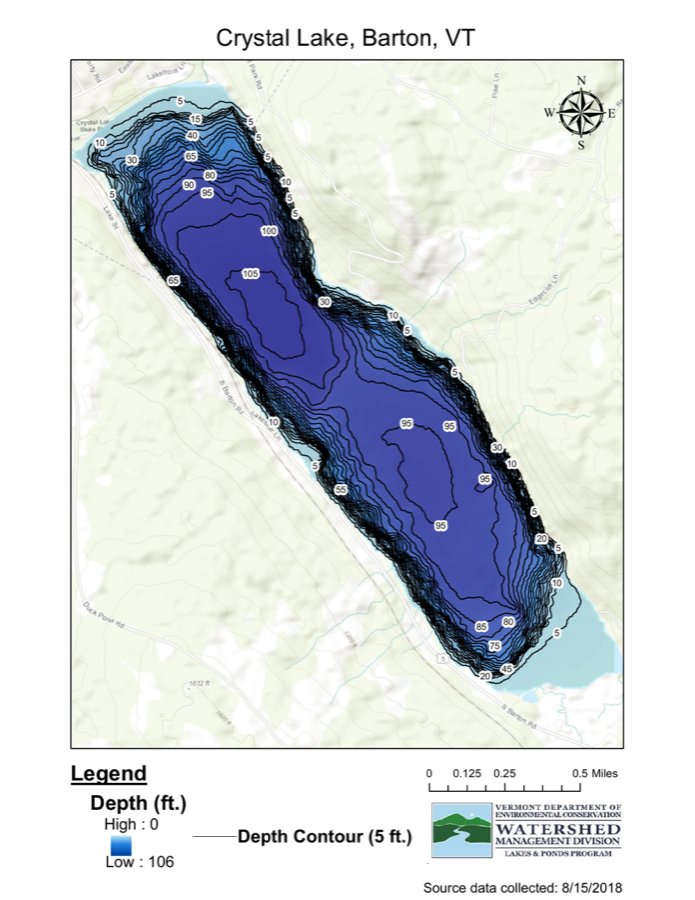
Bathymetric depth chart — click to open the full PDF. Source: Vermont DEC.
Source: Vermont DEC
Water Characteristics
Crystal is a narrow, deep, exceptionally clear glacial lake — a flooded trough with ledge and boulder shorelines dropping fast to a cold central basin. Shoal areas at the northwestern (beach) end and near the inlet provide the main shallow structure and what weed growth exists. Water quality is excellent, and the smelt-driven food web supports wild lake trout reproduction.
Chironomids dominate the insect biomass, with damselflies, dragonflies, and leeches in the shoal weeds and midge activity spring through fall. The clarity that names the lake also defines the fishing: long leaders, fine tippets by stillwater standards, and low-light windows are the difference between watching fish and catching them.
Stocking
| Species | Size | Number | Program |
|---|---|---|---|
| Rainbow Trout | Yearling | 1,400 | VT F&W annual stocking (2025 actual) |
Seasonal Fishing Guide
Spring
Ice-out through May: streamers along the eastern ledge drop-offs, the beach flats, and the inlet corner. Lakers, salmon, and rainbows all ride the top 15 feet chasing smelt. The narrow basin means fish travel the contours — anchor or drift along the 10-20 foot line and let them come to you.
Summer
Dawn chironomid fishing over the 30-50 foot shelves takes rainbows and the odd salmon; evening midge rises in the coves reward a Griffith's Gnat on a long leader. Lake trout are deep — respect the thermocline and plan around the shoulder seasons for them.
Fall
The sleeper season. From late September, wild lakers and salmon stage along gravel shoals and the fishing tightens to short, productive windows on overcast days. Swing and strip smelt patterns on sinking lines; handle October's spawning-ready wild lake trout gently and briefly.
Winter
Ice fishing in season over the deep basin for lakers, salmon, and rainbows. Jigged smelt imitations near bottom in 40-80 feet do the work. Check ice near the inlet and outlet, where current thins it.
Access & Boats
Crystal Lake State Park day-use beach at the northwestern corner (seasonal); state fishing access with boat launch on the western shore off Route 5. The narrow basin suits kayaks and small boats; shore casting is practical off the beach flats and the launch at ice-out.
Ice Fishing
A dependable Kingdom ice fishery for lake trout, salmon, and rainbows in season, with jigging over 40-80 feet the standard program. Village-adjacent access keeps winter logistics simple; the narrow basin generally makes good ice by mid-January.
Fishing Pressure & Local Tips
Light to moderate. The state park beach is busy on summer weekends and trollers work the basin in early season, but angling pressure overall is modest and fly pressure nearly nil. Ice season draws a steady local crowd. In May and October you will often have the ledges to yourself.
Local Knowledge
Use the clarity instead of fighting it: in spring and fall, spend time watching the 10-to-20-foot contour from a drifting boat with the sun behind you — cruising lakers and salmon show themselves, and a smelt pattern led well ahead of a moving fish is deadly. Blind casting is the fallback, not the plan.
The beach flats fish far better than their bathing-suit summer reputation suggests: at ice-out and after Labor Day, the shallow northwestern corner concentrates baitfish and everything that eats them, all within casting range of shore.
Species Present
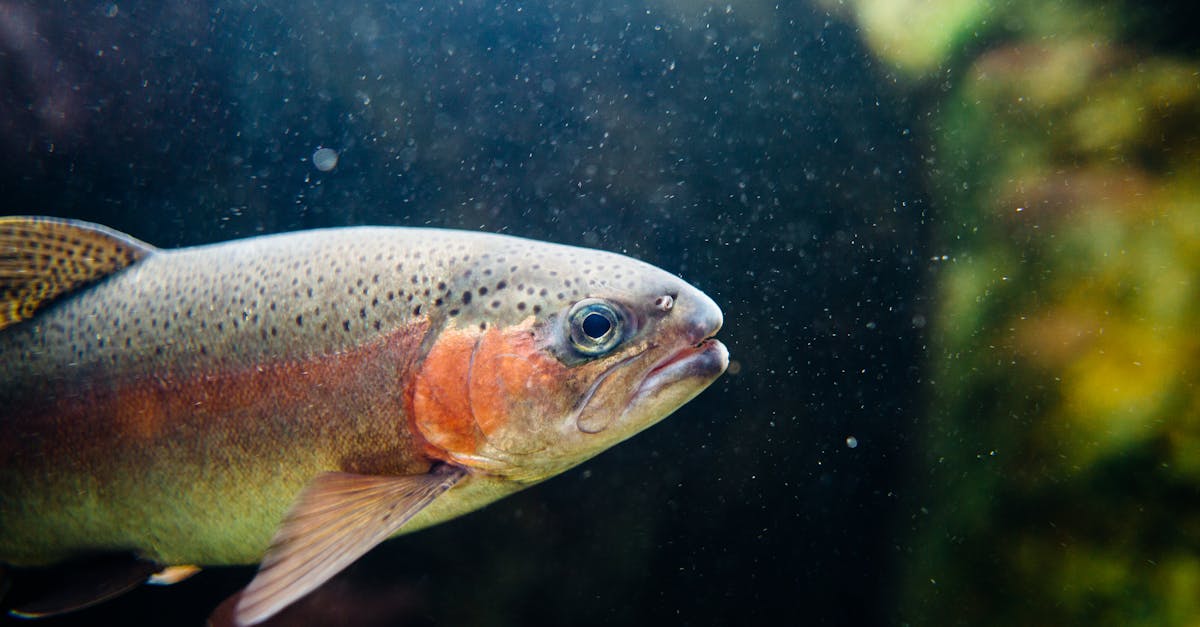
Rainbow Trout
The rainbow trout is Montana's most widespread and popular gamefish, celebrated for its explosive surface strikes, aerial acrobatics, and willingness to take a well-presented dry fly. Native to Pacific Coast drainages from Alaska to Mexico, rainbows were first introduced to Montana's waters in the late 1800s and have since established thriving populations in nearly every major river system in the state. On legendary waters like the Madison, Missouri, and Bighorn, wild rainbow trout grow fat on prolific insect hatches and provide some of the finest dry-fly fishing in North America. Rainbow trout in Montana display remarkable variation depending on their home water. Fish in nutrient-rich tailwaters like the Missouri River below Holter Dam can exceed 20 inches with regularity, their deep bodies and broad tails reflecting the abundant food supply. Freestone river rainbows, such as those in the upper Madison and Gallatin, tend to be leaner and more athletic, shaped by faster currents and colder water temperatures. In many Montana rivers, rainbows spawn in the spring from March through June, and anglers should be mindful of spawning redds during this period to protect future generations of fish. Rainbows are arguably the most versatile trout species for fly anglers. They respond well to dry flies during hatches, aggressively chase streamers, and feed heavily on nymphs subsurface throughout the year. Their fighting ability is legendary: a hooked rainbow will often launch itself completely out of the water multiple times during a battle. Montana's catch-and-release regulations on many blue-ribbon streams have produced exceptional rainbow trout fisheries with high densities of large, healthy fish that continue to draw anglers from around the world.

Lake Trout
The lake trout is the largest member of the char family and the signature deep-water gamefish of northern New England's coldest, cleanest glacial lakes. A native coldwater char of the northern tier of North America, the lake trout reaches the southern edge of its natural range in the deep, oligotrophic lakes carved by Pleistocene glaciers across northern New England, including Vermont's Lake Champlain and the remote glacial lakes of the Northeast Kingdom. Unlike the stream-dwelling brook trout to which it is related, the lake trout is a true creature of the depths, spending most of the year in the cold, dark, well-oxygenated water far below the surface. Lake trout are long-lived, slow-growing fish that can survive for decades in the frigid depths of their home lakes. Average fish run 18 to 24 inches, but trophy specimens exceeding 30 inches and 15 pounds are taken each season from the best Vermont waters, and the state record approaches 35 pounds. Their size and strength, combined with the challenge of reaching them in deep water, make lake trout a prized quarry for anglers willing to adapt their tactics to the fish's coldwater lifestyle. For fly anglers, the lake trout presents a unique seasonal opportunity. Through most of the year these fish hold too deep for practical fly fishing, but during the narrow windows of ice-out in spring and the fall turnover, lake trout move into the shallows to feed and spawn, bringing them within reach of a well-presented streamer. Casting large baitfish patterns near rocky shorelines and drop-offs during these periods can produce the fish of a lifetime, connecting the angler to the deep glacial history of Vermont's finest coldwater lakes.
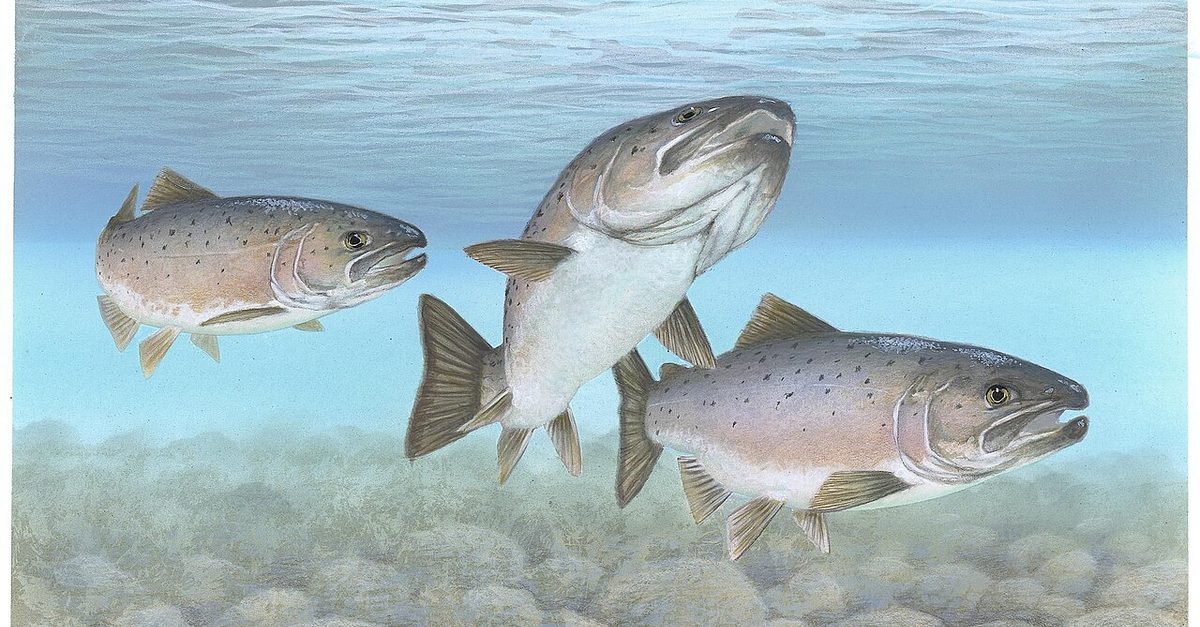
Landlocked Atlantic Salmon
The landlocked Atlantic salmon is one of New England's most prized gamefish, a freshwater-resident form of the Atlantic salmon that spends its entire life in lakes and rivers rather than migrating to the ocean. Found primarily in the lakes and rivers of Maine, New Hampshire, Vermont, and New York, landlocked salmon are genetically identical to their sea-run counterparts but have adapted to a completely freshwater life cycle, using large, cold lakes as their ocean substitute and tributary rivers as spawning habitat. Landlocked salmon are the signature gamefish of Maine's sporting camp tradition, where generations of anglers have gathered at remote wilderness lodges to fish for salmon in the Rangeley Lakes, Moosehead Lake, Sebago Lake, and the rivers that connect them. The fish combine the acrobatic fighting ability of their anadromous relatives with the accessibility of a freshwater species, leaping repeatedly when hooked and running with the kind of power and endurance that makes them one of the most exciting fish available on a fly rod in the northeastern United States. In rivers, landlocked salmon behave much like large resident trout, holding in classic lies and feeding on aquatic insects during hatches. They are particularly responsive to caddis and mayfly emergers, and the sight of a 3-pound landlocked salmon rising to a dry fly in a New England river is one of the defining experiences of northeastern fly fishing. In lakes, salmon are targeted with streamers that imitate smelt, their primary forage fish, trolled or cast from boats during the spring and fall when salmon cruise near the surface in cold-water conditions.
Food Sources & Hatches
| Insect | Suggested Fly | Jan | Feb | Mar | Apr | May | Jun | Jul | Aug | Sep | Oct | Nov | Dec |
|---|---|---|---|---|---|---|---|---|---|---|---|---|---|
Rainbow Smelt (post ice-out) morning | Grey Ghost | ||||||||||||
Chironomids (midges) morning | Chironomid (Bomber) | ||||||||||||
Midge clusters (evening) evening | Griffith's Gnat | ||||||||||||
Damselflies morning | Damselfly Nymph |
Rainbow Smelt (post ice-out): Wild lakers and salmon on the shelves and ledge drop-offs at ice-out. Smaller patterns for the clear water.
Chironomids (midges): Dawn sessions over the 30-50 foot shelves; the lake's most consistent summer game.
Midge clusters (evening): Cove rises on still evenings; 18-20 on long 5X leaders in this clarity.
Damselflies: Limited weedbeds near the inlet concentrate the damsel activity — and the fish.
Recommended Flies
Grey Ghost
Top PickSmaller Grey Ghosts (6-8) for the ledge drop-offs at ice-out; the clear water rewards restraint.
Best in spring
Chironomid (Bomber)
Top PickChironomid Bomber over the shelves at dawn — Crystal's most consistent summer producer.
Best in summer
Zebra Midge
Top PickZebra Midge on 5X as dropper or solo; educated clear-water fish eat the small fly.
Best in summer
Access Points & Boat Launches
Crystal Lake State Park Beach
Wade AccessEasyHistoric CCC-built day-use beach at the northwestern corner near Barton village. Outside swim season the beach flats are legitimate fly water — baitfish stack on the shallow corner at ice-out and after Labor Day, with rainbows and salmon within casting reach of the sand.
Crystal Lake State Fishing Access
Boat LaunchEasyState launch on the western shore off Route 5 south of Barton. Quick access to the ledge drop-offs on the eastern shore — the lake's prime streamer water — and to the deep central basin for chironomid mornings. Winter ice anglers stage here as well.
Regulations
Regulations
Vermont general season applies: trout and salmon open water fishing from the second Saturday in April through October 31, with statewide length and bag limits; wild lake trout warrant careful release. Ice fishing for trout and salmon permitted per state winter season dates. Vermont fishing license required; check vtfishandwildlife.com for current rules.
Always verify current regulations with Vermont Fish & Wildlife Department before fishing.
Quick Facts
- Surface Area
- 763 acres
- Max Depth
- 100 ft
- Elevation
- 968 ft
- Lake Type
- Natural Lake
- Region
- Northeast Kingdom / Orleans County
- Best Seasons
- spring, fall, winter
- Species
- Rainbow Trout, Lake Trout, Landlocked Atlantic Salmon
- Difficulty
- Intermediate
- Record Fish
- Wild lake trout to 10+ lbs are taken most years, with rainbows to 20 inches; the lake's clarity makes every large fish a sight-fishing memory.
- Depth Chart
- Download PDF
Nearby Lakes & Ponds
Lake Willoughby
Northeast Kingdom / Orleans County
Seymour Lake
Northeast Kingdom / Orleans County
Caspian Lake
Northeast Kingdom / Orleans County
Lake Memphremagog
Northeast Kingdom / Orleans County
Maidstone Lake
Northeast Kingdom / Essex County
Noyes Pond (Seyon Pond)
Central Vermont / Groton State Forest, Caledonia County