First Connecticut Lake
First Connecticut Lake is the largest of Pittsburg's Connecticut Lakes, 3,071 acres of deep, cold, oligotrophic water in New Hampshire's remote Great North Woods. Managed for landlocked salmon over a wild trophy lake trout population, it anchors the state's most famous coldwater fishing country.
Overview
First Connecticut Lake sprawls across 3,071 acres of Pittsburg, New Hampshire, the largest link in the chain of Connecticut Lakes that gives the state's northernmost town its identity. At 1,638 feet of elevation in the Great North Woods, hemmed by unbroken spruce-fir forest and moose country, it is about as far north as you can fish in New Hampshire without crossing into Quebec. The lake is deep — 163 feet at maximum, averaging 56 feet — and its oligotrophic water stays cold from ice-out to ice-in. This is a pure coldwater fishery: landlocked Atlantic salmon and lake trout, with burbot prowling the bottom, and essentially nothing warmwater to dilute the character.
New Hampshire Fish and Game manages First Connecticut as a stocked lake trout and salmon lake, part of the North Country salmon program. Salmon are stocked annually, while the lake trout population is largely wild and has earned the lake a reputation for trophy-class fish. The high elevation and cold climate mean everything runs late here — ice lingers into spring, and the coldwater season persists longer than anywhere else in the state.
For fly anglers, the marquee window opens at ice-out, typically in May. Salmon push shallow to chase baitfish, and casting or trolling smelt-pattern streamers near the inlets and around the dam outflow is the classic play. A Grey Ghost stripped along a drop-off in forty-five-degree water is North Country tradition, and for a few weeks the lake's best fish are within reach of a sinking line. As summer sets in, salmon and lakers slide down the water column, and the fly game shifts to early mornings, chironomid work, and deep-line streamer tactics before fall cooling brings fish back toward the surface.
It is worth being honest about the geography of the fishing here: the Connecticut River sections that connect the lakes — including famous fly-fishing-only water — are the region's biggest fly-rod draw, and many anglers treat First Connecticut Lake as the deep, mysterious neighbor of the river they came to fish. That is a mistake worth correcting. The lake offers big-fish potential in genuinely wild surroundings, and the angler who brings a boat and a box of streamers in May or October can have a trophy fishery nearly to themselves.
First Connecticut is big, remote water. Services are limited to the Pittsburg camps and lodges strung along Route 3, cell coverage is spotty, and the weather comes down from Canada with little warning. Plan accordingly, and the reward is fishing that feels a century removed from the rest of New England.
Depth & Character
- Surface Area
- 3,071acres
- Max Depth
- 163ft
- Mean Depth
- 56ft
- Elevation
- 1,638ft
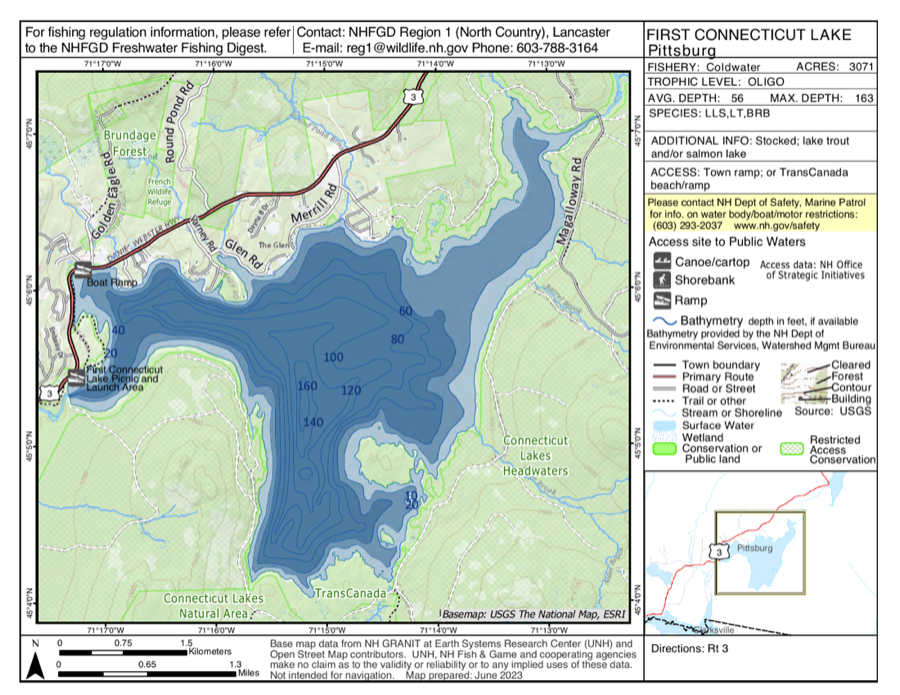
Bathymetric depth chart — click to open the full PDF. Source: Vermont DEC.
Source: Vermont DEC
Water Characteristics
First Connecticut is a deep, cold, oligotrophic lake. The NHFG depth chart shows a basin that falls away to 163 feet, with an average depth of 56 feet — the kind of profile that keeps water cold and well-oxygenated at depth all season and supports lake trout year-round. Shoreline structure drops into deep water quickly across much of the lake, and the productive fly water concentrates where inlets, points, and the dam outflow interrupt the drop-offs.
As a nutrient-poor northern lake, First Connecticut does not fish like a weedy trout pond. Insect biomass is modest, and the food chain runs through baitfish: salmon and lake trout feed heavily on forage fish, which is why smelt-imitating streamers dominate the fly fishing here. Chironomids are the most dependable insect, with midge activity in the coves and over moderate depths from late spring onward, and leeches and dragonfly nymphs working the limited shallow margins.
At 1,638 feet in New Hampshire's coldest corner, the lake's thermal calendar lags the rest of the state by weeks. Ice-out comes late, surface temperatures climb slowly, and stratification arrives later and breaks up earlier than on lakes to the south — which stretches the shallow-water windows at both ends of the season.
Stocking
| Species | Size | Number | Program |
|---|---|---|---|
| Landlocked Atlantic Salmon | See NHFG stocking report | Stocked annually (counts in NHFG weekly stocking report) | NHFG North Country salmon program; lake trout largely wild |
Seasonal Fishing Guide
Spring
Ice-out arrives late — typically May at this elevation — and opens the best fly window of the year. Salmon move shallow to chase baitfish; cast or troll smelt streamers like the Grey Ghost on sinking and sink-tip lines near the inlets, along shoreline drop-offs, and around the dam outflow. Cold, gray, choppy days are prime, and the shallow-water window stretches later here than on lakes to the south.
Summer
Salmon and lake trout drop deeper as the lake stratifies, though the cold high-elevation water keeps them reachable longer than in southern New Hampshire. Fish first light with streamers on full-sinking lines along the drop-offs, and try chironomid pupae under an indicator over the coves. Many anglers shift to the fly-only river sections midday and save the lake for dawn.
Fall
September cooling pulls salmon back up in the water column and toward the moving water at the inlets and dam as fish stage ahead of spawning. Streamer fishing improves steadily through the fall — smelt patterns and Egg-Sucking Leeches stripped off points and river mouths. Expect raw North Country weather and dress for it; the fishing is best when conditions are worst.
Winter
The lake ices reliably in New Hampshire's coldest region, and jigging deep structure for lake trout is the winter game. Check current ice-fishing season dates and rules for lake trout and salmon lakes in the NH Freshwater Fishing Digest, and verify safe ice locally — this is big, deep, remote water.
Access & Boats
Access is by boat for all practical purposes. A town ramp and a hydro-utility (TransCanada) beach and ramp serve the lake off Route 3 in Pittsburg. This is big, open, remote water where trolling and boat fishing dominate; shore casting is realistic mainly near the ramps, inlet mouths, and dam area at ice-out, and a float tube is only sensible close to a launch on a calm day. The Connecticut River sections below the dam offer the walk-and-wade alternative.
Ice Fishing
Pittsburg's lakes freeze hard and stay frozen in New Hampshire's coldest region, and First Connecticut's lake trout are a winter target for anglers jigging deep structure. Verify current ice-season dates and species rules for lake trout and salmon lakes in the NH Freshwater Fishing Digest before heading up, and treat ice thickness with the caution this big, deep lake demands.
Fishing Pressure & Local Tips
Light to moderate. Pittsburg draws serious angling traffic, but the bulk of it concentrates on the fly-fishing-only river sections between the lakes; the lake itself sees mostly a trolling crowd at ice-out and scattered effort thereafter. Fly-specific pressure on the lake is minimal. Midweek in May or October, an angler working streamers from a small boat will rarely have company.
Local Knowledge
Fish the moving-water connections. Salmon in a lake like this orient to current — the inlets at the upper end and the dam outflow area are the highest-percentage water at ice-out and again in fall. Work smelt streamers on sinking or sink-tip lines along the adjacent drop-offs, and keep the retrieve fast; a fleeing baitfish, not a drifting one, is what triggers landlocked salmon.
Respect the calendar shift. Everything in Pittsburg runs two to three weeks behind southern New Hampshire — if ice-out fishing is done down south, it may just be starting here. Watch North Country ice-out reports rather than the calendar, and do not write off June, when the lake is often still fishing like spring.
Make the lake part of a river trip. The Connecticut River between the lakes is the region's headline fly water, and the smart Pittsburg itinerary pairs river mornings and evenings with midday sessions on the lake, or flips to the lake entirely when the river is crowded. The lake is where the biggest fish in the neighborhood live.
Species Present
Landlocked Atlantic Salmon
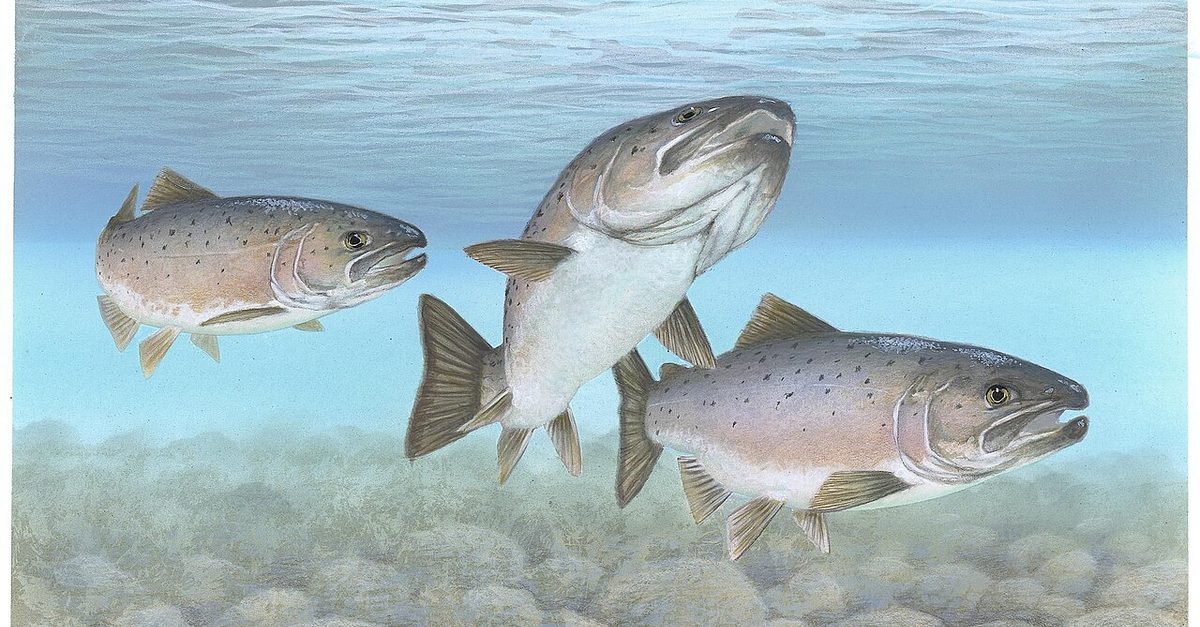
The landlocked Atlantic salmon is one of New England's most prized gamefish, a freshwater-resident form of the Atlantic salmon that spends its entire life in lakes and rivers rather than migrating to the ocean. Found primarily in the lakes and rivers of Maine, New Hampshire, Vermont, and New York, landlocked salmon are genetically identical to their sea-run counterparts but have adapted to a completely freshwater life cycle, using large, cold lakes as their ocean substitute and tributary rivers as spawning habitat. Landlocked salmon are the signature gamefish of Maine's sporting camp tradition, where generations of anglers have gathered at remote wilderness lodges to fish for salmon in the Rangeley Lakes, Moosehead Lake, Sebago Lake, and the rivers that connect them. The fish combine the acrobatic fighting ability of their anadromous relatives with the accessibility of a freshwater species, leaping repeatedly when hooked and running with the kind of power and endurance that makes them one of the most exciting fish available on a fly rod in the northeastern United States. In rivers, landlocked salmon behave much like large resident trout, holding in classic lies and feeding on aquatic insects during hatches. They are particularly responsive to caddis and mayfly emergers, and the sight of a 3-pound landlocked salmon rising to a dry fly in a New England river is one of the defining experiences of northeastern fly fishing. In lakes, salmon are targeted with streamers that imitate smelt, their primary forage fish, trolled or cast from boats during the spring and fall when salmon cruise near the surface in cold-water conditions.

Lake Trout
The lake trout is the largest member of the char family and the signature deep-water gamefish of northern New England's coldest, cleanest glacial lakes. A native coldwater char of the northern tier of North America, the lake trout reaches the southern edge of its natural range in the deep, oligotrophic lakes carved by Pleistocene glaciers across northern New England, including Vermont's Lake Champlain and the remote glacial lakes of the Northeast Kingdom. Unlike the stream-dwelling brook trout to which it is related, the lake trout is a true creature of the depths, spending most of the year in the cold, dark, well-oxygenated water far below the surface. Lake trout are long-lived, slow-growing fish that can survive for decades in the frigid depths of their home lakes. Average fish run 18 to 24 inches, but trophy specimens exceeding 30 inches and 15 pounds are taken each season from the best Vermont waters, and the state record approaches 35 pounds. Their size and strength, combined with the challenge of reaching them in deep water, make lake trout a prized quarry for anglers willing to adapt their tactics to the fish's coldwater lifestyle. For fly anglers, the lake trout presents a unique seasonal opportunity. Through most of the year these fish hold too deep for practical fly fishing, but during the narrow windows of ice-out in spring and the fall turnover, lake trout move into the shallows to feed and spawn, bringing them within reach of a well-presented streamer. Casting large baitfish patterns near rocky shorelines and drop-offs during these periods can produce the fish of a lifetime, connecting the angler to the deep glacial history of Vermont's finest coldwater lakes.
Food Sources & Hatches
| Insect | Suggested Fly | Jan | Feb | Mar | Apr | May | Jun | Jul | Aug | Sep | Oct | Nov | Dec |
|---|---|---|---|---|---|---|---|---|---|---|---|---|---|
Baitfish / Smelt Patterns Early morning and overcast days | Grey Ghost | ||||||||||||
Chironomids (Midges, large) Morning | Chironomid (Bomber) | ||||||||||||
Midges (small) Morning and evening | Zebra Midge | ||||||||||||
Leeches All day; best in low light | Woolly Bugger | ||||||||||||
Dragonflies & Damselflies Midday | Dragonfly Nymph |
Baitfish / Smelt Patterns: Baitfish are the engine of this nutrient-poor coldwater lake. Salmon and lake trout key on forage fish at ice-out (May at this elevation) and again in fall; 3-5 inch smelt streamers like the Grey Ghost fished near inlets, the dam outflow, and drop-offs are the core technique.
Chironomids (Midges, large): The most dependable insect on this oligotrophic lake. Fish pupa patterns under an indicator over 10-25 feet in the coves, hung near bottom, especially at first light through early summer.
Midges (small): Small midges emerge spring through fall; a Zebra Midge below a chironomid or a Griffith's Gnat on flat calm evenings covers the sparse surface activity.
Leeches: Leeches work the limited shallow margins and drop-offs. Woolly Buggers and Egg-Sucking Leeches stripped slow on sinking lines are a reliable searching option whenever streamer fish are not committing to smelt patterns.
Dragonflies & Damselflies: A secondary food source along the shallow, structured margins in midsummer. A dragonfly nymph crawled along bottom near weed and wood picks up cruising fish when the coldwater species are off the baitfish.
Recommended Flies
Grey Ghost
Top PickThe classic North Country smelt streamer. Cast or troll on sinking lines near the inlets and dam outflow at ice-out in May and again as salmon stage in fall — the signature fly for this lake.
Best in Spring, Fall
Woolly Bugger
Top PickThe universal stillwater searcher. Olive and black buggers stripped along drop-offs take salmon and the occasional shallow lake trout from ice-out until ice-in.
Best in Spring through Fall
Chironomid (Bomber)
Top PickThe top insect pattern on this baitfish-driven lake. Hang it under an indicator over 10-25 feet in the coves at first light once the water opens.
Best in Late Spring, Summer
Access Points & Boat Launches
First Connecticut Lake Town Ramp
Boat LaunchEasyPublic town boat ramp serving the lake off Route 3 in Pittsburg. The primary put-in for trolling and fly-fishing boats; shore casting is possible near the ramp at ice-out.
Hydro Company Beach & Ramp (Dam Area)
Boat LaunchEasyBeach and launch area maintained by the hydro utility (TransCanada) near the dam at the lake's outlet. Puts boats close to the dam-outflow water that concentrates salmon at ice-out and in fall; the fly-fishing-only Connecticut River section begins below the dam.
Connecticut River Inlet (Upper End)
Wade AccessModerateThe upper end of the lake where the Connecticut River enters from Second Connecticut Lake. Inlet current draws salmon at ice-out and in fall; approached by boat or from Route 3-side pulloffs. Know the fly-fishing-only boundaries on the connecting river before fishing the moving water.
Regulations
Regulations
First Connecticut Lake is managed under New Hampshire's coldwater regulations, with specific length and bag limits for landlocked salmon and lake trout set out in the NH Freshwater Fishing Digest. Note that sections of the Connecticut River connecting the lakes are designated fly-fishing-only — know where the special-regulation river water begins before fishing near the inlet and outlet. A New Hampshire fishing license is required. Always verify current seasons, limits, and special rules at wildlife.nh.gov before fishing.
Always verify current regulations with Montana Fish, Wildlife & Parks before fishing.
Quick Facts
- Surface Area
- 3,071 acres
- Max Depth
- 163 ft
- Elevation
- 1,638 ft
- Lake Type
- Natural Lake
- Region
- Great North Woods / Coos County
- Best Seasons
- spring, fall, winter
- Species
- Landlocked Atlantic Salmon, Lake Trout
- Difficulty
- Intermediate-Advanced
- Record Fish
- First Connecticut is known as trophy lake trout water — its largely wild laker population, deep cold habitat, and light pressure make it one of the North Country's best chances at an outsized fish.
- Depth Chart
- Download PDF
Nearby Lakes & Ponds
Newfound Lake
Lakes Region / Grafton County
Lake Winnipesaukee
Lakes Region / Belknap & Carroll Counties
Squam Lake
Lakes Region / Grafton, Carroll & Belknap Counties
Lake Sunapee
Dartmouth-Lake Sunapee / Sullivan & Merrimack Counties
Second Connecticut Lake
Great North Woods / Coos County
Lake Francis
Great North Woods / Coos County (Pittsburg)