Moosehead Lake
Moosehead Lake is Maine's largest lake, a 74,890-acre inland sea at Greenville that has anchored the state's landlocked salmon, togue, and wild brook trout fishing for a century and a half. Its smelt-driven ice-out streamer fishery at the great river mouths remains the flagship coldwater stillwater experience in Maine.
Overview
Moosehead Lake sprawls across 74,890 acres of the Piscataquis County highlands, a forty-mile inland sea studded with islands and framed by the cliff face of Mount Kineo rising straight out of the water. It is Maine's largest lake and, for a hundred and fifty years, its flagship coldwater fishery: sports have been riding trains and floatplanes to Greenville to chase landlocked salmon, togue, and brook trout since the heyday of the great sporting camps. That heritage is not a museum piece. The lake still fishes, and it still fishes best with a fly rod at the times and places it always has.
The engine of the fishery is rainbow smelt. Landlocked salmon, supported by annual stocking that augments a wild population, hunt smelt along shorelines and off tributary mouths from ice-out into June. Lake trout — togue, in the local vocabulary — are entirely wild here, self-sustaining since stocking ended in 1975, and grow fat in the cold water over the lake's 246-foot depths. The brook trout fishery is wild as well; hatchery brookie stocking was discontinued, and the squaretails an angler finds gulping mayflies over a midsummer shoal were all born in the watershed.
For fly anglers, Moosehead is really a collection of famous small places attached to an enormous lake. The Roach River delta at Kokadjo-side Spencer Bay, the Moose River mouth at Rockwood under Kineo, and the dam pool where the East Outlet of the Kennebec leaves the lake are classic smelt-streamer stations at ice-out and again in September, when salmon and brook trout stage before running the rivers. This is the fishery the Grey Ghost and its fellow Maine smelt patterns were built to imitate, and a stripped tandem streamer along a drop-off in early May is still the most reliable way to touch a Moosehead salmon.
Summer shifts the game toward the brook trout. Moosehead's shoals and coves produce genuine stillwater dry-fly fishing, with brookies cruising and gulping over rocky shallows on summer evenings, and a Hexagenia hatch that brings big fish to silty coves in late June and July. It is unusual, gulper-style fishing on a lake this size, and it rewards anglers willing to hunt calm water at dusk.
Moosehead demands respect. Forty miles of open water can build dangerous seas in wind, distances are long, and the best water is spread out. But the practical fly fishing concentrates at readable spots — river mouths, shoals, coves — served by good public launches at Greenville, Rockwood, Lily Bay State Park, and Seboomook. Pair it with the East Outlet of the Kennebec and the Roach River and you have the finest salmon-and-brookie circuit in the state.
Depth & Character
- Surface Area
- 74,890acres
- Max Depth
- 246ft
- Elevation
- 1,029ft
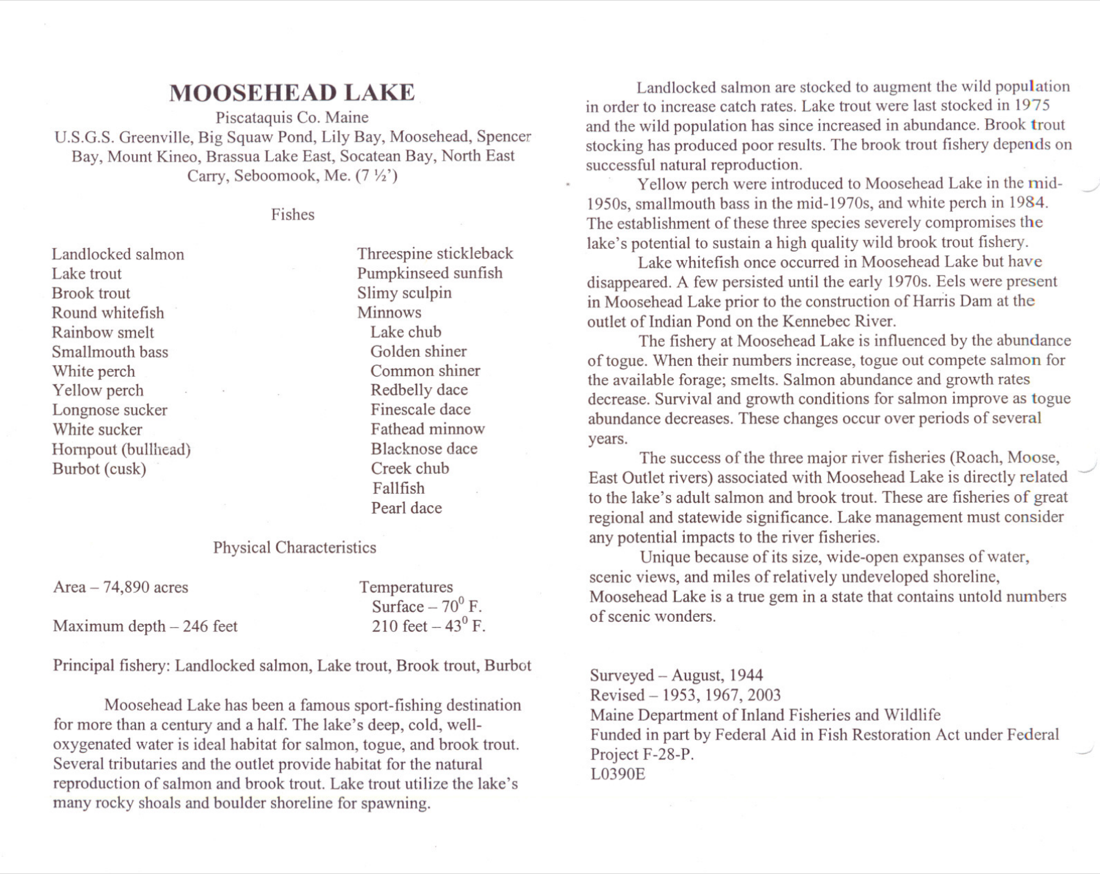
Bathymetric depth chart — click to open the full PDF. Source: Vermont DEC.
Source: Vermont DEC
Water Characteristics
Moosehead is a huge, cold, island-studded natural lake reaching 246 feet at its deepest, with an irregular shoreline of bays, narrows, and rocky points stretching some forty miles from Greenville to the Seboomook region at the north end. A summer thermocline sets up over the deep basins, sending togue and most salmon down out of practical fly range by July, while the extensive shoals, reefs, and cove shallows stay biologically busy all season and hold the wild brook trout that make Moosehead's summer surface fishing possible.
Rainbow smelt dominate the forage base and dictate the movements of salmon and lake trout: shallow and shoreline-oriented around the spring spawning runs into the tributaries, deep and scattered through midsummer, and back toward river mouths in fall. Insect life includes strong chironomid populations, caddis over the rocky shoals, and a notable Hexagenia hatch in the softer-bottomed coves in late June and July. The state's legacy survey map — a genuine fishery report with contours and management history — repays study for locating the shoals and drop-offs that concentrate fish on such a large lake.
Stocking
| Species | Size | Number | Program |
|---|---|---|---|
| Landlocked Atlantic Salmon | 6 in | 2,000 | MDIFW spring stocking at Greenville, 5/20/2026 (augments wild population) |
| Landlocked Atlantic Salmon | 6 in | 1,500 | MDIFW spring stocking at Lily Bay Twp, 5/20/2026 |
Seasonal Fishing Guide
Spring
Ice-out through early June is prime time. Smelt run the tributaries, and salmon and brook trout crowd the river mouths to meet them. Cast or troll Grey Ghosts and tandem smelt streamers on sinking lines off the Roach River delta, the Moose River mouth at Rockwood, and the East Outlet. Cold, gray, choppy days outfish bright ones; keep the fly moving fast in the top ten feet.
Summer
The thermocline pushes togue and most salmon deep by July, so turn to the wild brook trout. Fish gulper-style dries and emergers over rocky shoals on calm evenings, and hit the silty coves at dusk in late June and July for the Hexagenia hatch — hex nymphs before the spinner action, big yellow dries after. Early mornings with a bugger along drop-offs still find the odd salmon.
Fall
September brings salmon and brook trout back to the river mouths as they stage to run the Roach, the Moose, and the outlet rivers to spawn. Streamer fishing off the deltas rivals ice-out, with aggressive pre-spawn fish taking smelt patterns and buggers stripped on sink-tips. Special tributary-mouth regulations tighten in fall — read the lawbook before you fish.
Winter
Once safe ice forms, Moosehead hosts a substantial hardwater fishery for togue, salmon, and cusk, mostly by jigging smelt imitations over deep basins. Ice quality varies enormously across a lake this size; get current local ice reports in Greenville and verify winter season rules in the current lawbook.
Access & Boats
Public boat launches serve every quarter of the lake: Greenville at the south end, Rockwood at the Moose River mouth mid-lake, Lily Bay State Park on the east shore, and Seboomook at the remote north end. The classic fly water concentrates where moving water meets the lake — the Roach River delta, the Moose River mouth, and the East and West Outlets of the Kennebec — and several of these spots fish well from shore or by wading the delta bars. A boat is essential for covering shoals and coves, but distances are serious; small craft should plan around the wind rather than through it. Float tubes and canoes are practical inside sheltered coves and off the river mouths, not on open crossings.
Ice Fishing
Moosehead supports a long-running winter fishery, with anglers jigging and setting traps for togue, salmon, and cusk over the lake's deep basins once safe ice forms. The lake's size means ice conditions vary widely between bays and open reaches; check locally in Greenville or Rockwood for current ice and consult the Maine lawbook for the winter season dates and limits that apply.
Fishing Pressure & Local Tips
Moderate in aggregate, and famously diluted by sheer size. Greenville is a destination town and the marquee spots — the East Outlet, the Roach mouth, Rockwood — see steady traffic at ice-out and in September, but 74,890 acres absorb effort like few waters in the East. Away from the named river mouths, an angler working a shoal or cove at dawn will usually have it alone. Winter brings a substantial ice-fishing crowd to the accessible bays.
Local Knowledge
Fish the mouths, not the middle. Nearly all of Moosehead's fly-rod salmon are caught within casting distance of moving water: the Roach River delta, the Moose River at Rockwood, and the East Outlet dam pool. At ice-out in early May, strip smelt streamers — Grey Ghosts, tandem bucktails — on sinking or sink-tip lines along the drop-offs off these mouths, and fish them fast. September repeats the show as salmon and brook trout stage for their spawning runs.
In summer, think like a pond angler on a big lake. Find rocky shoals in six to fifteen feet of water and fish dries and emergers on calm evenings for cruising wild brookies; work the silty coves at dusk during the late June and July hex emergence with nymphs before dark and big dries after. The middle of a bright afternoon belongs to the swimmers and the trollers, not the fly rod.
Respect the wind above all else. Moosehead builds real waves with forty miles of fetch, and afternoon southwesterlies can strand a small boat far from the launch. Structure days to fish early, move at midday, and be positioned in a lee cove by evening.
Species Present
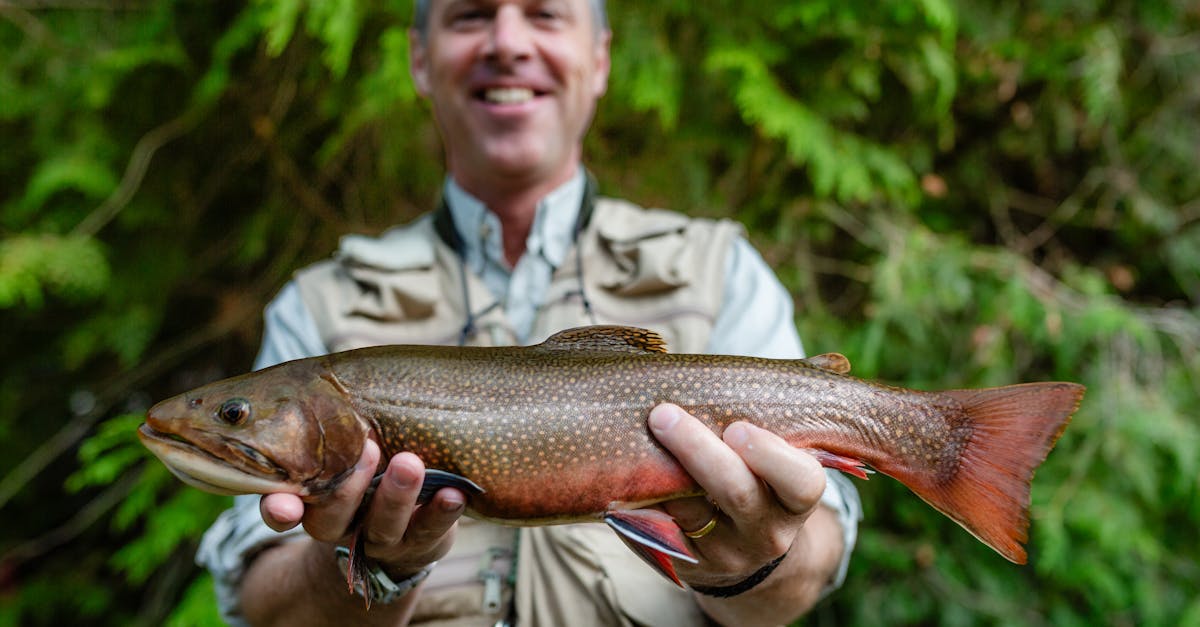
Brook Trout
The brook trout is widely considered the most beautiful freshwater fish in North America, and catching one in a pristine Montana mountain stream is an experience that captures the essence of backcountry fly fishing. Despite their common name, brook trout are not true trout at all; they are a species of char (genus Salvelinus), more closely related to lake trout and Arctic char than to rainbows or browns. Native to eastern North America from Georgia to Hudson Bay, brook trout were among the first salmonids introduced to Montana's waters in the late 1800s and have since established self-sustaining populations in cold, high-elevation streams and lakes throughout the state. In Montana, brook trout thrive best in small, cold headwater streams and high mountain lakes where competition from larger trout species is minimal. In these environments, they are often the dominant, or only, salmonid present. The trade-off is size: Montana stream-dwelling brook trout typically range from 6 to 10 inches, with fish over 12 inches considered noteworthy in most waters. What they lack in size, however, they more than make up for in beauty and willingness to eat a fly. Brookies are aggressive feeders that will strike attractor dry flies, nymphs, and small streamers with enthusiasm, making them an ideal species for beginning fly anglers and a delightful quarry for anyone who appreciates small-stream fishing. Brook trout do present a conservation paradox in Montana. While they are a beloved and beautiful gamefish, they are non-native and can negatively impact native species, particularly Yellowstone and westslope cutthroat trout. In headwater streams, brook trout often outcompete cutthroats for food and spawning habitat due to their higher reproductive rate and earlier maturation. As a result, Montana FWP has implemented brook trout removal projects on some streams to restore native cutthroat populations. In many waters, liberal harvest limits for brook trout are encouraged to reduce their numbers and benefit native fish. Anglers can enjoy excellent brook trout fishing while actively helping conservation by keeping a few for the pan.
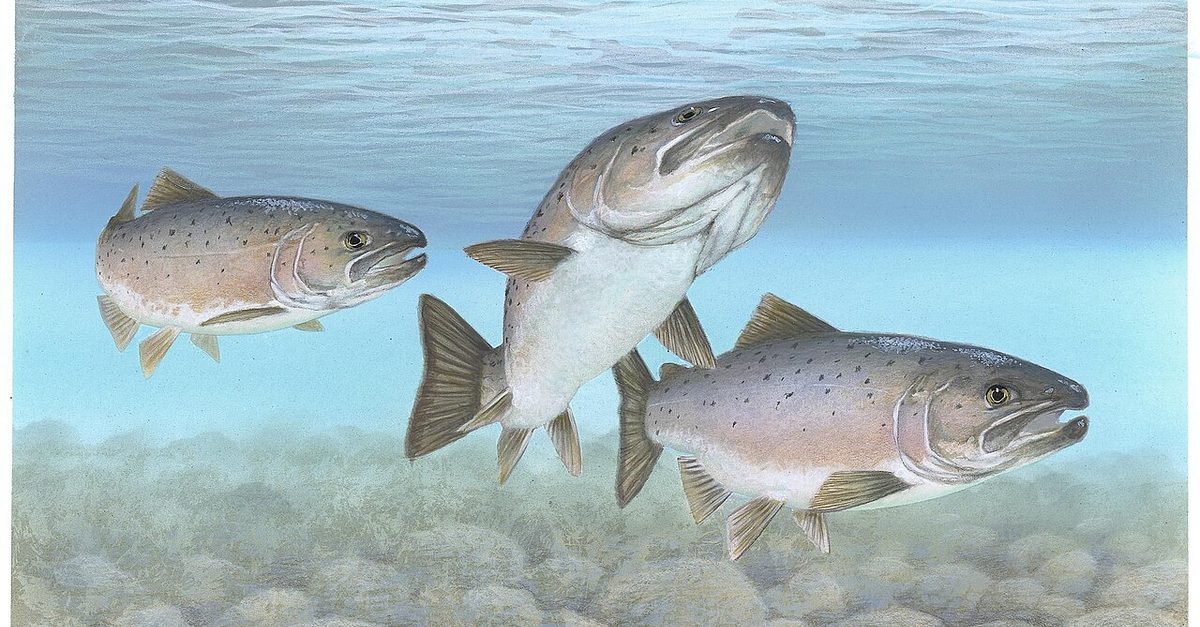
Landlocked Atlantic Salmon
The landlocked Atlantic salmon is one of New England's most prized gamefish, a freshwater-resident form of the Atlantic salmon that spends its entire life in lakes and rivers rather than migrating to the ocean. Found primarily in the lakes and rivers of Maine, New Hampshire, Vermont, and New York, landlocked salmon are genetically identical to their sea-run counterparts but have adapted to a completely freshwater life cycle, using large, cold lakes as their ocean substitute and tributary rivers as spawning habitat. Landlocked salmon are the signature gamefish of Maine's sporting camp tradition, where generations of anglers have gathered at remote wilderness lodges to fish for salmon in the Rangeley Lakes, Moosehead Lake, Sebago Lake, and the rivers that connect them. The fish combine the acrobatic fighting ability of their anadromous relatives with the accessibility of a freshwater species, leaping repeatedly when hooked and running with the kind of power and endurance that makes them one of the most exciting fish available on a fly rod in the northeastern United States. In rivers, landlocked salmon behave much like large resident trout, holding in classic lies and feeding on aquatic insects during hatches. They are particularly responsive to caddis and mayfly emergers, and the sight of a 3-pound landlocked salmon rising to a dry fly in a New England river is one of the defining experiences of northeastern fly fishing. In lakes, salmon are targeted with streamers that imitate smelt, their primary forage fish, trolled or cast from boats during the spring and fall when salmon cruise near the surface in cold-water conditions.
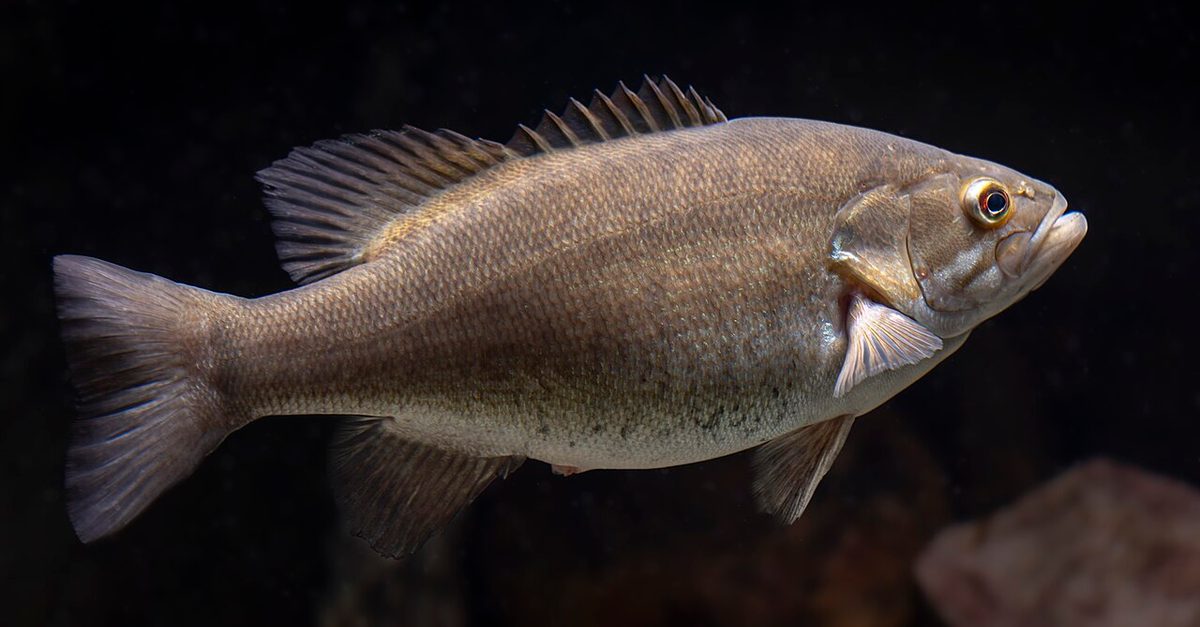
Smallmouth Bass
The smallmouth bass is one of the most popular and widely distributed gamefish in North America and one of the finest freshwater species available to fly anglers. Found in clear, cool rivers and lakes from the Great Lakes to the Southern Appalachians, smallmouth bass combine aggressive feeding behavior, remarkable fighting ability, and a preference for the kinds of rocky, current-rich habitats that are ideally suited to fly fishing. Pound for pound, the smallmouth bass is widely considered the hardest-fighting freshwater fish in North America, earning it the nickname 'the bronze bomber' for its explosive takes and powerful, acrobatic battles on the end of a line. While smallmouth bass are not a traditional trout-stream species, they have become increasingly important to fly anglers as warm-water fly fishing has grown in popularity. Rivers like the French Broad in North Carolina, the Susquehanna and Delaware in Pennsylvania, and the St. Lawrence in New York support world-class smallmouth fisheries that attract dedicated fly anglers. In many regions, smallmouth bass inhabit the lower reaches of the same river systems that hold trout in their upper reaches, providing fly anglers with a warm-water counterpart to their cold-water fishing. Smallmouth bass are particularly appealing to fly anglers because they readily take surface flies. On warm summer evenings, smallmouth will crush poppers, sliders, and large dry flies with explosive strikes that rival any trout rise. Their willingness to feed on the surface, combined with their strength and acrobatic leaping ability, makes smallmouth bass on a fly rod one of the most thrilling freshwater fly fishing experiences available.

Lake Trout
The lake trout is the largest member of the char family and the signature deep-water gamefish of northern New England's coldest, cleanest glacial lakes. A native coldwater char of the northern tier of North America, the lake trout reaches the southern edge of its natural range in the deep, oligotrophic lakes carved by Pleistocene glaciers across northern New England, including Vermont's Lake Champlain and the remote glacial lakes of the Northeast Kingdom. Unlike the stream-dwelling brook trout to which it is related, the lake trout is a true creature of the depths, spending most of the year in the cold, dark, well-oxygenated water far below the surface. Lake trout are long-lived, slow-growing fish that can survive for decades in the frigid depths of their home lakes. Average fish run 18 to 24 inches, but trophy specimens exceeding 30 inches and 15 pounds are taken each season from the best Vermont waters, and the state record approaches 35 pounds. Their size and strength, combined with the challenge of reaching them in deep water, make lake trout a prized quarry for anglers willing to adapt their tactics to the fish's coldwater lifestyle. For fly anglers, the lake trout presents a unique seasonal opportunity. Through most of the year these fish hold too deep for practical fly fishing, but during the narrow windows of ice-out in spring and the fall turnover, lake trout move into the shallows to feed and spawn, bringing them within reach of a well-presented streamer. Casting large baitfish patterns near rocky shorelines and drop-offs during these periods can produce the fish of a lifetime, connecting the angler to the deep glacial history of Vermont's finest coldwater lakes.
Food Sources & Hatches
| Insect | Suggested Fly | Jan | Feb | Mar | Apr | May | Jun | Jul | Aug | Sep | Oct | Nov | Dec |
|---|---|---|---|---|---|---|---|---|---|---|---|---|---|
Rainbow Smelt (spring spawning run) All day; best early and on overcast chop | Grey Ghost | ||||||||||||
Chironomids (midges) Morning and evening | Chironomid (Bomber) | ||||||||||||
Caddisflies Evening | Elk Hair Caddis | ||||||||||||
Hexagenia limbata Dusk into dark | Hexagenia Nymph | ||||||||||||
Leeches Early morning and evening | Woolly Bugger | ||||||||||||
Smelt and baitfish (fall staging) All day | Muddler Minnow |
Rainbow Smelt (spring spawning run): The defining event of the Moosehead year. Smelt push toward tributary mouths to spawn at ice-out and salmon, togue, and brook trout follow. Grey Ghosts and tandem bucktails stripped fast off the Roach, Moose, and outlet mouths.
Chironomids (midges): Steady midge activity in the bays and coves all season. Chironomid pupae fished on long leaders over 10-25 feet pick up brook trout and the occasional salmon when nothing shows on top.
Caddisflies: Caddis over the rocky shoals bring wild brook trout up on summer evenings — the gulper-style surface fishing Moosehead is quietly known for. An Elk Hair Caddis covers most of it.
Hexagenia limbata: The big mayfly of the silty-bottomed coves, emerging late June into July. Fish the nymph on a slow lift before dark, then large dries to gulping brook trout at last light.
Leeches: A season-long searching option along drop-offs and weed edges. Buggers on sinking lines find brookies in the coves and salmon early in the morning.
Smelt and baitfish (fall staging): Pre-spawn salmon and brook trout stage off the river mouths in September and hammer baitfish patterns. Muddlers and smelt streamers on sink-tips; check tightened fall tributary-mouth regulations.
Recommended Flies
Grey Ghost
Top PickThe essential Moosehead fly. Maine's classic smelt streamer, stripped or trolled off the Roach, Moose, and outlet river mouths at ice-out and again during the September staging.
Best in Spring, Fall
Woolly Bugger
Top PickAll-purpose searching streamer for brook trout along cove drop-offs and salmon at the river mouths. Olive and black in 4-8 on a sinking line.
Best in Spring through Fall
Hexagenia Nymph
Top PickMatch the hex emergence in the silty coves. Fish it on a slow hand-twist retrieve or lift near bottom in the hour before dark.
Best in Late June-July
Muddler Minnow
Top PickClassic Maine baitfish imitation for staging salmon and brookies in September. Fished on a sink-tip with an erratic strip, it doubles as a sculpin over the shoals.
Best in Fall
Access Points & Boat Launches
Greenville Public Launch
Boat LaunchEasyPrimary access at the south end of the lake in the town of Greenville, the region's hub for lodging, guides, and supplies. Convenient jumping-off point for the East and West Outlet areas and the southern bays.
Rockwood Landing (Moose River Mouth)
Boat LaunchEasyMid-lake public access at Rockwood where the Moose River enters beneath Mount Kineo. The river mouth is one of the lake's classic smelt-streamer stations at ice-out and again in September.
Lily Bay State Park Launch
Boat LaunchEasyState park launch on the east shore north of Greenville, with camping and the closest access to the Spencer Bay side and the Roach River delta water. The 2026 salmon stocking included 1,500 fish released at Lily Bay.
Seboomook Launch
Boat LaunchModerateRemote access at the far north end of the lake, reached by gravel roads. Puts small boats on the least-pressured water on Moosehead, far from the Greenville crowds.
Regulations
Regulations
Moosehead is managed under Maine's general-law open-water season, but the tributary mouths that hold the best fly fishing carry special S-code regulations — restricted tackle, seasons, and limits vary at the Roach River, Moose River, and the Kennebec outlets. A Maine fishing license is required. The rules at the river mouths change enough that consulting the current MDIFW lawbook before fishing any specific spot is essential.
Always verify current regulations with Montana Fish, Wildlife & Parks before fishing.
Quick Facts
- Surface Area
- 74,890 acres
- Max Depth
- 246 ft
- Elevation
- 1,029 ft
- Lake Type
- Natural Lake
- Region
- Moosehead Region / Piscataquis County
- Best Seasons
- spring, fall, winter
- Species
- Brook Trout, Landlocked Atlantic Salmon, Smallmouth Bass, Lake Trout
- Difficulty
- Intermediate
- Depth Chart
- Download PDF
Nearby Lakes & Ponds
Sebago Lake
Sebago Lakes Region / Cumberland County
Rangeley Lake
Rangeley Lakes / Franklin County
Upper Richardson Lake
Rangeley Lakes / Oxford County
West Grand Lake
Downeast Lakes / Washington County
East Grand Lake
Downeast / Washington-Aroostook border, St. Croix headwaters
First Roach Pond
Moosehead Region / Piscataquis County