Schroon Lake
Schroon Lake is a nine-mile ribbon of Adirondack water straddling Warren and Essex counties, 4,107 acres of smelt-rich habitat for landlocked salmon, lake trout, and smallmouth bass. Its ice-out salmon fishery around the Schroon River inlet is one of the best fly-rod windows in DEC Region 5.
Overview
Schroon Lake stretches roughly nine miles along the Route 9 and Interstate 87 corridor in the eastern Adirondacks, its 4,107 acres split between Warren and Essex counties. The lake is really a broad, drowned section of the Schroon River valley: the river enters at the north end by the village of Schroon Lake and exits at the south toward the Hudson, and that riverine character shapes the fishery. A long, narrow basin reaching 152 feet deep holds coldwater habitat for landlocked Atlantic salmon and lake trout, while miles of boulder-strewn shoreline and rocky shoals grow some of the better smallmouth bass fishing in DEC Region 5.
The engine of the coldwater fishery is rainbow smelt. Schroon's salmon program is substantial — DEC stocked nearly 35,000 landlocked salmon here in a recent year, a mix of fry and fall fingerlings — and those fish grow up chasing smelt through the open basin. Lake trout share the deep water; the laker population is best thought of as a mixed wild and periodically supplemented fishery rather than an annually stocked one, and the fish that come up at ice-out and through the ice can be genuinely large.
For the fly angler, the calendar starts the day the ice leaves, usually mid to late April. Spawning smelt push toward the Schroon River inlet and the gravelly north-end shallows, and the salmon follow them into water a cast can cover. Full-sinking lines and tandem smelt streamers — a Grey Ghost trailing a bugger is a local standard — worked along the drop-offs and off the inlet mouth produce the best salmon of the year, with the occasional lake trout mixed in. The window lasts into late May before the fish slide down to the thermocline.
June belongs to the smallmouth. Schroon's boulder shoals and rocky points hold bass shallow through early summer, and they eat poppers, sliders, and Clouser-style baitfish patterns with the aggression that makes Adirondack smallmouth fishing so addictive. Through midsummer the salmonids are a troller's game, but mornings still offer chironomid fishing in the bays and dragonfly and damselfly activity along the weedy margins.
Fall brings the salmon back. As surface temperatures fall through the 50s in late September and October, pre-spawn salmon reappear near the surface and stage toward the river mouth, and streamer fishing off the north end can rival ice-out. With three hard-surface launches, a village beachfront, and wadeable shoreline near the inlet, Schroon is one of the most accessible big coldwater lakes in the Adirondacks — a legitimate destination rather than a consolation stop off the Northway.
Depth & Character
- Surface Area
- 4,107acres
- Max Depth
- 152ft
- Mean Depth
- 56ft
- Elevation
- 807ft
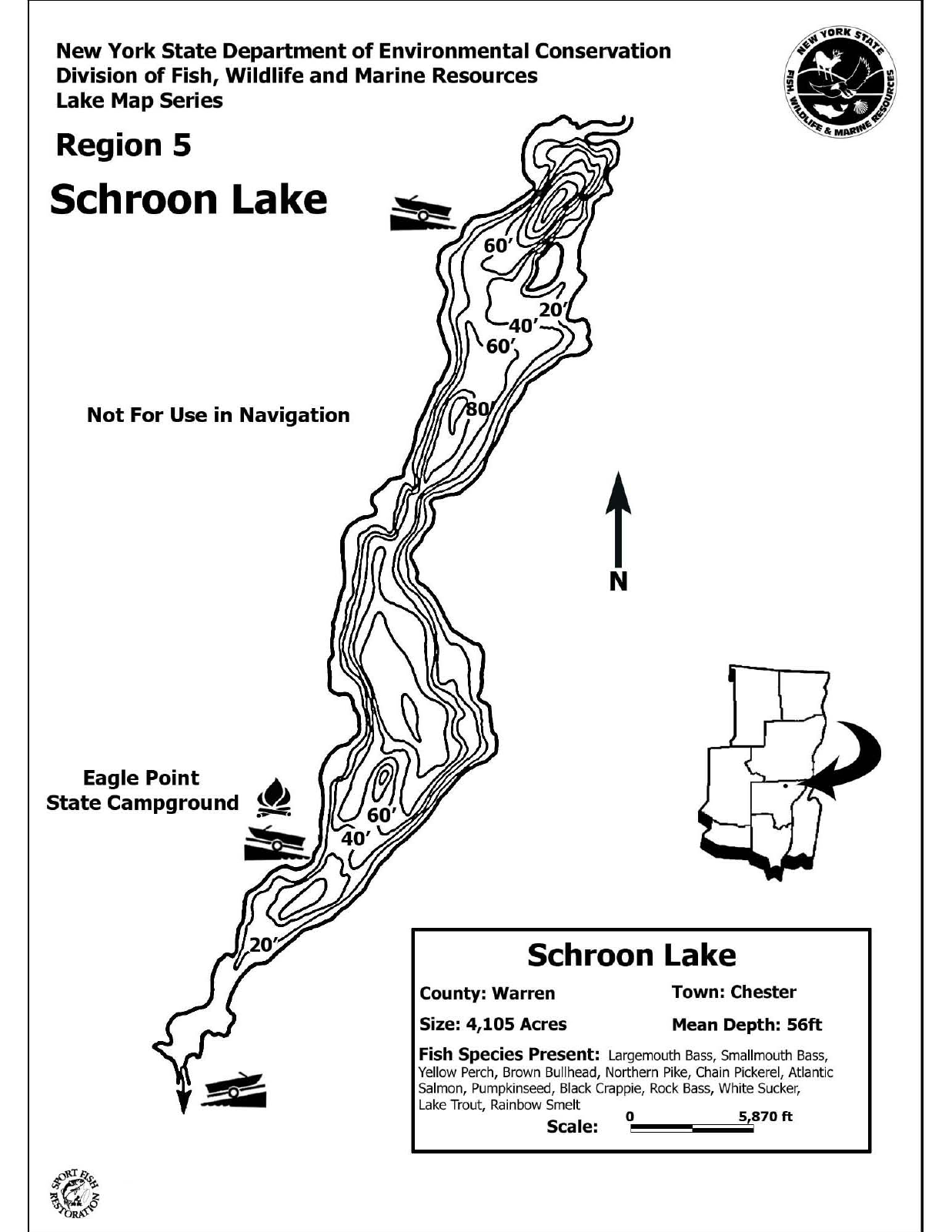
Bathymetric depth chart — click to open the full PDF. Source: Vermont DEC.
Source: Vermont DEC
Water Characteristics
Schroon is a long, narrow, natural lake oriented north-south, with a maximum depth of 152 feet, a mean depth of 56 feet, and a surface elevation of 807 feet. The DEC contour map shows the classic drowned-valley profile: a deep central trench flanked by shoreline shelves that drop away quickly, with the broadest shallow flats at the north end where the Schroon River enters near Eagle Point and the village. Those north-end shallows and the inlet delta are the smelt-spawning grounds that concentrate salmon at ice-out.
A summer thermocline sets up over the deep basin, stacking salmon and lake trout below practical fly range from roughly late June through early September. Rocky, bouldery structure dominates much of the shoreline — prime smallmouth habitat — while softer bays and weedy margins hold the lake's dragonflies, damselflies, and chironomid beds. Rainbow smelt are the dominant forage and drive the behavior of every coldwater predator in the lake; northern pike also cruise the weedy sections, so a wire-shy leader occasionally pays the price.
Stocking
| Species | Size | Number | Program |
|---|---|---|---|
| Landlocked Atlantic Salmon | Fry | 31,970 | NYSDEC stocking (2022 actual) |
| Landlocked Atlantic Salmon | Fall fingerling (6.5 in) | 2,910 | NYSDEC stocking (2022 actual) |
Seasonal Fishing Guide
Spring
Ice-out (mid to late April) through late May is the prime window. Salmon and the odd lake trout chase spawning smelt into the Schroon River inlet and the north-end shallows. Fish full-sinking lines with tandem smelt streamers — Grey Ghost trailing a dark bugger — along drop-offs and off the inlet mouth. Overcast, breezy days and first light fish best; wading anglers can reach legitimate water near the inlet.
Summer
Salmonids drop to the thermocline by late June and become a troller's fish. Shift to smallmouth on the boulder shoals: poppers and sliders at dawn and dusk, Clouser-style baitfish and Muddlers on sink-tips midday. Mornings offer chironomid fishing on anchor in the bays, and damselfly and dragonfly nymphs work the weedy margins.
Fall
Pre-spawn salmon reappear near the surface in late September and October, staging toward the Schroon River mouth. Streamer fishing off the north end can match ice-out, with aggressive fish eating smelt patterns and Egg-Sucking Leeches. Smallmouth feed hard on the shoals through early October before sliding deep.
Winter
Ice fishing is permitted, with lake trout and salmon taken by jigging smelt imitations over the deep basin. Ice near the river inlet and springs is unreliable — verify safe ice locally and check current Region 5 season dates and limits before fishing.
Access & Boats
Access is excellent for a lake this size. Three hard-surface ramps serve the lake: the Eagle Point Campground launch off Route 9 on the west shore, the Horicon launch off County Route 62 on the east shore with roughly 45 trailer spots, and the municipal launch at Dock Street in Schroon Lake village at the north end. The village also maintains a town beach with public shoreline, and there is wadeable water near the Schroon River inlet — the single best spot on the lake for a shore-bound or wading fly angler at ice-out. Canoes, kayaks, and float tubes are practical in the north-end shallows and sheltered bays, though the open mid-lake builds a serious chop in wind.
Ice Fishing
Ice fishing is permitted on Schroon Lake, and the winter fishery targets lake trout and salmon over the deep basin along with perch and pike in the shallower bays. Jigged smelt imitations account for most of the lakers. The lake's size and springs around the river inlet make ice conditions variable, especially at the north end — verify safe ice locally and check current DEC Region 5 season dates before heading out.
Fishing Pressure & Local Tips
Moderate. Schroon sits directly on the Northway corridor and sees heavy summer recreational traffic, plus a steady troller fleet at ice-out and a dedicated hard-water crowd in winter. Fly-specific pressure is light; an angler working the inlet shallows with streamers on an April weekday will often have that water alone. June smallmouth fishing draws bass boats, but the shoreline structure is extensive enough to spread everyone out.
Local Knowledge
At ice-out, fish where the smelt are: the Schroon River inlet and the gravelly north-end shallows are the highest-percentage water on the lake. Rig tandem streamers on a full-sinking line — a Grey Ghost up front with a dark bugger or leech behind — and cover water with long casts and a fast, purposeful strip. Overcast, choppy days out-fish calm sun, and the first two hours of light are worth the alarm clock.
When the salmon drop out in June, switch to the boulder shoals. Schroon smallmouth hold tight to rock in six to fifteen feet of water; poppers early and late, and Clouser-style or Muddler-type baitfish patterns on a sink-tip through the middle of the day. Work the points and shoal edges shown on the DEC contour map rather than blind-casting the flats.
Come back in October. Pre-spawn salmon push toward the surface and stage off the river mouth, and the same tandem-streamer program that worked in April works again, often with fewer boats and better fish. Dress for hard weather; the fall bite is best when conditions are worst.
Species Present
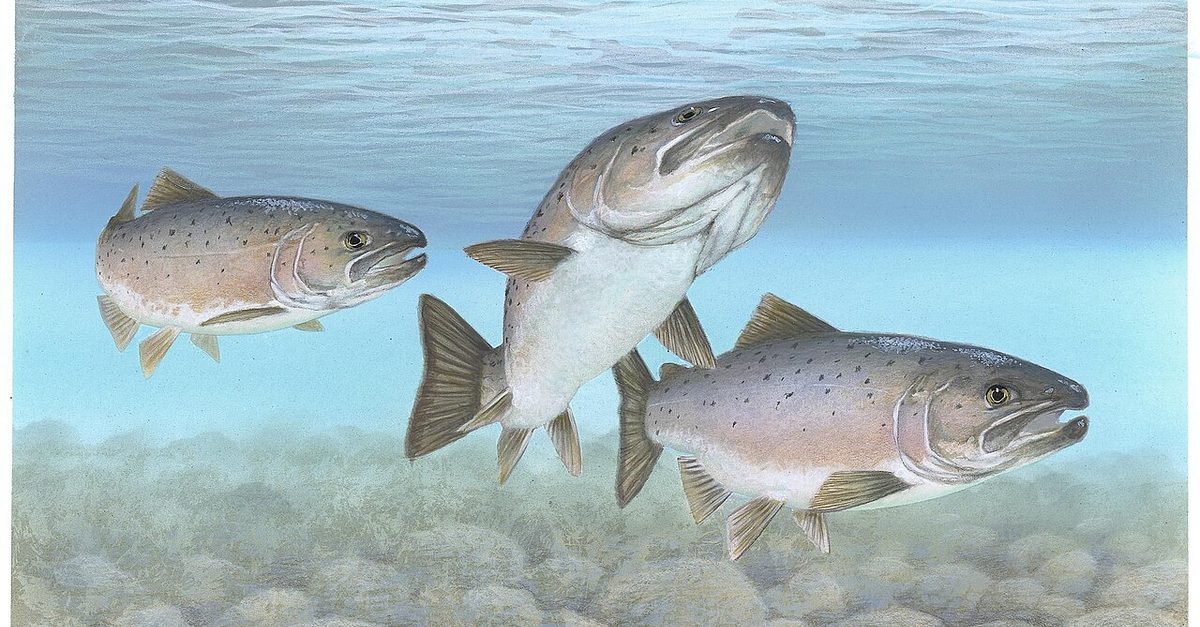
Landlocked Atlantic Salmon
The landlocked Atlantic salmon is one of New England's most prized gamefish, a freshwater-resident form of the Atlantic salmon that spends its entire life in lakes and rivers rather than migrating to the ocean. Found primarily in the lakes and rivers of Maine, New Hampshire, Vermont, and New York, landlocked salmon are genetically identical to their sea-run counterparts but have adapted to a completely freshwater life cycle, using large, cold lakes as their ocean substitute and tributary rivers as spawning habitat. Landlocked salmon are the signature gamefish of Maine's sporting camp tradition, where generations of anglers have gathered at remote wilderness lodges to fish for salmon in the Rangeley Lakes, Moosehead Lake, Sebago Lake, and the rivers that connect them. The fish combine the acrobatic fighting ability of their anadromous relatives with the accessibility of a freshwater species, leaping repeatedly when hooked and running with the kind of power and endurance that makes them one of the most exciting fish available on a fly rod in the northeastern United States. In rivers, landlocked salmon behave much like large resident trout, holding in classic lies and feeding on aquatic insects during hatches. They are particularly responsive to caddis and mayfly emergers, and the sight of a 3-pound landlocked salmon rising to a dry fly in a New England river is one of the defining experiences of northeastern fly fishing. In lakes, salmon are targeted with streamers that imitate smelt, their primary forage fish, trolled or cast from boats during the spring and fall when salmon cruise near the surface in cold-water conditions.

Lake Trout
The lake trout is the largest member of the char family and the signature deep-water gamefish of northern New England's coldest, cleanest glacial lakes. A native coldwater char of the northern tier of North America, the lake trout reaches the southern edge of its natural range in the deep, oligotrophic lakes carved by Pleistocene glaciers across northern New England, including Vermont's Lake Champlain and the remote glacial lakes of the Northeast Kingdom. Unlike the stream-dwelling brook trout to which it is related, the lake trout is a true creature of the depths, spending most of the year in the cold, dark, well-oxygenated water far below the surface. Lake trout are long-lived, slow-growing fish that can survive for decades in the frigid depths of their home lakes. Average fish run 18 to 24 inches, but trophy specimens exceeding 30 inches and 15 pounds are taken each season from the best Vermont waters, and the state record approaches 35 pounds. Their size and strength, combined with the challenge of reaching them in deep water, make lake trout a prized quarry for anglers willing to adapt their tactics to the fish's coldwater lifestyle. For fly anglers, the lake trout presents a unique seasonal opportunity. Through most of the year these fish hold too deep for practical fly fishing, but during the narrow windows of ice-out in spring and the fall turnover, lake trout move into the shallows to feed and spawn, bringing them within reach of a well-presented streamer. Casting large baitfish patterns near rocky shorelines and drop-offs during these periods can produce the fish of a lifetime, connecting the angler to the deep glacial history of Vermont's finest coldwater lakes.
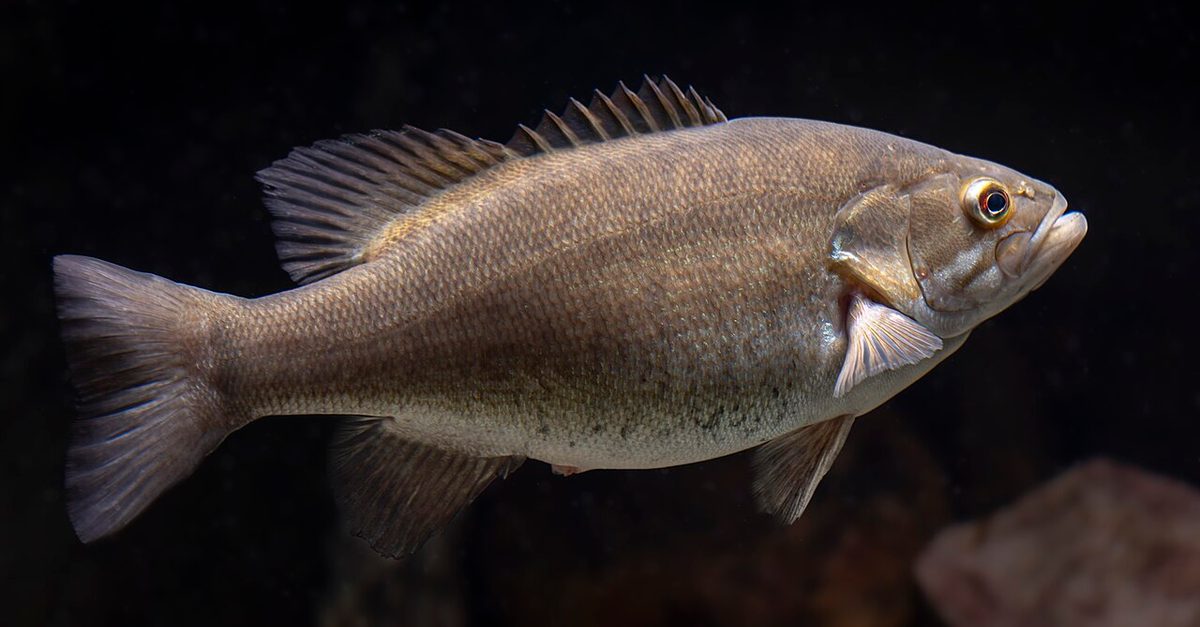
Smallmouth Bass
The smallmouth bass is one of the most popular and widely distributed gamefish in North America and one of the finest freshwater species available to fly anglers. Found in clear, cool rivers and lakes from the Great Lakes to the Southern Appalachians, smallmouth bass combine aggressive feeding behavior, remarkable fighting ability, and a preference for the kinds of rocky, current-rich habitats that are ideally suited to fly fishing. Pound for pound, the smallmouth bass is widely considered the hardest-fighting freshwater fish in North America, earning it the nickname 'the bronze bomber' for its explosive takes and powerful, acrobatic battles on the end of a line. While smallmouth bass are not a traditional trout-stream species, they have become increasingly important to fly anglers as warm-water fly fishing has grown in popularity. Rivers like the French Broad in North Carolina, the Susquehanna and Delaware in Pennsylvania, and the St. Lawrence in New York support world-class smallmouth fisheries that attract dedicated fly anglers. In many regions, smallmouth bass inhabit the lower reaches of the same river systems that hold trout in their upper reaches, providing fly anglers with a warm-water counterpart to their cold-water fishing. Smallmouth bass are particularly appealing to fly anglers because they readily take surface flies. On warm summer evenings, smallmouth will crush poppers, sliders, and large dry flies with explosive strikes that rival any trout rise. Their willingness to feed on the surface, combined with their strength and acrobatic leaping ability, makes smallmouth bass on a fly rod one of the most thrilling freshwater fly fishing experiences available.
Food Sources & Hatches
| Insect | Suggested Fly | Jan | Feb | Mar | Apr | May | Jun | Jul | Aug | Sep | Oct | Nov | Dec |
|---|---|---|---|---|---|---|---|---|---|---|---|---|---|
Rainbow Smelt (spawning run) Early morning and overcast days | Grey Ghost | ||||||||||||
Chironomids (midges) Morning | Chironomid (Bomber) | ||||||||||||
Damselflies Late morning to afternoon | Damselfly Nymph | ||||||||||||
Dragonflies Midday | Dragonfly Nymph | ||||||||||||
Leeches Low light | Woolly Bugger | ||||||||||||
Baitfish / juvenile smallmouth forage Dawn and dusk | Muddler Minnow |
Rainbow Smelt (spawning run): The defining event of the year. Smelt push into the Schroon River inlet and north-end shallows at ice-out, pulling salmon and lake trout into fly range. Tandem smelt streamers on sinking lines.
Chironomids (midges): Steady midge emergences over the bays and north-end flats all season. Anchor and hang pupae under an indicator over 10-25 feet; small dries on flat-calm evenings.
Damselflies: Nymph migrations along weedy margins and softer bays in early summer. Slow-swim nymphs toward shore over the weed tops.
Dragonflies: Big nymphs crawling the weedbeds and rocky margins draw smallmouth and cruising trout. Strip a dragonfly nymph in short, erratic pulls along the bottom near weed edges.
Leeches: Available all season along drop-offs and weedlines. Buggers and leech patterns on sinking lines are the searching flies of choice when nothing is showing.
Baitfish / juvenile smallmouth forage: Boulder shoals hold sculpin-and-minnow forage that smallmouth crush. Muddlers and Clouser-style patterns on sink-tips over the shoals; poppers on top early and late.
Recommended Flies
Grey Ghost
Top PickThe essential Schroon streamer. Fish it on point of a tandem rig on a full-sink line at ice-out off the river inlet, and again for pre-spawn salmon in October.
Best in Spring and fall
Chironomid (Bomber)
Top PickThe workhorse for anchored midge fishing in the bays and over the north-end flats. Hang it 1-3 feet off bottom under an indicator at first light.
Best in Late spring through summer
Woolly Bugger
Top PickThe searching fly when nothing shows — strip it along drop-offs and weed edges on a sinking line. Olive and black both produce; doubles as the trailer in an ice-out tandem rig.
Best in All season
Egg Sucking Leech
Top PickDeadly on staging pre-spawn salmon near the Schroon River mouth in October. Swing and strip it on a sink-tip through the north-end shallows.
Best in Fall
Also Effective
Access Points & Boat Launches
Eagle Point Campground Launch
Boat LaunchEasyHard-surface ramp at the DEC Eagle Point Campground off Route 9 on the west shore, with campground facilities in season. Convenient to the mid-lake basin and west-shore shoals.
Horicon Boat Launch (CR 62)
Boat LaunchEasyHard-surface state launch off County Route 62 on the east shore in the town of Horicon, with roughly 45 car-and-trailer spots — the largest launch on the lake and the best jumping-off point for the south basin.
Schroon Lake Village Launch (Dock Street)
Boat LaunchEasyMunicipal hard-surface ramp at Dock Street in Schroon Lake village at the north end, minutes from the smelt-spawning shallows and the Schroon River inlet. The adjacent town beach offers public shoreline.
Schroon River Inlet Shoreline
Wade AccessEasyWadeable shoreline and shallows near where the Schroon River enters the north end of the lake. The best shore-fishing water on the lake at ice-out, when salmon follow spawning smelt into casting range.
Regulations
Regulations
Schroon Lake falls under DEC Region 5 special regulations, which include specific size and harvest limits for lake trout and landlocked salmon. Ice fishing is permitted. A New York fishing license is required. Regulations change; verify current seasons, limits, and any special rules for Warren and Essex county waters at dec.ny.gov before fishing.
Always verify current regulations with Montana Fish, Wildlife & Parks before fishing.
Quick Facts
- Surface Area
- 4,107 acres
- Max Depth
- 152 ft
- Elevation
- 807 ft
- Lake Type
- Natural Lake
- Region
- Adirondacks / Warren & Essex Counties
- Best Seasons
- spring, summer, fall
- Species
- Landlocked Atlantic Salmon, Lake Trout, Smallmouth Bass
- Difficulty
- Intermediate
- Depth Chart
- Download PDF
Nearby Lakes & Ponds
Lake Placid
Adirondack High Peaks / Essex County
Cranberry Lake
Adirondacks / St. Lawrence County
Stillwater Reservoir
Beaver River Country / Herkimer County
Skaneateles Lake
Finger Lakes / Onondaga, Cortland & Cayuga Counties
Lake George
Adirondacks / Warren, Essex & Washington Counties
Otsego Lake
Leatherstocking / Otsego County (Cooperstown, DEC Region 4)