Stillwater Reservoir
Stillwater Reservoir is New York's signature splake water, 6,195 acres of shallow, stump-studded flowage in the western Adirondacks at the end of a 28-mile road. Averaging barely six feet deep, it keeps its fish within reach of a fly line all season, and DEC reports splake topping 20 inches.
Overview
Stillwater Reservoir lies at the end of the road in the truest sense. Twenty-eight miles east of Lowville, Stillwater Road finally quits at a DEC hard-surface ramp, and beyond it spreads 6,195 acres of tea-colored water threaded with drowned timber, bays, and islands in the Beaver River country of Herkimer County. It sits at 1,680 feet, ringed by Forest Preserve, with 117 designated primitive boat-in campsites scattered around a shoreline that is otherwise undeveloped. There is no other road access. Once you launch, the reservoir belongs to you and the wilderness.
What makes Stillwater matter to a fly angler is not size but shape. Maximum depth is only 32 feet and mean depth is 6.2 feet, which means the entire waterbody is effectively one giant littoral shelf. There is no meaningful deep-water refuge for gamefish to disappear into, and none of the hard stratification that pushes lake trout beyond fly range on the Adirondacks' big natural lakes by midsummer. Whatever is feeding here is feeding in water a floating or intermediate line can cover.
The fishery is built around splake, the brook trout and lake trout hybrid, and Stillwater is the state's flagship water for it. DEC stocked 1,500 splake at 8.5 inches in the 2022 distribution year, delivered by aircraft because of the reservoir's remoteness. The hybrid was chosen deliberately for a water like this: splake grow well, tolerate the conditions, and, unlike pure lake trout, keep feeding in the upper water column for far more of the year. DEC has reported splake exceeding 20 inches out of the reservoir. Brook trout share the water, smallmouth bass provide a warmwater bonus once the shallows heat up, and yellow perch round out the forage and panfish base.
The seasonal rhythm is bracketed at both ends. At ice-out the reservoir wakes fast, and splake work the old Beaver River channel, the submerged riverbed still traced by the contours on the DEC map, and the flooded timber edges alongside it. Streamers on intermediate lines account for most of the good fish. Then September and October bring the second act, when cooling water and lengthening nights turn splake aggressive again ahead of winter. Between those windows, midsummer fishing is early-and-late work: chironomid emergences off the flats, damsel and dragon nymphs along the weed and stump edges, and leech patterns crawled slow through the shade of overcast days.
The reservoir asks for a few concessions. Late-season drawdown drops the water and exposes stumps that were comfortably submerged in June, and floating debris is a persistent hazard for anyone running a boat at speed. Weather in the western Adirondacks turns quickly and the nearest services are a long drive back down Stillwater Road. But few waters in the Northeast combine this much wilderness shoreline, this much fly-reachable water, and a signature gamefish you cannot fish for many other places in New York.
Depth & Character
- Surface Area
- 6,195acres
- Max Depth
- 32ft
- Mean Depth
- 6.2ft
- Elevation
- 1,680ft
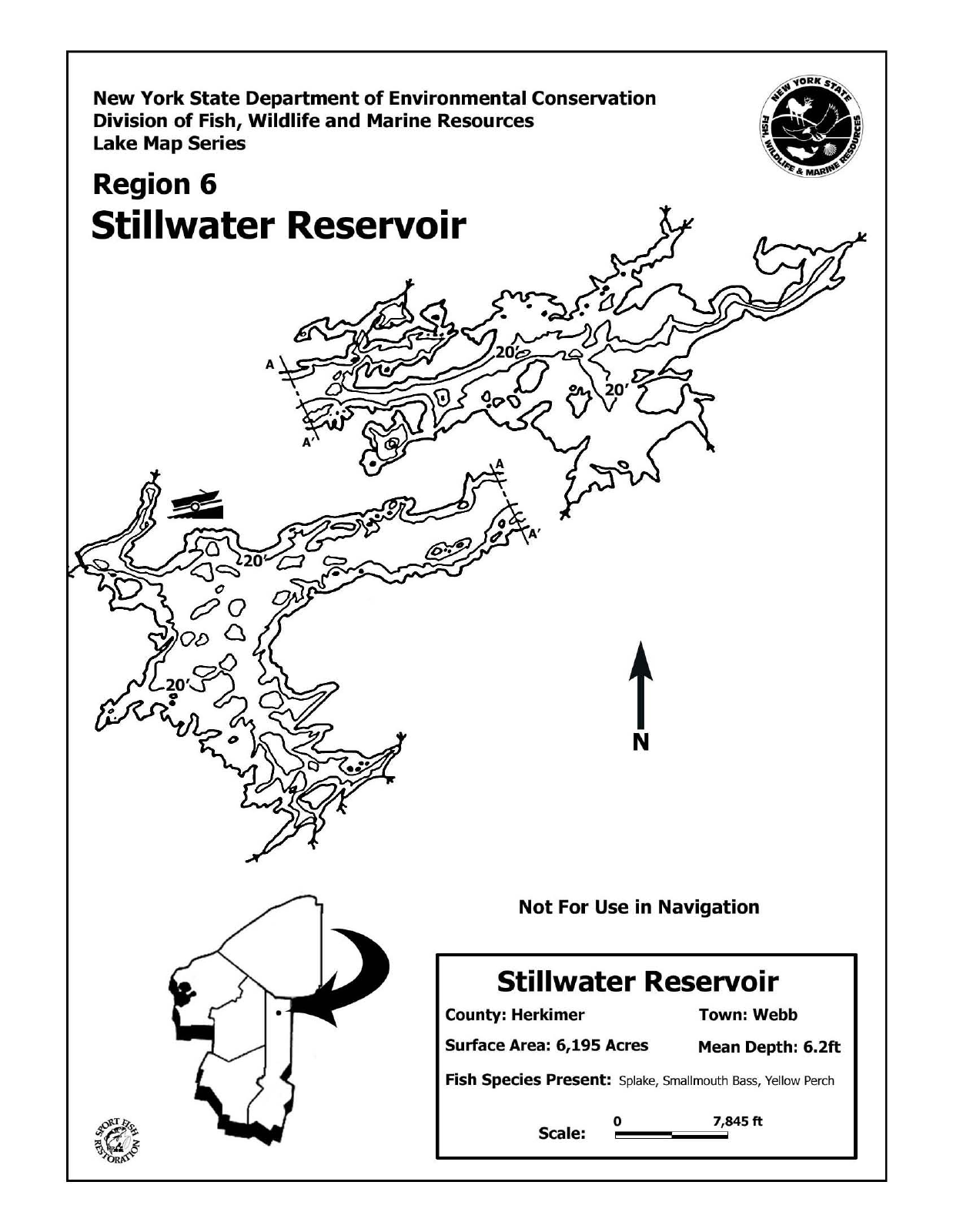
Bathymetric depth chart — click to open the full PDF. Source: Vermont DEC.
Source: Vermont DEC
Water Characteristics
Stillwater is a shallow, tannic Adirondack impoundment: 6,195 surface acres with a maximum depth of just 32 feet and a mean depth of 6.2 feet. Practically the whole reservoir behaves as one broad shelf, and the deepest water is confined to the old Beaver River channel that the DEC contour map traces through the basin. That channel is the single most important structural feature on the water. It is the migration corridor and the thermal refuge, and its edges, where the bottom breaks from three or four feet down into the deeper cut, concentrate fish through spring and fall.
Because the reservoir is so shallow, it does not set up the stable, deep thermocline that the big natural Adirondack lakes do, and there is no summer layer carrying fish forty feet down and out of fly range. The tradeoff is heat: shallow tea-stained water warms readily in July and August, which pushes trout toward the coolest available water and shifts prime feeding to dawn, dusk, and overcast, breezy conditions. Clarity is limited by tannin staining rather than sediment, so fish are less leader-shy here than on a gin-clear Finger Lake, and darker, higher-contrast flies tend to show up better.
The defining cover is drowned timber. Flooding left standing stumps and submerged deadfall over broad areas of the basin, and that structure holds fish shallow, particularly on gray days when they will sit tight to wood in only a few feet of water. Weedbeds develop through the summer in the soft-bottomed bays and along protected shorelines. Late-season drawdown reshapes the whole picture, dropping levels, exposing stumps that were invisible earlier in the year, and setting floating debris loose across the flowage.
Stocking
| Species | Size | Number | Program |
|---|---|---|---|
| Splake | 8.5 in | 1,500 | NYSDEC aircraft stocking, Town of Webb (2022 actual distribution) |
Seasonal Fishing Guide
Spring
Ice-out is the marquee window. Splake move onto the flats and along the edges of the old Beaver River channel, and streamers fished on intermediate lines are the highest-percentage approach. Work the drowned timber and the break where shallow water drops into the channel; a Woolly Bugger or small baitfish pattern on a steady, moderate strip covers water efficiently. Chironomid activity ramps up over the flats as the water warms through May, with the first damsel and dragon nymph movement following toward the end of the season.
Summer
Shallow tannic water warms quickly, so fish the edges of the day. First light and last light are prime, and overcast breezy afternoons can fish well when the sun stays off the flats. Damselfly and dragonfly nymphs along weed and stump edges, chironomid pupae over the soft-bottomed bays, and leeches crawled slow through timber are the summer staples. Smallmouth bass become a legitimate target on rocky shorelines and stump flats, and they will take the same buggers and streamers.
Fall
September and October are the second peak. Cooling water turns splake aggressive again and pulls them back into the upper water column across the whole reservoir. Streamer fishing along the channel edges and flooded timber is the play, with larger and darker patterns as the light gets shorter. Watch for the late-season drawdown; falling water exposes stumps and concentrates fish into the deeper cuts, which can make the fishing easier if you navigate carefully.
Winter
Open-water fly fishing ends once the reservoir locks up, and the remote 28-mile road approach makes winter access a serious undertaking. Any hardwater fishing here falls under DEC Region 6 season rules; confirm current regulations, road conditions, and ice safety locally before planning a trip.
Access & Boats
Road access to Stillwater Reservoir is limited to a single point: the DEC hard-surface boat launch on Stillwater Road, roughly 28 miles east of Lowville. There is no second ramp and no highway shadowing the shoreline, so everything beyond the launch area is reached by water. That is the practical shape of a day here. Launch a boat, canoe, kayak, or car-topper, run to the water you want, and fish it.
Once afloat, shoreline access is extensive. DEC maintains 117 designated primitive boat-in campsites around the reservoir, and those sites double as landing spots and shore-fishing bases for anglers working a stretch of bank or the shallow margins near camp. Multi-day trips are a natural fit; the reservoir rewards paddlers who can reach the far bays and stump flats that day-trippers rarely touch.
Float tubes and small craft fish the protected coves well, but treat the open basin with respect. Stillwater is big water with a long fetch, and wind builds a real chop. Combined with drifting timber and drawdown-exposed stumps, that argues for a boat with freeboard for crossings and a tube or pontoon only for sheltered work near a landing.
Ice Fishing
Winter conditions on Stillwater are not documented in our source material, and the 28-mile remote road approach is the limiting factor for most anglers. Ice fishing on the reservoir falls under DEC Region 6 regulations, which set the applicable seasons and species rules, and a flowage subject to drawdown deserves extra caution regardless of air temperatures. Confirm current Region 6 ice fishing rules with DEC and check road and ice conditions locally before making the drive.
Fishing Pressure & Local Tips
Light by the standards of any comparable Adirondack water. The 28-mile dead-end approach from Lowville filters out casual traffic, and with a single launch and no shoreline development, the reservoir spreads what pressure it does get across 6,195 acres. Most of that effort clusters near the launch and the first few bays. Anglers willing to run or paddle toward the far end of the flowage routinely have entire stump flats to themselves. Summer weekends and the boat-in camping season bring the most boats, and the ice-out weeks draw a small, dedicated splake following, but fly-specific pressure here is close to nonexistent.
Local Knowledge
Fish the old river channel. The submerged Beaver River bed shows clearly on the DEC contour map, and it is the highest-percentage water on the reservoir at ice-out and again through the fall. Work streamers along the break where the shallow flat drops into the channel rather than casting blind across open water, and let an intermediate line take the fly down to the edge before starting the retrieve. Splake stay willing to chase in the upper water column far longer into the season than lake trout do, which is what makes this a genuine fly fishery rather than a downrigger fishery.
Let the weather pick your day. Overcast, breezy conditions pull fish tight to the drowned timber in surprisingly shallow water, and that is when a Woolly Bugger or leech crawled past a stump line does its best work. Bright, flat-calm days push fish deeper and slower, so shift to the channel edges and slow everything down. In midsummer, be on the water at first light and again in the last hour; the middle of a hot day over six feet of tea-colored water is rarely productive.
Plan for the reservoir's hazards rather than reacting to them. Late-season drawdown drops the level and brings stumps up out of nowhere, so run slow and read the water ahead, especially in areas you scouted in June. Floating debris is a year-round nuisance. Carry a spare prop or paddle, more layers than the forecast suggests, and everything you need for the day, because the nearest resupply is the full length of Stillwater Road away.
Species Present
Splake
The splake is a fertile hybrid between the lake trout (Salvelinus namaycush) and the brook trout (Salvelinus fontinalis), created by fisheries managers to combine the best qualities of both parent species. The name is a portmanteau of "speckled trout" (a regional name for brook trout) and "lake trout," and while natural hybridization occasionally occurs where the two species overlap, virtually all splake in North American waters are the product of deliberate hatchery propagation. By crossing a female lake trout with a male brook trout, hatcheries produce a fish that grows faster and larger than a brook trout, matures earlier than a lake trout, and tolerates the marginal conditions of small, cold ponds where neither parent thrives on its own. Splake occupy an unusual niche in fisheries management because they are a management tool as much as a gamefish. Unlike most hybrids, splake are not sterile, but their reproduction in the wild is negligible, which gives managers precise control over population density through stocking rates. This makes them ideal for waters where a self-sustaining native fishery is impossible to maintain: acidified Adirondack ponds, reclaimed lakes recovering from invasive species, and cold headwater reservoirs that would otherwise support only stunted panfish. New York's Department of Environmental Conservation has been the most aggressive proponent of splake in the eastern United States, and the fish is a signature species of the Adirondack pond program. For anglers, the splake offers the aggressive, willing-to-strike temperament of the brook trout combined with the growth potential and deep-water habits of the lake trout. Stillwater Reservoir in New York's western Adirondacks is DEC's flagship splake water, stocked by aircraft into remote sections and producing fish that regularly exceed 20 inches. The splake fights hard, takes both flies and lures readily, and provides a reliable coldwater fishery in places where wild trout cannot persist. It is one of the great success stories of applied fisheries science in the Northeast.
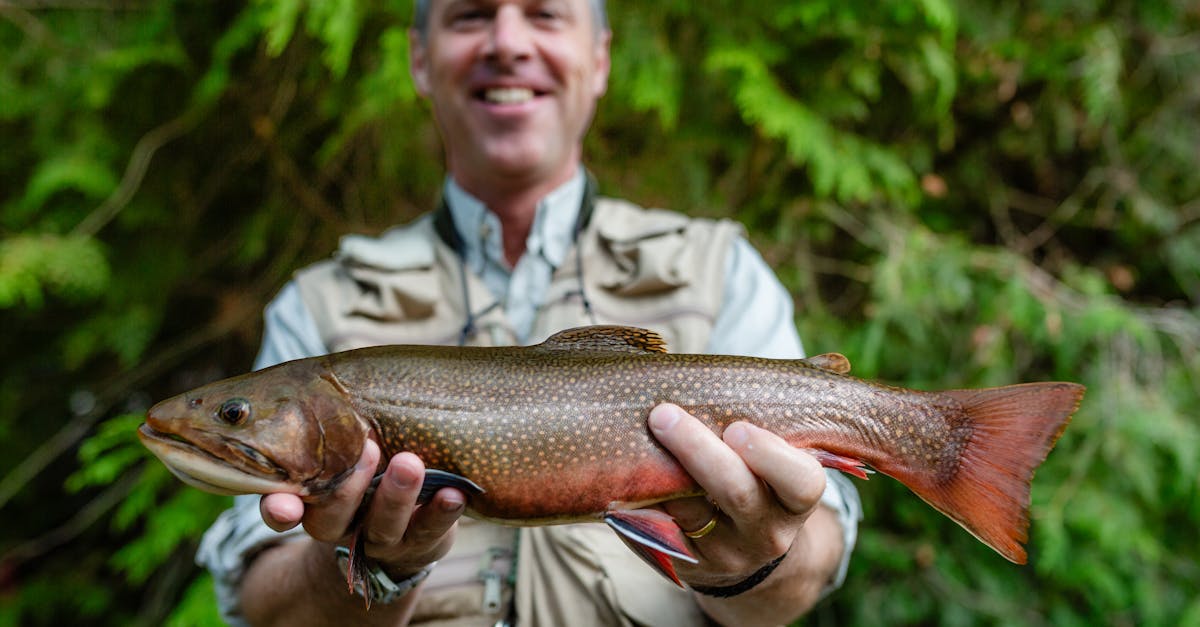
Brook Trout
The brook trout is widely considered the most beautiful freshwater fish in North America, and catching one in a pristine Montana mountain stream is an experience that captures the essence of backcountry fly fishing. Despite their common name, brook trout are not true trout at all; they are a species of char (genus Salvelinus), more closely related to lake trout and Arctic char than to rainbows or browns. Native to eastern North America from Georgia to Hudson Bay, brook trout were among the first salmonids introduced to Montana's waters in the late 1800s and have since established self-sustaining populations in cold, high-elevation streams and lakes throughout the state. In Montana, brook trout thrive best in small, cold headwater streams and high mountain lakes where competition from larger trout species is minimal. In these environments, they are often the dominant, or only, salmonid present. The trade-off is size: Montana stream-dwelling brook trout typically range from 6 to 10 inches, with fish over 12 inches considered noteworthy in most waters. What they lack in size, however, they more than make up for in beauty and willingness to eat a fly. Brookies are aggressive feeders that will strike attractor dry flies, nymphs, and small streamers with enthusiasm, making them an ideal species for beginning fly anglers and a delightful quarry for anyone who appreciates small-stream fishing. Brook trout do present a conservation paradox in Montana. While they are a beloved and beautiful gamefish, they are non-native and can negatively impact native species, particularly Yellowstone and westslope cutthroat trout. In headwater streams, brook trout often outcompete cutthroats for food and spawning habitat due to their higher reproductive rate and earlier maturation. As a result, Montana FWP has implemented brook trout removal projects on some streams to restore native cutthroat populations. In many waters, liberal harvest limits for brook trout are encouraged to reduce their numbers and benefit native fish. Anglers can enjoy excellent brook trout fishing while actively helping conservation by keeping a few for the pan.
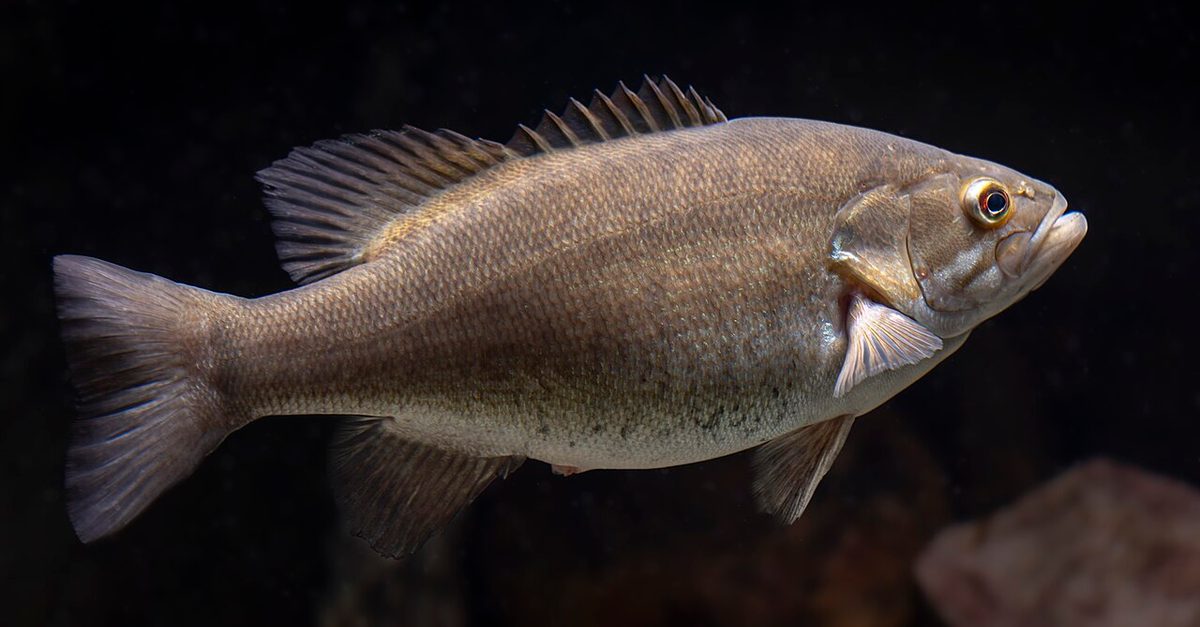
Smallmouth Bass
The smallmouth bass is one of the most popular and widely distributed gamefish in North America and one of the finest freshwater species available to fly anglers. Found in clear, cool rivers and lakes from the Great Lakes to the Southern Appalachians, smallmouth bass combine aggressive feeding behavior, remarkable fighting ability, and a preference for the kinds of rocky, current-rich habitats that are ideally suited to fly fishing. Pound for pound, the smallmouth bass is widely considered the hardest-fighting freshwater fish in North America, earning it the nickname 'the bronze bomber' for its explosive takes and powerful, acrobatic battles on the end of a line. While smallmouth bass are not a traditional trout-stream species, they have become increasingly important to fly anglers as warm-water fly fishing has grown in popularity. Rivers like the French Broad in North Carolina, the Susquehanna and Delaware in Pennsylvania, and the St. Lawrence in New York support world-class smallmouth fisheries that attract dedicated fly anglers. In many regions, smallmouth bass inhabit the lower reaches of the same river systems that hold trout in their upper reaches, providing fly anglers with a warm-water counterpart to their cold-water fishing. Smallmouth bass are particularly appealing to fly anglers because they readily take surface flies. On warm summer evenings, smallmouth will crush poppers, sliders, and large dry flies with explosive strikes that rival any trout rise. Their willingness to feed on the surface, combined with their strength and acrobatic leaping ability, makes smallmouth bass on a fly rod one of the most thrilling freshwater fly fishing experiences available.
Food Sources & Hatches
| Insect | Suggested Fly | Jan | Feb | Mar | Apr | May | Jun | Jul | Aug | Sep | Oct | Nov | Dec |
|---|---|---|---|---|---|---|---|---|---|---|---|---|---|
Chironomids (midges) Early morning and evening; all day under overcast skies | Chironomid (Bomber) | ||||||||||||
Callibaetis (speckled-wing duns) Late morning through mid-afternoon on calm days | Parachute Adams | ||||||||||||
Caddis Evening, last two hours of light | Elk Hair Caddis | ||||||||||||
Damselfly nymphs Mid-morning through afternoon | Damselfly Nymph | ||||||||||||
Dragonfly nymphs All day, best under low light | Dragonfly Nymph | ||||||||||||
Leeches All day; best at first and last light or under cloud | Woolly Bugger | ||||||||||||
Baitfish and perch fry First and last light; all day at ice-out and in October | Little Brook Trout |
Chironomids (midges): The backbone insect on a shallow, soft-bottomed impoundment like Stillwater. Pupae fished under an indicator just off bottom over the flats and bays produce from shortly after ice-out through fall. Because the whole reservoir averages just over six feet deep, chironomid fishing here needs none of the deep-water rigging the big lakes demand.
Callibaetis (speckled-wing duns): The typical stillwater mayfly of shallow Adirondack flowages. Look for sporadic duns over the weedier bays on warm, low-wind days and fish a Parachute Adams or sparkle dun to individual cruising risers rather than searching blind.
Caddis: Evening caddis activity along protected shorelines and around timber edges gives the reservoir its brief midsummer dry-fly window. Twitch the fly rather than dead-drifting it; stillwater caddis rises are usually to moving insects.
Damselfly nymphs: Migrating damsel nymphs swim toward shoreline vegetation and emergent stumps to hatch, and Stillwater's weedbeds and drowned timber give them plenty of targets. Retrieve with a slow, steady hand-twist just under the surface along weed edges.
Dragonfly nymphs: Large, meaty, and present year-round on a shallow reservoir bottom. Crawl a dragon nymph slow along stump lines and soft-bottom flats; it is one of the best searching patterns when nothing is showing on the surface.
Leeches: A staple food item in shallow tannic water and the most reliable fly on the reservoir. Fished on an intermediate line along the old river channel edge or crawled through timber, a leech or bugger covers water and draws splake and brook trout alike.
Baitfish and perch fry: Yellow perch and small trout make up the forage base that grows splake past 20 inches. Small baitfish streamers along the channel break at ice-out, and again through September and October, account for the biggest fish of the year.
Recommended Flies
Woolly Bugger
Top PickThe essential Stillwater fly. Olive or brown on an intermediate line, stripped along the old Beaver River channel break at ice-out and crawled through drowned timber on overcast summer days. It doubles as a leech, a dragon nymph, and a baitfish depending on the retrieve.
Best in Spring through Fall
Little Brook Trout
Top PickA brook trout imitation is exactly right on a water where splake and brookies share the shallows. Fish it along the channel edge and stump lines at ice-out and again in September and October when splake feed hardest.
Best in Spring and Fall
Chironomid (Bomber)
Top PickChironomid pupae under an indicator over the flats and soft-bottomed bays. With a mean depth of just over six feet you can cover the reservoir's chironomid water with a floating line and a moderate leader rather than the deep rigs big lakes require.
Best in Spring through Fall
Damselfly Nymph
Top PickDamsel nymph swum with a slow hand-twist along weedbeds and emergent stumps in June and July. One of the few patterns that reliably moves fish in the middle of a summer day here.
Best in Summer
Access Points & Boat Launches
Stillwater Reservoir DEC Boat Launch
Boat LaunchEasy once you arrive; the 28-mile dead-end drive from Lowville is the real barrierThe only road-accessible point on the reservoir: a DEC hard-surface ramp at the end of Stillwater Road, approximately 28 miles east of Lowville. Everything else on the water is reached by boat from here, which makes this the mandatory starting point for any trip. Launching early beats the day's wind and gives you the run to the far bays before other boats spread out.
Boat-In Primitive Campsite Shoreline
Wade AccessModerate - requires a boat, canoe, or kayak and a crossing of open waterDEC maintains 117 designated primitive boat-in campsites around the reservoir shoreline. Reached only by water, they serve as landing spots and shore-fishing bases as well as overnight camps, giving anglers a foothold on stretches of bank and shallow margin far from the launch. Multi-day paddle trips built around these sites open up the stump flats and back bays that day traffic never reaches.
Old Beaver River Channel
Boat LaunchModerate - navigate slowly around stumps and submerged timberNot a facility but the reservoir's key fishable structure, reached from the Stillwater Road ramp. The submerged Beaver River bed runs through the basin and appears clearly on the DEC contour map as the deepest water in an otherwise uniformly shallow flowage. Its edges are the primary ice-out and fall streamer target, and the surrounding drowned timber holds fish shallow on overcast days.
Regulations
Regulations
Stillwater Reservoir is managed under NYSDEC Region 6 special regulations, which govern the open seasons, minimum lengths, and daily limits that apply to splake, brook trout, and the reservoir's other species. Splake are generally handled under trout regulations in New York, and anglers should confirm which category and limits apply before keeping fish. A New York State fishing license is required. Regulations change from year to year and can differ from statewide rules on specific Adirondack waters, so verify the current Region 6 rules with DEC at dec.ny.gov before fishing.
Always verify current regulations with Montana Fish, Wildlife & Parks before fishing.
Quick Facts
- Surface Area
- 6,195 acres
- Max Depth
- 32 ft
- Elevation
- 1,680 ft
- Lake Type
- Reservoir
- Region
- Beaver River Country / Herkimer County
- Best Seasons
- spring, fall
- Species
- Splake, Brook Trout, Smallmouth Bass
- Difficulty
- Beginner to Intermediate
- Record Fish
- DEC reports splake exceeding 20 inches from Stillwater Reservoir, exceptional growth for the hybrid and a reflection of the reservoir's productive shallow-water forage base.
- Depth Chart
- Download PDF
Nearby Lakes & Ponds
Lake Placid
Adirondack High Peaks / Essex County
Cranberry Lake
Adirondacks / St. Lawrence County
Skaneateles Lake
Finger Lakes / Onondaga, Cortland & Cayuga Counties
Lake George
Adirondacks / Warren, Essex & Washington Counties
Schroon Lake
Adirondacks / Warren & Essex Counties
Otsego Lake
Leatherstocking / Otsego County (Cooperstown, DEC Region 4)