Skaneateles Lake
Skaneateles Lake is the clearest of New York's Finger Lakes, an 8,960-acre glacial trench of drinking-water-quality water with visibility past 26 feet. Wild lake trout, stocked rainbows, and landlocked salmon cruise its shale shelves, making it the premier sight-fishing stillwater in central New York.
Overview
Skaneateles Lake runs roughly sixteen miles southeast from the village that shares its name, a narrow glacial trough shared by Onondaga, Cortland, and Cayuga counties at the eastern end of New York's Finger Lakes. DEC's waterbody page puts it at 8,960 surface acres, while the agency's own contour sheet prints 8,746 — a small discrepancy worth knowing if you compare sources. What no one disputes is the water itself: Skaneateles is a drinking-water supply of such quality that it is delivered essentially unfiltered, and anglers routinely see bottom in more than 26 feet. It sits at 863 feet of elevation, drops to 300 feet at its deepest, and averages 145 feet across the basin.
That clarity defines the fishing. Skaneateles is the best sight-fishing stillwater in central New York, and on a calm spring morning you will watch fish before you cast to them. Rainbow trout and landlocked Atlantic salmon patrol the shallows in spring and again in late fall, moving over pale shale in water so clear that a heavy leader or a sloppy approach ends the encounter before it starts. Lake trout here are wild, sustained by natural reproduction rather than the hatchery, and the coldwater forage base is built on cisco — a native baitfish that DEC's contour sheet lists right alongside the gamefish.
The stocking program supports the two species that reproduce least reliably. DEC's 2022 actual distribution records show 15,770 rainbow trout planted at Spafford (15,000 at eight inches plus 770 four-inch fingerlings) and 8,460 landlocked salmon at six and a half inches. Lake trout received nothing, because they do not need it. Smallmouth bass fill out the warmwater side of the fishery and hold on the shale points through summer, while walleye, chain pickerel, rock bass, and yellow perch round out the species list printed on the map sheet.
Skaneateles falls under New York's Finger Lakes and tributary regulations, which means a year-round trout and salmon season. That single fact reshapes the fly-fishing calendar here. From December through March, when most northeastern stillwaters are locked up or closed, an angler can walk the shoreline at Skaneateles and cast streamers to fish that are legitimately available. Winter shoreline fly fishing is not a novelty on this lake; it is one of its genuine strengths.
The lake is big, deep, exposed, and largely ringed by private shoreline, so a boat or kayak expands the game considerably. But the public accesses — the DEC ramp south of the village, the village pier, and Andrew R. Fuller Park at the far south end — put a wading or shore angler on real fish at dawn and dusk without a hull. Skaneateles is not a numbers lake, and it does not forgive careless presentation. It is a place to hunt individual cruising fish in water clear enough to make every mistake visible.
Depth & Character
- Surface Area
- 8,960acres
- Max Depth
- 300ft
- Mean Depth
- 145ft
- Elevation
- 863ft
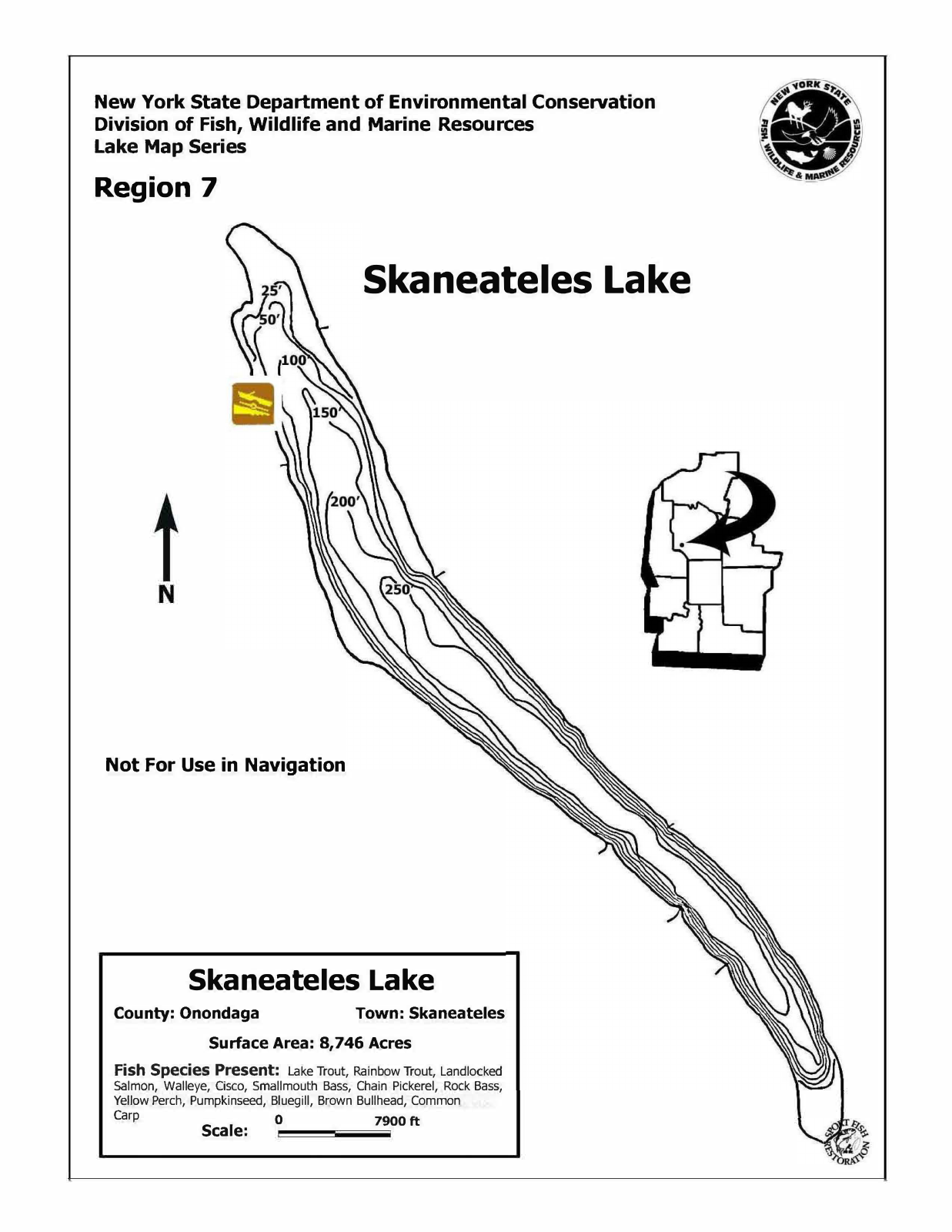
Bathymetric depth chart — click to open the full PDF. Source: Vermont DEC.
Source: Vermont DEC
Water Characteristics
Skaneateles is a classic Finger Lakes trough: a long, narrow, steep-sided basin gouged by ice, 300 feet deep at its maximum and averaging 145 feet, which means very little of the lake is shallow. The fishable fly water is a comparatively thin rim of shale shelf and gravel that skirts the shoreline before the bottom tips away into the main basin. DEC's contour sheet is the essential planning document here, because it shows exactly where those shelves widen — the shallower flats at the north and south ends and the broader benches off several points are where cruising trout and salmon spend their shallow-water hours.
Water clarity is the lake's signature. Visibility of 26 feet and better is normal, a consequence of the low-nutrient chemistry that also makes Skaneateles a nearly unfiltered municipal supply. Weed growth is limited compared with fertile lowland lakes and concentrates in the shallower bays at each end, so fish orient to depth breaks, gravel, and shale rather than vegetation. That clarity is an advantage for spotting fish and a liability for fooling them: light tippet and long leaders are not optional.
A thermocline establishes through summer and pushes lake trout well beyond fly range by July, though cisco keep the coldwater food chain running below it. Chironomids are the most consistently important insect, emerging over the 15-to-25-foot flats in spring, with midge activity continuing on calm evenings through the season. The lake's long northwest-to-southeast axis gives wind a serious fetch, and a flat dawn can be whitecapped by mid-morning.
Stocking
| Species | Size | Number | Program |
|---|---|---|---|
| Rainbow Trout | 8 in yearling | 15,000 | NYSDEC stocking at Spafford (2022 actual distribution report) |
| Rainbow Trout | 4 in fingerling | 770 | NYSDEC stocking at Spafford (2022 actual distribution report) |
| Landlocked Atlantic Salmon | 6.5 in | 8,460 | NYSDEC stocking (2022 actual distribution report) |
| Lake Trout | Not stocked | None | Wild, naturally reproducing population — no lake trout appear in DEC's 2022 actual stocking records |
Seasonal Fishing Guide
Spring
The prime fly window. Rainbows and landlocked salmon cruise the shale shelves and shallow flats, visible in the clear water, and this is the season for deliberate sight-fishing with small cisco- and alewife-profile streamers on long fluorocarbon leaders. Simultaneously, chironomid emergences over the 15-to-25-foot flats support indicator fishing from an anchored boat or kayak — an underused and very effective spring pattern here. Fish first light and overcast days; bright calm afternoons push everything deep.
Summer
Once the thermocline sets up, lake trout drop far beyond fly range and rainbows and salmon hold near the temperature break. Shift focus to smallmouth bass on the shale points, which fish well all summer and are genuinely abundant. Trout anglers should confine themselves to the first hour of light, working streamers along the shelf edges before recreational boat traffic builds.
Fall
Cooling water brings rainbows and salmon back onto the shallow shelves, and late fall repeats the spring sight-fishing game with fewer boats and softer light. October and November are quietly among the best months on Skaneateles for a shore angler. Work perch-fry and baitfish patterns near the pier and the south-end park in low light.
Winter
Because Finger Lakes regulations keep trout and salmon open year-round, winter shoreline fly fishing on Skaneateles is real fishing, not a stunt. Slow-stripped streamers on intermediate lines from the accessible shoreline and the village pier take rainbows and salmon through the cold months. The lake's depth means ice is unreliable and this is an open-water winter fishery; dress accordingly and fish the warmest part of the afternoon.
Access & Boats
The primary public access is the DEC concrete-ramp launch about two miles south of Skaneateles village off Route 41A, with a roughly 30-car lot — the practical starting point for anyone trailering a boat or launching a kayak. In the village itself, the pier at Skaneateles Park gives shore anglers a casting platform over deep-adjacent water, and it is a productive first-light spot for perch-fry and small baitfish patterns. At the far south end, Andrew R. Fuller Park in the Town of Scott provides a second public foothold on a stretch of lake that sees far less traffic than the village end.
Most of the remaining shoreline is private, so plan around those three points. Stealthy dawn wading along the accessible shale is genuinely rewarded here — fish move shallow in low light, and clear water punishes anyone who wades in loudly at mid-morning. Float tubes and kayaks work well near the ends and in sheltered water, but the open middle of the lake belongs to boats that can handle a hard afternoon chop.
Ice Fishing
Skaneateles is not an ice-fishing destination in any practical sense. With a mean depth of 145 feet and a maximum of 300, the basin holds too much heat for dependable ice, and the lake's winter angling tradition runs the other direction: because Finger Lakes regulations keep the trout and salmon season open year-round, shoreline fly fishing through the cold months is genuinely viable here. From December through March, streamers worked slowly along the accessible shale from the village pier and the public parks put anglers on rainbows and salmon while most of the Northeast is frozen shut.
Fishing Pressure & Local Tips
Moderate, and heavily concentrated at the village end and on summer weekends when Skaneateles becomes a recreational boating and swimming destination. Serious fly pressure is light. Most angling effort goes to trollers working deep water for lake trout and salmon, which leaves the shallow shale shelves — the water a fly rod can actually cover — largely to whoever shows up at dawn. Weekday mornings in April and May, and almost any winter day, offer near-solitude on a lake ringed by a busy village.
Local Knowledge
Fish the light, not the clock. In water this clear, the shallow-water window is dawn, dusk, and heavy overcast; by mid-morning on a bright day the rainbows and salmon have slid off the shelf and you are casting to empty shale. Get to the pier or the shoreline before sunrise and expect the best half hour of the day to happen before you can comfortably see your fly.
Go longer and lighter than feels reasonable. Twelve to eighteen feet of leader tapering to fluorocarbon is standard practice on Skaneateles, and the streamers that work are small — slim cisco- and alewife-profile flies and perch-fry imitations rather than the four-inch articulated patterns that produce on darker water. Cast well ahead of a cruising fish and let it find the fly; a streamer dropped on a spotted trout's head in 26-foot visibility spooks it every time.
Use the contour map to find the benches. Spring chironomid fishing over the 15-to-25-foot flats is one of the lake's most reliable and least-fished patterns, and those flats are marked plainly on the DEC sheet. Anchor, hang pupae a foot or two off bottom under an indicator, and be patient. Through summer, when the trout go deep, switch to the shale points for smallmouth — they are abundant, willing, and a fine consolation prize on a July afternoon.
Species Present
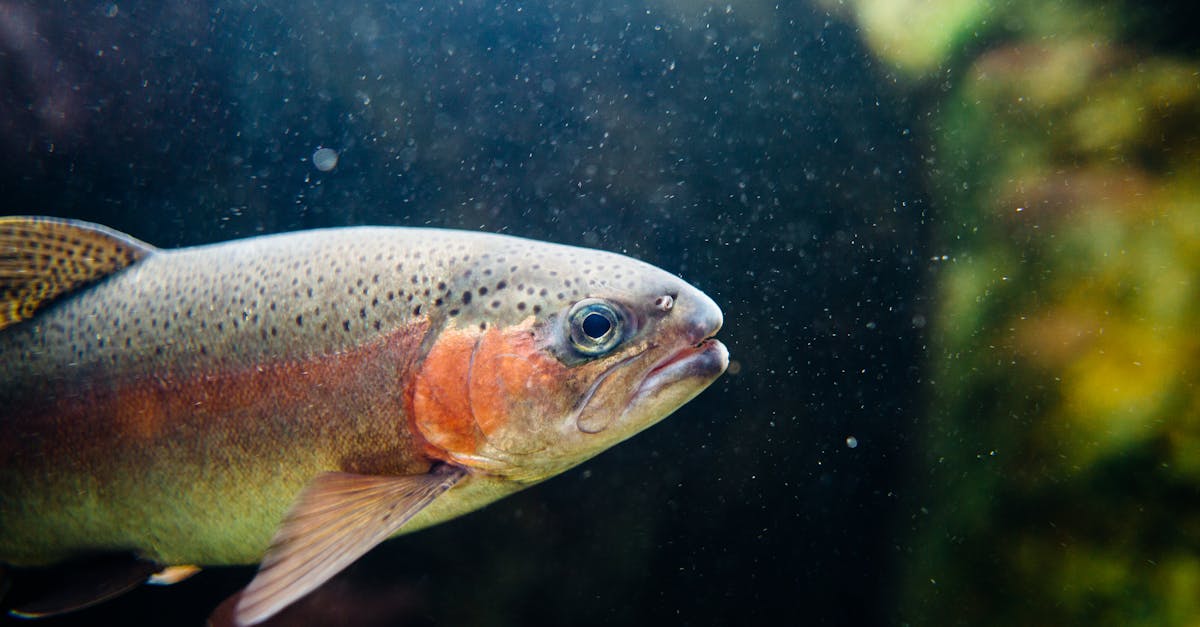
Rainbow Trout
The rainbow trout is Montana's most widespread and popular gamefish, celebrated for its explosive surface strikes, aerial acrobatics, and willingness to take a well-presented dry fly. Native to Pacific Coast drainages from Alaska to Mexico, rainbows were first introduced to Montana's waters in the late 1800s and have since established thriving populations in nearly every major river system in the state. On legendary waters like the Madison, Missouri, and Bighorn, wild rainbow trout grow fat on prolific insect hatches and provide some of the finest dry-fly fishing in North America. Rainbow trout in Montana display remarkable variation depending on their home water. Fish in nutrient-rich tailwaters like the Missouri River below Holter Dam can exceed 20 inches with regularity, their deep bodies and broad tails reflecting the abundant food supply. Freestone river rainbows, such as those in the upper Madison and Gallatin, tend to be leaner and more athletic, shaped by faster currents and colder water temperatures. In many Montana rivers, rainbows spawn in the spring from March through June, and anglers should be mindful of spawning redds during this period to protect future generations of fish. Rainbows are arguably the most versatile trout species for fly anglers. They respond well to dry flies during hatches, aggressively chase streamers, and feed heavily on nymphs subsurface throughout the year. Their fighting ability is legendary: a hooked rainbow will often launch itself completely out of the water multiple times during a battle. Montana's catch-and-release regulations on many blue-ribbon streams have produced exceptional rainbow trout fisheries with high densities of large, healthy fish that continue to draw anglers from around the world.

Lake Trout
The lake trout is the largest member of the char family and the signature deep-water gamefish of northern New England's coldest, cleanest glacial lakes. A native coldwater char of the northern tier of North America, the lake trout reaches the southern edge of its natural range in the deep, oligotrophic lakes carved by Pleistocene glaciers across northern New England, including Vermont's Lake Champlain and the remote glacial lakes of the Northeast Kingdom. Unlike the stream-dwelling brook trout to which it is related, the lake trout is a true creature of the depths, spending most of the year in the cold, dark, well-oxygenated water far below the surface. Lake trout are long-lived, slow-growing fish that can survive for decades in the frigid depths of their home lakes. Average fish run 18 to 24 inches, but trophy specimens exceeding 30 inches and 15 pounds are taken each season from the best Vermont waters, and the state record approaches 35 pounds. Their size and strength, combined with the challenge of reaching them in deep water, make lake trout a prized quarry for anglers willing to adapt their tactics to the fish's coldwater lifestyle. For fly anglers, the lake trout presents a unique seasonal opportunity. Through most of the year these fish hold too deep for practical fly fishing, but during the narrow windows of ice-out in spring and the fall turnover, lake trout move into the shallows to feed and spawn, bringing them within reach of a well-presented streamer. Casting large baitfish patterns near rocky shorelines and drop-offs during these periods can produce the fish of a lifetime, connecting the angler to the deep glacial history of Vermont's finest coldwater lakes.
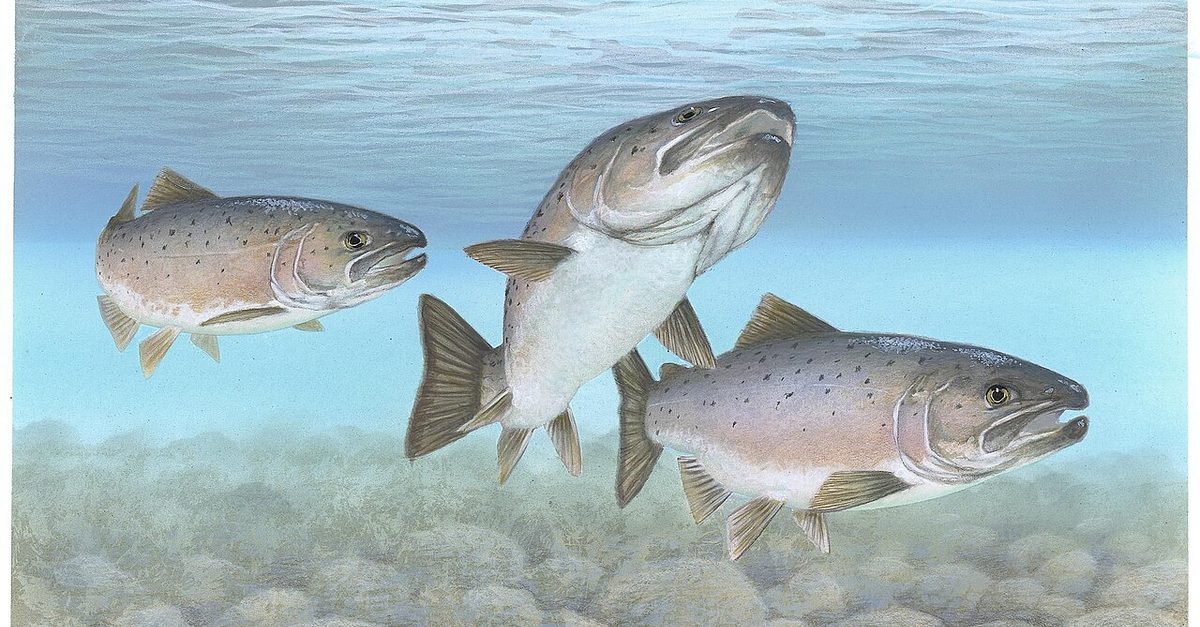
Landlocked Atlantic Salmon
The landlocked Atlantic salmon is one of New England's most prized gamefish, a freshwater-resident form of the Atlantic salmon that spends its entire life in lakes and rivers rather than migrating to the ocean. Found primarily in the lakes and rivers of Maine, New Hampshire, Vermont, and New York, landlocked salmon are genetically identical to their sea-run counterparts but have adapted to a completely freshwater life cycle, using large, cold lakes as their ocean substitute and tributary rivers as spawning habitat. Landlocked salmon are the signature gamefish of Maine's sporting camp tradition, where generations of anglers have gathered at remote wilderness lodges to fish for salmon in the Rangeley Lakes, Moosehead Lake, Sebago Lake, and the rivers that connect them. The fish combine the acrobatic fighting ability of their anadromous relatives with the accessibility of a freshwater species, leaping repeatedly when hooked and running with the kind of power and endurance that makes them one of the most exciting fish available on a fly rod in the northeastern United States. In rivers, landlocked salmon behave much like large resident trout, holding in classic lies and feeding on aquatic insects during hatches. They are particularly responsive to caddis and mayfly emergers, and the sight of a 3-pound landlocked salmon rising to a dry fly in a New England river is one of the defining experiences of northeastern fly fishing. In lakes, salmon are targeted with streamers that imitate smelt, their primary forage fish, trolled or cast from boats during the spring and fall when salmon cruise near the surface in cold-water conditions.
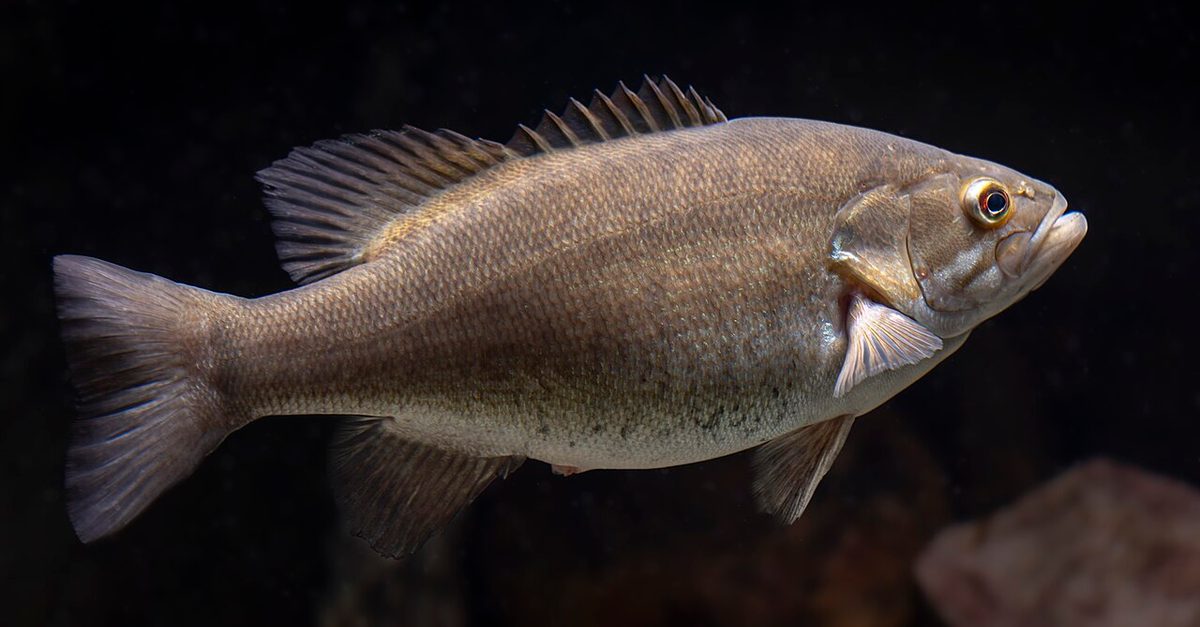
Smallmouth Bass
The smallmouth bass is one of the most popular and widely distributed gamefish in North America and one of the finest freshwater species available to fly anglers. Found in clear, cool rivers and lakes from the Great Lakes to the Southern Appalachians, smallmouth bass combine aggressive feeding behavior, remarkable fighting ability, and a preference for the kinds of rocky, current-rich habitats that are ideally suited to fly fishing. Pound for pound, the smallmouth bass is widely considered the hardest-fighting freshwater fish in North America, earning it the nickname 'the bronze bomber' for its explosive takes and powerful, acrobatic battles on the end of a line. While smallmouth bass are not a traditional trout-stream species, they have become increasingly important to fly anglers as warm-water fly fishing has grown in popularity. Rivers like the French Broad in North Carolina, the Susquehanna and Delaware in Pennsylvania, and the St. Lawrence in New York support world-class smallmouth fisheries that attract dedicated fly anglers. In many regions, smallmouth bass inhabit the lower reaches of the same river systems that hold trout in their upper reaches, providing fly anglers with a warm-water counterpart to their cold-water fishing. Smallmouth bass are particularly appealing to fly anglers because they readily take surface flies. On warm summer evenings, smallmouth will crush poppers, sliders, and large dry flies with explosive strikes that rival any trout rise. Their willingness to feed on the surface, combined with their strength and acrobatic leaping ability, makes smallmouth bass on a fly rod one of the most thrilling freshwater fly fishing experiences available.
Food Sources & Hatches
| Insect | Suggested Fly | Jan | Feb | Mar | Apr | May | Jun | Jul | Aug | Sep | Oct | Nov | Dec |
|---|---|---|---|---|---|---|---|---|---|---|---|---|---|
Chironomids (midge pupae) Morning through midday; strongest on calm overcast days | Chironomid (Bomber) | ||||||||||||
Adult midges and midge clusters Flat-calm evenings and first light | Griffith's Gnat | ||||||||||||
Callibaetis mayflies Late morning through afternoon | Parachute Adams | ||||||||||||
Damselfly nymphs Mid-morning migrations toward shore | Damselfly Nymph | ||||||||||||
Cisco and alewife (baitfish forage) First and last light; all day in winter | Grey Ghost | ||||||||||||
Yellow perch fry First light and dusk near shoreline structure | Muddler Minnow |
Chironomids (midge pupae): The most consistently important insect on the lake. Emergences over the 15-to-25-foot flats at each end drive spring indicator fishing; anchor and hang pupae one to two feet off bottom.
Adult midges and midge clusters: Surface midge activity on glassy water gives a dry-fly window for cruising rainbows. Clear water demands a long leader and a fly cast well ahead of the fish.
Callibaetis mayflies: Found over the shallower bays and weedier margins at the north and south ends rather than the deep central basin. A summer dry-fly opportunity when trout are otherwise deep.
Damselfly nymphs: Limited to the weedbeds in the shallow bays, which are modest on this low-nutrient lake, but worth fishing on a floating line along weed edges when damsels are migrating.
Cisco and alewife (baitfish forage): The engine of the coldwater fishery — cisco are listed on the DEC map sheet as a resident species. Slim, small cisco- and alewife-profile streamers outfish bulky patterns in this clarity.
Yellow perch fry: Perch-fry imitations fished off the village pier and along the shale at first light are a signature Skaneateles play for rainbows, salmon, and smallmouth alike.
Recommended Flies
Chironomid (Bomber)
Top PickChironomid Bomber hung under an indicator over the 15-to-25-foot flats is the most reliable spring pattern on the lake and one almost nobody fishes here.
Best in Spring
Grey Ghost
Top PickThe Grey Ghost profile matches cisco and alewife. Keep it slim and in the 2-3 inch range for this clarity, and fish it on an intermediate line along the shelf edges.
Best in Spring, Fall, Winter
Muddler Minnow
Top PickMuddler Minnow doubles as a perch-fry and sculpin imitation off the pier and along shale points, and takes smallmouth as readily as trout.
Best in Summer, Fall
Woolly Bugger
Top PickWoolly Bugger in olive or brown covers leeches and generic forage along the drop-offs. Small and sparse beats big and bushy in water you can see 26 feet through.
Best in All season
Also Effective
Access Points & Boat Launches
DEC Skaneateles Lake Boat Launch (Route 41A)
Boat LaunchEasyState boat launch with a concrete ramp roughly two miles south of Skaneateles village off Route 41A, the primary trailer access on the lake and the practical put-in for kayaks and small craft working the north-end shelves.
Skaneateles Park Village Pier
Wade AccessEasyPublic pier and shoreline at the village park on the north end, giving shore anglers a casting platform over deep-adjacent water. A first-light spot for perch-fry and small baitfish patterns, and one of the most productive winter shoreline stations on the lake.
Andrew R. Fuller Park (Town of Scott)
Wade AccessEasy to ModerateTown park at the far south end of the lake providing public shoreline access well away from the village crowds. The quieter end for dawn wading over shale, and the natural base for anglers working the south-end flats.
Regulations
Regulations
Skaneateles falls under New York's Finger Lakes and tributary regulations, which provide a year-round season for trout and salmon rather than the statewide spring-to-fall window — one of the lake's most useful features for cold-weather anglers. DEC instituted walleye control regulations on Skaneateles in 2022, with no catch limit and a 12-inch minimum size, in response to that species' establishment in the lake. A New York State fishing license is required. Size and creel limits for lake trout, rainbow trout, landlocked salmon, and smallmouth bass are set by DEC Region 7 and statewide rules and do change; verify current regulations with NYSDEC before you fish.
Always verify current regulations with Montana Fish, Wildlife & Parks before fishing.
Quick Facts
- Surface Area
- 8,960 acres
- Max Depth
- 300 ft
- Elevation
- 863 ft
- Lake Type
- Natural Lake
- Region
- Finger Lakes / Onondaga, Cortland & Cayuga Counties
- Best Seasons
- spring, fall, winter
- Species
- Rainbow Trout, Lake Trout, Landlocked Atlantic Salmon, Smallmouth Bass
- Difficulty
- Intermediate to Advanced
- Record Fish
- Lake trout in Skaneateles are wild and self-sustaining rather than hatchery-supported, and the combination of 300-foot depth and an abundant cisco forage base grows them well. Rainbow trout and landlocked salmon come from DEC's annual stockings and are the primary sight-fishing targets in the shallows.
- Depth Chart
- Download PDF
Nearby Lakes & Ponds
Lake Placid
Adirondack High Peaks / Essex County
Cranberry Lake
Adirondacks / St. Lawrence County
Stillwater Reservoir
Beaver River Country / Herkimer County
Lake George
Adirondacks / Warren, Essex & Washington Counties
Schroon Lake
Adirondacks / Warren & Essex Counties
Otsego Lake
Leatherstocking / Otsego County (Cooperstown, DEC Region 4)