Otsego Lake
Otsego Lake is James Fenimore Cooper's Glimmerglass, a 4,046-acre natural lake at the head of the Susquehanna that runs 167 feet deep and holds lake trout, brown trout, cisco, lake whitefish, and smallmouth bass. Cooperstown sits on its southern shore, making this the rare literary landmark that also fishes well at ice-out.
Overview
Otsego Lake lies at the very top of the Susquehanna drainage, a long north-south basin of 4,046 acres held between wooded hills in Otsego County. Cooperstown occupies the southern shore, where the lake spills out and becomes the Susquehanna River, and it was from these banks that James Fenimore Cooper renamed the water Glimmerglass in the Leatherstocking Tales. Two centuries of literary cachet mean the lake is photographed far more often than it is fished with a fly rod, which is precisely the opportunity: this is a deep, cold, genuinely two-story fishery hiding behind a tourist postcard.
The numbers explain the fishing. Otsego drops to 167 feet with a mean depth of 82 feet, which is a great deal of cold water for a lake at 1,191 feet of elevation in central New York. That volume keeps the deep layer cold and oxygenated through the summer, and DEC manages the lake accordingly: lake trout are the most sought-after species here, supported by stocking alongside naturally occurring cisco and lake whitefish. Brown trout, walleye, smallmouth bass, and yellow perch fill out a diverse gamefish list, but the lake's identity is coldwater.
For the fly angler, the calendar has a clear peak. At ice-out the water column is uniform in temperature and lake trout leave the depths to hunt the narrow littoral shelf, cruising in ten to twenty feet of water off Three Mile Point and along the shoreline below Glimmerglass State Park. The DEC contour map is worth studying before the trip, because Otsego's shallow band is genuinely narrow: the bottom falls away quickly from shore over most of the lake, and finding the handful of places where the shelf widens is most of the work. Baitfish streamers fished on sinking lines through April and May are the highest-percentage approach of the year.
As the lake stratifies through June, the trout drop out of fly range and the fishery turns to the shallows. Smallmouth bass become the practical target through July and August, holding on the rocky points and gravel shorelines and taking poppers and streamers readily; browns stay catchable early and late, particularly near the Shadow Brook inlet where evening caddis and midge activity draws fish onto the adjacent flats. This is comfortable, forgiving summer fishing, well suited to a canoe, kayak, or small boat.
The lake gives up a second coldwater window in late October, when surface temperatures fall back through the fifties and trout return to the shallows ahead of winter. Fall is the quietest season on Otsego and arguably the best-value one for a fly angler: the summer boat traffic is gone, the hills above Cooperstown are turning, and the same shelves that fished at ice-out fish again. Add in a winter ice season and a public boat launch minutes from the middle of Cooperstown, and Otsego makes an unusually easy destination for a serious stillwater trip.
Depth & Character
- Surface Area
- 4,046acres
- Max Depth
- 167ft
- Mean Depth
- 82ft
- Elevation
- 1,191ft
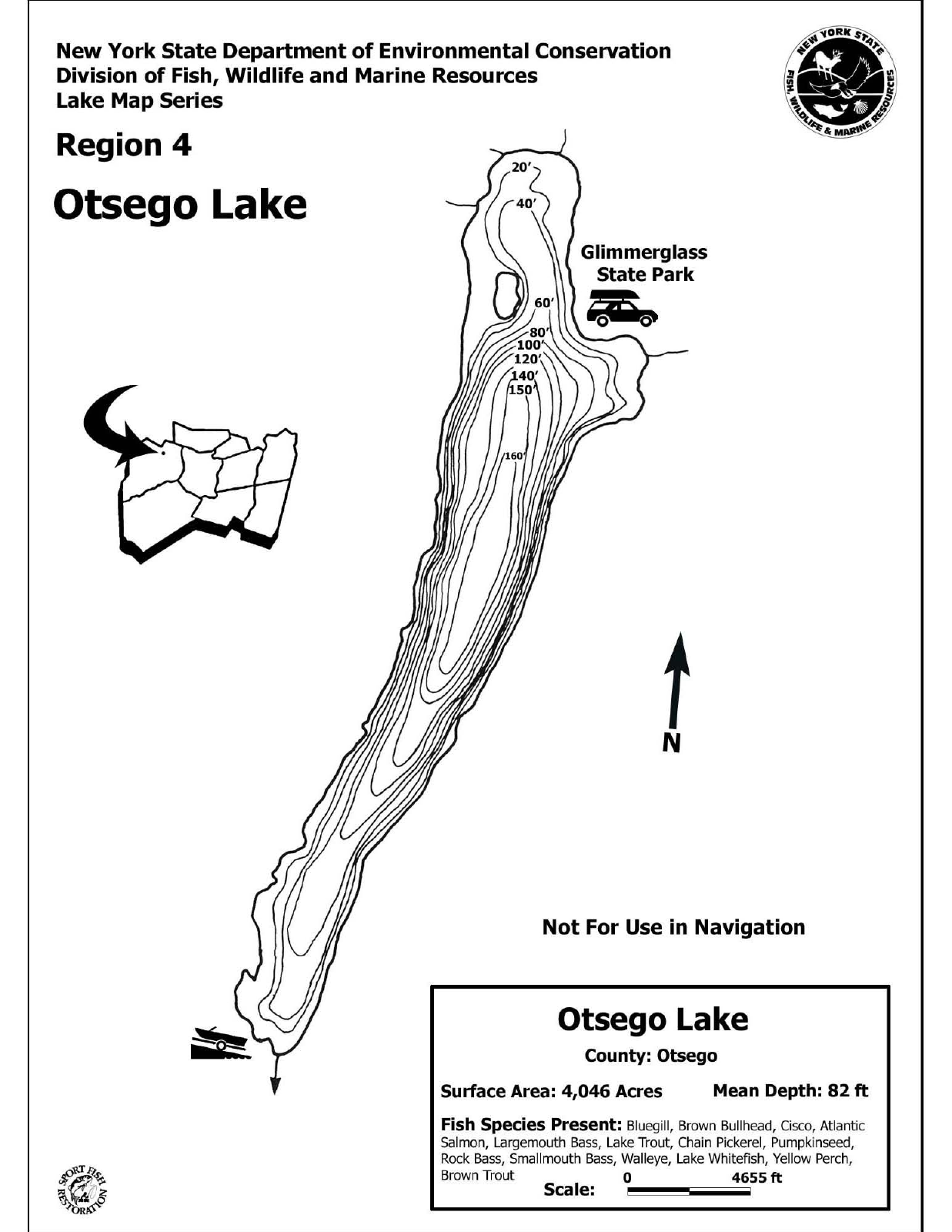
Bathymetric depth chart — click to open the full PDF. Source: Vermont DEC.
Source: Vermont DEC
Water Characteristics
Otsego is a deep, cold, natural basin: 4,046 surface acres, 167 feet at the deepest, and a mean depth of 82 feet that makes it far more of a coldwater lake than its central New York setting suggests. Water clarity is good, and the lake stratifies strongly in summer, with the thermocline separating a warm surface layer from a cold, well-oxygenated deep zone that holds lake trout, cisco, and lake whitefish through the hot months.
The DEC contour sheet shows the essential feature clearly: over much of the shoreline the bottom drops sharply, leaving only a thin littoral band before deep water. That narrow shelf concentrates almost everything a fly angler cares about. The wider shallows and points -- the water off Three Mile Point, the northeast shoreline below Glimmerglass State Park, and the flats near the north end -- hold the weed growth, the gravel and rubble structure, and the insect life. Chironomids are the backbone of the invertebrate fishery, with damselfly and dragonfly nymphs, Callibaetis, and caddis around the shallower margins and leeches through the weed edges.
Forage is what grows the trout. Cisco are the key coldwater baitfish, joined by alewife-type schooling forage and perch fry, and any streamer fished at ice-out or in late fall should suggest a slim, silvery baitfish three to five inches long. The lake's north-south axis gives the wind a long fetch, so a calm morning on Otsego can turn into a chop by mid-day.
Stocking
| Species | Size | Number | Program |
|---|---|---|---|
| Lake Trout | 8 in | 2,500 | NYSDEC stocking, Middlefield (2022 actual stocking report) |
Seasonal Fishing Guide
Spring
The ice-out window from April into May is the year's best fly fishing. Lake trout leave the depths and cruise the 10-20 foot littoral shelf, with the water off Three Mile Point and the Glimmerglass State Park shoreline the most reliable starting points. Fish slim baitfish streamers on intermediate or type-3 sinking lines, retrieved fast and parallel to the drop-off. Brown trout join in near the Shadow Brook inlet and the smaller tributary mouths as the water warms through May.
Summer
Once the lake stratifies in June the trout drop below practical fly range and the fishery becomes smallmouth-centric. Work poppers and baitfish streamers over the rocky points and gravel shorelines through July and August. Save the trout effort for first and last light: chironomid pupae fished under an indicator over the shelf, damselfly nymphs along the weed edges, and evening caddis and midge activity near the inlets.
Fall
Late October is the second coldwater window. As surface temperatures drop back through the 50s, lake trout and browns return to the shallow shelf and the same ice-out water fishes again, now without boat traffic. Streamer fishing off the points and near tributary mouths is the play, and the crowds are gone.
Winter
Ice fishing is permitted and popular, with tip-ups and jigs producing lake trout, walleye, and perch over the deeper contours and shelf edges. Fly rods stay home; if you are visiting in winter, treat it as scouting and study the contour map for spring. Verify ice safety locally and check current DEC season dates.
Access & Boats
The most convenient access is the state ramp off Lake Street at the south end in Cooperstown, a few minutes from the village center, which puts a boat on the water within reach of the lake's outlet into the Susquehanna. Glimmerglass State Park on the northeast shore offers a hand launch ideal for canoes, kayaks, and float tubes, plus shoreline access and parking within the park. At the far north end, the Springfield public landing gives a third launch point and shortens the run to the upper basin.
Shore fishing is workable but selective, because the drop-off runs close to the bank over much of the lake -- which is an advantage at ice-out, when trout cruise within a long cast of the gravel. Glimmerglass State Park and the Cooperstown end are the most practical bank spots. Float tubes and kayaks are effective for working the littoral shelf and the points, but this is a big lake with a long fetch; watch the wind and stay within reach of shore in small craft.
Ice Fishing
Ice fishing is permitted on Otsego, and winter is a genuine part of the lake's fishing culture, with anglers working tip-ups and jigs for lake trout, walleye, and perch over the deeper contours and the shelf edges. Ice quality varies across a basin this size and this deep, particularly near the outlet at Cooperstown and around inlet current, so check conditions locally before going out and confirm current DEC season dates and limits.
Fishing Pressure & Local Tips
Moderate on the water, light from fly anglers. Otsego is a busy recreational lake in summer thanks to Cooperstown's tourist traffic, and it has a steady local following of trollers, bass anglers, and a dedicated winter ice crowd. Very few people fish it with a fly rod, and almost nobody targets the ice-out lake trout window with a sinking line. Spring mornings and October weekdays are quiet; midsummer afternoons are not.
Local Knowledge
Fish the shelf, not the middle. Otsego's productive water at ice-out is the ten-to-twenty-foot band along the shoreline, and the contour map is the fastest way to find where that band widens -- Three Mile Point and the shoreline off Glimmerglass State Park are the classic starting places. Work a slim baitfish streamer on an intermediate or type-3 sinking line parallel to the drop-off rather than casting straight out from shore; you want the fly in the productive depth range for the whole retrieve.
Match the forage silhouette. Cisco and alewife-type baitfish are slender and silvery, so favor sparse, elongated streamers over bulky articulated patterns. A Grey Ghost or similar smelt-style streamer in three to four inches is the right profile, and a fast, steady strip usually outfishes a crawl for lake trout in cold spring water.
Do not ignore the inlets in the evening. Shadow Brook and the smaller tributaries pull brown trout onto the adjacent flats at last light in late spring and again in fall, and that is the best dry-fly and emerger opportunity the lake offers -- caddis and midge activity on calm evenings, fished with a floating line and a long leader. In midsummer, switch targets entirely and pound the rocky points for smallmouth; it keeps the trip fun while the trout are unreachable.
Species Present

Lake Trout
The lake trout is the largest member of the char family and the signature deep-water gamefish of northern New England's coldest, cleanest glacial lakes. A native coldwater char of the northern tier of North America, the lake trout reaches the southern edge of its natural range in the deep, oligotrophic lakes carved by Pleistocene glaciers across northern New England, including Vermont's Lake Champlain and the remote glacial lakes of the Northeast Kingdom. Unlike the stream-dwelling brook trout to which it is related, the lake trout is a true creature of the depths, spending most of the year in the cold, dark, well-oxygenated water far below the surface. Lake trout are long-lived, slow-growing fish that can survive for decades in the frigid depths of their home lakes. Average fish run 18 to 24 inches, but trophy specimens exceeding 30 inches and 15 pounds are taken each season from the best Vermont waters, and the state record approaches 35 pounds. Their size and strength, combined with the challenge of reaching them in deep water, make lake trout a prized quarry for anglers willing to adapt their tactics to the fish's coldwater lifestyle. For fly anglers, the lake trout presents a unique seasonal opportunity. Through most of the year these fish hold too deep for practical fly fishing, but during the narrow windows of ice-out in spring and the fall turnover, lake trout move into the shallows to feed and spawn, bringing them within reach of a well-presented streamer. Casting large baitfish patterns near rocky shorelines and drop-offs during these periods can produce the fish of a lifetime, connecting the angler to the deep glacial history of Vermont's finest coldwater lakes.
Brown Trout
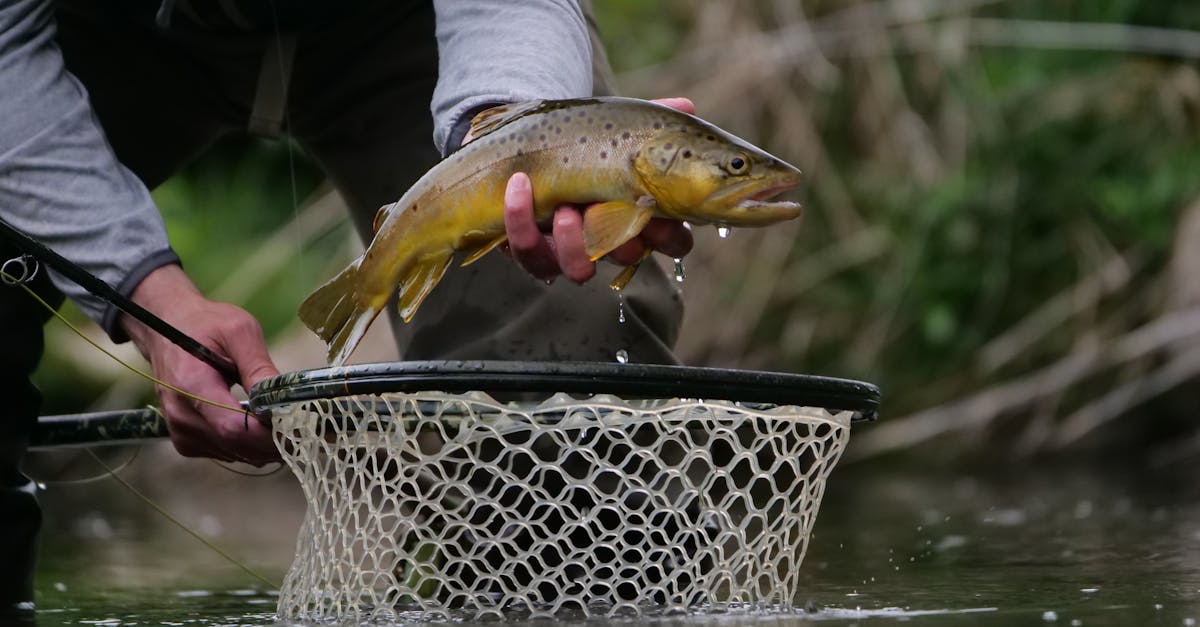
The brown trout is the most cunning and elusive trout species swimming in Montana's rivers, and it rewards patient, skilled anglers with some of the state's most memorable catches. Originally native to Europe and western Asia, brown trout were first introduced to North American waters in 1883 and arrived in Montana shortly thereafter. They have since established robust, self-sustaining populations in virtually every major trout stream in the state, from the legendary spring creeks of the Paradise Valley to the sweeping runs of the lower Madison and the deep pools of the Bighorn. Brown trout grow larger than any other trout species in Montana, and fish exceeding 24 inches are caught with regularity on premium waters. The lower Madison River, the Missouri River below Holter Dam, and the Bighorn River are particularly renowned for producing trophy-class browns. Unlike rainbows, brown trout spawn in the fall (October through November), and their aggressive pre-spawn behavior creates an exciting window for streamer fishing as large males become territorial and attack anything that enters their domain. Browns are notably more nocturnal than other trout species, and many of the biggest fish are caught during low-light conditions. What sets brown trout apart from other species is their wariness and selectivity. Large browns are notoriously difficult to fool, often refusing flies that are even slightly off in size, color, or presentation. They tend to establish and defend prime feeding lies (undercut banks, logjams, deep pools, and boulder gardens), and an angler who learns to read water and identify these holding spots will consistently catch more and larger fish. This combination of difficulty, size potential, and intelligence makes the brown trout the most prized quarry for many serious Montana fly fishers.
Smallmouth Bass
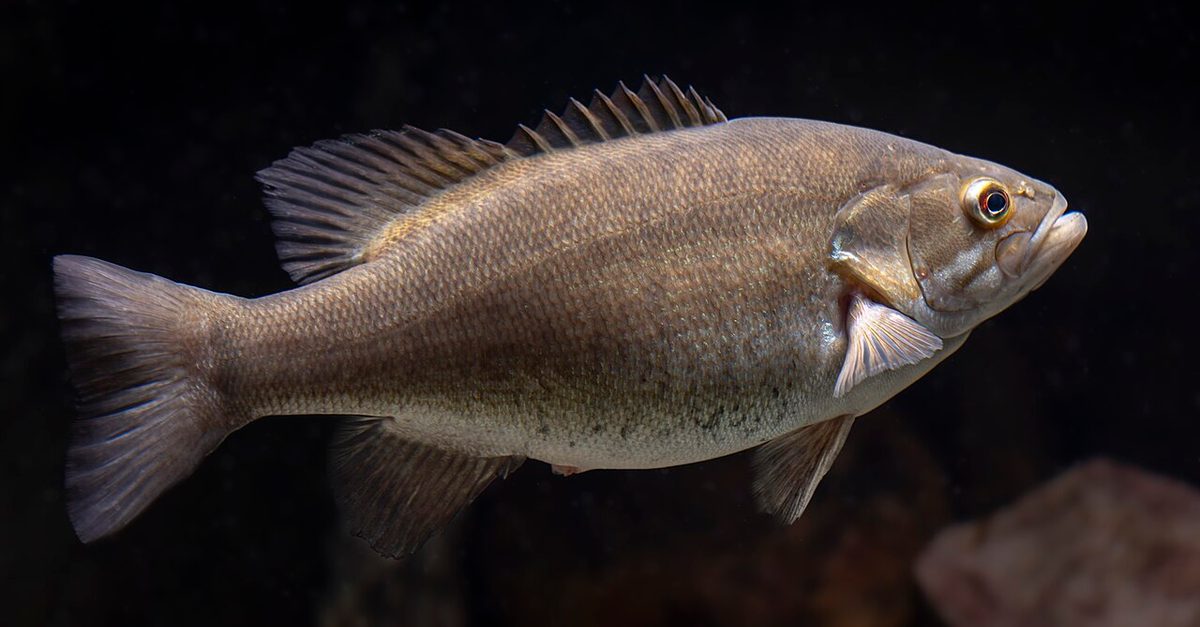
The smallmouth bass is one of the most popular and widely distributed gamefish in North America and one of the finest freshwater species available to fly anglers. Found in clear, cool rivers and lakes from the Great Lakes to the Southern Appalachians, smallmouth bass combine aggressive feeding behavior, remarkable fighting ability, and a preference for the kinds of rocky, current-rich habitats that are ideally suited to fly fishing. Pound for pound, the smallmouth bass is widely considered the hardest-fighting freshwater fish in North America, earning it the nickname 'the bronze bomber' for its explosive takes and powerful, acrobatic battles on the end of a line. While smallmouth bass are not a traditional trout-stream species, they have become increasingly important to fly anglers as warm-water fly fishing has grown in popularity. Rivers like the French Broad in North Carolina, the Susquehanna and Delaware in Pennsylvania, and the St. Lawrence in New York support world-class smallmouth fisheries that attract dedicated fly anglers. In many regions, smallmouth bass inhabit the lower reaches of the same river systems that hold trout in their upper reaches, providing fly anglers with a warm-water counterpart to their cold-water fishing. Smallmouth bass are particularly appealing to fly anglers because they readily take surface flies. On warm summer evenings, smallmouth will crush poppers, sliders, and large dry flies with explosive strikes that rival any trout rise. Their willingness to feed on the surface, combined with their strength and acrobatic leaping ability, makes smallmouth bass on a fly rod one of the most thrilling freshwater fly fishing experiences available.
Food Sources & Hatches
| Insect | Suggested Fly | Jan | Feb | Mar | Apr | May | Jun | Jul | Aug | Sep | Oct | Nov | Dec |
|---|---|---|---|---|---|---|---|---|---|---|---|---|---|
Cisco and alewife-type baitfish first light through mid-morning; overcast days all day | Grey Ghost | ||||||||||||
Chironomids (midges) dawn and dusk; emergences build through the morning | Chironomid (Bomber) | ||||||||||||
Caddisflies evening into dark | Elk Hair Caddis | ||||||||||||
Callibaetis late morning through early afternoon on calm days | Parachute Adams | ||||||||||||
Damselfly nymphs mid-morning through afternoon | Damselfly Nymph | ||||||||||||
Dragonfly nymphs all day | Dragonfly Nymph | ||||||||||||
Leeches all day; best in low light | Woolly Bugger |
Cisco and alewife-type baitfish: Not a hatch but the lake's defining forage. At ice-out, lake trout push onto the 10-20 foot shelf hunting slim silvery baitfish. Grey Ghost and similar smelt-style streamers in 3-4 inches, stripped fast on an intermediate or type-3 line along the drop-off.
Chironomids (midges): The backbone of Otsego's invertebrate fishery and the most consistent way to reach trout from a boat once the ice-out streamer window closes. Anchor over 12-25 feet on the shelf and hang pupa patterns a foot or two off bottom under an indicator.
Caddisflies: Evening caddis activity near the Shadow Brook inlet and the smaller tributary mouths brings brown trout onto the adjacent flats. The lake's best dry-fly window; fish a floating line and a long leader on calm evenings.
Callibaetis: Speckled mayflies come off over the shallower flats and weedy margins in summer. A Parachute Adams or sparkle dun covers duns and cripples; watch for cruising fish rather than casting blind.
Damselfly nymphs: Damsel nymphs migrate toward shore and emergent vegetation through early summer along the weedy sections of the littoral band. Retrieve in short strips just under the surface near weed edges.
Dragonfly nymphs: A season-long staple in the weedbeds and along the rubble shorelines. Crawled slowly on a sinking line over the shelf, a dragon nymph takes trout early and late in the season and smallmouth through the summer.
Leeches: Always available and always worth trying. A Woolly Bugger crawled or stripped along drop-offs and weed edges is the most versatile fly on the lake, covering trout at ice-out and in fall and smallmouth all summer.
Recommended Flies
Grey Ghost
Top PickThe signature Otsego fly. Fished on an intermediate or type-3 line along the 10-20 foot shelf off Three Mile Point and the state park shoreline, it matches the slim, silvery cisco and alewife-type forage that lake trout hunt when the water is uniformly cold.
Best in spring (ice-out) and late fall
Chironomid (Bomber)
Top PickAnchor over 12-25 feet on the littoral shelf at first light and hang a chironomid pupa a foot or two off bottom under an indicator. The most reliable way to reach trout once the lake stratifies in June.
Best in late spring through fall
Woolly Bugger
Top PickOlive and black Woolly Buggers cover leeches, sculpins, and general baitfish along drop-offs and weed edges. The right fly when you do not know what is happening, and effective on smallmouth all summer.
Best in all open water
Elk Hair Caddis
Top PickEvening caddis near the Shadow Brook inlet and the smaller tributary mouths is the lake's best dry-fly opportunity for brown trout. Fish it on flat water at dusk with a long leader.
Best in late spring through summer evenings
Also Effective
Access Points & Boat Launches
Lake Street State Boat Launch (Cooperstown)
Boat LaunchEasyState ramp off Lake Street at the south end of the lake in Cooperstown, minutes from the village center and the lake's outlet into the Susquehanna River. The most convenient trailer launch on Otsego and the natural starting point for working the southern shelf at ice-out.
Glimmerglass State Park Hand Launch
Boat LaunchEasyHand launch on the northeast shore inside Glimmerglass State Park, ideal for canoes, kayaks, and float tubes working the north-end shelf and the Shadow Brook inlet water. Park shoreline gives the best walk-in bank access on the lake, with the littoral shelf close enough to reach on foot at ice-out.
Springfield Public Landing (North End)
Boat LaunchEasyPublic landing at the north end of the lake in Springfield, the shortest run to the upper basin and the north-end flats. A useful launch when the wind is out of the south and the Cooperstown end is rough.
Regulations
Regulations
Otsego Lake falls under DEC Region 4 regulations, including the special regulations that apply to trout, lake trout, and other species in the region; ice fishing is permitted. A New York State fishing license is required. Season dates, minimum lengths, and daily limits for lake trout, brown trout, walleye, and black bass differ by species and change periodically, so review the current New York freshwater fishing regulations at dec.ny.gov before you fish.
Always verify current regulations with Montana Fish, Wildlife & Parks before fishing.
Quick Facts
- Surface Area
- 4,046 acres
- Max Depth
- 167 ft
- Elevation
- 1,191 ft
- Lake Type
- Natural Lake
- Region
- Leatherstocking / Otsego County (Cooperstown, DEC Region 4)
- Best Seasons
- spring, summer, fall
- Species
- Lake Trout, Brown Trout, Smallmouth Bass
- Difficulty
- Beginner to Intermediate
- Record Fish
- DEC identifies lake trout as the most sought-after species on Otsego, and the lake's depth and cisco forage base support fish well above the average for a central New York water.
- Depth Chart
- Download PDF
Nearby Lakes & Ponds
Lake Placid
Adirondack High Peaks / Essex County
Cranberry Lake
Adirondacks / St. Lawrence County
Stillwater Reservoir
Beaver River Country / Herkimer County
Skaneateles Lake
Finger Lakes / Onondaga, Cortland & Cayuga Counties
Lake George
Adirondacks / Warren, Essex & Washington Counties
Schroon Lake
Adirondacks / Warren & Essex Counties