Steelhead
Oncorhynchus mykiss
Overview
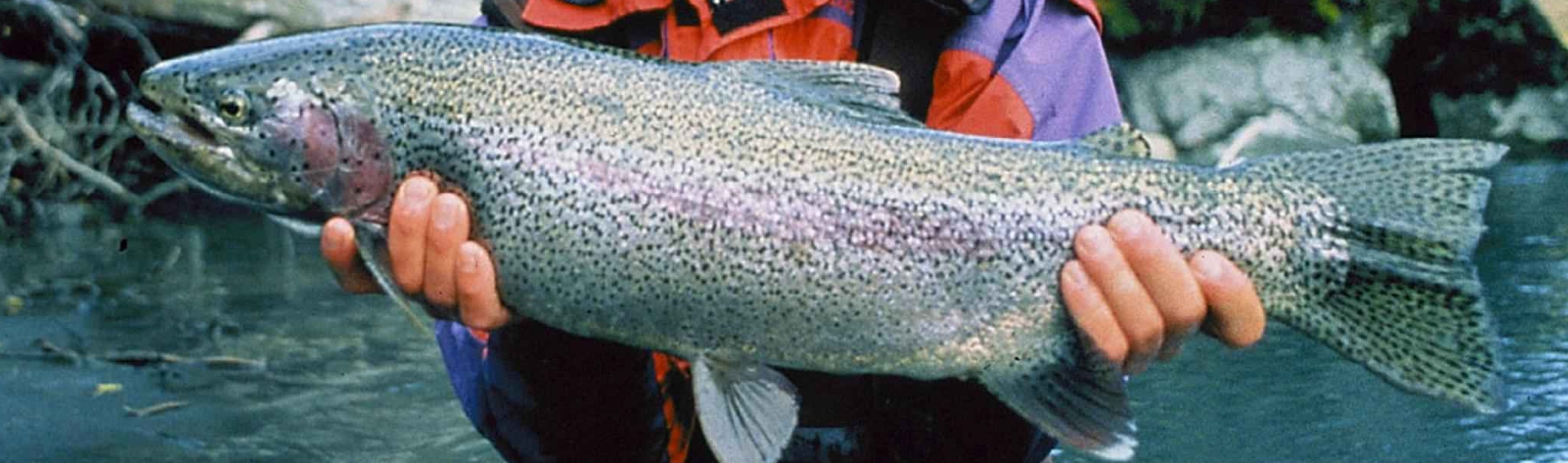
The steelhead is the undisputed monarch of Pacific Northwest fly fishing, a sea-run rainbow trout that combines the power of a salmon with the acrobatics of its resident rainbow cousins, wrapped in a chrome-bright package that can exceed 20 pounds. Genetically identical to rainbow trout (Oncorhynchus mykiss), steelhead are the anadromous form of the species: born in freshwater rivers, they migrate to the Pacific Ocean as juveniles, spend one to three years feeding in the rich saltwater environment, then return to their natal rivers to spawn. This ocean migration transforms a modest stream-resident rainbow into a muscular, silver-sided powerhouse that is widely considered the greatest gamefish available to fly anglers in North America.
Steelhead are found in rivers throughout the Pacific Northwest, with Idaho, Oregon, and Washington offering the most celebrated fly-fishing opportunities. Idaho's Clearwater and Salmon rivers host legendary runs of summer steelhead, B-run fish that spend extra time in the ocean and return as massive 10- to 20-pound adults. Oregon's Deschutes River is perhaps the most iconic swing-fishing destination in the world, with summer steelhead providing consistent action from July through November. Washington's Olympic Peninsula rivers, the Skagit system, and tributaries of the Columbia River offer both summer and winter steelhead runs, drawing anglers from around the globe.
Swing fishing for steelhead with a spey or switch rod is widely regarded as the pinnacle of fly-fishing pursuits. The technique involves casting a fly across and downstream, then allowing it to swing through the current on a tight line, covering water methodically as the angler steps downstream between each cast. The take of a steelhead on the swing, a sudden, violent pull that can nearly wrench the rod from your hands, is an experience that steelhead anglers describe as addictive beyond reason. The combination of the cast, the swing, the anticipation, the remote and beautiful river settings, and the sheer power of the fish creates a pursuit that many dedicated anglers build their entire fishing lives around.
Identification
Identifying a steelhead versus a resident rainbow trout is straightforward when the fish is fresh from the ocean but becomes more challenging as the fish spends time in freshwater. A fresh-run steelhead is brilliantly chrome-bright: bright silver sides with a steel-blue to gunmetal-gray back, very little visible spotting, and a faint or absent lateral stripe. This chrome coloration, combined with the fish's superior size (most adult steelhead are 24 inches or longer), immediately distinguishes it from resident rainbows. The body of a fresh steelhead is deep, muscular, and torpedo-shaped, reflecting months of high-protein ocean feeding.
As steelhead spend time in freshwater, they gradually lose their chrome brightness and revert to coloration that more closely resembles a large resident rainbow trout. The lateral pink stripe becomes more pronounced, spots darken and become more visible, and the overall body color shifts from silver to a more typical rainbow olive and pink. Males develop a pronounced kype (hooked jaw) and deepen in color as spawning approaches. At this stage, distinguishing a large resident rainbow from a colored-up steelhead can be difficult without looking at the fish's overall size, body condition, and the presence of sea lice (small parasitic crustaceans) that indicate recent ocean migration.
In rivers where both steelhead and resident rainbows coexist, such as Idaho's Clearwater or Oregon's Deschutes, size is the most practical field indicator: any rainbow trout over 20 inches in an anadromous stream is almost certainly a steelhead or at least has steelhead genetics. Some fisheries agencies clip the adipose fin on hatchery steelhead, so a missing adipose fin indicates a hatchery-origin fish and may affect regulations. Always check local regulations regarding the distinction between wild and hatchery steelhead, as many rivers require the release of all wild (adipose fin intact) steelhead while allowing harvest of hatchery (fin-clipped) fish.
Diet
Steelhead feeding behavior varies dramatically between their ocean phase and their freshwater spawning migration, and understanding this distinction is fundamental to fly-fishing tactics. In the ocean, steelhead are voracious predators that feed on squid, herring, anchovies, sand lance, euphausiid shrimp, and other marine organisms. This protein-rich marine diet is what fuels their extraordinary growth: a juvenile rainbow that entered the ocean at 6 to 8 inches can return as a 28-inch, 10-pound adult after just two years at sea. The ocean phase is entirely outside the angler's reach, but it explains the exceptional size and condition of returning fish.
Once steelhead re-enter freshwater rivers for their spawning migration, they largely stop actively feeding. Unlike resident rainbow trout that must eat to survive, returning adult steelhead have stored enough energy in the form of body fat and muscle to sustain them through the entire freshwater phase of their journey, which can last several months. However, steelhead do not completely shut down; they will strike flies and lures out of aggression, territorial instinct, curiosity, and what appears to be a lingering feeding reflex. This willingness to take a fly despite not needing to eat is what makes steelhead fishing possible, and it is why fly selection is driven more by triggering a reaction than by matching a hatch.
The flies and techniques that provoke steelhead strikes tend to involve movement, color, and silhouette rather than precise imitation. Traditional steelhead wet flies (bright, flowing patterns like the Green Butt Skunk, Purple Peril, and Intruder) are designed to pulse and breathe in the current, triggering an aggressive response from fish holding in runs and tailouts. During the summer months when water temperatures are warmer and fish are more active, steelhead will sometimes chase dry flies skated across the surface, a technique that produces heart-stopping surface strikes and represents the ultimate expression of steelhead fly fishing.
Habitat Preferences
Steelhead require large, connected river systems with unimpeded access from the ocean to upstream spawning tributaries, a habitat need that puts them in direct conflict with the extensive dam systems built throughout the Columbia, Snake, and other Pacific Northwest river basins. In their natal rivers, steelhead spawn in moderate-current gravel runs similar to those used by resident rainbow trout, with water temperatures between 42 and 52 degrees Fahrenheit. Spawning typically occurs from March through June, depending on the run timing and the specific river system. Unlike Pacific salmon, steelhead are iteroparous: they can survive spawning and return to the ocean to spawn again in subsequent years, though repeat spawners are relatively rare.
During their upstream migration, steelhead hold in specific types of water that anglers learn to identify and target. Classic steelhead holding water includes the tails of deep pools (tailouts), the slicks above riffles, the inside seams of current breaks, and moderate-speed runs with depths of 3 to 6 feet over cobble or boulder substrate. Steelhead prefer slower, deeper water than active resident trout, and they position themselves where the current provides a comfortable resting spot with overhead concealment from predators. Reading steelhead water is a skill that develops over years of fishing, and experienced anglers can walk a stretch of river and identify the handful of spots where steelhead are most likely to hold.
Steelhead runs are broadly categorized as summer-run or winter-run, which dictates where and when anglers encounter them. Summer steelhead enter rivers from June through October, often traveling hundreds of miles upstream to hold in deep pools through the late summer and fall before spawning the following spring. Idaho's Clearwater River and Oregon's Deschutes River are classic summer-run fisheries. Winter steelhead enter rivers from November through March, typically spawning closer to the ocean in lower-elevation tributaries. Washington's Olympic Peninsula rivers and Oregon's coastal streams host the best winter steelhead fisheries. Water temperature, flow levels, and the presence of deep holding pools all determine where summer and winter steelhead stage during their respective runs.
Fishing Tactics
Swing fishing with a spey or switch rod is the iconic and most widely practiced method for fly fishing for steelhead. The technique involves casting a fly on a sink-tip or floating line across and slightly downstream, then allowing the current to carry the fly in an arc across the river while maintaining tension on the line. After the fly completes its swing and hangs directly below the angler, a few strips are made, and then the angler takes two steps downstream and repeats the process. This methodical, meditative approach covers a run from top to bottom, presenting the fly to every steelhead holding in the water. Standard swing flies include Intruders, Marabou Speys, String Leeches, and classic steelhead wet flies (Green Butt Skunk, Purple Peril, Signal Light) in sizes 2 through 6, tied on tubes or standard shanks.
Skating dry flies for steelhead is considered the holy grail of the sport. When conditions align (water temperatures above 50 degrees Fahrenheit, summer-run fish that have been in the river long enough to become responsive, and relatively low, clear water), steelhead will come to the surface to attack a large dry fly or waking pattern skated across the current. Bombers, Muddler Minnows, October Caddis dries, and purpose-built waking flies in sizes 2 through 6 are the standard offerings. The visual take of a steelhead on a surface fly (a head-and-tail rise, a violent slash, or a full-body launch out of the water) is the single most thrilling moment in all of fly fishing, and many dedicated steelhead anglers fish exclusively with dry flies despite the lower hook-up rate.
Nymphing for steelhead is the most consistently productive method and is particularly effective during winter runs and in high or off-color water conditions when fish are less responsive to swung flies. Techniques include indicator nymphing with large stonefly patterns, egg imitations, and Glo Bugs drifted through known holding water, as well as tight-line (Euro-style) nymphing with heavy tungsten flies bounced along the bottom. While nymphing lacks the romance of the swung fly, it puts more steelhead on the end of the line per hour of fishing than any other technique. Use stout leaders (0X to 2X) and heavy rods (7- to 8-weight) when nymphing for steelhead, as these are powerful fish that require strong tackle for a quick, clean release.
Conservation
Steelhead conservation status varies significantly by population and geographic region. Several steelhead populations, known as Distinct Population Segments (DPS) or Evolutionarily Significant Units (ESU), are listed as Threatened or Endangered under the Endangered Species Act. Snake River Basin steelhead (which includes Idaho's Clearwater and Salmon River fish), Upper Columbia River steelhead, and several other DPS carry Threatened status, while others remain unlisted. The primary threats to steelhead are dam-related migration barriers and mortality, degraded freshwater habitat from logging and development, reduced ocean survival linked to changing marine conditions, and interbreeding with hatchery fish that can reduce wild population fitness. Hatchery programs for steelhead are widespread and controversial. While hatcheries provide fishing opportunity and mitigate some of the losses caused by dams, extensive research has shown that hatchery steelhead are less fit than wild fish, and interbreeding between hatchery and wild populations can reduce the survival and reproductive success of subsequent generations. Many rivers now operate under Wild Fish Management policies that distinguish between hatchery and wild steelhead in harvest regulations. Anglers can support steelhead conservation by releasing all wild steelhead (identified by an intact adipose fin), supporting dam removal and fish passage projects, and advocating for hatchery reform that reduces genetic impacts on wild populations.
Rivers Where Found
Salmon River
Central Idaho
Deschutes River
Central Oregon
McKenzie River
Willamette Valley / Cascades
John Day River
Eastern Oregon (High Desert / Blue Mountains)
Skagit River
Northwest Washington, Skagit County
Klickitat River
South Central Washington, Klickitat County
Lower Sacramento River
Northern California / Shasta County
Upper Klamath River
Northern California / Siskiyou County
Quick Facts
- Scientific Name
- Oncorhynchus mykiss
- Average Size
- 24-30"
- Trophy Size
- 36+"
- State Record
- 30 lbs 2 oz, caught in the Clearwater River, Idaho in 1973; Oregon record 35 lbs 8 oz from the Columbia River
- Found In
- Salmon River, Deschutes River, McKenzie River, John Day River, Skagit River, Klickitat River, Lower Sacramento River, Upper Klamath River