Profile Lake
Profile Lake is a 13-acre fly-fishing-only alpine tarn on the floor of Franconia Notch, tucked beneath the cliffs of Cannon Mountain at 1,930 feet. Shallow, cold, and glass-clear, it is a stocked brook trout pond where sight-fishing small dries and soft-hackles is the whole game.
Overview
Profile Lake is barely a lake at all by the standards of New Hampshire's big water. Thirteen acres of clear, cold water sitting on the floor of Franconia Notch at roughly 1,930 feet, it is pinned between the cliffs of Cannon Mountain on one side and the parkway on the other, and you can walk its full shoreline in an easy morning. The pond takes its name from the stone profile of the Old Man of the Mountain, which looked down on it from the Cannon cliffs until the formation collapsed in 2003. What remains is one of the most photographed pieces of water in the White Mountains and, improbably, a genuinely good little brook trout fishery.
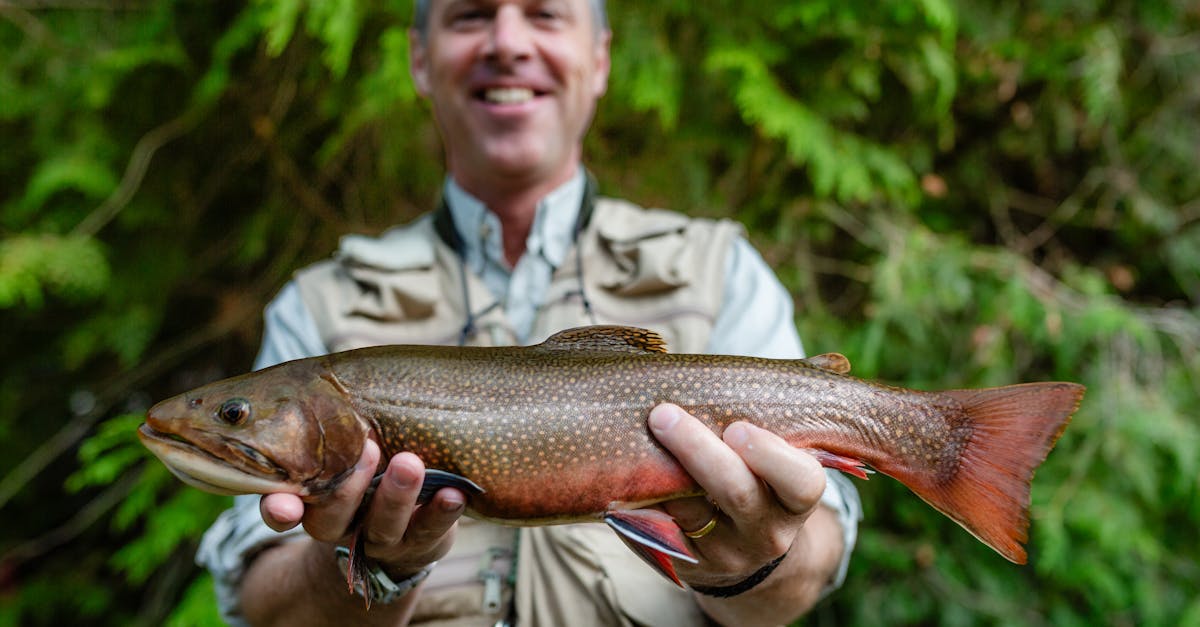
Profile Lake is the headwater of the Pemigewasset River, and everything about the fishery follows from that. The pond is fed by cold seepage and snowmelt off the notch walls, it is oligotrophic and nutrient-poor, and it holds a coldwater fishery — eastern brook trout, with yellow perch as the only other resident species of note. New Hampshire Fish and Game manages it as a stocked Designated Trout Pond and, importantly, as a fly-fishing-only water. That single designation is why the pond fishes as well as it does given its location: no bait, no hardware, and none of the put-and-take churn that a roadside stocked pond would otherwise attract.
For a fly angler the appeal is the scale. With an average depth of about six feet and a maximum of roughly fifteen, there is no water here that a floating line cannot reach. On a calm morning you can stand on the bank and watch brook trout cruise the shoreline shelf in ones and twos, working a beat, tipping up on midges and terrestrials. It is sight fishing on a stillwater, which is a rare thing in New England, and it demands the same restraint spring creek fishing does: soft presentations, long leaders, and patience with fish that have already watched a dozen anglers this week.
The calendar is short and front-loaded. Franconia Notch holds ice and snow late, so the season starts weeks behind the Seacoast ponds, but the stretch from ice-out through June is the best of the year — cold water, hungry stocked and holdover brookies, and steady midge and small mayfly activity in the shallows. Midsummer slows through the middle of the day, though the pond's elevation and cold inflows keep it worth fishing at first and last light when lowland trout ponds have gone lethargic. September and early October bring fish back to the margins, and the notch in fall is worth the drive whether or not the trout cooperate.
What Profile Lake will not give you is solitude. It sits inside Franconia Notch State Park directly off the parkway, with paved paths and a viewing area, so hikers, photographers, and tourists are constant company. Treat that as part of the character rather than a problem. Fish it early, fish it small, and accept that the best fish in the pond has probably watched a hundred people walk past its lie today. Few waters in New Hampshire deliver this much scenery for this little effort.
Depth & Character
- Surface Area
- 13acres
- Max Depth
- 15ft
- Mean Depth
- 6ft
- Elevation
- 1,930ft
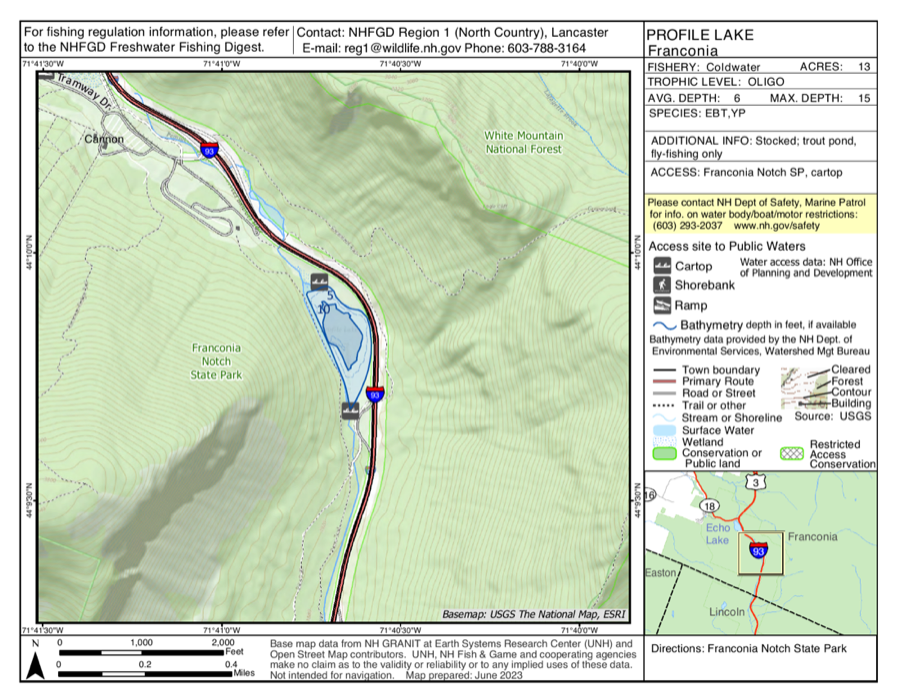
Bathymetric depth chart — click to open the full PDF. Source: Vermont DEC.
Source: Vermont DEC
Water Characteristics
Profile Lake is a shallow, cold, oligotrophic tarn. New Hampshire Fish and Game's bathymetric map lists an average depth of about six feet, with the deepest sounding near fifteen and roughly thirteen surface acres. There is no thermocline to speak of and no deep-water refuge — the entire basin sits within fly range from a float tube, and in places from shore. The bottom shelves gently off most of the shoreline before flattening into a small central bowl.
Water clarity is exceptional. The pond is fed by cold seepage and runoff off the walls of Franconia Notch and is nutrient-poor, so visibility often runs bottom-to-surface across much of the basin. That clarity is both the attraction and the difficulty: you can see cruising brook trout, and they can see you, your line, and the shadow of your rod. Weed growth is limited compared with a lowland trout pond, and the richest bug life concentrates along the shallow margins and near the outlet where the Pemigewasset begins.
The depth chart is worth a look before a first visit mainly for what it rules out. There is no structure to search at forty feet and no rock pile to jig over. The map's real value is in showing where the modest drop-off from the shoreline shelf into the central bowl runs, because that seam — generally six to twelve feet — is where cruising fish travel and where a slowly retrieved soft-hackle or small bugger earns its keep.
Stocking
| Species | Size | Number | Program |
|---|---|---|---|
| Brook Trout | Not published | Stocked annually; counts in NHFG stocking report | NHFG Designated Trout Pond — stocked, fly-fishing-only water |
Seasonal Fishing Guide
Spring
Franconia Notch holds ice and snow well past the southern ponds, so the season opens late here — but the first weeks of open water are the best fishing of the year. Brook trout work the shallow shelf aggressively in cold water. Fish small buggers and soft-hackles on a floating line with a slow hand-twist retrieve along the drop-off, and switch to chironomid pupae under an indicator when you see subtle head-and-tail rises. Overcast, breezy days break up the surface and make the clear water far more forgiving. Expect winter conditions into May at 1,930 feet.
Summer
Midday slows as the shallow basin warms, but elevation and cold inflows keep dawn and dusk productive well into July and August. Concentrate on the first and last hour of light: small dries for sipping fish, midge emergers in the film, and terrestrials — ants and beetles — dropped tight against the wooded bank on windy afternoons. Fish long, fine leaders and keep low; midsummer is when the pond's clarity punishes a sloppy approach.
Fall
September and early October are the second peak. Cooling water pulls holdover brookies back into the margins, and pre-spawn fish color up and get territorial. Slow-stripped small streamers and buggers along the shelf draw hard takes, and mild afternoons still bring midge and small mayfly activity. Foliage in the notch makes this the most scenic session of the year even when the fishing is slow. Check the Digest for the trout-pond closing date before a late trip.
Winter
Profile Lake is managed under New Hampshire's Designated Trout Pond season, which closes before winter, and the pond is not a winter fishery. Franconia Notch turns into a ski and winter-recreation destination instead. Use the off-season to tie the small dries, midge pupae, and soft-hackles the pond demands, and verify current season dates in the Freshwater Fishing Digest before planning an early-season trip.
Access & Boats
Access could hardly be simpler. Profile Lake lies within Franconia Notch State Park directly alongside the Franconia Notch Parkway, with park parking and a short, level walk to the water. NHFG's map marks the pond as cartop/hand-launch access only — there is no trailered boat ramp, and the pond is sized for a canoe, kayak, or float tube carried the short distance from the lot.
Because the water is shallow and clear throughout, shoreline and wading access is legitimate here rather than a consolation prize. Much of the perimeter can be walked and fished, and careful wading along the shelf puts a caster in position on cruising fish without a boat. A float tube is still the best tool, mainly because it lets you sit off the shelf and cast in toward the bank rather than the other way around, which matters enormously on water this transparent.
Motor Restrictions
Cartop / hand-launch access only — no trailered boat ramp. Canoes, kayaks, and float tubes only.
Fishing Pressure & Local Tips
Pressure here is a mixed picture. Profile Lake is one of the most visited spots in the White Mountains, sitting alongside a state park parkway with a viewing area and foot traffic all summer, so the pond is never lonely and the trout see people constantly. The fly-fishing-only designation filters actual angling pressure hard, though: casual visitors are far more likely to be photographing Cannon Mountain than fishing, and the water sees a fraction of the fishing effort of comparably accessible stocked ponds. Early weekday mornings in May and quiet weekday evenings in September are the practical windows for having real water to yourself.
Local Knowledge
Go small and go long. On thirteen acres of glass-clear water, the difference between a refusal and an eat is usually tippet diameter and leader length, not pattern. Twelve to fifteen feet of leader tapered to 5X or 6X, a size 16-20 dry or a size 14-16 soft-hackle, and a presentation that lands well ahead of a cruising fish rather than on top of it will out-fish anything more aggressive.
Fish the cruise lanes, not the water. Brook trout in a shallow tarn patrol predictable beats along the shoreline shelf and the drop-off into the central bowl. Rather than blind-casting, spend ten minutes watching for a moving fish or a series of rises tracking in one direction, then get ahead of it. This is the closest thing to stalking that New Hampshire stillwater offers, and it rewards standing still far more than covering ground.
Mind your shadow and your timing. The notch walls throw long shadows early and late, and those low-light windows both cool the shallows and hide your silhouette — the two conditions that matter most here. In midsummer, plan a dawn session and an evening session and spend the middle of the day on the Pemigewasset downstream instead. Terrestrials also matter more than most anglers expect on a pond ringed by forest and cliff; a small ant or beetle dropped tight to the bank on a breezy August afternoon is a reliable trick.
Species Present
Food Sources & Hatches
| Insect | Suggested Fly | Jan | Feb | Mar | Apr | May | Jun | Jul | Aug | Sep | Oct | Nov | Dec |
|---|---|---|---|---|---|---|---|---|---|---|---|---|---|
Chironomids (Midges) Early morning and evening; all day in cool, overcast weather | Chironomid (Bomber) | ||||||||||||
Midge Clusters and Emergers Flat-calm evenings and first light | Griffith's Gnat | ||||||||||||
Blue-Winged Olives and Small Mayflies Overcast afternoons; cool, damp days | BWO Emerger | ||||||||||||
Caddisflies Evening | Elk Hair Caddis | ||||||||||||
Terrestrials (Ants and Beetles) Warm, breezy afternoons | · | ||||||||||||
Damselfly Nymphs Late morning through afternoon | Damselfly Nymph | ||||||||||||
Leeches and General Subsurface Forage All day; best in low light | Black Woolly Bugger |
Chironomids (Midges): The backbone food source in a nutrient-poor alpine tarn. Pupae fished under a small indicator over six to twelve feet along the shelf drop-off take fish from ice-out through fall. Watch for slow head-and-tail rises rather than splashy takes.
Midge Clusters and Emergers: When brook trout are sipping in glassy water and refusing everything, a Griffith's Gnat or small emerger in the film on 6X is usually the answer. Presentation matters far more than pattern.
Blue-Winged Olives and Small Mayflies: Small mayfly activity peaks on the gray, drizzly days that also make this clear pond fishable. Emergers in the surface film outproduce high-riding duns when fish are cruising and inspecting.
Caddisflies: Evening caddis along the wooded shoreline give the most reliable dry-fly window of midsummer. A size 16-18 Elk Hair Caddis twitched once and then left to sit draws confident rises from cruising brookies.
Terrestrials (Ants and Beetles): The pond is ringed by forest and cliff, and wind pushes terrestrials onto the water all summer. Drop a small ant or beetle within a foot of the bank on a breezy August afternoon — an underused tactic here.
Damselfly Nymphs: Limited weed growth keeps the damsel migration modest compared with lowland trout ponds, but a slowly retrieved damsel nymph along the shallow margins is worth a look in June and early July.
Leeches and General Subsurface Forage: With no smelt or baitfish base, small dark buggers stand in for leeches and general invertebrate forage. Keep them sizes 12-16 and retrieve slowly along the shelf-to-basin seam.
Recommended Flies
Parachute Adams
Top PickThe default dry on Profile Lake. Sizes 16-20 cover small mayflies and generic surface activity, and its low-riding profile suits fish inspecting flies in glass-clear water.
Best in Spring through Fall
Chironomid (Bomber)
Top PickChironomid pupa fished under a small indicator over six to twelve feet along the drop-off. In a nutrient-poor tarn with no baitfish, midges are the primary food and this is the highest-percentage subsurface fly.
Best in Spring through Fall
Soft Hackle Pheasant Tail
Top PickSoft-Hackle Pheasant Tail on a slow hand-twist retrieve along the shoreline shelf. Suggests emerging midges and mayflies without committing to either — the classic small-pond brook trout searching fly.
Best in Spring and Fall
Black Woolly Bugger
Top PickA small black Woolly Bugger in sizes 12-16 is the search pattern at ice-out and again in September, retrieved slowly along the seam where the shelf drops into the central bowl. Resist the urge to fish it big.
Best in Spring and Fall
Also Effective
Access Points & Boat Launches
Profile Lake Cartop Launch (Franconia Notch State Park)
Boat LaunchEasyHand-carry/cartop launch inside Franconia Notch State Park, a short walk from parkway parking. No trailered boat ramp — canoes, kayaks, and float tubes only. Puts a paddler on the whole thirteen acres within minutes.
Franconia Notch Parkway Parking
ParkingEasyState park parking off the Franconia Notch Parkway serves the lake and the Old Man of the Mountain viewing area. Short, level walk on paved path to the water — the most convenient trout-pond access in the White Mountains.
Profile Lake Shoreline Wade Access
Wade AccessEasy to ModerateMuch of the pond's perimeter is walkable, and the shallow shelf allows careful wading into casting position on cruising brook trout. Best used early and late when the notch walls shade the water and reduce your silhouette on the clear surface.
Regulations
Regulations
Profile Lake is a fly-fishing-only water on New Hampshire Fish and Game's designated FFO list — fly tackle and flies only, no bait and no lures — and it is managed as a stocked Designated Trout Pond, which carries its own season dates and creel limits distinct from the general open-water rules. Access is cartop/hand launch only; there is no trailered ramp. A New Hampshire fishing license is required. Designated Trout Pond seasons and limits are set annually and differ from the general lake season, so confirm current opening and closing dates, limits, and gear specifics in the New Hampshire Freshwater Fishing Digest at wildlife.nh.gov before you fish.
Always verify current regulations with Montana Fish, Wildlife & Parks before fishing.
Quick Facts
- Surface Area
- 13 acres
- Max Depth
- 15 ft
- Elevation
- 1,930 ft
- Lake Type
- Natural Lake
- Region
- Grafton County / White Mountains (Franconia Notch)
- Best Seasons
- spring, fall
- Species
- Brook Trout
- Difficulty
- Beginner to Intermediate
- Depth Chart
- Download PDF
Nearby Lakes & Ponds
Newfound Lake
Lakes Region / Grafton County
Lake Winnipesaukee
Lakes Region / Belknap & Carroll Counties
Squam Lake
Lakes Region / Grafton, Carroll & Belknap Counties
Lake Sunapee
Dartmouth-Lake Sunapee / Sullivan & Merrimack Counties
First Connecticut Lake
Great North Woods / Coos County
Second Connecticut Lake
Great North Woods / Coos County