Willard Pond
Willard Pond is a 110-acre fly-fishing-only trout pond tucked inside NH Audubon's dePierrefeu Wildlife Sanctuary in Antrim, where petroleum motors are banned and the shoreline is undeveloped forest. Stocked with brook and rainbow trout each spring and surprisingly deep at 58 feet, it is southern New Hampshire's purest stillwater fly-fishing experience.
Overview
Willard Pond lies at 1,158 feet in the hills of Antrim, on the eastern edge of New Hampshire's Monadnock Region, and it is one of the very few waters in the state where the rules themselves guarantee the character of the fishing. Willard is a designated trout pond managed as fly-fishing-only, and petroleum-powered motors are prohibited. The result is 110 acres of quiet water surrounded almost entirely by conserved land: the pond sits within NH Audubon's dePierrefeu Wildlife Sanctuary, with Bald Mountain and Goodhue Hill rising directly from the shoreline. There are no cottages, no wakes, and no jet skis. On a still June morning the loudest thing on the pond is usually a loon.
For a small pond it is strikingly deep. Willard drops to roughly 58 feet with a mean depth near 25 feet, unusual for a Monadnock-area water of this size and the single most important fact about the fishery. That depth keeps a genuine coldwater layer intact through July and August, so the brook trout and rainbows New Hampshire Fish and Game stocks each spring do not simply cook off by midsummer the way they do in shallower southern-New Hampshire ponds. Holdover fish are part of the equation here, and the pond fishes well into fall precisely because it has somewhere cold to hide in between.
The fishery is straightforward: eastern brook trout and rainbow trout supported by spring stocking, with smallmouth bass present as a warmwater component along the rocky shoreline. NHFG classifies the pond as an oligotrophic cold-and-warm water fishery, and in practice a fly angler is trout fishing from ice-out through June, mixing trout and bass through the heat of summer, then trout fishing again from September until the season closes. Nobody comes to Willard for numbers of large fish. They come because a 12-inch brook trout taken on a chironomid from a canoe at first light, with a wooded ridge reflected in flat water, is worth more than a dozen fish caught somewhere noisier.
Tactically, Willard is a textbook stillwater and one of the best places in New Hampshire to learn the discipline. Chironomid pupae fished under an indicator over the 15-to-30-foot contours account for more trout here than anything else. Callibaetis duns and spinners bring fish to the surface on warm, low-wind afternoons from early summer into September, the June damselfly migration produces some of the most exciting sight fishing of the year as nymphs swim toward shoreline vegetation, and leeches and Woolly Buggers stripped or crawled along the drop-offs work in every month the pond is open.
Access is deliberately modest — a gravel launch suitable for canoes, kayaks, and float tubes, plus a walkable shoreline and sanctuary trail system. Because motors are limited to electric and paddle, the pond never feels crowded even on good days, and a float tube or canoe is genuinely all the boat anyone needs. Willard Pond is the rare New England stillwater where the regulations, the setting, and the fishery all point in the same direction, and it deserves a place on any serious northeastern stillwater angler's short list.
Depth & Character
- Surface Area
- 110acres
- Max Depth
- 58ft
- Mean Depth
- 25ft
- Elevation
- 1,158ft
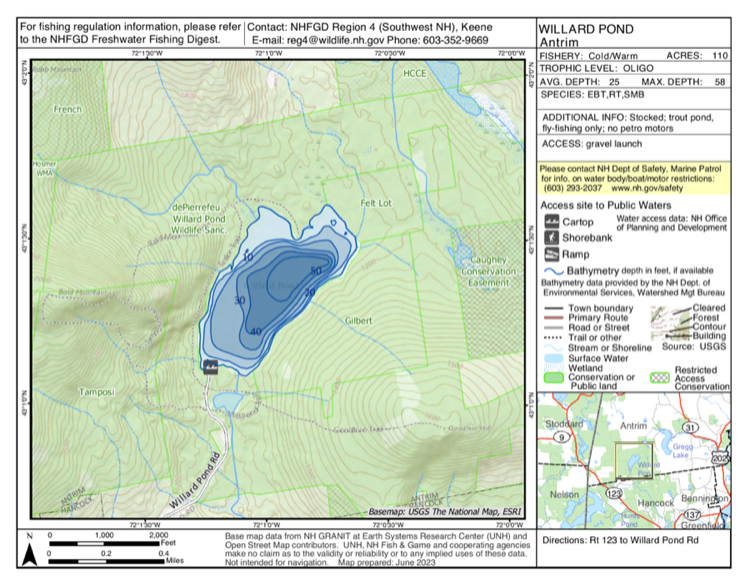
Bathymetric depth chart — click to open the full PDF. Source: Vermont DEC.
Source: Vermont DEC
Water Characteristics
Willard is a small, clear, oligotrophic basin whose bathymetry does most of the work. From the shoreline the bottom shelves through weedy shallows and rocky margins before falling into a central hole of roughly 58 feet, with a mean depth around 25 feet — an unusually deep average for a 110-acre pond. The NHFG depth chart shows that deep water concentrated in the main basin rather than spread evenly, which means the productive fly-fishing water is the transitional band where the shallow shelf breaks toward the depths.
That depth supports a real thermocline. By early July the pond stratifies and trout drop to the cooler layer, holding along the deeper edges rather than cruising the flats; by September, cooling and turnover push them back up. Water clarity is good and the pond is generally sheltered and calm, so leader length and a delicate presentation matter more than they would on a wind-riffled big lake. On flat calm days trout can be maddeningly selective in the top few feet.
Weed growth and rocky structure line much of the shoreline and drive the insect life. Chironomids emerge from the soft-bottom areas across a long season, Callibaetis mayflies work the shallower margins in summer, damselfly and dragonfly nymphs live in and around the weedbeds, and leeches are always present. Because the pond is small and hemmed in by hills, wind lanes and slicks form predictably and are worth reading — cruising trout follow them.
Stocking
| Species | Size | Number | Program |
|---|---|---|---|
| Brook Trout | Not published | Annual spring stocking | NHFG designated trout pond — annual spring stocking |
| Rainbow Trout | Not published | Annual spring stocking | NHFG designated trout pond — annual spring stocking |
Seasonal Fishing Guide
Spring
Ice-out through the fourth-Saturday-in-April opener and on into early June is the peak window. Trout — both freshly stocked fish and holdovers that wintered in the deep basin — cruise the shallows and shoreline shelf in cold water. Chironomid pupae under an indicator over 10 to 20 feet, Woolly Buggers and leeches crawled along the drop-off, and small soft-hackles on a slow retrieve all produce. Overcast, breezy days beat flat-calm sun on this clear pond.
Summer
June brings the damselfly migration and the first steady Callibaetis activity — the best dry-fly and sight-fishing weeks of the year. As the pond stratifies in July, trout move to the deeper edges: fish leeches and dragonfly nymphs on intermediate or full-sink lines through midday, and save the shallows for dawn and the last hour of light. Smallmouth bass along the rocky shoreline are a fun midday alternative when the trout go deep.
Fall
September and October are the pond's second peak. Cooling water and turnover push trout back into the upper layers and against shoreline structure, and holdover rainbows and brookies feed hard before the season closes. Streamers and leeches fished shallow, plus late-season midge activity on calm afternoons, make October the quietest and often the best fishing of the year. Confirm the trout-pond closing date before planning a late trip.
Winter
The open-water fly-fishing season defines Willard; there is no established hard-water tradition here, and designated trout ponds follow their own season dates in the NH Freshwater Fishing Digest. Use the winter months to tie chironomid pupae and damsel nymphs, and watch for Monadnock-region ice-out reports in April.
Access & Boats
A gravel launch on the pond serves canoes, kayaks, car-top boats, and float tubes; there is no ramp built for trailered powerboats and none is needed, since petroleum-powered motors are prohibited and only electric motors and paddle craft are allowed. The pond is small enough that a canoe or float tube covers all of the productive water in a morning, and a tube held just off the shelf break is the classic Willard rig. Shoreline access is available on foot along the dePierrefeu Wildlife Sanctuary property, and the sanctuary's trail network (including the routes up Bald Mountain and Goodhue Hill) puts walkable bank within reach of a fly rod in several places. Parking is limited and informal — arrive early on summer weekends. Treat the sanctuary as the conservation property it is: stay on established trails, pack out everything, and respect posted NH Audubon rules.
Motor Restrictions
No petroleum-powered motors. Electric motors and paddle craft (canoe, kayak, float tube) only.
Ice Fishing
Willard is not a hard-water destination, and its reputation rests entirely on the open-water fly-fishing season. As a designated trout pond it follows New Hampshire's trout-pond season dates rather than the general lake rules, and winter access is limited by the sanctuary setting and the small, informal parking area. Anyone considering a winter trip should confirm current season dates and whether ice fishing is permitted on this specific water in the New Hampshire Freshwater Fishing Digest before going.
Fishing Pressure & Local Tips
Light to moderate, and self-limiting by design. The fly-fishing-only rule filters out most casual anglers, the petroleum-motor ban keeps powerboats off entirely, and the small parking area caps how many people can be on the water at once. Spring weekends after the trout-pond opener see the heaviest use, as do bluebird summer afternoons when hikers and paddlers share the pond. Weekday mornings and the entire month of October are frequently solitary. The trout do see flies — this is not naive water — but pressure is spread thin enough that a careful angler is rarely fishing behind someone else.
Local Knowledge
Fish the chironomid game seriously. More Willard trout fall to a pupa suspended under an indicator over 15 to 30 feet of water than to anything else in the box. Anchor or hold a tube over the break between the shelf and the deeper basin, hang the fly one to three feet off bottom, and resist the urge to move — let the pond come to you. A second fly at a different depth speeds up the search on the first morning of a trip.
Watch the calendar for the damsel migration. Sometime in June, damselfly nymphs begin swimming toward shoreline weeds and emergent stems, and trout hunt them in water shallow enough to see the takes. A slim damsel nymph retrieved with short, steady strips parallel to the weedline is the highest-percentage way to catch a good fish in daylight. Dragonfly nymphs work the same water all summer with a slower, more deliberate crawl.
Adjust to the thermocline as summer sets in. Once the pond stratifies in July, stop fishing the shallows in the middle of the day and work the deeper edges on an intermediate or full-sinking line with a leech or Woolly Bugger, then return to the margins at first and last light. Come September, turnover brings fish back up and the shallow-water tactics that failed in August start working again — October is the most underrated month on this pond.
Species Present
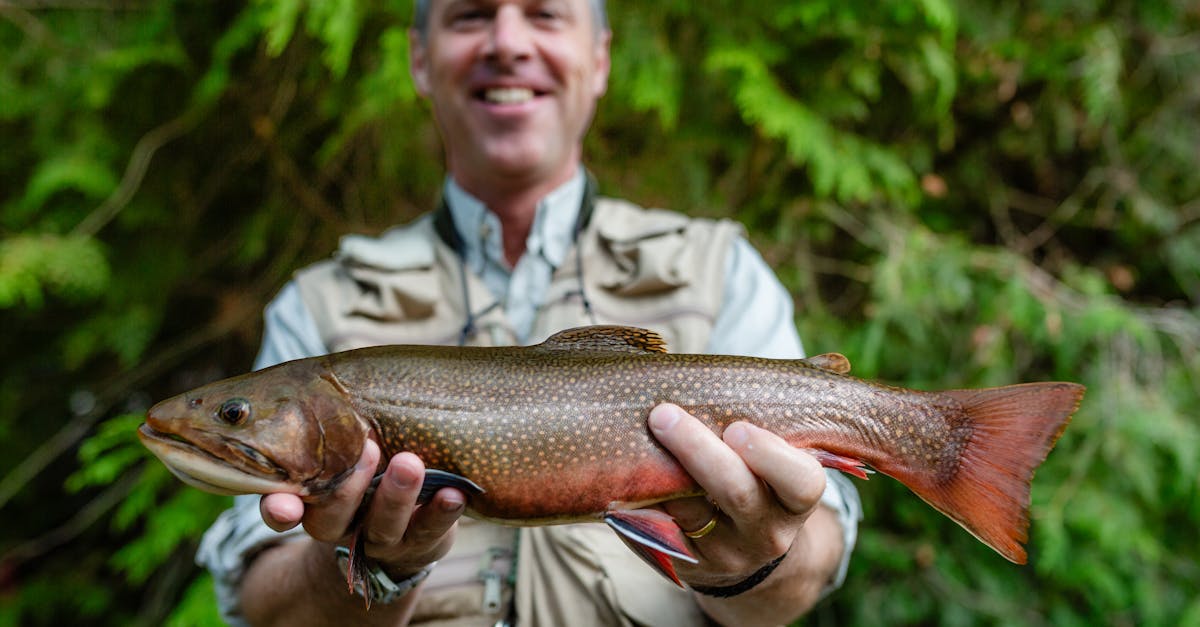
Brook Trout
The brook trout is widely considered the most beautiful freshwater fish in North America, and catching one in a pristine Montana mountain stream is an experience that captures the essence of backcountry fly fishing. Despite their common name, brook trout are not true trout at all; they are a species of char (genus Salvelinus), more closely related to lake trout and Arctic char than to rainbows or browns. Native to eastern North America from Georgia to Hudson Bay, brook trout were among the first salmonids introduced to Montana's waters in the late 1800s and have since established self-sustaining populations in cold, high-elevation streams and lakes throughout the state. In Montana, brook trout thrive best in small, cold headwater streams and high mountain lakes where competition from larger trout species is minimal. In these environments, they are often the dominant, or only, salmonid present. The trade-off is size: Montana stream-dwelling brook trout typically range from 6 to 10 inches, with fish over 12 inches considered noteworthy in most waters. What they lack in size, however, they more than make up for in beauty and willingness to eat a fly. Brookies are aggressive feeders that will strike attractor dry flies, nymphs, and small streamers with enthusiasm, making them an ideal species for beginning fly anglers and a delightful quarry for anyone who appreciates small-stream fishing. Brook trout do present a conservation paradox in Montana. While they are a beloved and beautiful gamefish, they are non-native and can negatively impact native species, particularly Yellowstone and westslope cutthroat trout. In headwater streams, brook trout often outcompete cutthroats for food and spawning habitat due to their higher reproductive rate and earlier maturation. As a result, Montana FWP has implemented brook trout removal projects on some streams to restore native cutthroat populations. In many waters, liberal harvest limits for brook trout are encouraged to reduce their numbers and benefit native fish. Anglers can enjoy excellent brook trout fishing while actively helping conservation by keeping a few for the pan.
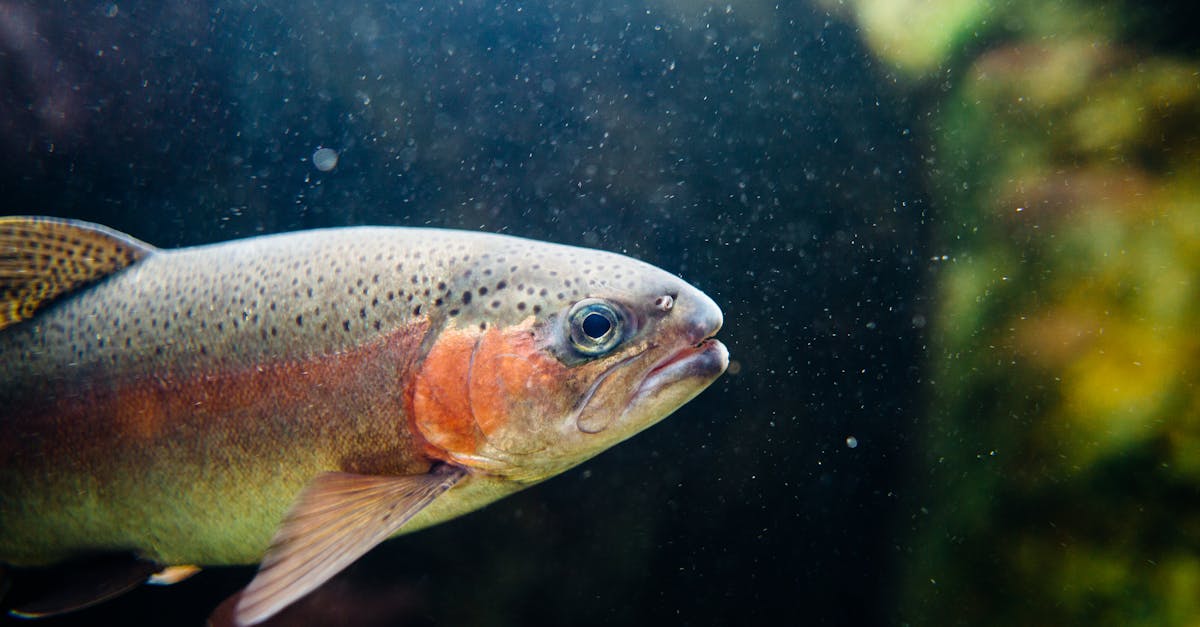
Rainbow Trout
The rainbow trout is Montana's most widespread and popular gamefish, celebrated for its explosive surface strikes, aerial acrobatics, and willingness to take a well-presented dry fly. Native to Pacific Coast drainages from Alaska to Mexico, rainbows were first introduced to Montana's waters in the late 1800s and have since established thriving populations in nearly every major river system in the state. On legendary waters like the Madison, Missouri, and Bighorn, wild rainbow trout grow fat on prolific insect hatches and provide some of the finest dry-fly fishing in North America. Rainbow trout in Montana display remarkable variation depending on their home water. Fish in nutrient-rich tailwaters like the Missouri River below Holter Dam can exceed 20 inches with regularity, their deep bodies and broad tails reflecting the abundant food supply. Freestone river rainbows, such as those in the upper Madison and Gallatin, tend to be leaner and more athletic, shaped by faster currents and colder water temperatures. In many Montana rivers, rainbows spawn in the spring from March through June, and anglers should be mindful of spawning redds during this period to protect future generations of fish. Rainbows are arguably the most versatile trout species for fly anglers. They respond well to dry flies during hatches, aggressively chase streamers, and feed heavily on nymphs subsurface throughout the year. Their fighting ability is legendary: a hooked rainbow will often launch itself completely out of the water multiple times during a battle. Montana's catch-and-release regulations on many blue-ribbon streams have produced exceptional rainbow trout fisheries with high densities of large, healthy fish that continue to draw anglers from around the world.
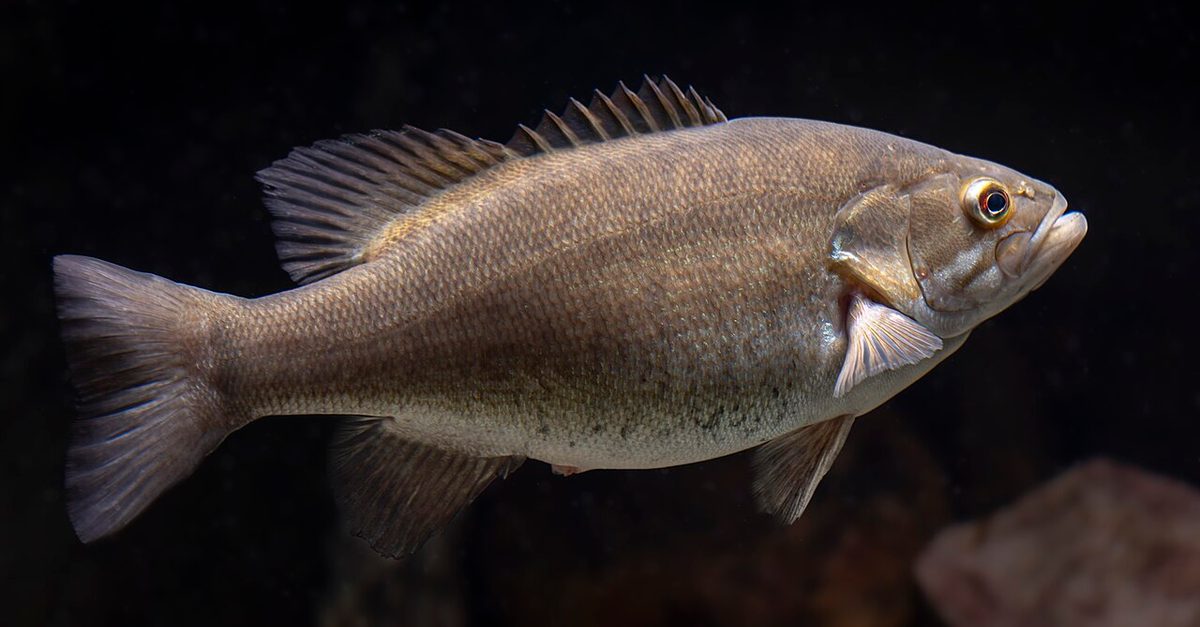
Smallmouth Bass
The smallmouth bass is one of the most popular and widely distributed gamefish in North America and one of the finest freshwater species available to fly anglers. Found in clear, cool rivers and lakes from the Great Lakes to the Southern Appalachians, smallmouth bass combine aggressive feeding behavior, remarkable fighting ability, and a preference for the kinds of rocky, current-rich habitats that are ideally suited to fly fishing. Pound for pound, the smallmouth bass is widely considered the hardest-fighting freshwater fish in North America, earning it the nickname 'the bronze bomber' for its explosive takes and powerful, acrobatic battles on the end of a line. While smallmouth bass are not a traditional trout-stream species, they have become increasingly important to fly anglers as warm-water fly fishing has grown in popularity. Rivers like the French Broad in North Carolina, the Susquehanna and Delaware in Pennsylvania, and the St. Lawrence in New York support world-class smallmouth fisheries that attract dedicated fly anglers. In many regions, smallmouth bass inhabit the lower reaches of the same river systems that hold trout in their upper reaches, providing fly anglers with a warm-water counterpart to their cold-water fishing. Smallmouth bass are particularly appealing to fly anglers because they readily take surface flies. On warm summer evenings, smallmouth will crush poppers, sliders, and large dry flies with explosive strikes that rival any trout rise. Their willingness to feed on the surface, combined with their strength and acrobatic leaping ability, makes smallmouth bass on a fly rod one of the most thrilling freshwater fly fishing experiences available.
Food Sources & Hatches
| Insect | Suggested Fly | Jan | Feb | Mar | Apr | May | Jun | Jul | Aug | Sep | Oct | Nov | Dec |
|---|---|---|---|---|---|---|---|---|---|---|---|---|---|
Chironomids (Midges) Early morning and evening, with emergences through the day in cool weather | Chironomid (Bomber) | ||||||||||||
Callibaetis Mayfly Late morning through warm afternoons | Parachute Adams | ||||||||||||
Damselfly Nymph Migration Mid-morning through afternoon on warm, calm days | Damselfly Nymph | ||||||||||||
Dragonfly Nymphs All day, best in low light | Dragonfly Nymph | ||||||||||||
Leeches Dawn, dusk, and overcast days | Woolly Bugger | ||||||||||||
Midge Cluster / Surface Film Activity Flat-calm evenings and early mornings | Griffith's Gnat |
Chironomids (Midges): The backbone of the Willard food chain and the most reliable way to catch trout here. Fish pupae under an indicator over 15-30 feet along the shelf break, hung one to three feet off bottom. Adult clusters on calm evenings bring fish to the surface.
Callibaetis Mayfly: Willard's dry-fly hatch. Duns ride the surface on low-wind afternoons over the shallower margins, with spinner falls late in the day. A Parachute Adams or sparkle dun in size 14-16 covers it; lengthen the leader on flat water.
Damselfly Nymph Migration: The June migration of damsel nymphs toward shoreline weeds and emergent stems is the most exciting sight fishing on the pond. Retrieve a slim nymph in short steady strips parallel to the weedline and watch for wakes.
Dragonfly Nymphs: Present in and around the weedbeds all season and a large meal that big holdover trout will move for. Fish a heavy nymph with a slow, deliberate crawl along weed edges and the drop-off.
Leeches: A constant forage item and the default searching pattern on this pond. Work olive, black, and brown leeches or Woolly Buggers along the drop-off on an intermediate line in spring and fall, deeper on a full-sink once the pond stratifies.
Midge Cluster / Surface Film Activity: On glassy evenings trout sip clustered adults and stillborn midges in the film. A Griffith's Gnat or small emerger on a long fine leader is the answer; approach quietly, because the water is clear and the takes are subtle.
Recommended Flies
Chironomid (Bomber)
Top PickThe single most productive pattern on Willard. Fish pupae in black, olive, and red under an indicator over the shelf break, suspended one to three feet off bottom. Sizes 14-18.
Best in Spring through Fall
Damselfly Nymph
Top PickEssential for the early-summer damsel migration. Retrieve in short steady strips parallel to weedlines and emergent vegetation; trout hunt these in water shallow enough to see the eat.
Best in June through July
Woolly Bugger
Top PickThe all-purpose Willard searching fly. Olive and black on an intermediate line along the drop-off in spring and fall, on a full-sink through midsummer. Also takes smallmouth off the rocky shoreline.
Best in Spring through Fall
Parachute Adams
Top PickCovers the Callibaetis duns on warm, low-wind afternoons from June into September. Sizes 14-16 on a long, fine leader — this pond is clear and calm-day trout are picky.
Best in Summer
Access Points & Boat Launches
Willard Pond Gravel Launch
Boat LaunchEasyGravel hand-launch on the pond serving canoes, kayaks, car-top boats, and float tubes. There are no facilities for trailered powerboats and none are needed — petroleum motors are prohibited, so it is electric and paddle craft only. This is the main put-in and the fastest way onto the productive shelf-break water.
dePierrefeu Wildlife Sanctuary Trailhead
ParkingEasyParking and trailhead for NH Audubon's dePierrefeu Wildlife Sanctuary, the conserved land that surrounds the pond and keeps its shoreline undeveloped. Trails lead along the water and up Bald Mountain and Goodhue Hill. Parking is limited and fills on pleasant summer weekends; arrive early.
Sanctuary Shoreline Walk-In
Wade AccessModerateWalkable shoreline along the sanctuary side of the pond, reached on foot from the trail system. Provides bank casting to the near shelf and weedline for anglers without a boat, though the deeper water that holds midsummer trout is out of reach from shore. Best in spring and fall when fish are shallow.
Regulations
Regulations
Willard Pond is a New Hampshire designated trout pond managed as fly-fishing-only, so it appears on NHFG's fly-fishing-only waters list and conventional gear, bait, and spinning tackle are not permitted. Petroleum-powered motors are prohibited; electric motors and paddle craft only. Designated trout ponds open on the fourth Saturday in April and follow closing dates, length limits, and daily bag limits set specifically for trout ponds rather than the general statewide lake rules, and those limits vary by water. A New Hampshire fishing license is required, and the surrounding NH Audubon dePierrefeu Wildlife Sanctuary has its own property rules to respect. Always verify current seasons, limits, and gear restrictions in the New Hampshire Freshwater Fishing Digest at wildlife.nh.gov before fishing.
Always verify current regulations with Montana Fish, Wildlife & Parks before fishing.
Quick Facts
- Surface Area
- 110 acres
- Max Depth
- 58 ft
- Elevation
- 1,158 ft
- Lake Type
- Natural Lake
- Region
- Monadnock Region / Hillsborough County (Antrim)
- Best Seasons
- spring, summer, fall
- Species
- Brook Trout, Rainbow Trout, Smallmouth Bass
- Difficulty
- Beginner to Intermediate
- Depth Chart
- Download PDF
Nearby Lakes & Ponds
Newfound Lake
Lakes Region / Grafton County
Lake Winnipesaukee
Lakes Region / Belknap & Carroll Counties
Squam Lake
Lakes Region / Grafton, Carroll & Belknap Counties
Lake Sunapee
Dartmouth-Lake Sunapee / Sullivan & Merrimack Counties
First Connecticut Lake
Great North Woods / Coos County
Second Connecticut Lake
Great North Woods / Coos County