Dailey Lake
Dailey Lake is a 205-acre natural stillwater tucked under the Absaroka Range southeast of Emigrant, a short drive off the Yellowstone River in Paradise Valley. Heavily stocked rainbows and Big Timber-strain Yellowstone cutthroat — including oversized retired broodstock — make it an underserved alternative to the crowded river below Livingston.
Overview
Dailey Lake sits in a bench of open sagebrush country southeast of Emigrant, tucked against the western flank of the Absaroka Range at 5,238 feet. It covers about 205 acres and bottoms out at only 23 feet, which makes it a small, shallow, sun-warmed basin by Montana standards — nothing like the deep glacial trenches or the big Missouri reservoirs. What it lacks in size it makes up for in convenience and in the sheer quality of the fish Montana Fish, Wildlife & Parks puts into it. For an angler based in Livingston or working the Yellowstone River through Paradise Valley, Dailey is a fifteen-minute detour from the river corridor and an entirely different fishing experience.
The fishery is a managed one, and the stocking record proves it: FWP's stocking database carries more than four hundred plants for this lake. The current program leans on catchable rainbow trout — a 2026 plant of 5,040 Arlee-by-Erwin-Ennis cross rainbows at nine inches — layered on top of a heavy 2025 Yellowstone cutthroat effort using the Big Timber strain. That cutthroat program is what makes Dailey genuinely interesting to a fly angler: among the 2025 lots were 1,250 retired broodstock fish averaging roughly 32 inches. Cutthroat of that size in 23 feet of water, cruising within reach of a floating line, is not something most Montana stillwaters can offer.
Walleye are also present and have been stocked from Fort Peck brood sources. They are a legitimate part of the lake's fishery and a real draw for spin and bait anglers, but they are not the fly rod story here. Treat them as an occasional bycatch on a stripped leech rather than a target.
The fly fishing itself is straightforward stillwater work. Chironomids come off from ice-out onward, callibaetis populate the shallow margins through summer, and damselfly nymphs migrate toward shore in early summer. Between hatches, a leech or Woolly Bugger stripped along the edges of the deeper water accounts for most of the fish. Because the whole lake is shallow, there is no thermocline to fish under and no deep sanctuary — the fish are always within a fly angler's reach, which is both the appeal and the challenge, since bright calm midsummer days can push them into a sullen mood in warm water.
The main environmental factor at Dailey is wind. Paradise Valley funnels air down off the Absarokas and out of Yankee Jim Canyon with real force, and a lake this small and exposed goes from glass to whitecaps in minutes. Float tubers and small-boat anglers should watch the sky and stay near the shoreline they launched from. Plan for ice-out through late spring and again for the fall cooldown, when the water is cold, the crowds are on the river, and the big stocked cutthroat are willing.
Depth & Character
- Surface Area
- 205acres
- Max Depth
- 23ft
- Elevation
- 5,238ft
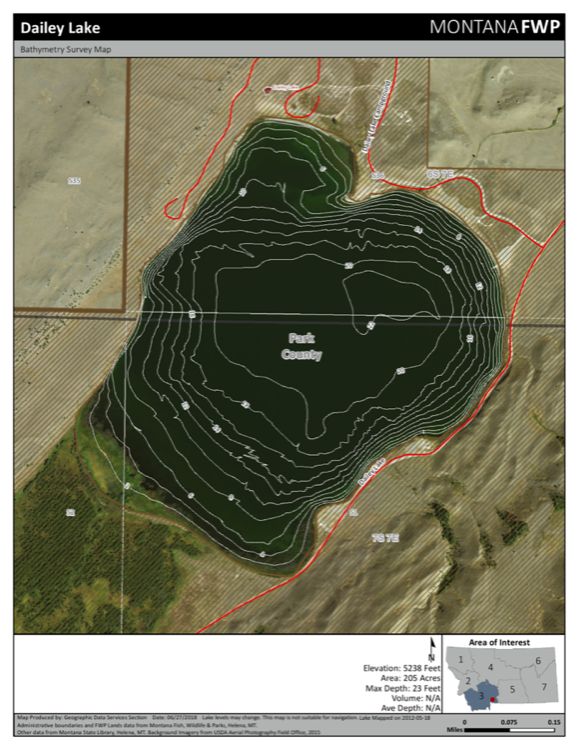
Bathymetric depth chart — click to open the full PDF. Source: Vermont DEC.
Source: Vermont DEC
Water Characteristics
Dailey is a shallow, bowl-like natural lake — 205 surface acres with a maximum depth of only 23 feet. The FWP bathymetric chart shows a basin without dramatic structure: broad shallow shelves around most of the perimeter grading gently toward a modest central deep, with the deepest contours occupying a limited portion of the lake. For a fly angler this is good news, because nothing in the lake is out of reach of a floating or intermediate line. The practical structure to fish is the transition where the shallow shelf breaks toward that central basin, and any point, inlet seam, or wind-formed edge that concentrates food.
With no depth to hide in, Dailey does not stratify into a proper coldwater thermocline the way a deep lake does. That shapes the whole season: fish are distributed shallow and are highly responsive to temperature and light. In spring and fall the entire lake is comfortable and productive. Through the heat of midsummer, warming water pushes fish into whatever relief they can find — the deepest contours, shaded margins, and the cool hours around dawn and dusk.
The lake's sagebrush-bench setting means limited canopy shade, plenty of wind-driven mixing, and enough fertility to support solid weed growth and the chironomid, callibaetis, damselfly, and dragonfly populations that anchor the food web. Water clarity varies with wind and algal activity; a hard blow will color the shallow margins quickly, which is often a gift to the angler stripping a dark leech.
Stocking
| Species | Size | Number | Program |
|---|---|---|---|
| Rainbow Trout (Arlee x Erwin-Ennis cross) | Catchable, 9 in | 5,040 | Montana FWP catchable plant (2026 actual) |
| Yellowstone Cutthroat Trout (Big Timber strain) | Multiple lots, including retired broodstock averaging 32 in | 1,250 broodstock plus additional lots | Montana FWP 2025 stocking program |
| Walleye | Not specified | Not specified | Montana FWP plants from Fort Peck brood source |
Seasonal Fishing Guide
Spring
Ice-out through late May is the best window of the year. The whole lake is cold and the fish are shallow and aggressive after a long winter. Strip leeches and Woolly Buggers along the shelf break on an intermediate line, and switch to chironomid pupae under an indicator when you see midges coming off. This is also the highest-percentage period for the oversized stocked cutthroat, which feed hard in cold water and cruise within easy casting range.
Summer
Callibaetis take over from June into August, with duns on the shallow margins on calm mornings and damselfly nymphs migrating toward shore in early summer. Fish get early and late as the shallow basin warms; midday can be slow. Work damsel nymphs on a floating line just under the surface toward the bank, and watch for cruising fish on flat evenings when a Parachute Adams or sparkle dun to a rising fish is the most fun available. Expect wind most afternoons.
Fall
September and October are the second prime window and arguably the better one, because the Yellowstone River takes all the pressure and Dailey cools back into ideal shape. Streamer and leech fishing along the drop-off improves steadily as water temperatures fall, and the big holdover cutthroat feed heavily. Cold, gray, breezy days outproduce blue-sky calm. Dress for Paradise Valley wind.
Winter
The lake ices over and open-water fly fishing shuts down. Winter effort here is an ice-fishing proposition rather than a fly one; confirm current season status and limits with Montana FWP and verify ice conditions locally before going out on a shallow, wind-exposed lake at this elevation.
Access & Boats
Dailey Lake is reached from the Emigrant area on the east side of the Yellowstone River, southeast of town. The Montana FWP fishing access site on the lake provides a boat ramp and a campground, so it is practical both as a day trip from Livingston and as a base camp for anglers splitting time between the lake and the Yellowstone River. The ramp handles trailered boats, and the lake's small size and shallow depth make it excellent float tube and pontoon water — a tube can cover the productive shelf and drop-off edge without much effort. Shoreline access is genuine here: much of the perimeter is wadeable or castable from the bank, and a wading angler working the shallow shelves during a chironomid or damsel emergence is not at a serious disadvantage. Be aware that the exposed setting means wind can end a float tube session in a hurry; launch on the shore you can retreat to.
Ice Fishing
Dailey freezes over in winter, and its shallow 23-foot basin is the kind of water that ice anglers in the Livingston area know about. It is not a fly-fishing proposition, and our source material does not document a specific ice program or season status for this lake, so treat winter as an off-season for the purposes of this guide. If you intend to fish Dailey through the ice, confirm the current season, limits, and any waterbody-specific provisions with Montana FWP at myfwp.mt.gov first, and check ice conditions locally — a shallow, wind-scoured lake at 5,238 feet can carry very uneven ice.
Fishing Pressure & Local Tips
Light to moderate, and light from fly anglers specifically. Dailey's greatest asset is that it sits in the shadow of one of the most famous trout rivers in North America: nearly everyone who comes to Paradise Valley in fishing season is on the Yellowstone, not on a 205-acre lake up a side road. The pressure Dailey does receive skews toward bait and spin anglers targeting stocked rainbows and walleye, plus campers using the FWP site. Weekends in summer bring recreational use, but a weekday morning at ice-out or on a cold October afternoon can be close to solitary. That combination — a lake stocked with oversized cutthroat and largely ignored by the fly crowd — is the core reason to make the drive.
Local Knowledge
Fish the drop-off edge, not the middle. In a lake this shallow the productive line is where the shelf gives way toward the deeper contours; anchor a float tube just off that edge, or wade the shelf and cast out over it. A chironomid pupa suspended under an indicator a foot off the bottom along that seam is the single most reliable presentation on Dailey from ice-out through early summer, and it is also the presentation most visiting anglers never bother to try.
Hunt the stocked broodstock cutthroat deliberately. The 2025 Big Timber-strain plants included fish in the 30-inch class, and those are not fish you catch by accident on a size 18 midge. Carry a stouter setup with a leech, Woolly Bugger, or dragonfly nymph on an intermediate line and cover water along the shelf break, especially early and late in the day and in the weeks right after ice-out. A slow, uneven retrieve with long pauses outfishes a steady strip on cold water.
Use the wind instead of fighting it. When Paradise Valley starts blowing, the downwind shoreline stacks up drifting food and colored water, and cruising fish move in to take advantage. Position so the wind is at your back, let the chop cover your approach, and fish shorter casts than you think you need. On the flip side, save the flat calm evenings for callibaetis and midge cluster fishing on the surface, when a Parachute Adams or Griffith's Gnat to a visible cruiser is the best game on the lake.
Species Present
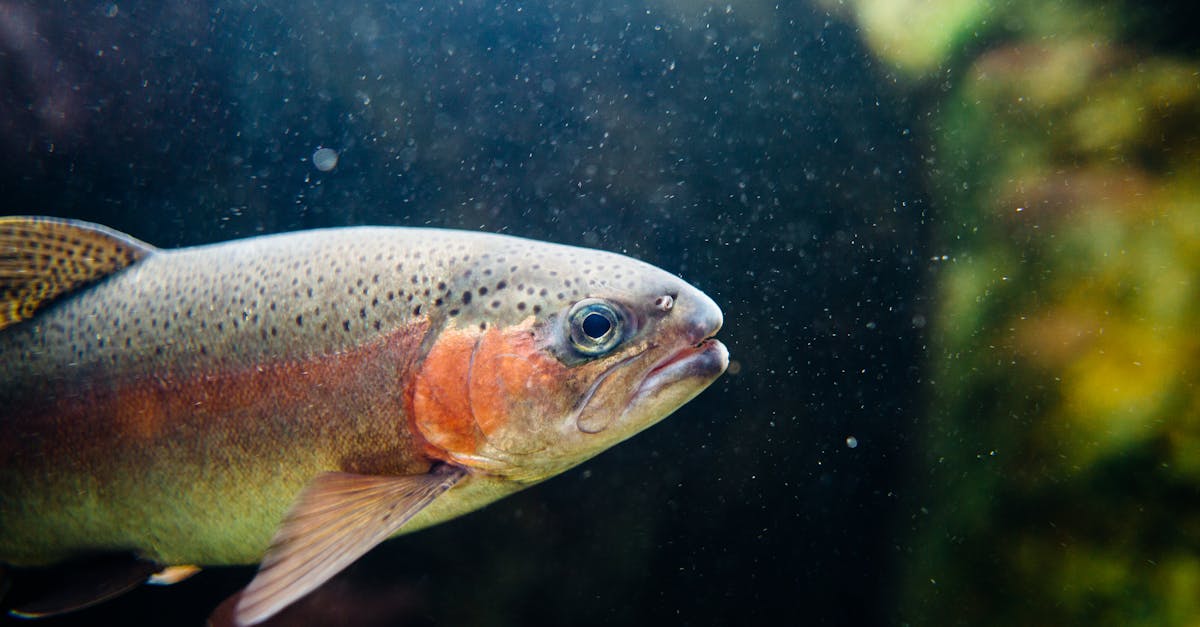
Rainbow Trout
The rainbow trout is Montana's most widespread and popular gamefish, celebrated for its explosive surface strikes, aerial acrobatics, and willingness to take a well-presented dry fly. Native to Pacific Coast drainages from Alaska to Mexico, rainbows were first introduced to Montana's waters in the late 1800s and have since established thriving populations in nearly every major river system in the state. On legendary waters like the Madison, Missouri, and Bighorn, wild rainbow trout grow fat on prolific insect hatches and provide some of the finest dry-fly fishing in North America. Rainbow trout in Montana display remarkable variation depending on their home water. Fish in nutrient-rich tailwaters like the Missouri River below Holter Dam can exceed 20 inches with regularity, their deep bodies and broad tails reflecting the abundant food supply. Freestone river rainbows, such as those in the upper Madison and Gallatin, tend to be leaner and more athletic, shaped by faster currents and colder water temperatures. In many Montana rivers, rainbows spawn in the spring from March through June, and anglers should be mindful of spawning redds during this period to protect future generations of fish. Rainbows are arguably the most versatile trout species for fly anglers. They respond well to dry flies during hatches, aggressively chase streamers, and feed heavily on nymphs subsurface throughout the year. Their fighting ability is legendary: a hooked rainbow will often launch itself completely out of the water multiple times during a battle. Montana's catch-and-release regulations on many blue-ribbon streams have produced exceptional rainbow trout fisheries with high densities of large, healthy fish that continue to draw anglers from around the world.
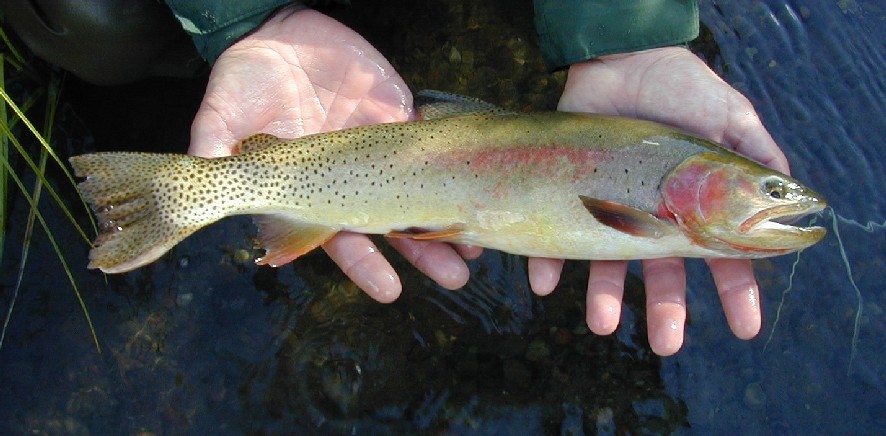
Yellowstone Cutthroat Trout
The Yellowstone cutthroat trout is Montana's most iconic native fish, a living symbol of the wild, untrammeled waters of the Greater Yellowstone Ecosystem. This subspecies of cutthroat trout evolved in the Yellowstone River drainage over thousands of years and is uniquely adapted to the cold, clear streams and rivers of south-central Montana. Named for the vivid red-orange slash marks beneath its lower jaw, the 'cut throat' that gives the entire cutthroat species complex its name, the Yellowstone cutthroat is one of the most beautiful and culturally significant fish in the American West. Yellowstone cutthroats are generally considered the most eager surface feeders among Montana's trout species, making them a favorite among dry-fly purists. They tend to be less wary than brown trout and more willing to eat a well-presented dry fly, even when no hatch is occurring. On their home waters (the Yellowstone River above Livingston, Slough Creek in Yellowstone National Park, the upper Lamar River, and numerous tributary streams throughout the Absaroka and Beartooth ranges), cutthroats will rise freely to attractor dry flies like Royal Wulffs, Stimulators, and Elk Hair Caddis, providing the kind of classic western dry-fly experience that anglers travel thousands of miles to enjoy. Despite their eagerness at the end of a fly line, Yellowstone cutthroat trout face significant conservation challenges. Habitat loss, hybridization with introduced rainbow trout, competition from non-native brook trout and lake trout, and the impacts of whirling disease have reduced their historic range by roughly 60 percent. Montana Fish, Wildlife & Parks, along with federal agencies and conservation groups, has invested heavily in cutthroat restoration projects, including barrier construction to prevent upstream migration of non-native species and targeted removal of lake trout from Yellowstone Lake. Anglers play an important role in cutthroat conservation by practicing careful catch-and-release techniques and supporting habitat protection efforts.
Food Sources & Hatches
| Insect | Suggested Fly | Jan | Feb | Mar | Apr | May | Jun | Jul | Aug | Sep | Oct | Nov | Dec |
|---|---|---|---|---|---|---|---|---|---|---|---|---|---|
Chironomids (midge pupae) Morning through early afternoon; strongest on calm, overcast days | Chironomid (Bomber) | ||||||||||||
Chironomid adults / midge clusters Flat calm evenings and early mornings | Griffith's Gnat | ||||||||||||
Callibaetis mayfly Late morning on calm days; spinners in the evening | Parachute Adams | ||||||||||||
Damselfly nymph migration Mid-morning to afternoon | Damselfly Nymph | ||||||||||||
Dragonfly nymph All day, best in low light | Dragonfly Nymph | ||||||||||||
Leeches All day; best early, late, and in wind-colored water | Woolly Bugger |
Chironomids (midge pupae): The backbone food source at Dailey and the most reliable fly-rod opportunity from ice-out onward. Suspend a pupa under an indicator a foot off the bottom along the shelf break; in 23 feet of water the entire lake is fishable this way.
Chironomid adults / midge clusters: When the wind lays down, clustering adult midges bring fish to the surface along the shallow margins. A Griffith's Gnat cast to a visible cruiser is the best dry-fly game on the lake outside of callibaetis season.
Callibaetis mayfly: Callibaetis populate the shallow weedy margins through summer and give Dailey its classic Montana stillwater dry-fly window. Fish duns and sparkle duns to cruising rainbows and cutthroat rather than casting blind.
Damselfly nymph migration: Early-summer damsel nymphs swim toward shore to emerge, and trout intercept them along the shallow shelf. Retrieve a damsel nymph on a floating line just under the surface, moving toward the bank to match the migration direction.
Dragonfly nymph: A year-round resident of the weedbeds and a large meal that appeals to the oversized stocked cutthroat. Fish it slowly along the weed edges and the shelf break with long pauses between short strips.
Leeches: Not a hatch but the most dependable searching food source on the lake. Strip a leech or Woolly Bugger near the drop-off edges when nothing is emerging; this is the standard tactic for covering water and finding the biggest fish.
Recommended Flies
Chironomid (Bomber)
Top PickChironomid Bomber suspended under an indicator a foot off the bottom along the shelf break. The highest-percentage fly on Dailey from ice-out through early summer and the presentation most visiting anglers skip.
Best in Spring through fall
Damselfly Nymph
Top PickDamselfly Nymph retrieved on a floating line toward shore during the June-July migration. Match the direction of the natural migration and keep the fly just under the surface film.
Best in Early summer
Woolly Bugger
Top PickWoolly Bugger on an intermediate line along the drop-off edge — the workhorse searching pattern when no hatch is on. Slow, uneven retrieve with long pauses in cold water.
Best in Ice-out through fall
Parachute Adams
Top PickParachute Adams for callibaetis duns and midge clusters on calm mornings and evenings. Cast to visible cruisers on the shallow margins rather than fishing blind water.
Best in Summer
Also Effective
Access Points & Boat Launches
Dailey Lake Fishing Access Site — Boat Ramp
Boat LaunchEasyThe primary Montana FWP fishing access site on the lake, reached from the Emigrant area southeast of town on the east side of the Yellowstone River. A concrete/gravel boat ramp serves trailered boats, and the same launch area is the natural put-in for float tubes and pontoon boats. From here it is a short paddle or kick to the shelf break that holds most of the fish.
Dailey Lake FWP Campground
ParkingEasyCamping is available at the FWP site on the lake, which makes Dailey a practical base for anglers splitting time between the lake and the Yellowstone River in Paradise Valley. Camp here to be on the water at first light for the calm-morning callibaetis and chironomid windows before the afternoon wind builds.
Shoreline Wade and Float Tube Access
Wade AccessEasy to ModerateMuch of Dailey's perimeter is open, low-bank shoreline that can be waded or fished from the bank. The shallow shelves along these margins are where chironomid emergences, damselfly migrations toward shore, and cruising fish concentrate, so a wading angler covering the shelf with a floating line is genuinely competitive with a boat on this lake. Pick a shoreline you can retreat to when the valley wind comes up.
Regulations
Regulations
Dailey Lake fishes under Montana's standard trout regulations with the addition of walleye provisions — walleye are the warm-water exception on this water and are managed separately from the trout. A Montana fishing license is required, and standard district season dates, length limits, and daily bag limits apply. Because Montana revises its regulations annually and waterbody-specific exceptions do change, verify the current rules for Dailey Lake at myfwp.mt.gov before you fish.
Always verify current regulations with Montana Fish, Wildlife & Parks before fishing.
Quick Facts
- Surface Area
- 205 acres
- Max Depth
- 23 ft
- Elevation
- 5,238 ft
- Lake Type
- Natural Lake
- Region
- South-central Montana / Paradise Valley; Park County
- Best Seasons
- spring, fall
- Species
- Rainbow Trout, Yellowstone Cutthroat Trout
- Difficulty
- Beginner-Intermediate
- Record Fish
- The 2025 Yellowstone cutthroat program included 1,250 retired Big Timber-strain broodstock averaging roughly 32 inches, so genuinely oversized cutthroat are present and catchable — an unusual opportunity for a lake of this size.
- Depth Chart
- Download PDF
Nearby Lakes & Ponds
Georgetown Lake
Southwest Montana / Anaconda-Pintler; Deer Lodge and Granite Counties
Hebgen Lake
Southwest Montana / Madison Valley; Gallatin County
Clark Canyon Reservoir
Southwest Montana / Beaverhead Valley; Beaverhead County
Browns Lake
Western Montana / Blackfoot Valley; Powell County
Canyon Ferry Lake
West-central Montana / Missouri River; Broadwater and Lewis and Clark counties
Placid Lake
Western Montana / Clearwater Valley; Missoula County