Quake Lake
Quake Lake was born in seconds on an August night in 1959, when an earthquake dropped a mountainside into the Madison River canyon and dammed it. Today the drowned forest holds a wild, unstocked population of rainbows, browns, westslope cutthroat and grayling in one of the most dramatic settings in Montana.
Overview
Quake Lake is the youngest significant lake in Montana and the only one most anglers can date to the minute. Late on the night of August 17, 1959, a magnitude 7.3 earthquake shook loose the flank of the canyon below Hebgen Dam and sent tens of millions of cubic yards of rock across the Madison River. The river backed up behind the new slide almost immediately, drowning several miles of canyon bottom, and the standing lodgepole and Douglas fir that grew there never got the chance to fall. Six decades later their bleached trunks still spike out of the water along the shoreline, and the 611-acre lake they stand in remains one of the strangest and most photogenic pieces of trout water in the West.
What makes Quake compelling to a fly angler is not just the scenery but the character of the fishery. This is wild water in the truest administrative sense: Montana FWP's stocking database contains zero records for the lake. Every rainbow, brown, westslope cutthroat and Arctic grayling swimming here got here on its own, arriving through the Madison River drainage from the Hebgen tailwater above and moving freely through a lake that is really a wide, slow, timber-choked reach of a famous river. The fish are not hatchery fish, they are not fed by a put-and-take program, and their numbers and size rise and fall with the river's own fortunes.
The Madison connection defines everything about how Quake fishes. The river enters at the upper end straight out of the Hebgen Dam tailwater and leaves through the slide at the lower end, so the lake carries a genuine, if lazy, current through its axis. Anglers who fish it well tend to treat it as a hybrid: they look for the current seams and the drowned river channel the way they would on a river, then fish the still flats and drop-offs on either side the way they would on a lake. That dual personality means a day here can move from swinging a leech through moving water to sight-casting a Callibaetis parachute at a cruising rainbow on glass, sometimes within the same hour.
Quake's hatches are stillwater hatches with a Madison Valley accent. Chironomids come off from the earliest open water through fall, Callibaetis carpet the calm flats through midsummer, and damsel and dragonfly nymphs work the shallow margins as the water warms. Leeches and small baitfish live in and around the standing timber, which is why streamers fished tight to the dead trees produce many of the lake's better browns. Summer and fall are the prime seasons; at 6,468 feet the season opens late and closes early, and shoulder weather can be genuinely severe.
For all the drama of its origin, Quake gets remarkably little fly pressure. Most visitors on US-287 are here for the Earthquake Lake Visitor Center and the story of the slide, not the fishing, and serious Madison anglers are typically headed downstream to the famous riffles below the slide or upstream to Hebgen's gulper flats. That leaves a low-pressure wild-trout lake sitting in plain sight between two of the most heavily fished pieces of water in Montana. It is not a numbers destination and it is not always generous, but on a still evening with fish working between the dead trees, Quake Lake is hard to trade for anywhere else.
Depth & Character
- Surface Area
- 611acres
- Max Depth
- 18ft
- Elevation
- 6,468ft
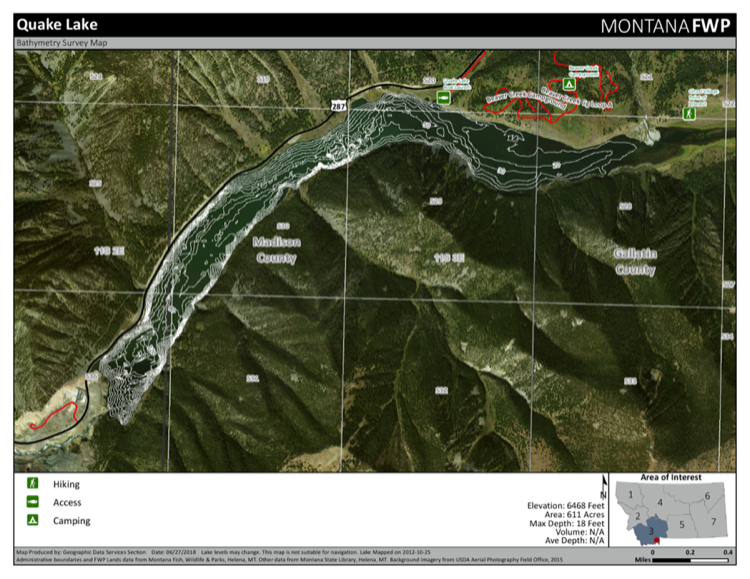
Bathymetric depth chart — click to open the full PDF. Source: Vermont DEC.
Source: Vermont DEC
Water Characteristics
The FWP bathymetric survey lists Quake's maximum depth as 18 feet, which understates the lake considerably: that figure describes the broad flooded benches, while the old Madison River channel running through the basin is substantially deeper and holds the lake's most consistent fish. Reading the chart is really an exercise in tracing that channel. The contour lines pinch together where the drowned riverbed cuts through and spread wide across the shallow shelves on either side, and those shelf-to-channel edges are the structure worth fishing.
Because the Madison flows in at the top and out through the slide at the bottom, Quake never fully behaves like a closed basin. Water exchanges continuously, so the lake stays cold and does not stratify into a hard summer thermocline the way a deep, still lake does; the whole water column stays within reach of a fly line all season. Clarity is generally good, with an off-color push after spring runoff and during heavy weather. Aquatic vegetation is limited compared to a fertile shallow reservoir like Georgetown, but the shallow benches grow enough weed to support damsels, dragonflies and the scud and leech population.
The defining physical feature has nothing to do with the bottom contours. Thousands of standing dead trees, drowned in place in 1959, still rise through the shallows and the margins. They are cover, they are structure, and they are a hazard: boat and float-tube anglers need to move slowly and watch for submerged trunks and branches just under the surface, and anyone fishing streamers in the timber should expect to leave flies behind.
Seasonal Fishing Guide
Spring
Cold and often off-color. Runoff and dam operations upstream push discolored water through the basin, and the lake fishes best on the clearer margins away from the inlet. Chironomid pupae under an indicator over the shallow benches is the most dependable presentation, with leeches and buggers stripped slowly along the timber for browns. Expect raw weather at 6,468 feet and check the current Madison-drainage season dates before making the drive.
Summer
Prime time. Callibaetis come off on the calm flats from midmorning, and rainbows and cutthroat cruise and sip in the flat water between the standing trees — sight-cast a Parachute Adams or Sparkle Dun and lead the fish. Damselfly nymphs migrating toward shore in early summer are worth imitating on a slow strip along weed edges, and dragonfly nymphs take fish along the shallow shelves. Fish early; the canyon wind usually arrives by early afternoon.
Fall
The best streamer season of the year. Cooling water pushes browns tight to the drowned timber and onto the current seams, and a Woolly Bugger, Egg-Sucking Leech or Muddler worked along the wood draws hard grabs. Midges keep coming off on calm days, and blue-winged olives can bring fish up on the moving water at the inlet and outlet. Pressure is minimal and the light on the dead trees is worth the trip on its own.
Winter
Effectively an off-season here. Quake is a high, remote, roadside canyon lake in the Madison drainage, where winter access and seasons are restrictive and conditions on US-287 can be difficult. Plan trips for summer and fall and confirm current season dates with Montana FWP before attempting any cold-weather outing.
Access & Boats
Access is roadside and informal. US-287 runs along the north shore for the length of the lake with a series of pullouts, and the Earthquake Lake Visitor Center near the slide at the lower end is the natural orientation point, with parking, interpretive displays on the 1959 quake, and a view down the whole basin. From the pullouts anglers walk down to the bank and fish the shoreline shelves and the edges of the standing timber. There is no developed marina-style facility on the lake; this is a park-and-walk fishery. A float tube, pontoon or small cartop craft dramatically expands what is reachable, especially the timber edges and the drowned channel out from the bank, but launching is over the bank rather than from a ramp and navigation among submerged snags demands patience and slow speeds. The upper end where the Madison enters from the Hebgen tailwater offers the most wadeable, river-like water.
Fishing Pressure & Local Tips
Light for a lake sitting on a paved federal highway between Hebgen Lake and the Madison River. The great majority of the traffic on US-287 here is sightseeing traffic bound for the Earthquake Lake Visitor Center, and dedicated anglers driving this stretch are usually on their way to the blue-ribbon river water below the slide or the gulper flats above. Summer weekends bring cars to the pullouts but rarely a crowd of fly rods on the water. Weekday mornings and the entire fall shoulder season can feel close to private.
Local Knowledge
Fish the current. The single most reliable pattern on Quake is to find where the Madison's flow is still organized — the inlet at the upper end, the defined seams where the drowned channel runs, and the drawdown toward the outlet at the slide — and work those edges first. Fish stack on moving water here for the same reason they do on the river: it delivers food. A leech or Woolly Bugger swung and stripped across a seam on an intermediate line is a good opening move on any day the surface is dead.
Work the timber, and accept the cost. The standing dead trees are the lake's best cover for browns, and getting a streamer genuinely tight to a trunk is worth the flies you will lose doing it. Use a slightly heavier tippet than the clear water suggests — you will be pulling on snags all day — and fish along the timber line rather than casting into the middle of it so you can steer hooked fish out of the wood.
Save your dry-fly ambitions for calm mornings and evenings. When the wind lies down, Callibaetis duns and midge clusters bring cruising rainbows and cutthroat up on the flats, and the fishing turns into sight-casting to individual fish rather than blind covering water. Watch for a rise, work out the direction the fish is traveling, and lead it; a fly dropped on a cruiser's head on this clear, quiet water usually ends the conversation. Wind is the other planning variable — the canyon funnels it, and an afternoon that started glassy can be unfishable by two o'clock.
Species Present
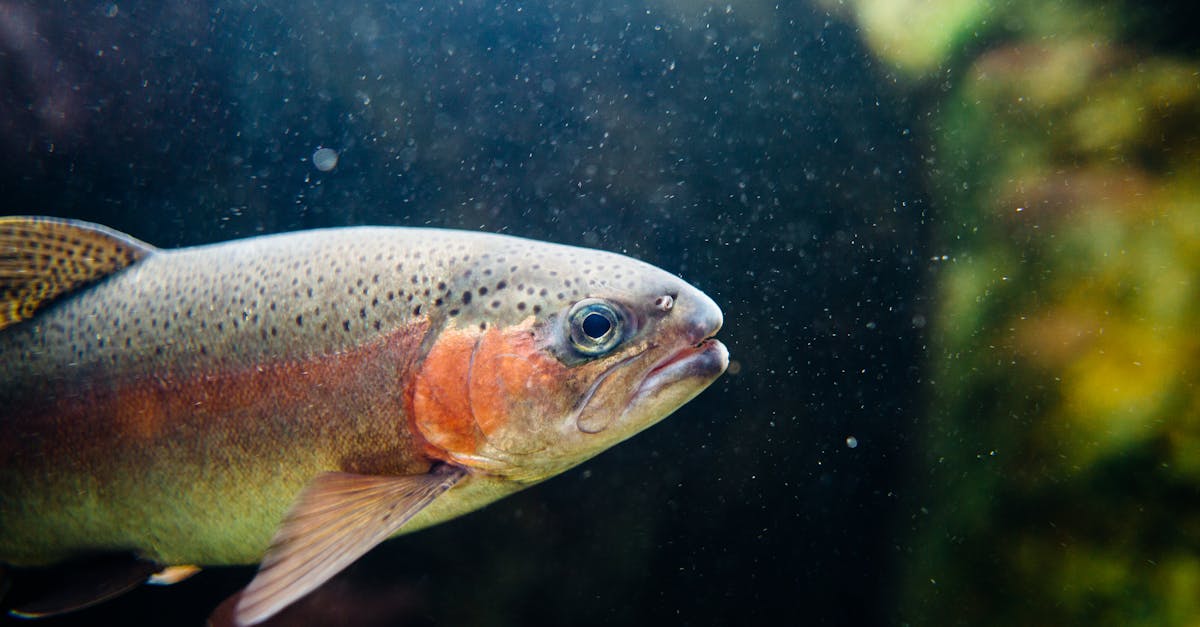
Rainbow Trout
The rainbow trout is Montana's most widespread and popular gamefish, celebrated for its explosive surface strikes, aerial acrobatics, and willingness to take a well-presented dry fly. Native to Pacific Coast drainages from Alaska to Mexico, rainbows were first introduced to Montana's waters in the late 1800s and have since established thriving populations in nearly every major river system in the state. On legendary waters like the Madison, Missouri, and Bighorn, wild rainbow trout grow fat on prolific insect hatches and provide some of the finest dry-fly fishing in North America. Rainbow trout in Montana display remarkable variation depending on their home water. Fish in nutrient-rich tailwaters like the Missouri River below Holter Dam can exceed 20 inches with regularity, their deep bodies and broad tails reflecting the abundant food supply. Freestone river rainbows, such as those in the upper Madison and Gallatin, tend to be leaner and more athletic, shaped by faster currents and colder water temperatures. In many Montana rivers, rainbows spawn in the spring from March through June, and anglers should be mindful of spawning redds during this period to protect future generations of fish. Rainbows are arguably the most versatile trout species for fly anglers. They respond well to dry flies during hatches, aggressively chase streamers, and feed heavily on nymphs subsurface throughout the year. Their fighting ability is legendary: a hooked rainbow will often launch itself completely out of the water multiple times during a battle. Montana's catch-and-release regulations on many blue-ribbon streams have produced exceptional rainbow trout fisheries with high densities of large, healthy fish that continue to draw anglers from around the world.
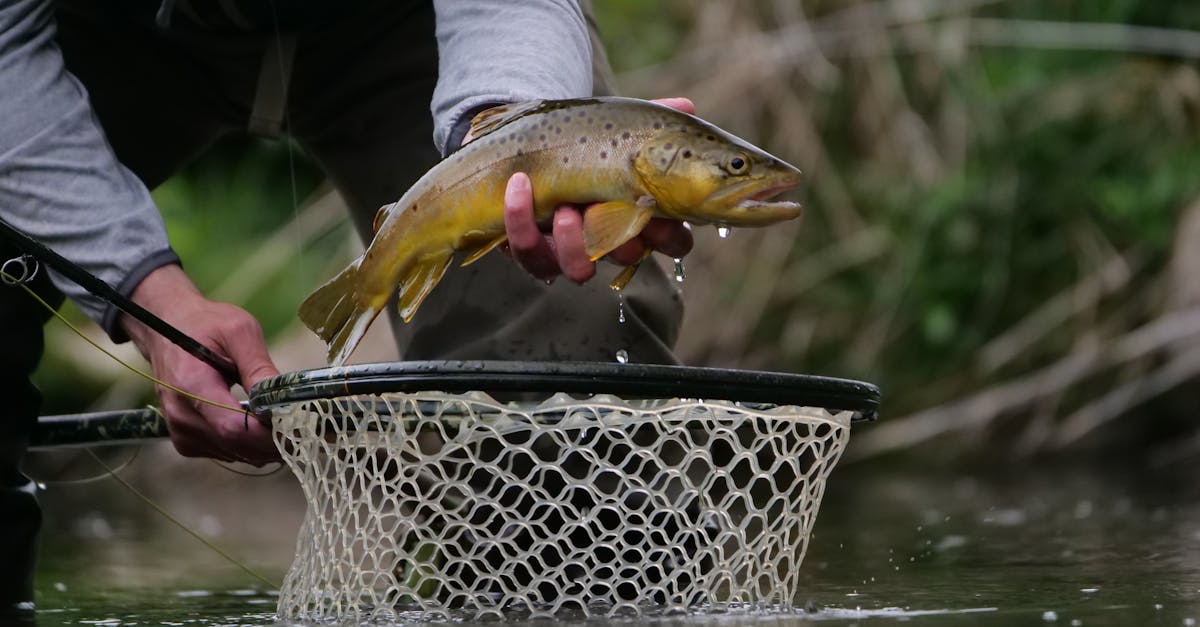
Brown Trout
The brown trout is the most cunning and elusive trout species swimming in Montana's rivers, and it rewards patient, skilled anglers with some of the state's most memorable catches. Originally native to Europe and western Asia, brown trout were first introduced to North American waters in 1883 and arrived in Montana shortly thereafter. They have since established robust, self-sustaining populations in virtually every major trout stream in the state, from the legendary spring creeks of the Paradise Valley to the sweeping runs of the lower Madison and the deep pools of the Bighorn. Brown trout grow larger than any other trout species in Montana, and fish exceeding 24 inches are caught with regularity on premium waters. The lower Madison River, the Missouri River below Holter Dam, and the Bighorn River are particularly renowned for producing trophy-class browns. Unlike rainbows, brown trout spawn in the fall (October through November), and their aggressive pre-spawn behavior creates an exciting window for streamer fishing as large males become territorial and attack anything that enters their domain. Browns are notably more nocturnal than other trout species, and many of the biggest fish are caught during low-light conditions. What sets brown trout apart from other species is their wariness and selectivity. Large browns are notoriously difficult to fool, often refusing flies that are even slightly off in size, color, or presentation. They tend to establish and defend prime feeding lies (undercut banks, logjams, deep pools, and boulder gardens), and an angler who learns to read water and identify these holding spots will consistently catch more and larger fish. This combination of difficulty, size potential, and intelligence makes the brown trout the most prized quarry for many serious Montana fly fishers.
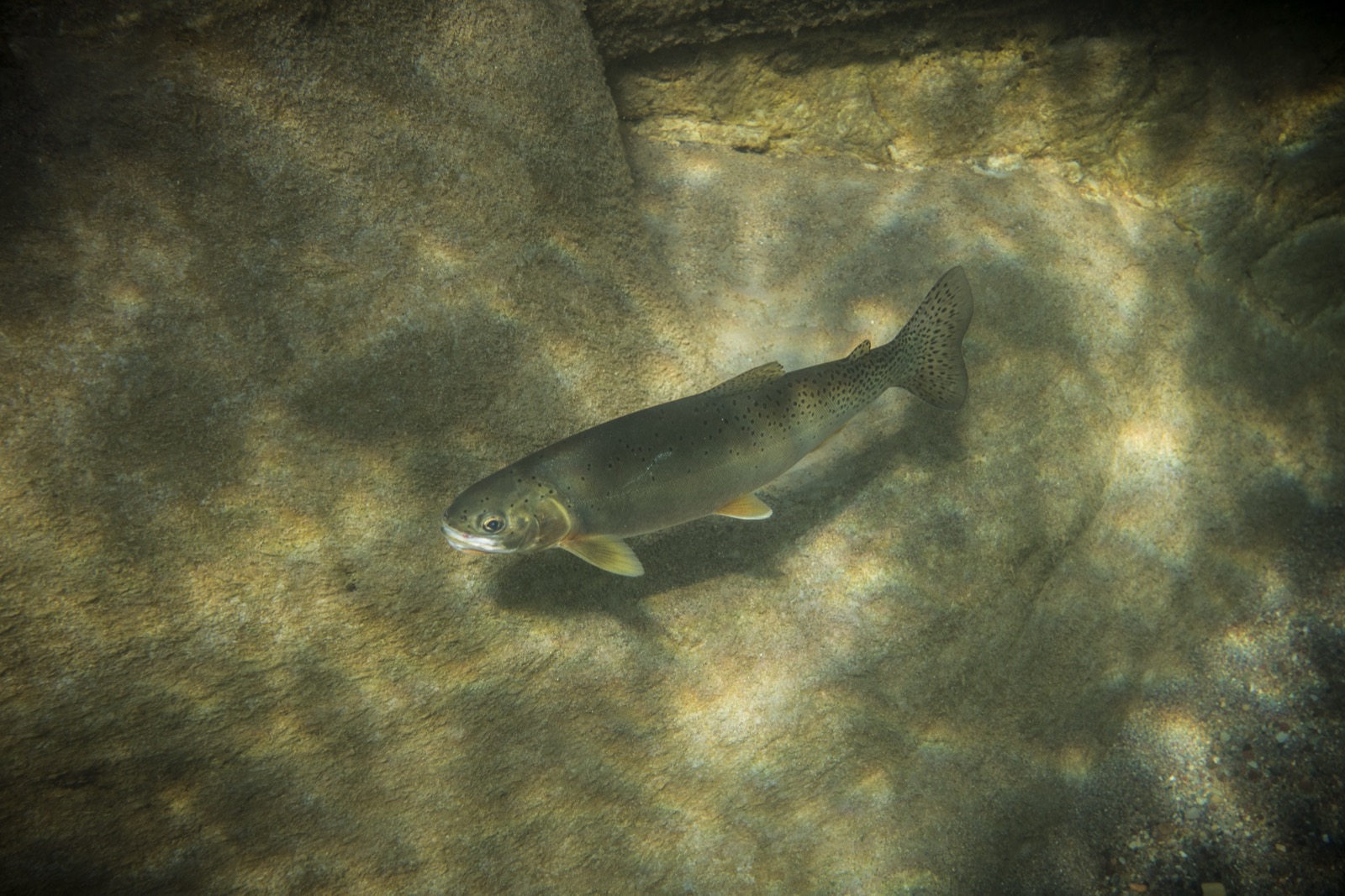
Westslope Cutthroat Trout
The westslope cutthroat trout is the most widely distributed native trout subspecies in the northern Rocky Mountains and holds the distinction of being Montana's official state fish. This interior subspecies of cutthroat trout evolved in the upper Columbia and Missouri River drainages west of the Continental Divide, inhabiting the cold, pristine mountain streams and alpine lakes of Idaho, western Montana, and pockets of eastern Washington and Oregon. Smaller and more delicately built than their Yellowstone cutthroat cousins, westslope cutthroats are a jewel of the backcountry, their buttery gold flanks peppered with fine black spots and accented by the hallmark crimson slashes beneath the jaw that define all cutthroat trout. Westslope cutthroats are the quintessential dry-fly trout of the northern Rockies. Found in headwater streams, cascading mountain creeks, and glacially carved alpine lakes from the Bitterroot Range to the Bob Marshall Wilderness, they inhabit some of the most breathtaking landscapes in the American West. On waters like the upper Blackfoot River, Rock Creek, the South Fork Flathead, and the St. Joe River in Idaho, westslope cutthroats rise eagerly to well-presented dry flies, often in settings so remote and wild that the fishing feels almost primeval. Their willingness to eat on the surface, combined with the spectacular scenery of their home waters, makes targeting westslope cutthroats one of the most rewarding experiences in western fly fishing. Despite their cultural and ecological importance, westslope cutthroat trout occupy only a fraction of their historic range. Hybridization with non-native rainbow trout and competition from introduced brook trout have eliminated genetically pure populations from many drainages. Today, the purest remaining westslope cutthroat populations persist in isolated headwater streams above natural or man-made barriers that prevent upstream migration of non-native species. Conservation efforts across Idaho, Montana, and Washington focus on protecting these stronghold populations, removing non-native competitors, and restoring connectivity where genetically pure fish still exist. Anglers who target westslope cutthroats become some of their strongest advocates, understanding firsthand the fragile beauty of the ecosystems these fish depend upon.
Arctic Grayling
The Arctic grayling is one of North America's most beautiful and distinctive freshwater fish, instantly recognized by its enormous, sail-like dorsal fin adorned with rows of iridescent spots that shimmer in shades of blue, purple, and rose. A member of the salmon family but placed in its own genus, Thymallus, the grayling is a fish of cold, clear northern waters, with a natural range that once stretched across Arctic and subarctic drainages of Alaska, Canada, and the northern Rockies. In the contiguous United States, the Arctic grayling holds special significance as a relict of the last ice age, its populations isolated in Montana as the glaciers retreated thousands of years ago. Montana occupies a unique place in the grayling's story as home to the last native, river-dwelling populations of Arctic grayling in the lower 48 states. The Big Hole River in southwestern Montana holds the final self-sustaining population of fluvial (river-dwelling) Arctic grayling south of Canada, a genetically distinct fish that has become a flagship for native fish conservation in the northern Rockies. Beyond this remnant river population, grayling persist in numerous Montana lakes both native and stocked, and restoration efforts have worked to expand the fish back into portions of its historic range using carefully managed hatchery strains. For fly anglers, the Arctic grayling is a pure delight: an eager, almost naive surface feeder that rises freely to dry flies and fights with a spirited, if not powerful, energy. The sight of that spectacular dorsal fin breaking the surface as a grayling takes a fly is one of the great experiences in northern fly fishing. Montana grayling are targeted in high mountain lakes such as those stocked with the Rogers Lake strain, in restoration waters including Hebgen Lake, and in the remote reaches of the Centennial Valley, where the fish connects anglers to a living remnant of the ice age and to one of the West's most important native fish conservation efforts.
Food Sources & Hatches
| Insect | Suggested Fly | Jan | Feb | Mar | Apr | May | Jun | Jul | Aug | Sep | Oct | Nov | Dec |
|---|---|---|---|---|---|---|---|---|---|---|---|---|---|
Chironomids (midges) Morning and evening; all day in cool weather | Chironomid (Bomber) | ||||||||||||
Callibaetis Midmorning through early afternoon on calm days | Parachute Adams | ||||||||||||
Damselflies Late morning through afternoon | Damselfly Nymph | ||||||||||||
Dragonfly nymphs All day | Dragonfly Nymph | ||||||||||||
Leeches All day; best early, late and under cloud | Woolly Bugger | ||||||||||||
Baitfish and small trout Dawn and dusk | Muddler Minnow | ||||||||||||
Blue-winged olives (Baetis) Midday on gray, drizzly days | BWO Emerger |
Chironomids (midges): The most consistent food source on the lake, emerging from the earliest open water through fall. Fish pupa patterns under an indicator over the shallow benches, hung one to three feet off the bottom, and switch to a Griffith's Gnat when clusters bring fish up on calm evenings.
Callibaetis: The classic Madison Valley stillwater mayfly and the reason to be on Quake with a floating line. Duns come off over the flat water between the standing trees and bring rainbows and cutthroat up to cruise and sip — sight-cast to individual fish and lead them.
Damselflies: Nymphs migrate toward the shallow shelves and weed edges in early summer. A slow, steady strip on a floating or intermediate line along the margins imitates the swimming migration; keep the retrieve horizontal rather than jerky.
Dragonfly nymphs: A year-round shallow-water forage item on the vegetated benches. Fish a large nymph on a slow crawl with occasional short darts along the bottom of the shelves and out toward the drop into the drowned channel.
Leeches: The staple searching food on Quake, especially in and around the standing dead timber. Swing and strip leech and bugger patterns along the wood and across the current seams where the Madison's flow runs through the lake.
Baitfish and small trout: Late summer and fall push the lake's larger browns onto smaller fish holding in the timber. Muddlers and larger streamers fished tight to the trunks and along the channel edges account for many of the biggest fish taken here.
Blue-winged olives (Baetis): Fall Baetis show best on the moving water at the inlet and outlet where the Madison's current is organized. Cloud and light rain concentrate the hatch; fish an emerger in the film on the seam edges.
Recommended Flies
Chironomid (Bomber)
Top PickChironomid pupa fished under an indicator over the shallow benches is the single most reliable subsurface presentation on Quake. Carry black, olive and red in sizes 14-18 and adjust depth until you find the feeding layer.
Best in Spring through fall
Woolly Bugger
Top PickThe searching fly for this lake. Swing and strip it along the standing timber and across the current seams the Madison carves through the basin; olive and black in sizes 6-10 cover the leech and baitfish forage together.
Best in Late spring through fall
Parachute Adams
Top PickCallibaetis dun imitation for calm-morning sight-fishing to cruising rainbows and cutthroat on the flats between the dead trees. Sizes 14-16; lead the fish rather than casting to the last rise ring.
Best in Summer
Damselfly Nymph
Top PickDamselfly nymph on a slow horizontal strip along the weed edges and shallow shelves during the June-August migration. Olive, size 10-12, on a floating or intermediate line.
Best in Early to mid summer
Access Points & Boat Launches
Earthquake Lake Visitor Center
ParkingEasyUSFS visitor center perched above the 1959 slide at the lower end of the lake, with parking, restrooms and interpretive exhibits on the earthquake that created the lake. The natural orientation stop and a good vantage for reading the whole basin before choosing a stretch of shoreline to fish.
US-287 Shoreline Pullouts
Wade AccessEasy to ModerateA string of informal highway pullouts along the north shore where anglers park and walk down the bank to fish the shoreline shelves and the edges of the standing dead timber. No facilities; the fishing is park-and-walk, and each pullout opens onto a different piece of shelf-and-timber structure.
Upper End / Madison River Inlet
Wade AccessModerateWhere the Madison enters the lake below the Hebgen Dam tailwater, the water is shallowest and most river-like, with defined current seams and the most genuinely wadeable footing on the lake. The highest-percentage area for anglers who want to fish moving water and the transition where river turns to lake.
Float Tube Launch — Timber Shoreline
Boat LaunchModerateThere is no developed ramp on Quake; float tubers, pontoon anglers and cartop craft launch over the bank from the highway pullouts. Launching this way opens the timber edges and the drowned river channel that bank anglers cannot reach, but submerged trunks and branches sit just under the surface throughout the shallows — move slowly and scout ahead.
Regulations
Regulations
Quake Lake sits within the Madison River drainage and is governed by that drainage's regulations, which in Montana are frequently more restrictive than the statewide standard and can include specific season dates, gear provisions and bag or length limits. A Montana fishing license is required. Because Madison-drainage rules are revised periodically and can differ between the lake and the river reaches immediately above and below it, verify the current regulations for this water at myfwp.mt.gov before you fish.
Always verify current regulations with Montana Fish, Wildlife & Parks before fishing.
Quick Facts
- Surface Area
- 611 acres
- Max Depth
- 18 ft
- Elevation
- 6,468 ft
- Lake Type
- Natural Lake
- Region
- Southwest Montana / Madison Valley; Gallatin and Madison Counties
- Best Seasons
- summer, fall
- Species
- Rainbow Trout, Brown Trout, Westslope Cutthroat Trout, Arctic Grayling
- Difficulty
- Intermediate
- Record Fish
- Quake produces wild browns and rainbows to good size — fish grown entirely in the Madison drainage rather than a hatchery — though the lake is not a documented state-record water.
- Depth Chart
- Download PDF
Nearby Lakes & Ponds
Georgetown Lake
Southwest Montana / Anaconda-Pintler; Deer Lodge and Granite Counties
Hebgen Lake
Southwest Montana / Madison Valley; Gallatin County
Clark Canyon Reservoir
Southwest Montana / Beaverhead Valley; Beaverhead County
Browns Lake
Western Montana / Blackfoot Valley; Powell County
Dailey Lake
South-central Montana / Paradise Valley; Park County
Canyon Ferry Lake
West-central Montana / Missouri River; Broadwater and Lewis and Clark counties